September 19, 2026 Ixmore Art
In large-format commercial spaces — mall Christmas displays especially — the materials behind a custom prop quietly decide almost everything else: visual impact, install speed, durability, and where the budget actually goes. As a fabrication house that’s spent years building for overseas shopping malls, holiday events, and public spaces, we run dozens of custom Christmas prop projects every year, and one thing has become clear: material choice is never just a question of “cheap versus expensive.” It has to match the use case, the structural demands, how the piece will be shipped and installed, whether it needs to survive multiple seasons, and the fire-safety and load-bearing codes of wherever it’s headed. This piece breaks down the three materials we reach for most often — fiberglass, foam carving, and metal framing — from a working fabricator’s point of view, so brands, mall operators, and event planners can make a call with their eyes open.
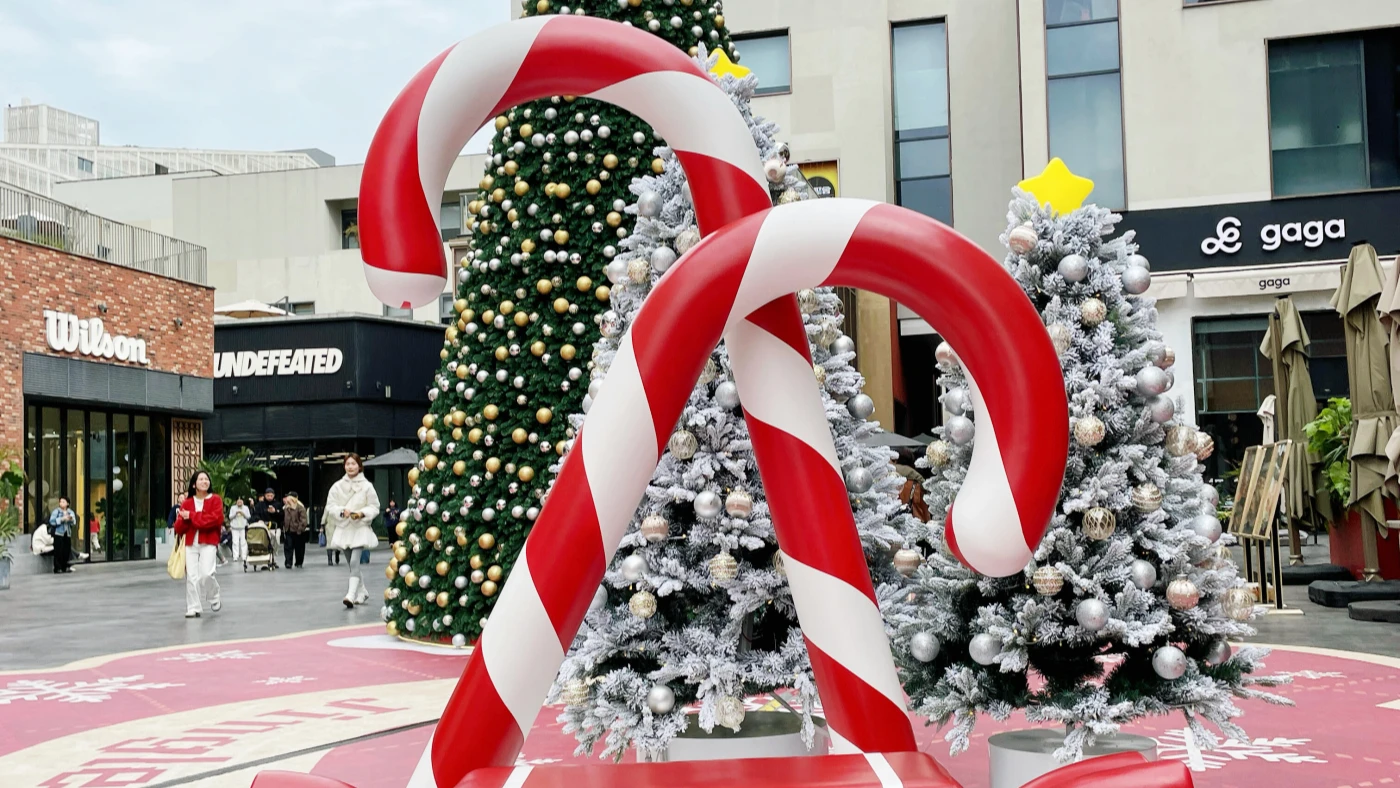
Mall Christmas installations tend to share the same pressures: they’re big, the designs are ambitious, the install window is short, they sit in high-traffic zones, and more often than not they’re expected to come back out year after year. Get the material wrong and you’re looking at anything from surface cracking and fading to transportation costs spiraling out of control — or, worse, a structural or fire-safety failure that shuts the whole thing down. Fiberglass, foam carving, and metal framing each pull their own weight, and on real projects it’s rarely one or the other — a foam core wrapped in an FRP skin over a metal frame is a combination we use constantly to balance weight, detail, and long-term stability.
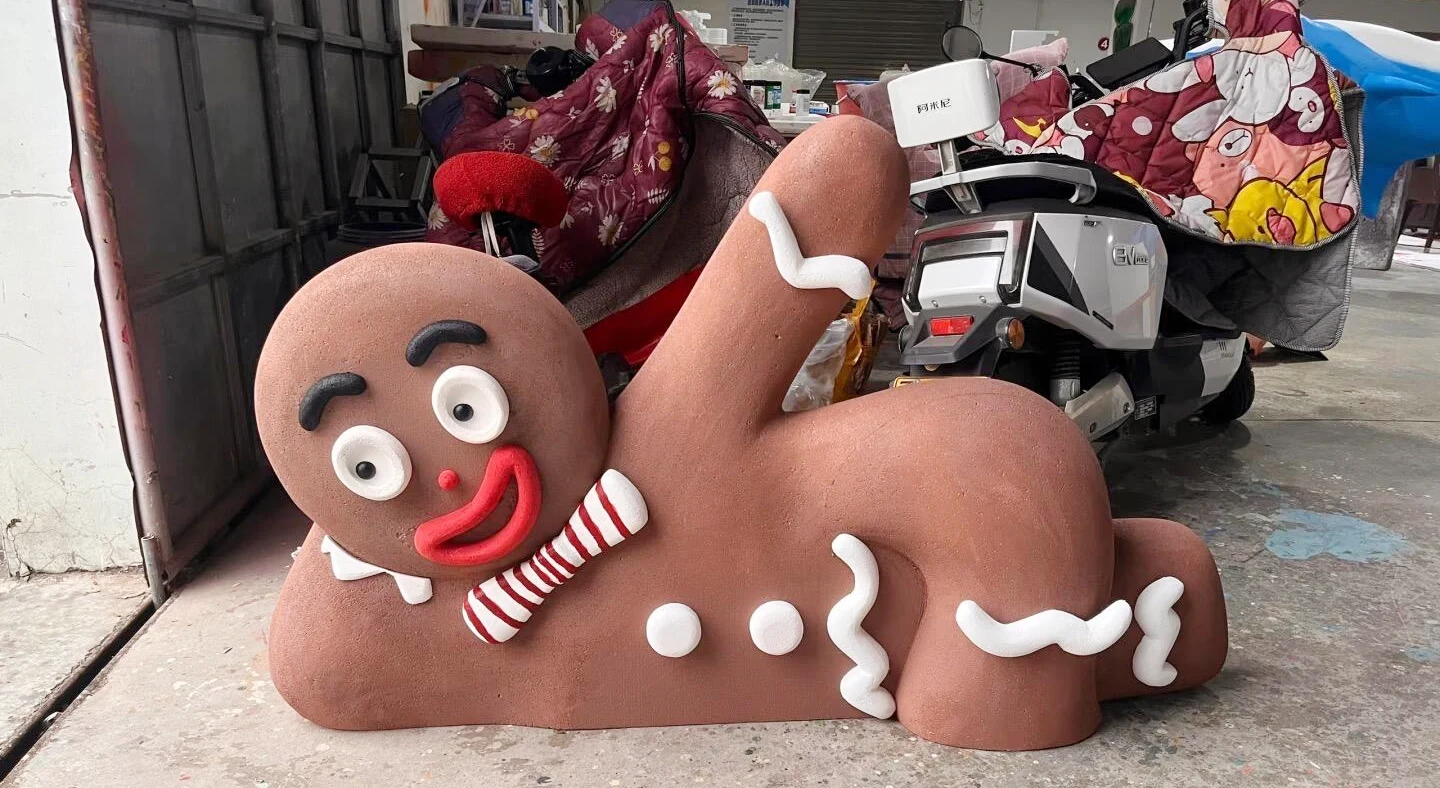
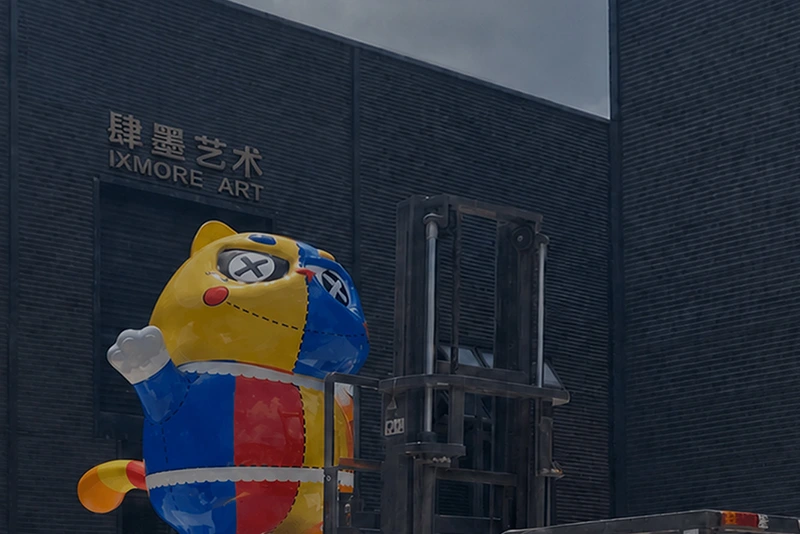
Fiberglass — fiber-reinforced plastic, to give it its full name — is a composite of glass fiber and resin, and it’s still the workhorse material for big commercial Christmas builds, particularly character props and scenic pieces that demand fine detail, complex curves, and the ability to be pulled out of storage and reused.

Outstanding strength-to-weight ratio: for the same volume it’s a fraction of the weight of metal, yet its tensile strength gets close to steel — which makes it far easier to ship and hoist into place.
Serious design freedom: clay modeling or CNC-milled tooling lets you nail fabric folds, facial expressions, and organic curves with real precision — perfect for three-dimensional builds like Santa figures, reindeer, oversized gift boxes, and arches.
Solid weathering and corrosion resistance: pair it with a quality gel coat and automotive-grade paint and it shrugs off UV, rain, and everyday chemical exposure. Properly built outdoor FRP pieces routinely last 15 to 25 years with basic upkeep.
A wide finish palette: high-gloss, matte, metallic, stone-effect, wood-effect — the color match is dependable across all of them.
Built for volume: once the mold’s done, you can turn out identical pieces fast, and the mold cost gets spread thin across the run — which is exactly why chains rolling out the same look across multiple locations lean on FRP.
Tooling takes time — typically several weeks — and until the mold cost is amortized, per-unit pricing runs high. Repairing a hard impact point is genuinely difficult. Standard polyester resin systems aren’t built for sustained high heat, so for outdoor work we’d recommend stepping up to a vinyl ester or epoxy system with added UV protection.
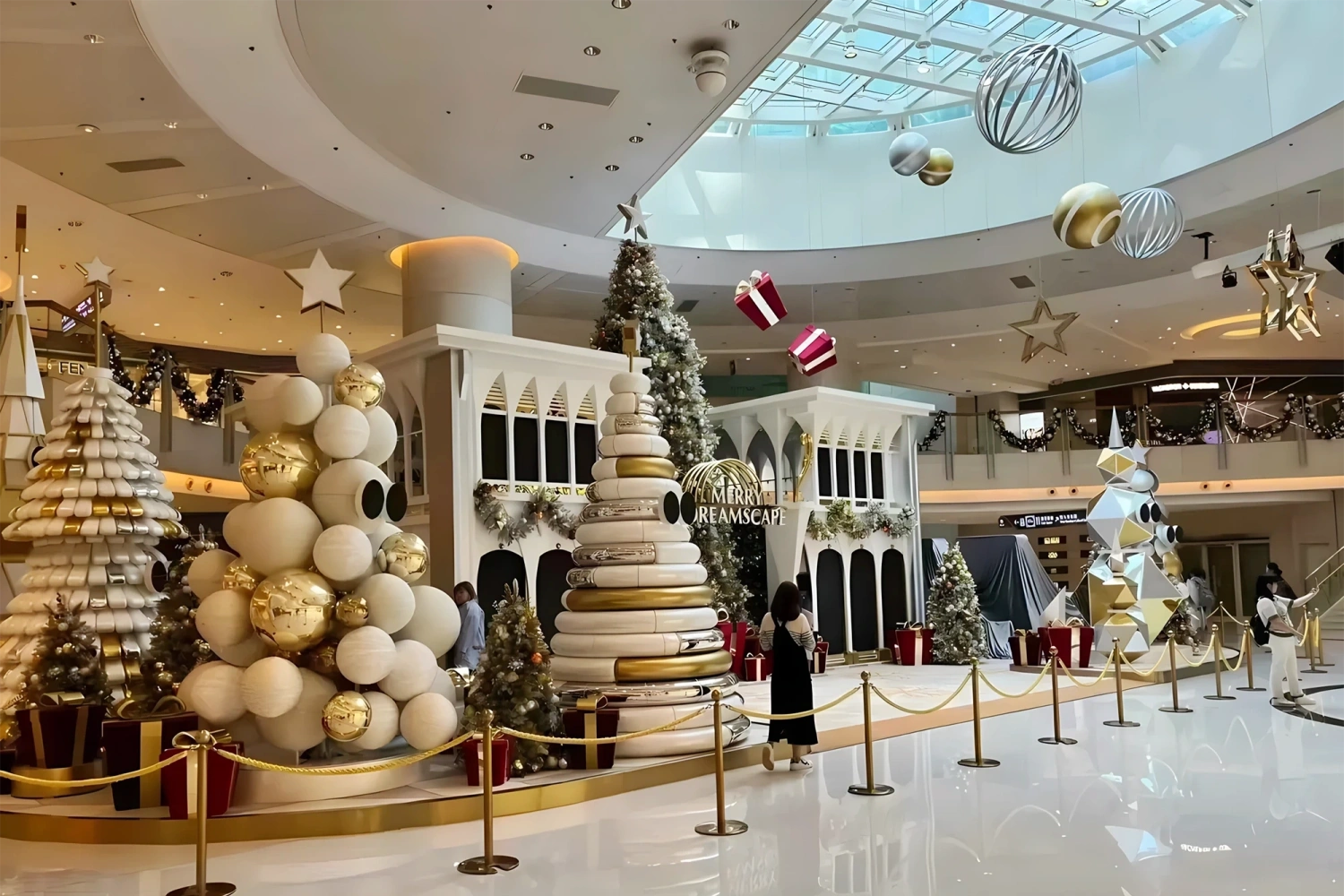
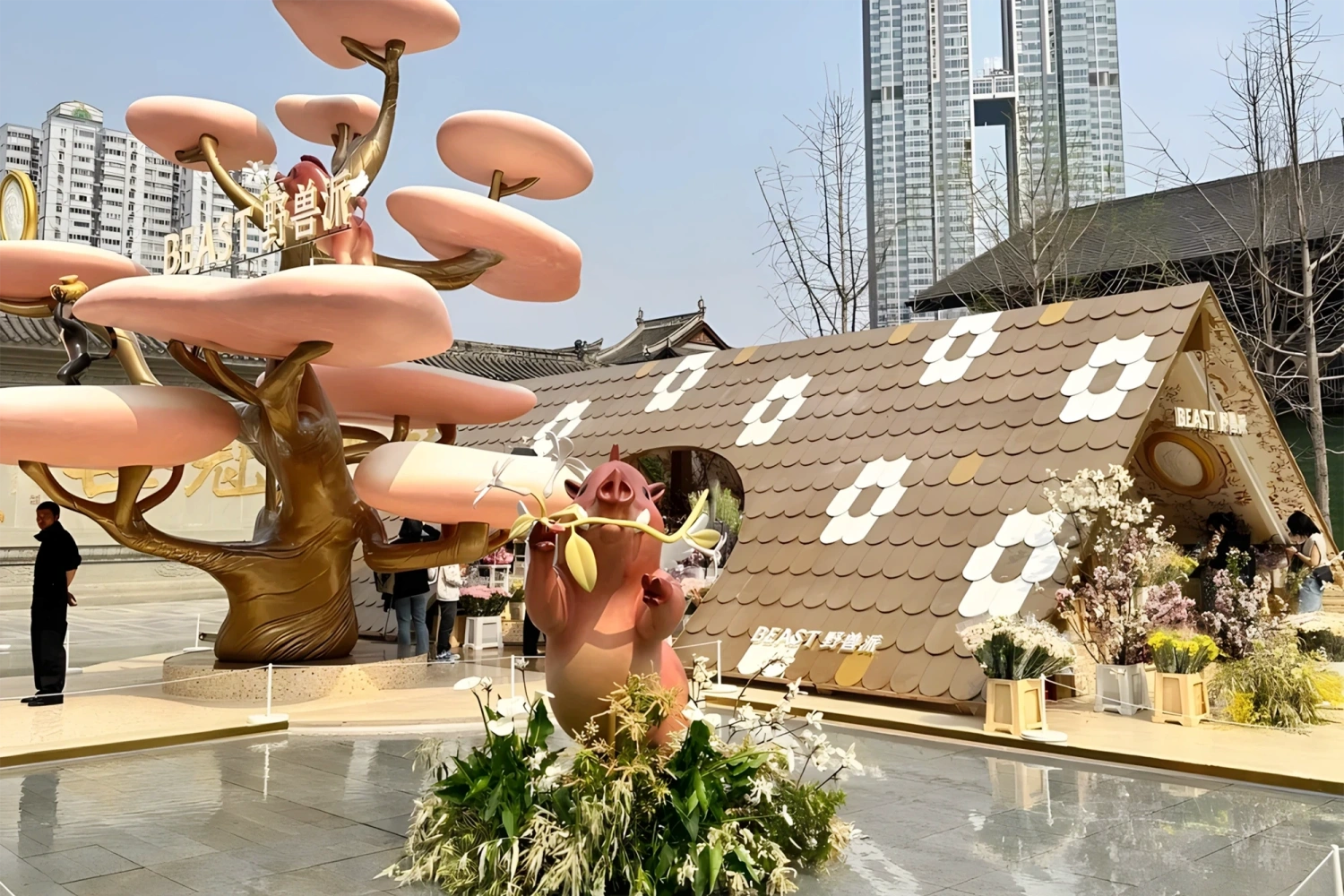
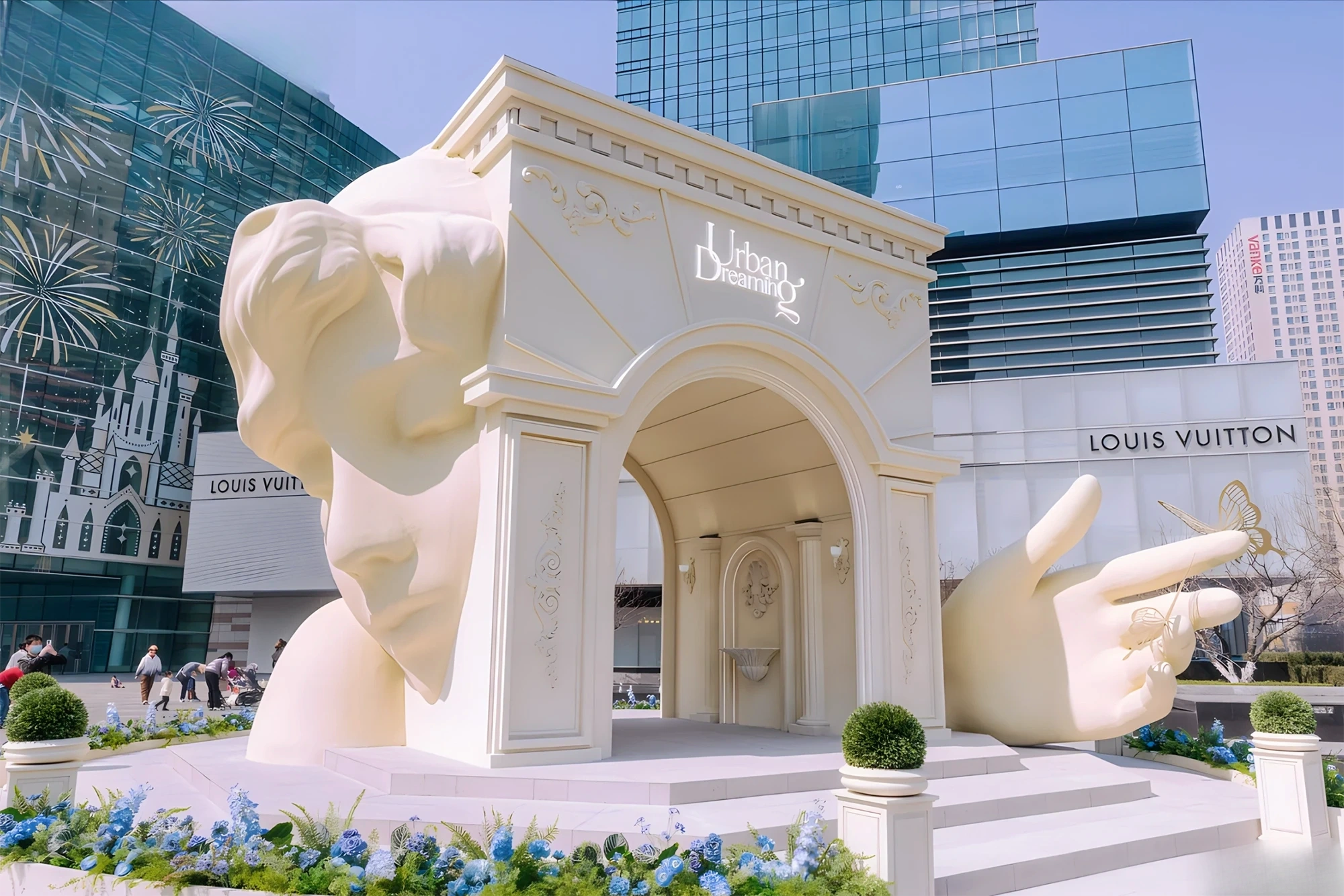
Large character pieces in mall atriums, entrance arches, photo-op installations, and the anchor visual pieces meant to come back season after season. When detail and reusability top the list, FRP is usually the first material we reach for.
Foam carving works with expanded polystyrene (EPS) or extruded polystyrene (XPS), shaped by hot-wire cutting, CNC carving, or hand-finishing, then sealed with a hard coating. It’s the go-to answer when a festive install or pop-up needs to move fast without blowing the budget.
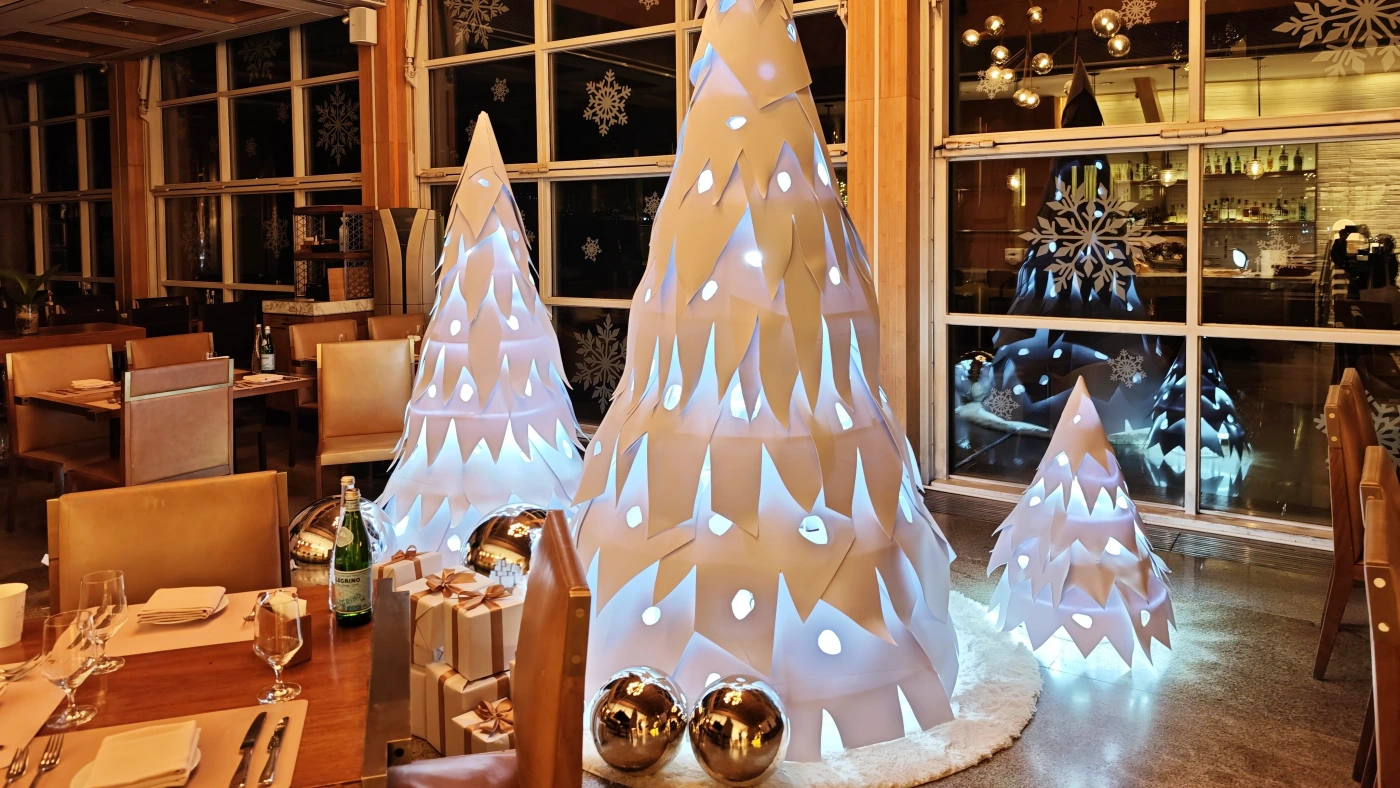
Genuinely light: even large-volume pieces stay light, which cuts transportation and rigging costs significantly and makes it a natural fit for upper-level mall spaces or suspended installations.
Fast turnaround: CNC and hot-wire cutting churn out large forms quickly — ideal when the deadline is tight or the run is short-term.
Budget-friendly: the raw material itself is cheap, which suits budget-conscious projects or anything that’s only expected to see one Christmas.
Plenty of detail: high-density foam plus careful carving and coating gets you real texture and dimensional presence.
Modular by nature: sections can be built off-site and assembled on location, which simplifies both transport and end-of-life recycling.
Foam on its own isn’t structurally strong — it needs a hard shell (polyurea, an FRP skin, or a specialized hard-coat paint) to handle mall foot traffic and weather. Left unprotected outdoors, foam pieces typically last only 2 to 8 years, and fire ratings need attention early — mall projects commonly call for Class B1 flame-retardant treatment. Impact resistance comes down to coating quality, and overly delicate cantilevered forms are best avoided at the design stage.
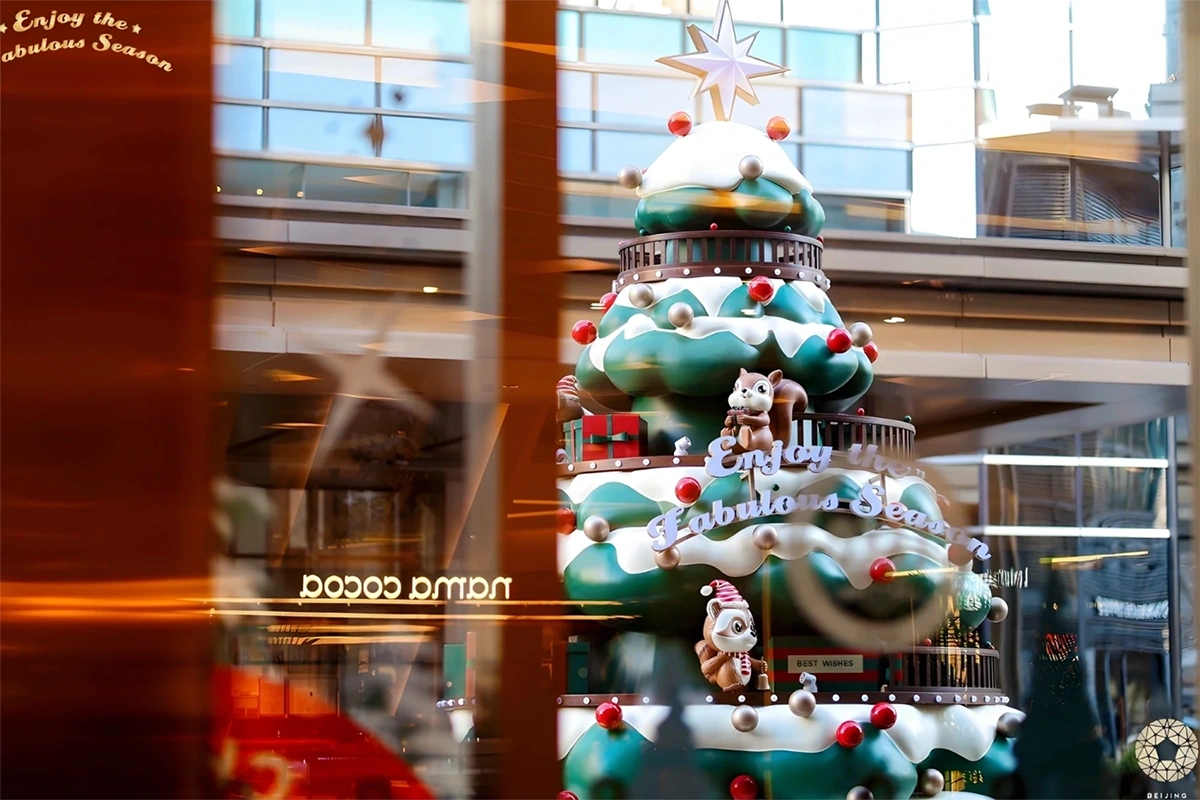
Giant snowmen, gift-box mountains, Christmas-tree backdrops, short-run pop-ups, entrance pieces that need to go up fast — anywhere budget and timeline are the deciding factors. Foam carving is particularly well suited to a “seasonal highlight” approach, where the design might change again next year.
Metal framing — usually carbon steel, galvanized steel, or aluminum profile — forms the support structure through welding, bolted connections, or truss systems. It’s rarely the visible finish; its job is structural safety, load-bearing, and wind resistance.
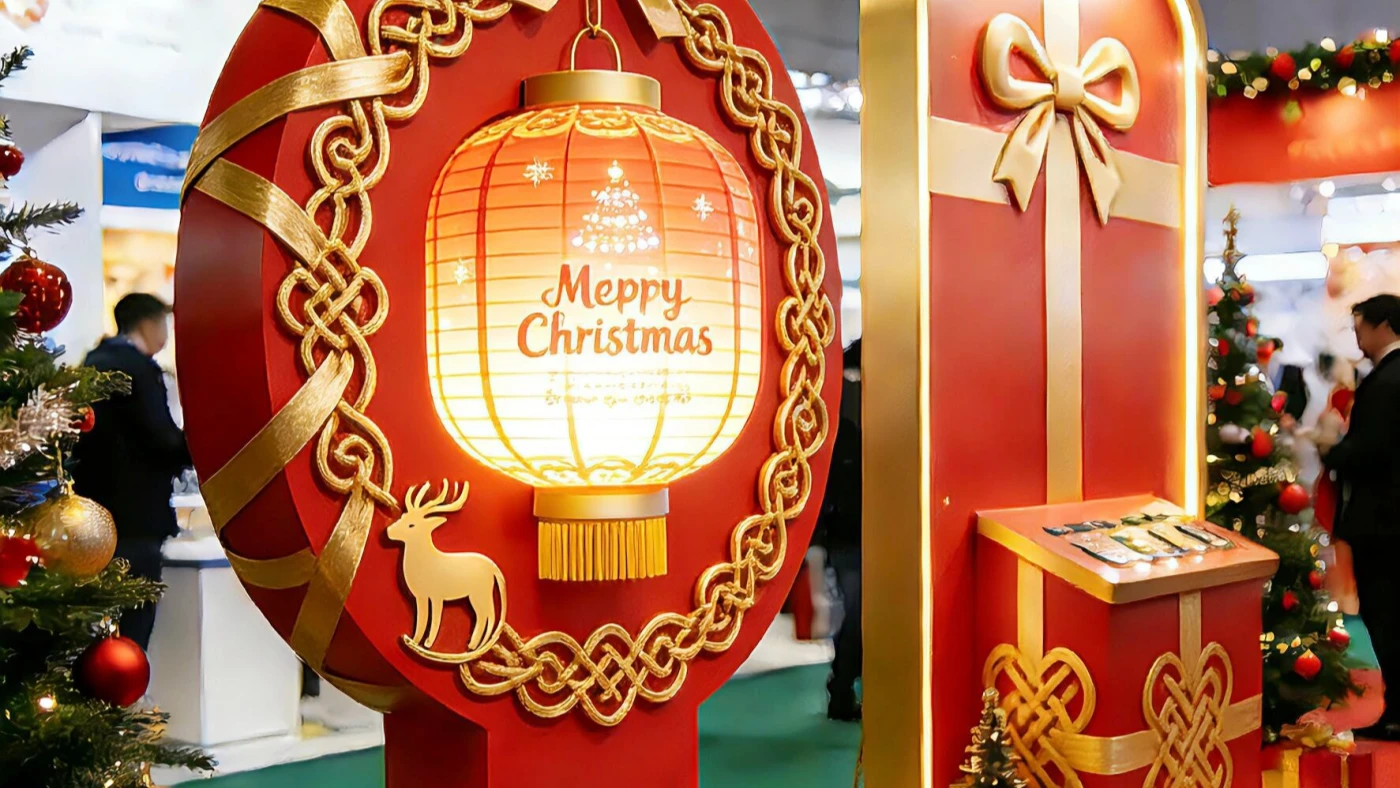
Serious structural strength and stability: wind loads, snow loads, and foot-traffic loads can be engineered precisely to meet mall and public-space safety codes.
Long service life: aluminum resists corrosion on its own, and galvanized or powder-coated steel holds up to sustained outdoor use — making metal a solid choice for a demountable, reusable base structure.
Modular by design: built to be taken apart and reassembled and reused across multiple seasons, which brings down the long-term cost of ownership.
Plays well with everything else: it’s the internal skeleton that carries FRP shells or foam-molded forms, giving you a “lightweight skin, strong bones” combination.
It’s heavy — steel especially — so plan for proper mechanical handling during transport and install. Fabricating complex organic curves in metal costs more and takes longer than in composite materials, and poor surface treatment opens the door to rust. Aluminum is lighter and more corrosion-resistant, but for very large spans or extreme loads, steel is still the more economical and dependable pick.
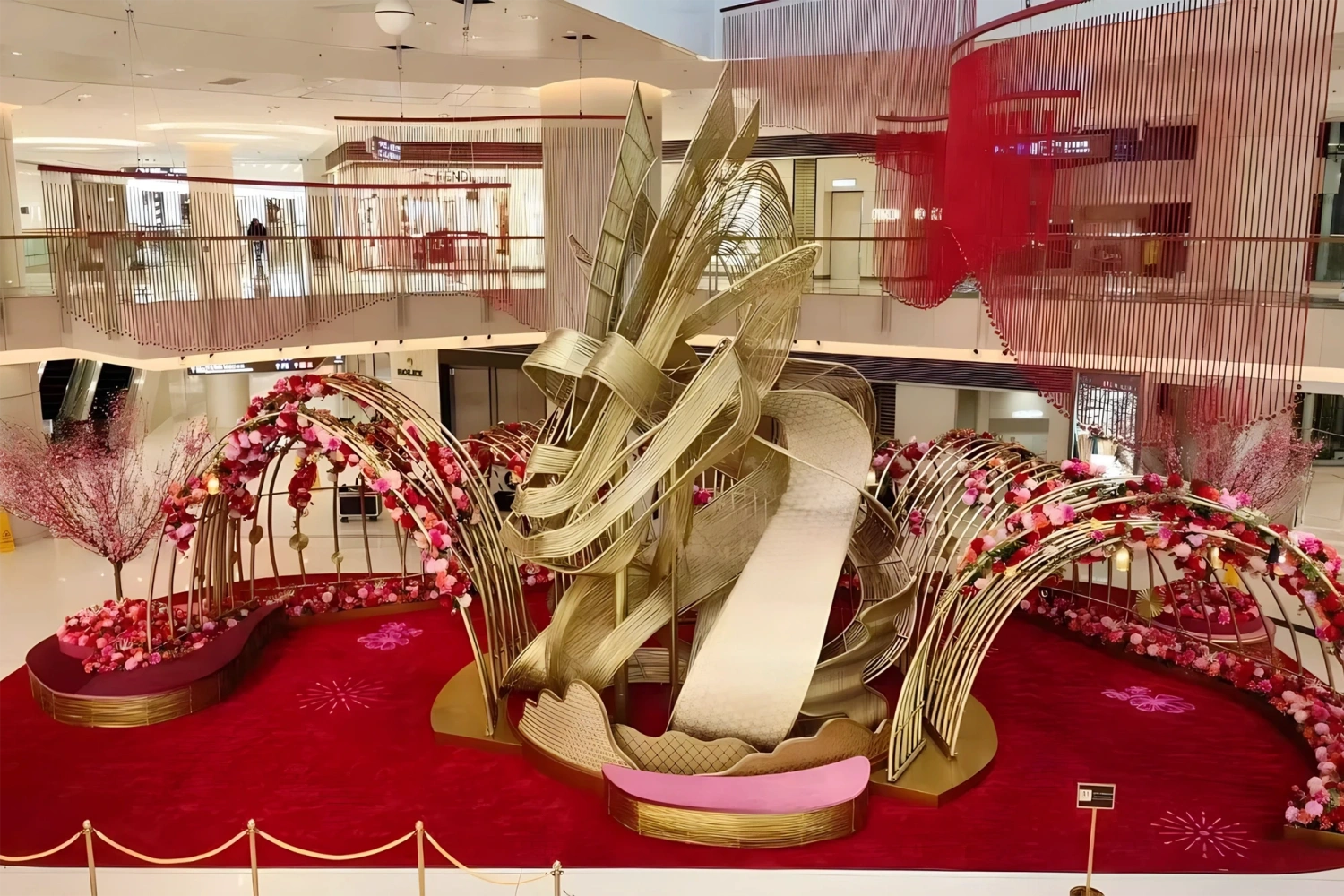
The skeleton inside oversized Christmas trees, archway and walkway structures, load-bearing interactive platforms, outdoor landmark installations facing serious wind loads, and any metal frame built for multi-year reuse. Practically every large-scale mall Christmas project uses metal framing at the critical load points to keep things safe.
More often than not, what makes or breaks an installation isn’t the material itself — it’s the process and the attention to detail behind it:
Fire Safety and Certification: for mall projects, confirm flame-retardant ratings and pull the relevant test reports before you commit to anything.
Transport and Install: large pieces need to be designed modular from the start, with lifting points and connectors built in so on-site welding is the exception, not the rule.
Surfaces and Lighting: Christmas displays live and die by their lighting, so the material choice has to account for fixture integration and heat dissipation from day one.
Reuse and Storage: demountable designs with standardized connectors are what actually bring the cost per season down over multiple years.
Local Codes: wind loads, snow loads, and rules around pedestrian interaction with outdoor installations vary a lot by country and region — materials and structure need to be built to whatever applies where the piece is going.
After years of building custom Christmas props, the pattern we see most often is clients getting fixated on unit price while losing sight of total lifecycle cost, and underestimating installation and transport until it’s too late. The manufacturers worth working with are the ones weighing material choices in at the concept stage — not just building to a drawing someone hands them.

There’s no single “best” material among fiberglass, foam carving, and metal framing — it comes down entirely to whether it fits the specific project’s goals. When visual impact, install efficiency, and long-term value all need to be balanced at once, getting the material comparison right — and knowing how to combine them — makes a real difference to whether the project succeeds. Whether you’re after an intricate, reusable character piece or a festive scene that needs to be up and running fast, choosing sensibly means your Christmas props work for your business instead of turning into a maintenance headache down the line.
If you’re already planning next season’s mall Christmas displays, we’re happy to talk through the right combination of materials and techniques based on your venue, your timeline, and your budget.

A: If the design is intricate, the piece needs to come back for multiple seasons, and the budget allows for it, fiberglass is the better bet. If you’re working at scale on a tight deadline for a single-season run, foam carving with a hard coating and flame-retardant treatment is the more sensible call. In practice, most projects end up using both.
A: For oversized installations, outdoor pieces facing serious wind loads, or anything that needs to bear interactive foot traffic, we’d strongly recommend one. For smaller indoor installations, the frame can often be simplified or left out — but structural calculations should still be run to confirm the piece is safe either way.
A: Yes. Both fiberglass and foam can be flame-retardant treated, and metal is non-combustible to begin with. What matters is confirming material grades and pulling test reports from the manufacturer up front, and building fire safety requirements into the design from day one rather than bolting them on afterward.
A: The upfront cost tends to run a bit higher, but you get a real return in safety, durability, and install efficiency. Once you factor in reuse over multiple seasons, the total cost of ownership usually comes out lower — which is exactly why this approach makes sense for chain stores or any project rolling out across several locations at once.
A: A manufacturer worth working with will ask about the use case, install conditions, reuse plans, and local code requirements before quoting anything — not just hand you a price for a single material and call it done. Look for one that can offer structural recommendations, coating solutions, and examples from comparable past projects; that’s usually the clearest sign they know what they’re doing.
July 27, 2026
July 27, 2026
July 27, 2026
July 27, 2026
July 27, 2026
July 27, 2026
July 27, 2026

July 26, 2026

July 26, 2026
July 26, 2026
July 26, 2026
July 26, 2026
July 26, 2026
July 26, 2026
July 26, 2026

July 26, 2026

July 26, 2026
July 25, 2026
July 25, 2026

July 25, 2026