October 15, 2026 Ixmore Art
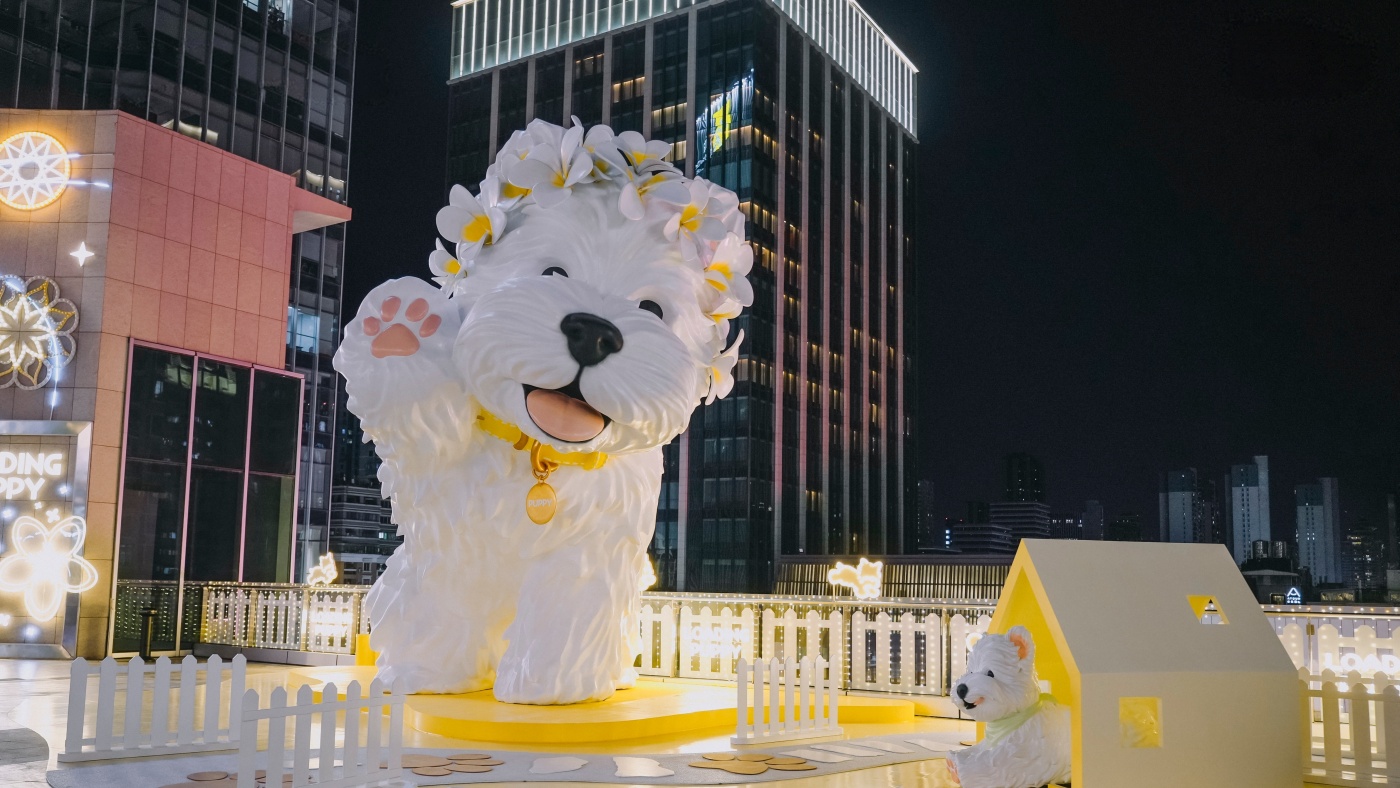
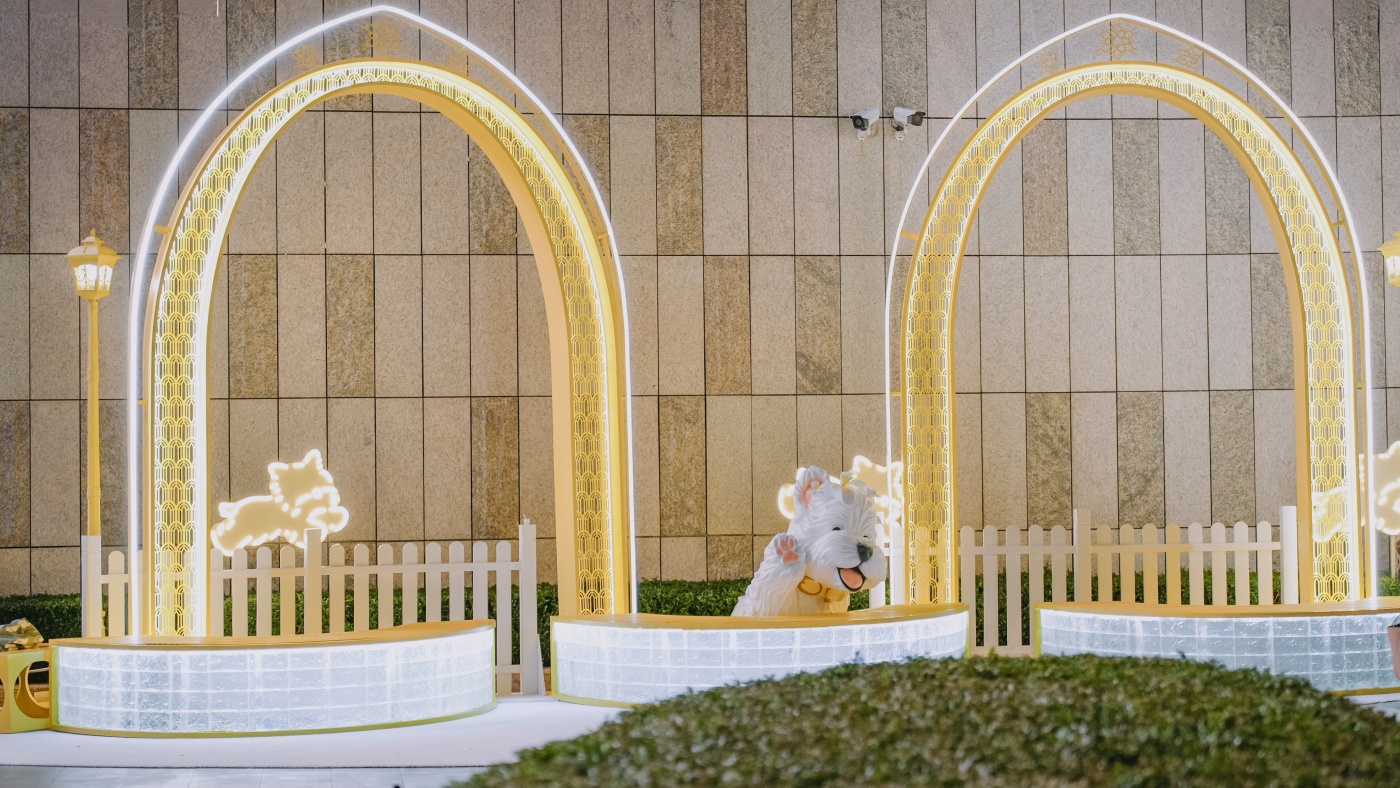
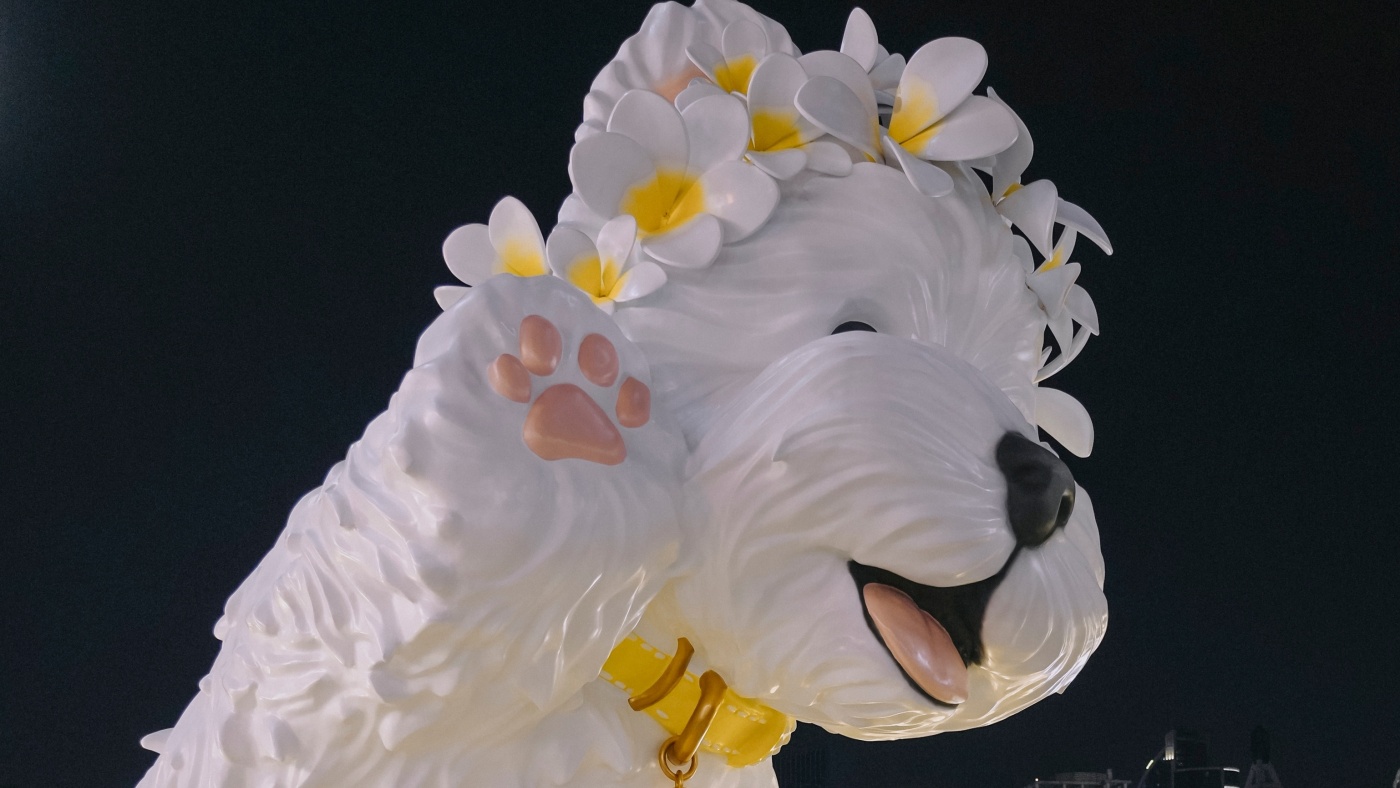
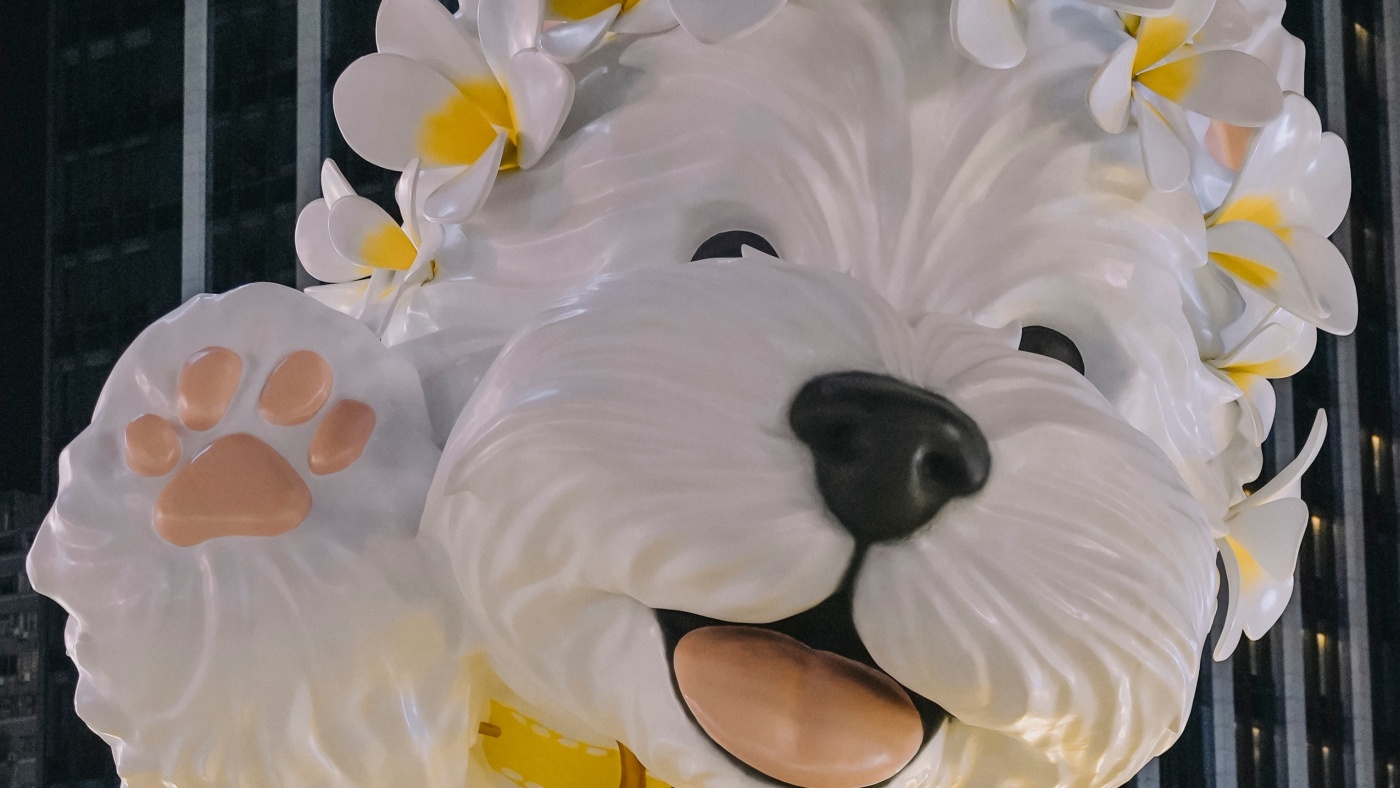
On the rooftops of commercial complexes and at large-scale events, themed installations have become an effective way to attract visitors, increase foot traffic, and create memorable photo opportunities. The LOADING PUPPY project is a striking example of custom-made installation art: a giant white West Highland White Terrier sculpture several meters tall, wearing a frangipani wreath and lifting one front paw to reveal pink paw pads. A yellow cottage, white fence, and illuminated archway complete the scene, turning it into a distinctive landmark against the city skyline after dark. In this article, Ixmore Art takes a closer look at the technical process behind this large-scale installation, from design development and fabrication to protective packaging, international shipping, and on-site installation. Drawing on actual project footage, this case study offers practical insights for overseas commercial property developers, brand event organizers, and buyers sourcing installations for commercial spaces.
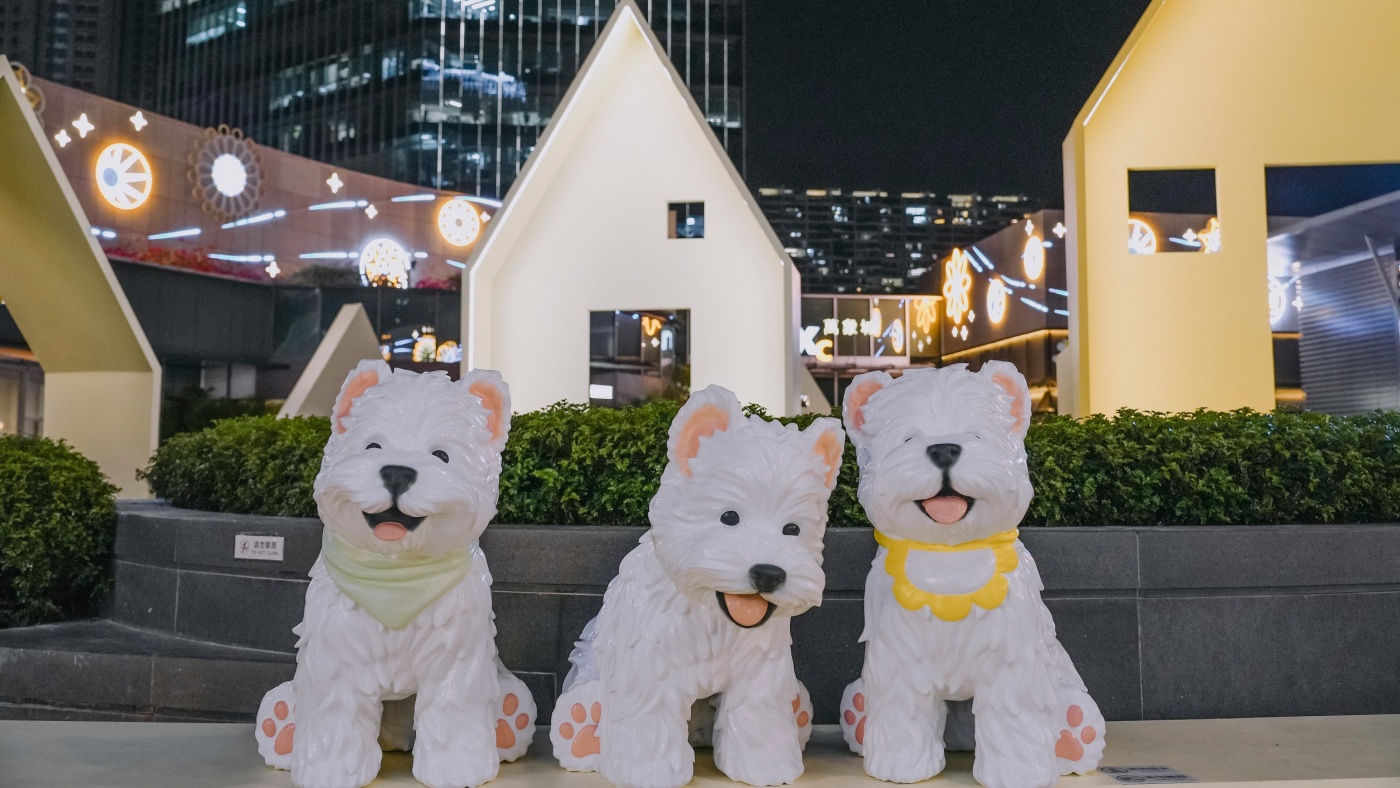
Set on a rooftop terrace surrounded by high-rise office buildings and a commercial complex, the installation relies heavily on its nighttime lighting to shape the visitor experience. The client’s brief centered on three priorities: the main sculpture needed enough scale and visual impact to stand out; the overall scene had to encourage visitors to take photos and interact with the installation; and every element needed to withstand outdoor conditions without compromising public safety. Projects of this kind require visual design, structural integrity, and site-specific installation requirements to be considered together from the earliest design stages.
The on-site photos show that the scene is made up of several coordinated elements: the giant puppy sculpture, frangipani garlands, a yellow collar with a metal tag, three smaller interactive photo-op sculptures, a yellow-themed cottage, a white illuminated fence, a glowing archway, and three-dimensional letters spelling out “LOADING PUPPY.” At the start of a project, we break the concept down into individual components and determine the appropriate materials and fabrication methods for each. This planning stage is essential to keeping custom art installation projects on schedule.
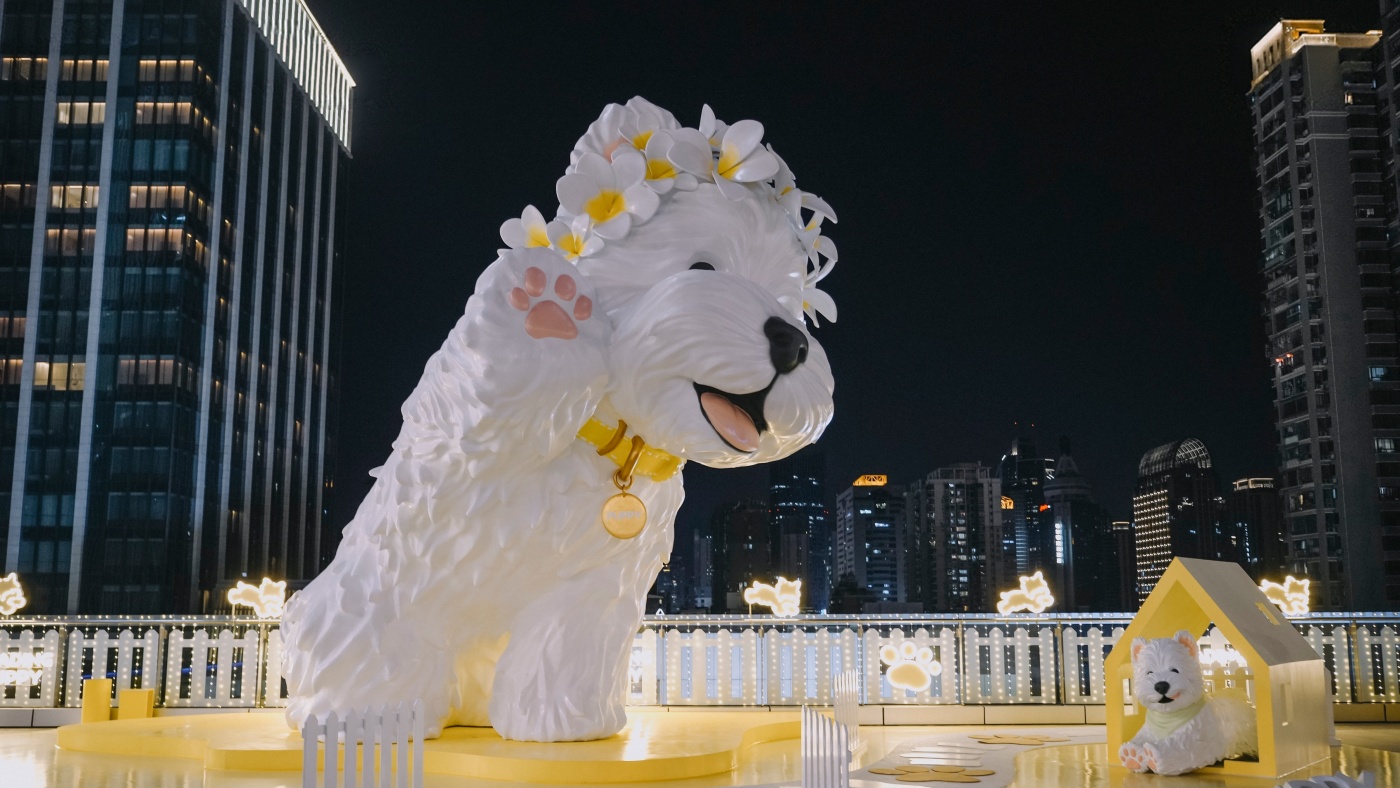
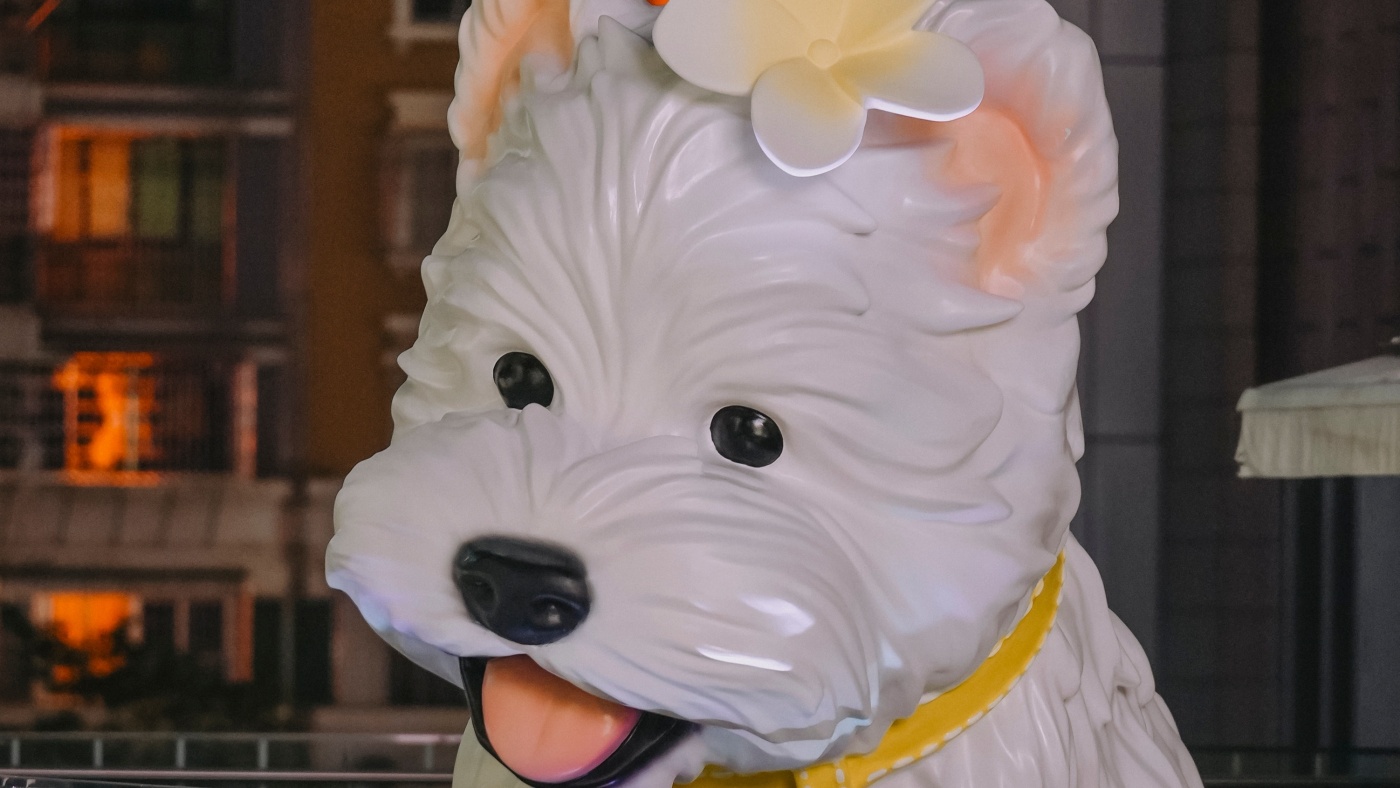
Once the design concept has been approved, we develop a 3D model and produce scaled drawings of the individual sections. The proportions of the puppy’s head, front paws, and body are central to its character, so we compare the model with the reference images and fine-tune details such as the distance between the eyes, the size of the nose, and the curve of the mouth. For the main sculpture, we typically produce a scaled prototype first, giving the client an opportunity to approve the form and colors before full production begins.
The safety of a large outdoor installation depends just as much on what cannot be seen as on its exterior finish. The main puppy sculpture is built around an internal steel framework and finished with an outer fiberglass shell. During design development, we assess the center of gravity, base connections, and resistance to wind loads. Because the puppy is shown with its front paws raised, the cantilevered sections need additional reinforcement. Rooftop projects also require careful consideration of the building’s floor load capacity. We therefore provide the client with base loading information and the locations of embedded anchors—essential details for the safe fabrication and installation of large-scale structures.
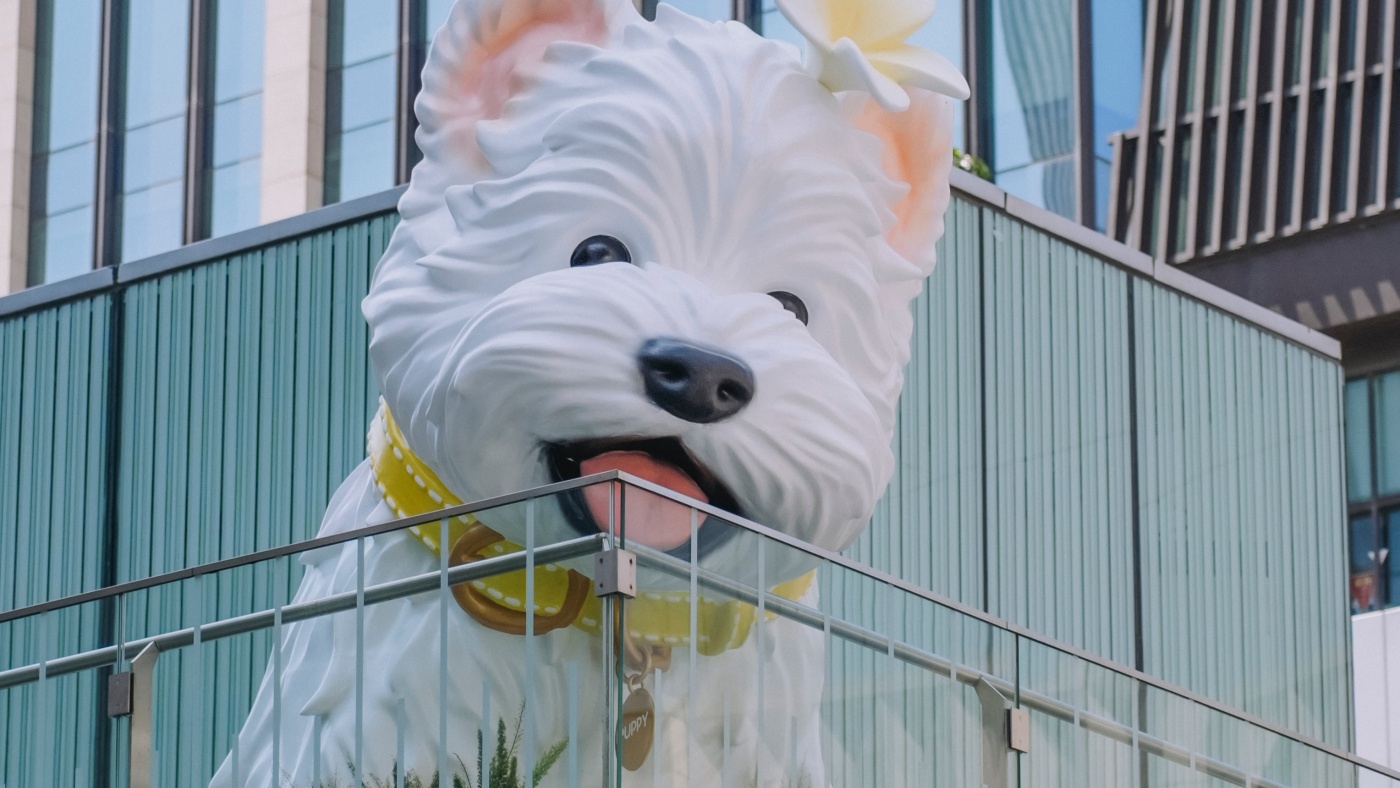
The main sculpture is fabricated using fiberglass-reinforced plastic (FRP). Made from resin and glass fibers, FRP combines strength with relatively low weight, making it well suited to large outdoor sculptures with complex forms. The process begins with a prototype made from foam or clay, followed by mold making. The sculpture is then laid up in separate sections and assembled into the finished piece. Producing the sculpture in sections also makes it easier to pack, ship, and transport as a modular installation.
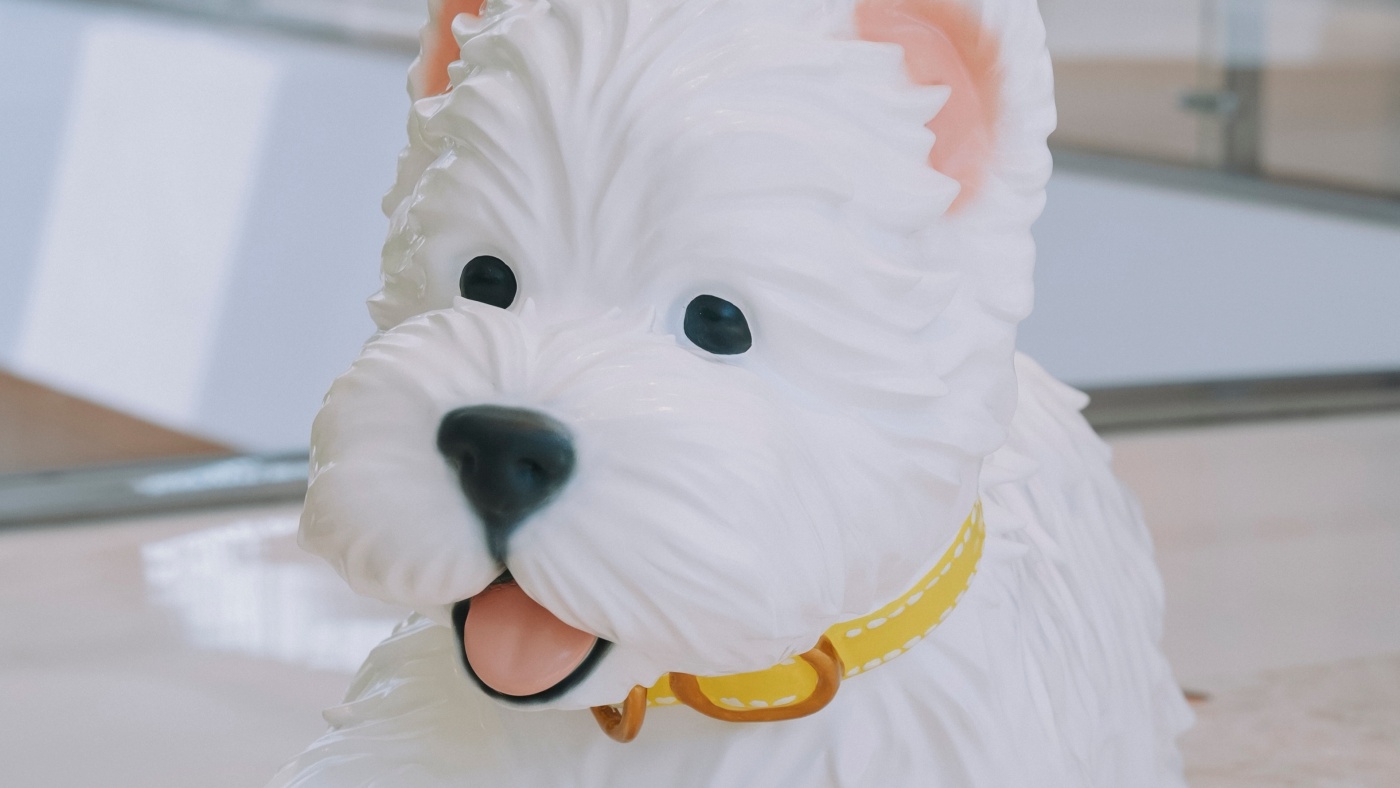
The West Highland White Terrier’s fluffy coat is one of the sculpture’s defining features. As shown in the project images, the surface incorporates layered fur detailing, while the final finish is refined through sanding, filling, and spray painting. White surfaces show imperfections particularly easily, so the finishing process must carefully control color consistency, paint runs, and visible seams. The pink gradient inside the ears and the hand-painted paw pads also call for skilled, detail-oriented finishing work. For outdoor installations, a weather-resistant clear coat helps protect the surface against UV exposure and rain.
Such as the Flower Wreath and Collar The frangipani wreath is made from dozens of individual artificial flowers. Each petal’s thickness and the transition from white to yellow need to be considered during color matching. The stitching on the yellow collar and the metallic finish of its tag are recreated through precise detailing and an electroplated effect. These smaller components are generally fabricated separately and fitted on-site to reduce the risk of damage during transit.
An installation needs to look compelling in daylight and work just as well after dark. Warm-white LED strips are integrated into the fence, while the archway combines openwork carved panels with outline lighting. An illuminated sculptural feature in the silhouette of a leaping puppy adds another focal point. All lighting fixtures must meet the waterproofing requirements for outdoor use, and the electrical system is divided into separate power zones so faults can be identified and addressed quickly during on-site testing. The way the lighting works with the physical sculptures is a major factor in making a themed installation an appealing nighttime photo destination.
Before shipment, we carry out a full pre-assembly at the factory to check panel joints, base mounting holes, lighting circuits, and color consistency. We also record a pre-assembly video for the client to review and approve. Quality checks cover dimensional accuracy, structural connections, power-on aging tests, and surface defects. This step helps identify issues before shipping and significantly reduces the need for rework on-site—a process refined through years of producing custom installations for commercial spaces.
Each section of a large sculpture needs several layers of protection. We first cover the surface with scratch-resistant protective film, then add cushioning such as bubble wrap and foam before securing the component in a reinforced wooden crate or a purpose-built frame. Export wooden packaging must also comply with the applicable requirements of International Standard for Phytosanitary Measures No. 15 (ISPM 15). Compliance typically involves heat treatment or fumigation, along with the required marking. Each crate is numbered in installation sequence and supplied with a corresponding packing list to make receiving and reassembly more straightforward.
Depending on the destination and shipment requirements, we arrange full container load (FCL), less than container load (LCL), or air freight. We also recommend using the International Chamber of Commerce’s Incoterms to clarify each party’s responsibilities, including the points at which costs and risks transfer under terms such as Ex Works (EXW) and Free On Board (FOB). Agreeing on these details in advance helps prevent misunderstandings later in the process. We can also assist with export customs documentation and provide shipment tracking information.
Rooftop terrace projects often have tight installation windows. Before work begins, we coordinate with the property owner to confirm the lifting route, elevator dimensions, floor load capacity, and electrical connections. Installation drawings are prepared in advance so the team can plan the work around the site’s access and operating requirements.
On-site work generally follows this sequence: base positioning, steel-frame anchoring, shell assembly, seam repair, touch-up painting, lighting connections, and final commissioning. For sculptures made in multiple sections, the joints are filled and repainted on-site so they blend as seamlessly as possible with the surrounding surface. Our installation team is familiar with working at height and following safety requirements in public areas. Once the installation is complete, we provide an acceptance checklist and maintenance instructions.
For overseas clients, the challenge of delivering a custom art installation is not limited to any one stage. Success depends on how effectively design, fabrication, logistics, and installation work together. Ixmore Art specializes in custom installations and props for commercial spaces, providing an integrated service that covers design development, factory fabrication, packaging and shipping, and on-site supervision. The LOADING PUPPY project shows how a disciplined process can bring even a large, highly detailed installation with complex shapes from concept to completion. If you are planning a similar seasonal display or brand activation, contact Ixmore Art to discuss a project-specific installation proposal and quotation.
The schedule depends on the installation’s size and complexity. For a large-scale project, the full process—including detailed design, sample approval, fabrication, shipping, and installation—typically takes anywhere from several weeks to several months, depending on the project plan.
Safety and durability are addressed through several measures: engineering the internal steel framework to support the required loads, using weather-resistant materials such as fiberglass for the outer shell, and applying a UV-resistant surface coating. After installation, connection points and lighting fixtures should also be inspected regularly.
Yes. Large sculptures can be divided into multiple modules for transport. Each module is packed and numbered individually, then reassembled on-site in the correct sequence. This modular approach makes transportation easier and helps reduce the risk of damage.
We can provide remote installation guidance or arrange for an installation team to travel to the site. The best approach is determined in consultation with the client, taking the project location and specific requirements into account.
Yes. Clients can provide design drafts, reference images, or brand assets. We then develop the 3D model, coordinate sample approval, and proceed with production once the design is confirmed.
July 27, 2026
July 27, 2026
July 27, 2026
July 27, 2026
July 27, 2026
July 27, 2026
July 27, 2026
July 26, 2026
July 26, 2026
July 26, 2026
July 26, 2026
July 26, 2026
July 26, 2026
July 26, 2026
July 26, 2026
July 26, 2026
July 26, 2026
July 25, 2026
July 25, 2026
July 25, 2026