October 26, 2026 Ixmore Art
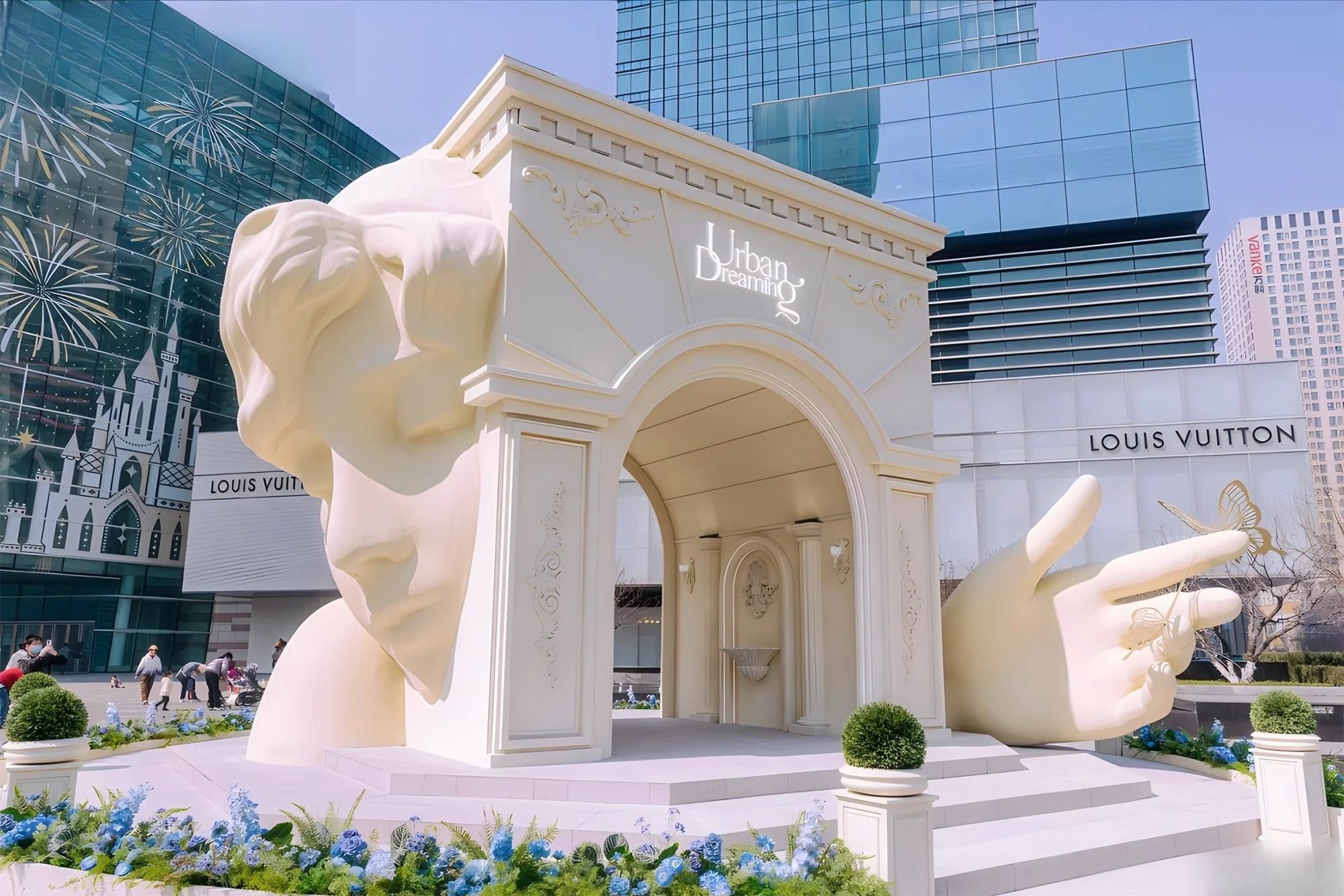
For shopping malls and commercial plazas,High-quality custom commercial space installations can quickly create memorable scene points, Boost foot traffic appeal and social sharing potential. This giant Tom and Jerry sculpture project is a representative example of a full-service, IP-themed commercial installation, covering every stage from 3D design and factory production to modular transportation, on-site installation, and final acceptance. Drawing on our experience as a custom props manufacturer, this article outlines the project’s technical workflow from digital modeling to real-world installation and offers a practical reference for similar commercial projects.
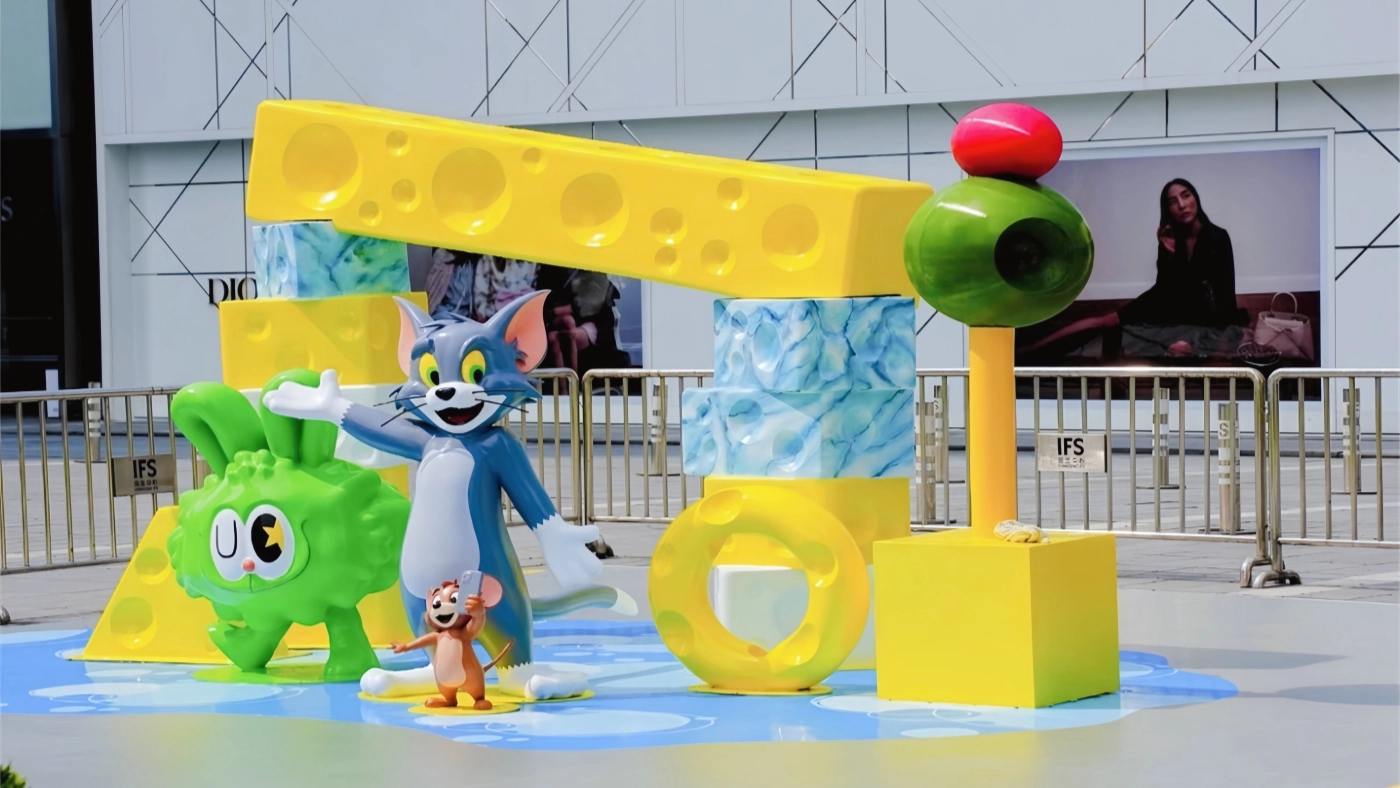
The project was developed for a premium commercial plaza in a central business district. It comprised two main zones: an outdoor feature area and an indoor interactive area, with more than ten installations, including a giant centerpiece sculpture, themed arches, interactive photo spots, and display props. The project had three core requirements. First, the classic IP characters had to be faithfully recreated so that their designs remained lively, recognizable, and appealing to visitors of all ages. Second, the outdoor installations needed to withstand long-term exposure and meet durability and structural-safety requirements under urban conditions, including temperature fluctuations, rain, and strong winds. Third, the full project—from manufacturing through on-site installation—had to be completed within the agreed schedule and coordinated with the mall’s themed-event timetable. Projects involving multiple locations and both indoor and outdoor installations place considerable demands on a factory’s end-to-end project management capabilities. This kind of multi-point,, Across indoor and outdoorShopping mall installation productionProject,well-coordinated production planning, and an experienced on-site installation team.
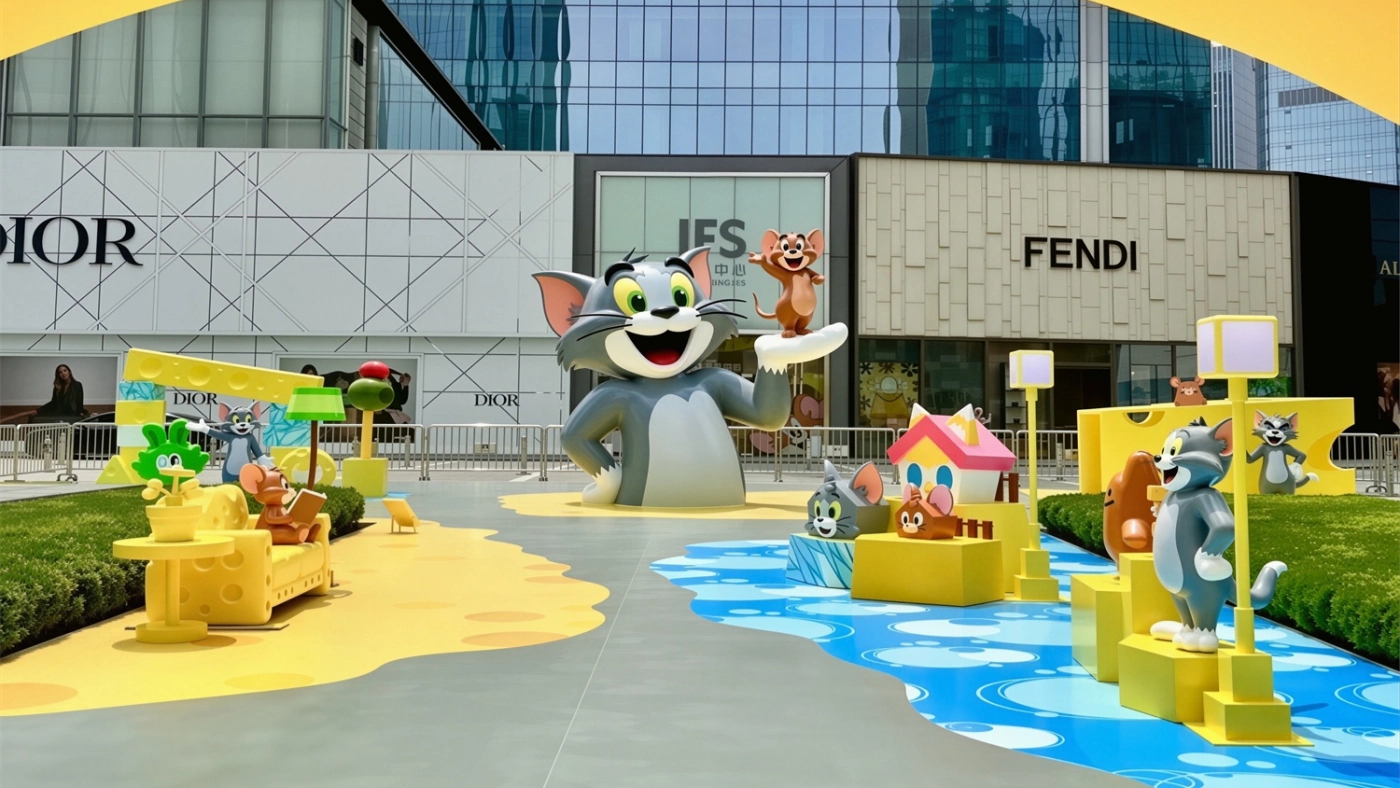
The final quality of a custom installation for a large commercial space depends heavily on detailed design and process selection at the outset. At the project-launch stage, our design and engineering team conducts a comprehensive feasibility review and optimizes the design across key dimensions. This helps identify potential issues early and reduces the risk of unexpected complications during manufacturing or installation.
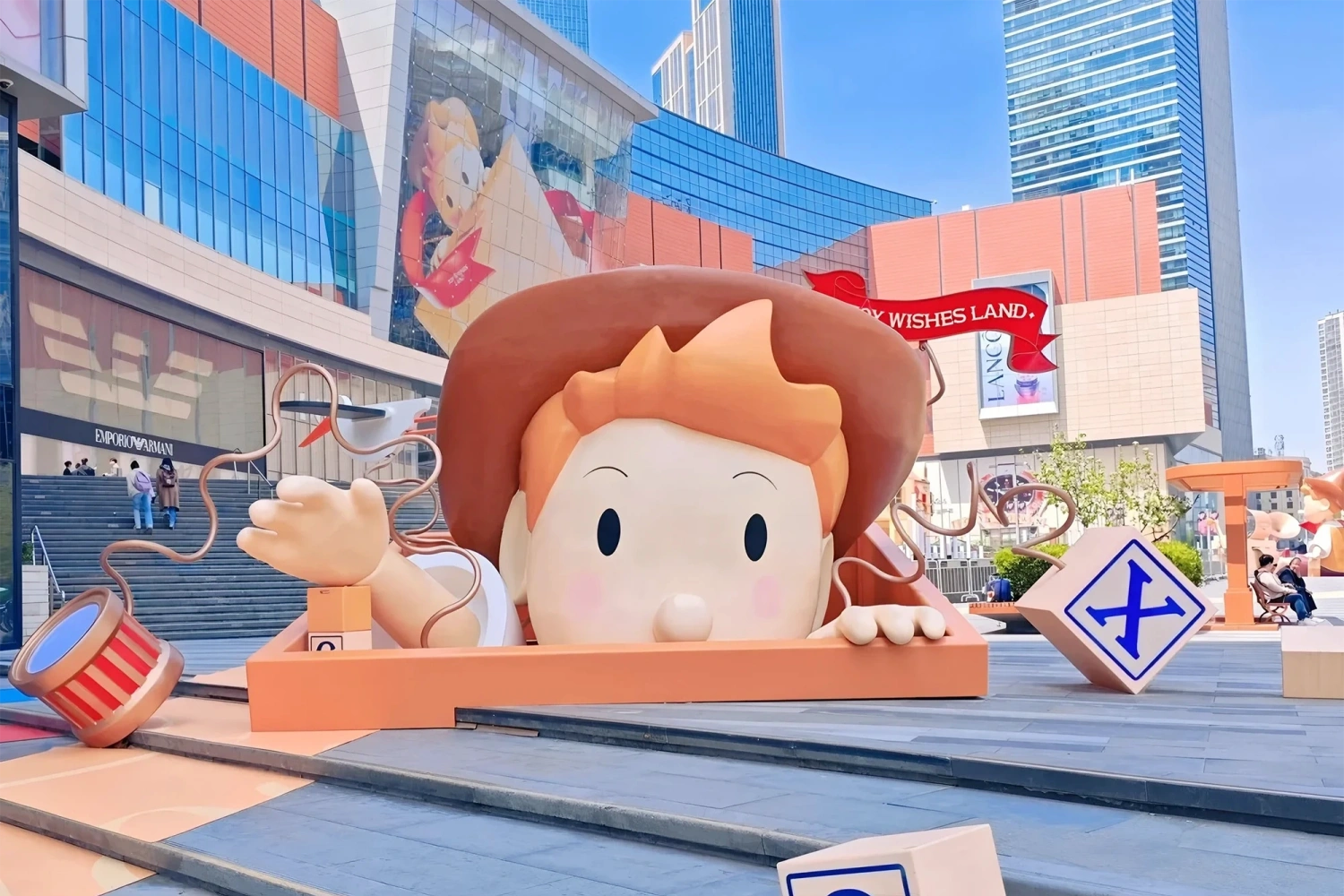
Turning a two-dimensional IP character into a three-dimensional sculpture involves far more than simply extruding a flat design. Following the IP owner’s official visual guidelines, our 3D designers refine the proportions of the head, facial features, and body contours from multiple viewing angles. This ensures that each sculpture looks balanced from low-angle, eye-level, and long-distance viewpoints. For giant centerpiece sculptures several meters tall, we pay particular attention to head and hand proportions and slightly enlarge selected facial features to maintain visual clarity for visitors viewing the sculpture from ground level. The dimensions of interactive photo spots are also optimized with visitor ergonomics in mind, helping create comfortable, photogenic viewing angles.
For indoor and outdoor applications, we select materials and finishing processes according to the installation’s intended use, balancing performance, durability, and cost.
The primary structures in outdoor areas are produced using custom fiberglass sculpture techniques. Fiberglass, or fiber-reinforced plastic (FRP), offers a useful combination of strength, low weight, and resistance to corrosion and UV exposure, making it a common choice for large outdoor installations. Its low density can help reduce the load on buildings, while its impact resistance and weather-resistant finish support long-term outdoor use.
For indoor interactive props and display installations, we use fiberglass substrates with more refined surface finishes. Edges and touchpoints are rounded where appropriate, and selected interactive surfaces receive anti-slip treatment to accommodate frequent visitor contact. All installation surfaces are finished with automotive-grade paint. For outdoor versions, UV-resistant additives are incorporated into the coating system to help maintain color stability over time.
Structural safety is a fundamental requirement for large outdoor installations. Our structural engineers carry out project-specific mechanical calculations for each major sculpture. The internal frame uses Q235-grade steel, and the steel sections and welding specifications are selected according to the installation’s height, geometry, and wind-exposed area. For large sculptures installed in urban commercial areas, the structural design must account for demanding wind conditions, stability, and resistance to overturning, with seismic considerations addressed where applicable. The project’s giant centerpiece uses a three-part structural solution: an internal steel frame, an external fiberglass shell, and a weighted base foundation. This arrangement provides stability while avoiding damage to the mall’s existing floor and supports compliance with the venue’s safety-management requirements.
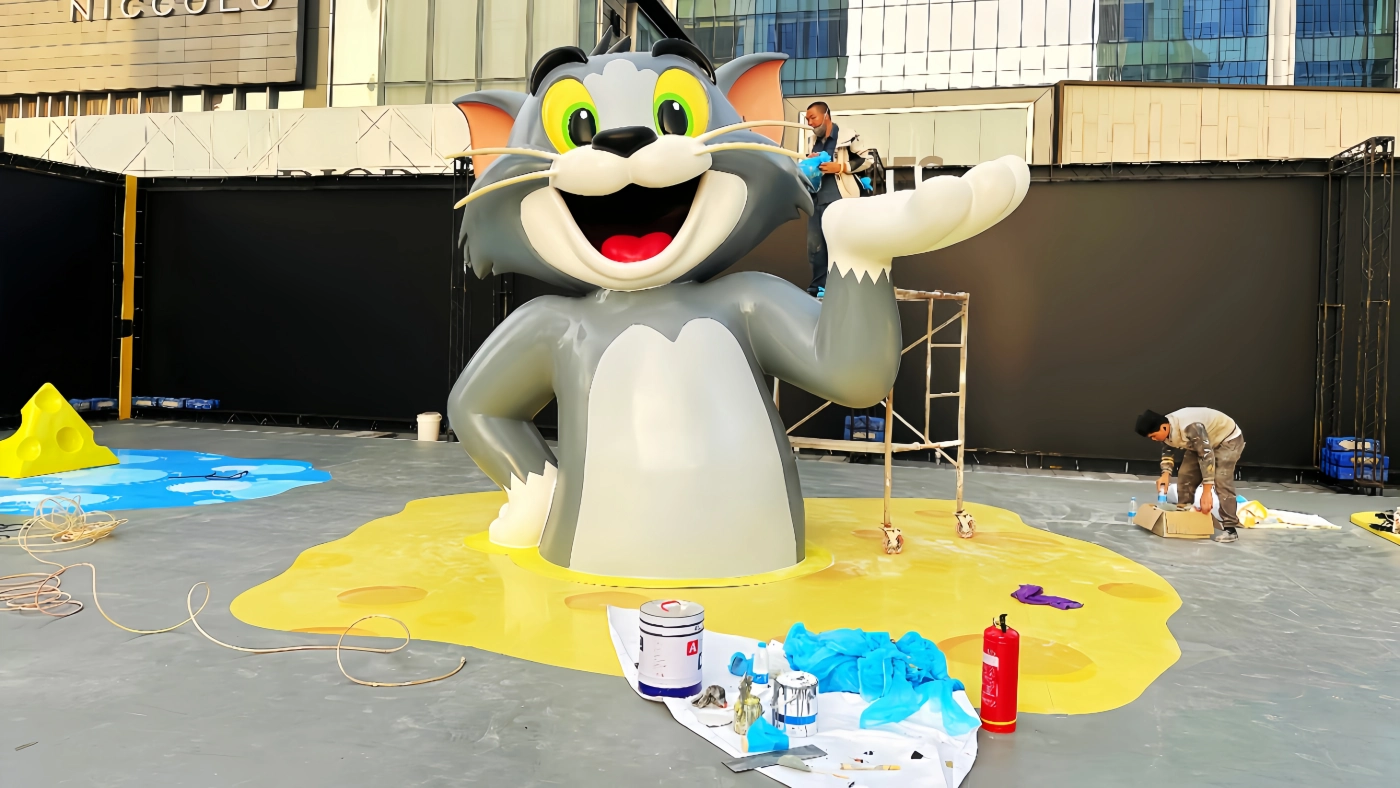
As a commercial props manufacturer with an integrated production workflow, we carry out the core manufacturing processes in our own facility. Standardized process controls help maintain product quality and keep delivery schedules on track. Because this project included more than ten installations of different sizes, we used a shift-based parallel production model to shorten the overall lead time without compromising quality.
The initial sculpture forms are produced using CNC carving equipment. Foam is carved at a 1:1 scale based on the approved 3D model to maintain dimensional accuracy. Once the client approves the foam prototype, mold production begins. Large installations use sectional molds, with alignment features at the joints to support accurate assembly. For detailed IP features—including facial expressions, whiskers, and fingertips—experienced sculptors carry out hand-finishing to give the characters a more lifelike appearance and avoid the overly uniform look that can result from machine processing alone.
Fiberglass components are produced using a multi-layer hand lay-up process, with close control over the resin-to-fiberglass ratio. Each layer of fiberglass mat is thoroughly saturated and consolidated to minimize air bubbles and the risk of delamination. The internal steel structure and connecting hardware are integrated during molding, with multiple fixing points connecting the frame to the fiberglass shell to create a secure assembly. Our fiberglass sculpture facility includes a dedicated, controlled molding workshop. Molding is carried out under stable temperature and humidity conditions to promote consistent curing and reduce the risk of material distortion caused by environmental fluctuations.
Each molded component undergoes three rounds of sanding and two applications of filler to create a smooth surface free of pinholes and other visible imperfections. The components then move to the painting stage, where colors are matched to the Pantone codes specified by the IP owner. The finishing sequence consists of a primer, a topcoat, and a protective clear coat. For outdoor installations, the paint-film thickness is controlled within the specified 60–80 μm range to support scratch resistance and weather durability. A color reference sample is retained for each painting batch to help maintain consistency during future touch-ups and maintenance.
For large installations manufactured in sections, we conduct a full-scale pre-assembly in the factory before shipment. This allows us to inspect joint gaps, structural stability, surface continuity, overall shape, and color consistency. This procedure reflects the practical experience we have built up through years of producing giant cartoon sculptures. Factory pre-assembly helps identify and resolve issues before delivery, reducing the complexity and risk of on-site installation and helping protect the project schedule. After the pre-assembly is approved, each module is labeled with a unique number, and the assembly sequence is documented to guide the installation team on site.
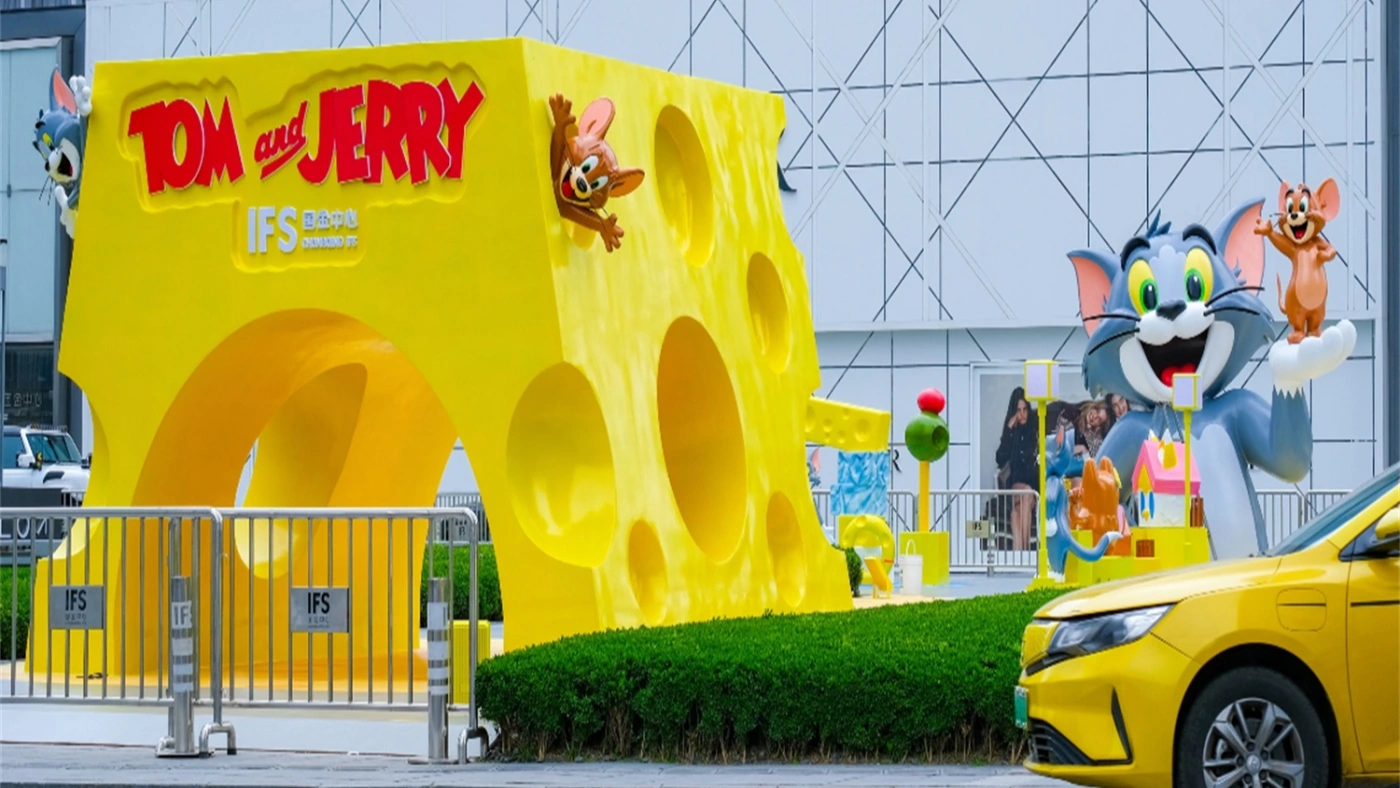
Transport is a critical stage in the delivery of large commercial installations. Poorly planned disassembly or inadequate packaging can lead to damage in transit. For this project, we developed a dedicated modular transport plan. Each installation was divided into sections according to its shape and dimensions, with joints positioned in less visible areas wherever possible to minimize their impact on the finished appearance. Each module received custom protective packaging. Multiple layers of EPE foam and bubble wrap were used on the inside to prevent scratches, while custom solid-wood shipping frames with corner protectors provided additional protection against impacts during transit. For projects outside the local area, we select logistics providers experienced in transporting oversized equipment and arrange dedicated trucks with full cargo insurance. During loading, modules are positioned according to their weight and fragility, with delicate components packed separately to help ensure that every item arrives safely at the installation site.
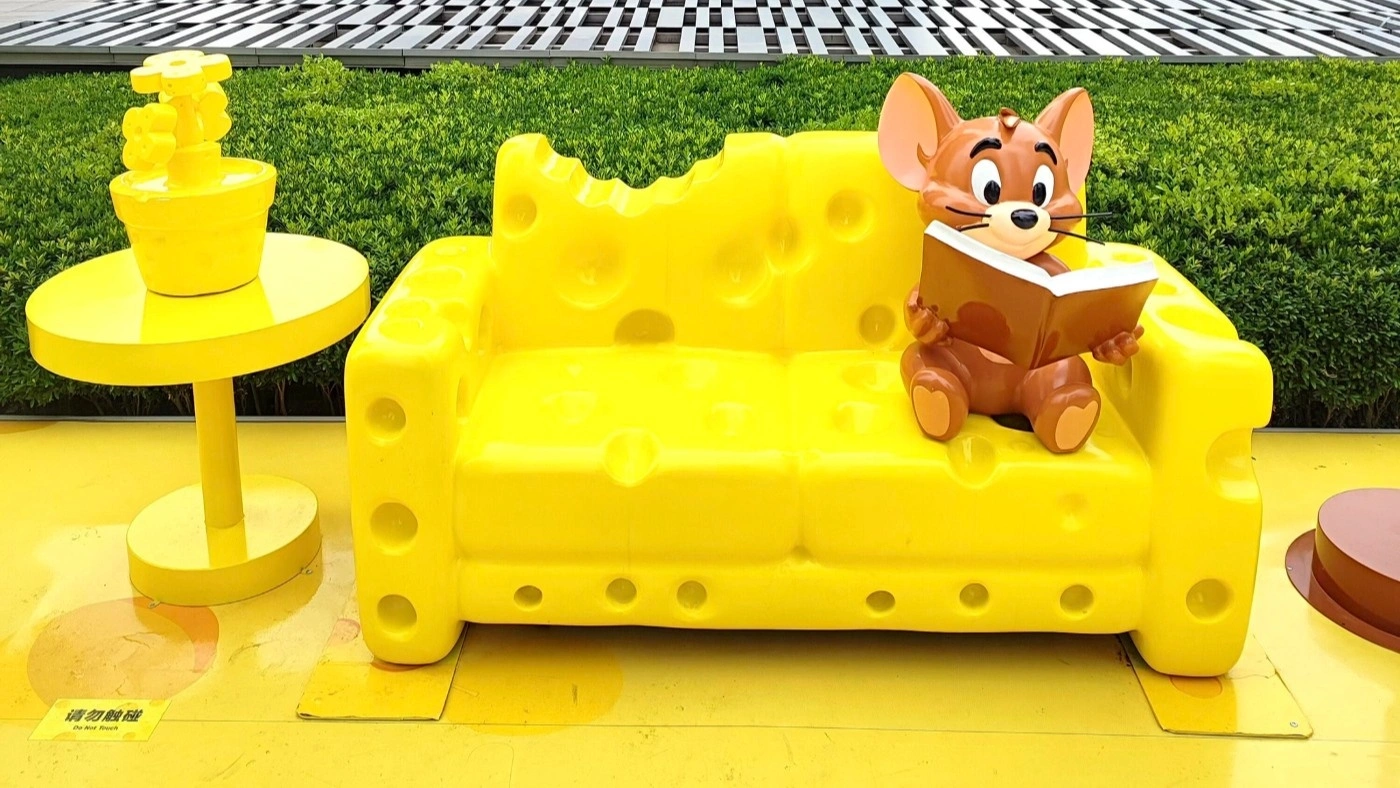
Installing themed displays in a shopping mall involves more than assembling individual pieces; it also requires careful adjustment to achieve the intended final appearance. Our installation team has extensive experience with commercial projects and understands mall construction-management requirements, allowing work to proceed safely and efficiently while minimizing disruption to normal operations.
Before installation begins, the team rechecks ground levelness, load-bearing capacity, and the specified positioning points. For large outdoor sculptures, the base and ballast foundation are leveled in advance. For indoor installations, the floor is protected against scratches and other construction-related damage. All personnel entering the site obtain the required construction permits or access passes and follow the mall’s working hours, safety procedures, and fire-safety requirements. Appropriate personal protective equipment is used throughout the installation process.
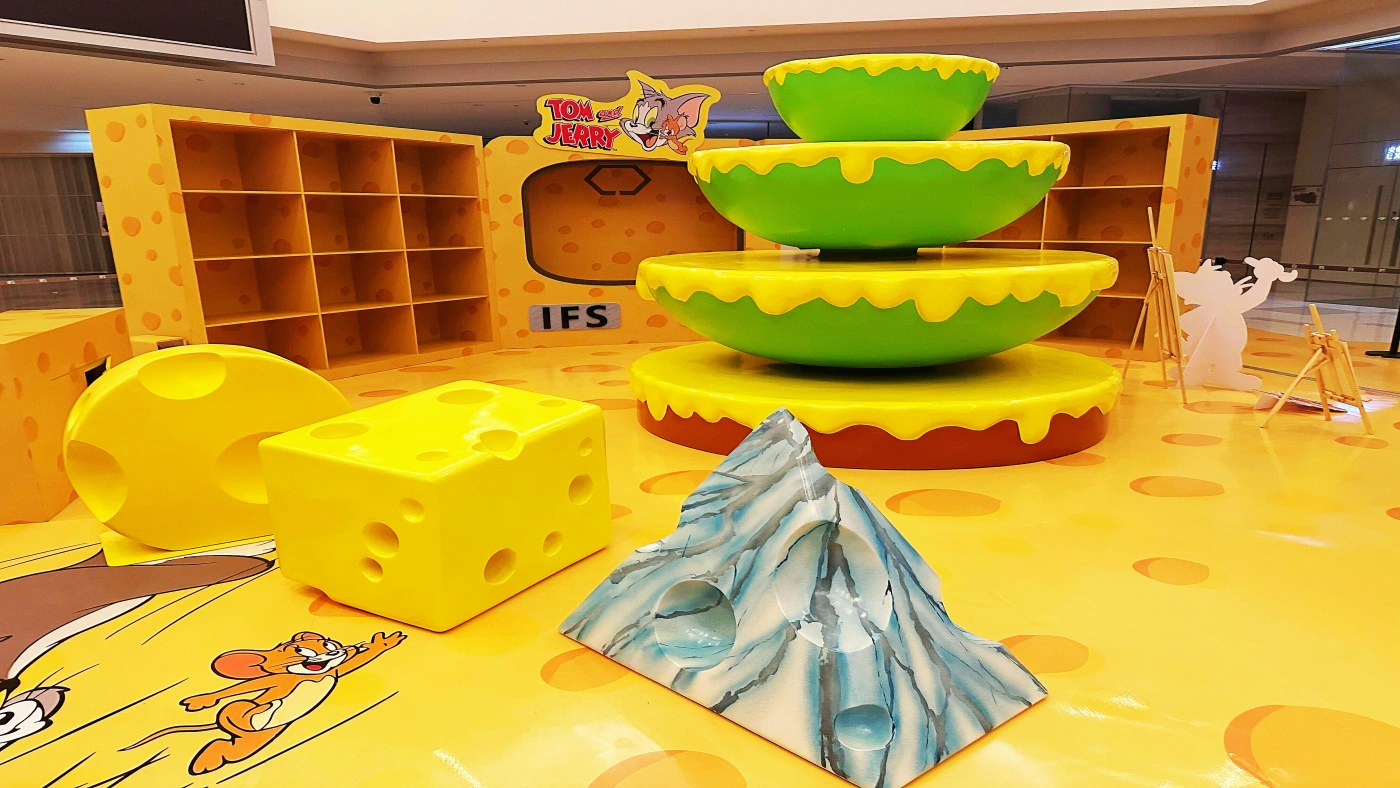
Installation follows the module numbering and assembly sequence established during factory pre-assembly. The internal steel frame is connected first, followed by the installation and fastening of the external fiberglass sections. Joints are then filled and finished, sanded smooth, and repainted to match the surrounding surfaces. This helps minimize visible seams and maintain a consistent, natural appearance. After assembly, the team checks the installation’s level and stability and inspects all edges and joints to ensure that no components are loose and no sharp edges remain.
After installation is complete, we conduct a joint final inspection covering three key areas: appearance, structural safety, and functionality. This confirms that the finished installation meets the agreed design and intended-use requirements. We also provide a maintenance manual covering routine cleaning, ongoing care, and emergency procedures, together with long-term after-sales support.
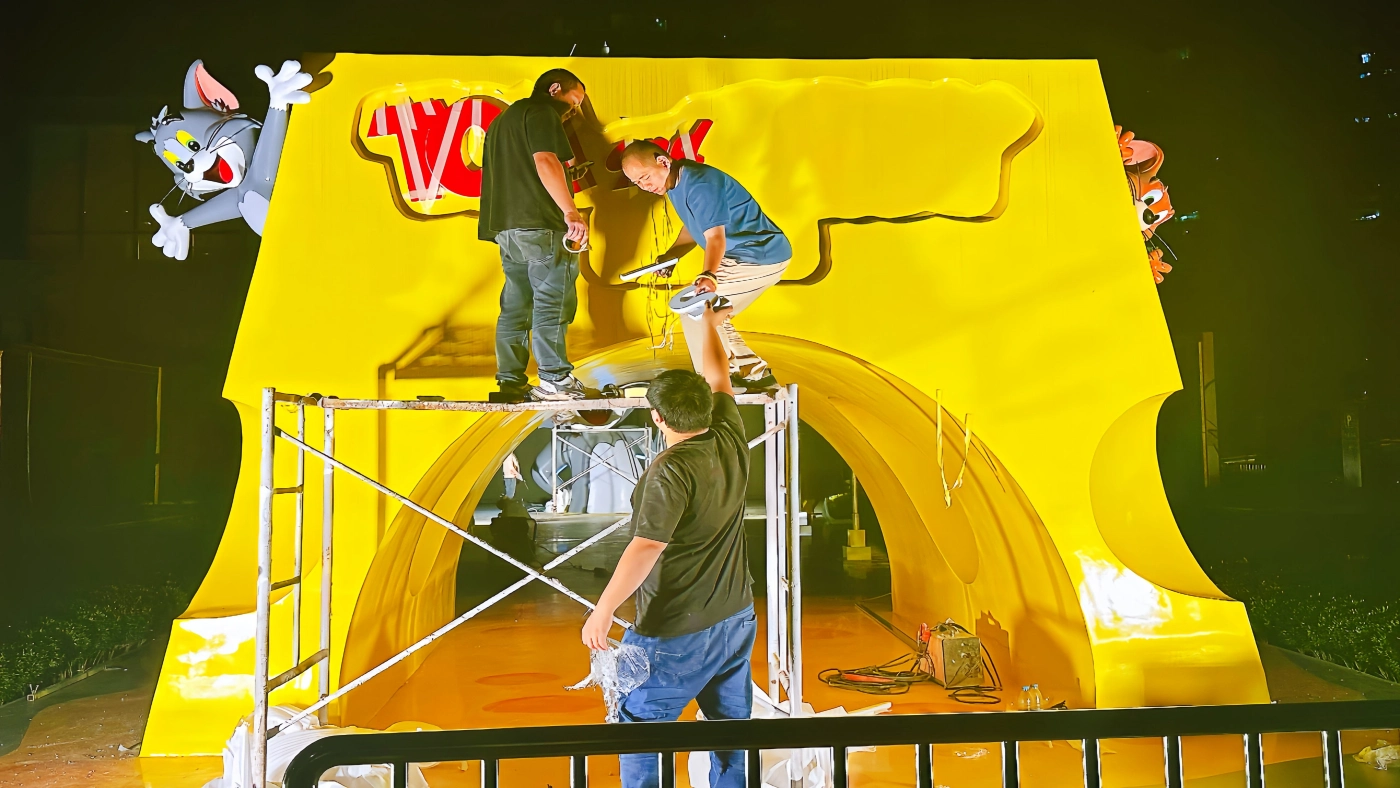
The successful delivery of this Tom and Jerry-themed commercial plaza project demonstrates the value of an integrated, end-to-end service approach. High-quality custom installations for commercial spaces depend on more than manufacturing alone; they require coordinated control across design, production, logistics, and on-site installation. We specialize in custom installations and props for commercial environments, with the finished result as our primary focus. Through established production techniques, standardized workflows, and extensive project experience, we provide dependable custom solutions for a wide range of commercial applications. From oversized IP sculptures and themed environments to retail display props, we can support the entire process from initial concept through on-site implementation.
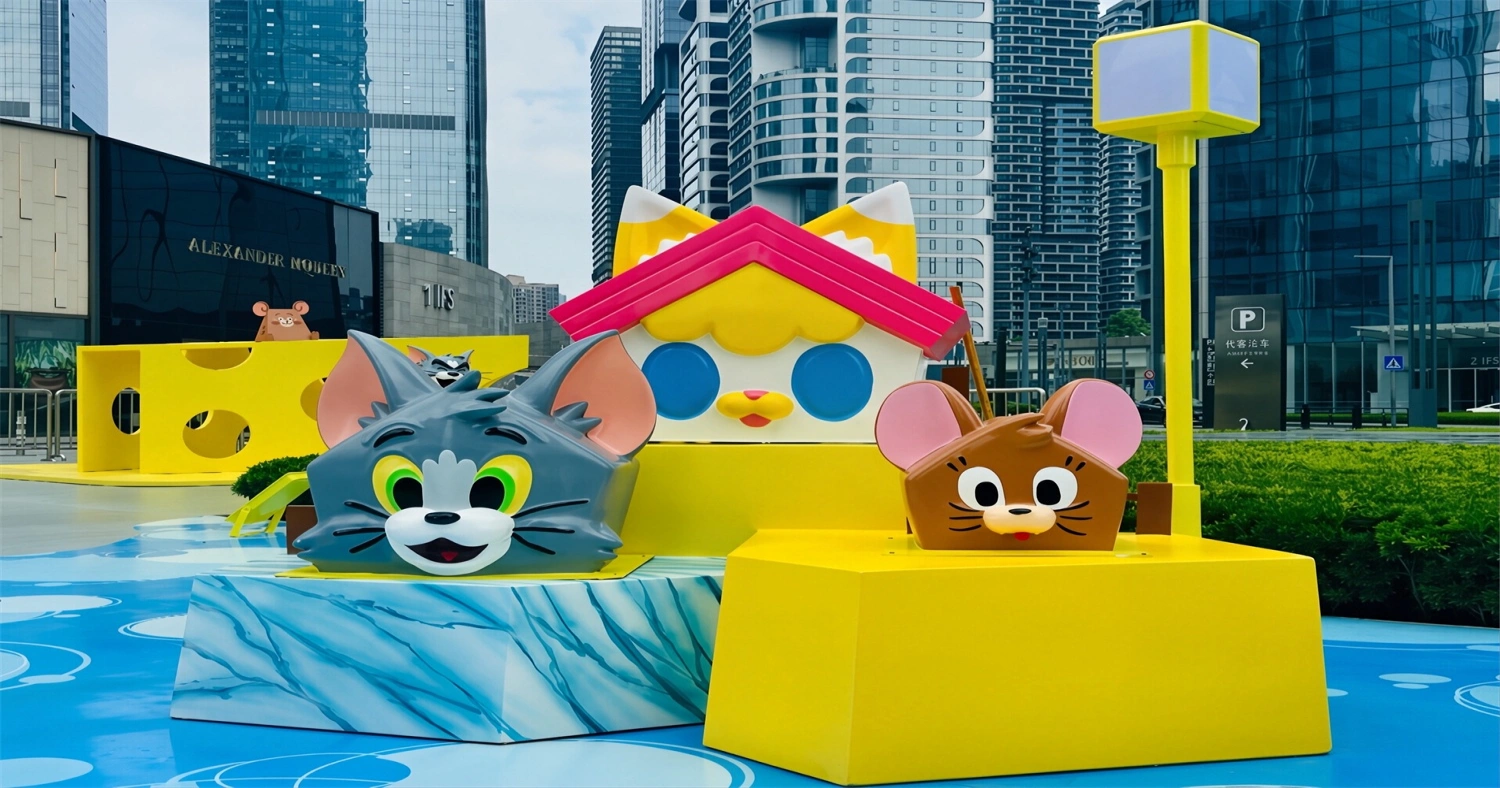
Large outdoor cartoon sculptures are commonly made from fiberglass, or fiber-reinforced plastic (FRP), with weather-resistant paint finishes. Under normal outdoor conditions, the main structure can last for more than 10 years. The paint finish may retain its color for around 3–5 years, depending on exposure and maintenance. Regular inspection and upkeep can help extend the service life.
The production schedule depends on the project’s scale, the number of installations, and their complexity. Standard medium-sized and small themed installations typically take around 20–30 days to produce. For larger projects involving a giant centerpiece sculpture, the overall manufacturing and installation schedule is generally around 45–60 days. Timelines can be adjusted to meet specific project requirements.
Large installations are designed in modules to simplify disassembly and transport, and they undergo pre-assembly checks at the factory before shipment. During transportation, custom wooden shipping frames and dedicated trucks are used, with cargo insurance arranged for the shipment. Our own installation team follows standardized procedures on site, and final acceptance is carried out against the design and specifications approved by both parties.
We develop 3D models based on the official IP visual guidelines. The modeling files must be reviewed and approved by the client or IP owner before production begins. Experienced sculptors hand-finish intricate details, and inspections are conducted before shipment and after installation to verify that the sculpture’s form and colors closely match the approved design.
Yes. Materials and manufacturing processes can be tailored to suit both settings. Installations intended for indoor and outdoor use can be made with weather-resistant materials and exterior-grade coatings, while the structural design is adapted to the intended placement. This helps balance detailed presentation with the durability required for outdoor exposure.
July 27, 2026
July 27, 2026
July 27, 2026
July 27, 2026
July 27, 2026
July 27, 2026
July 27, 2026
July 26, 2026
July 26, 2026
July 26, 2026
July 26, 2026
July 26, 2026
July 26, 2026
July 26, 2026
July 26, 2026
July 26, 2026
July 26, 2026
July 25, 2026
July 25, 2026
July 25, 2026