October 1, 2026 Ixmore Art
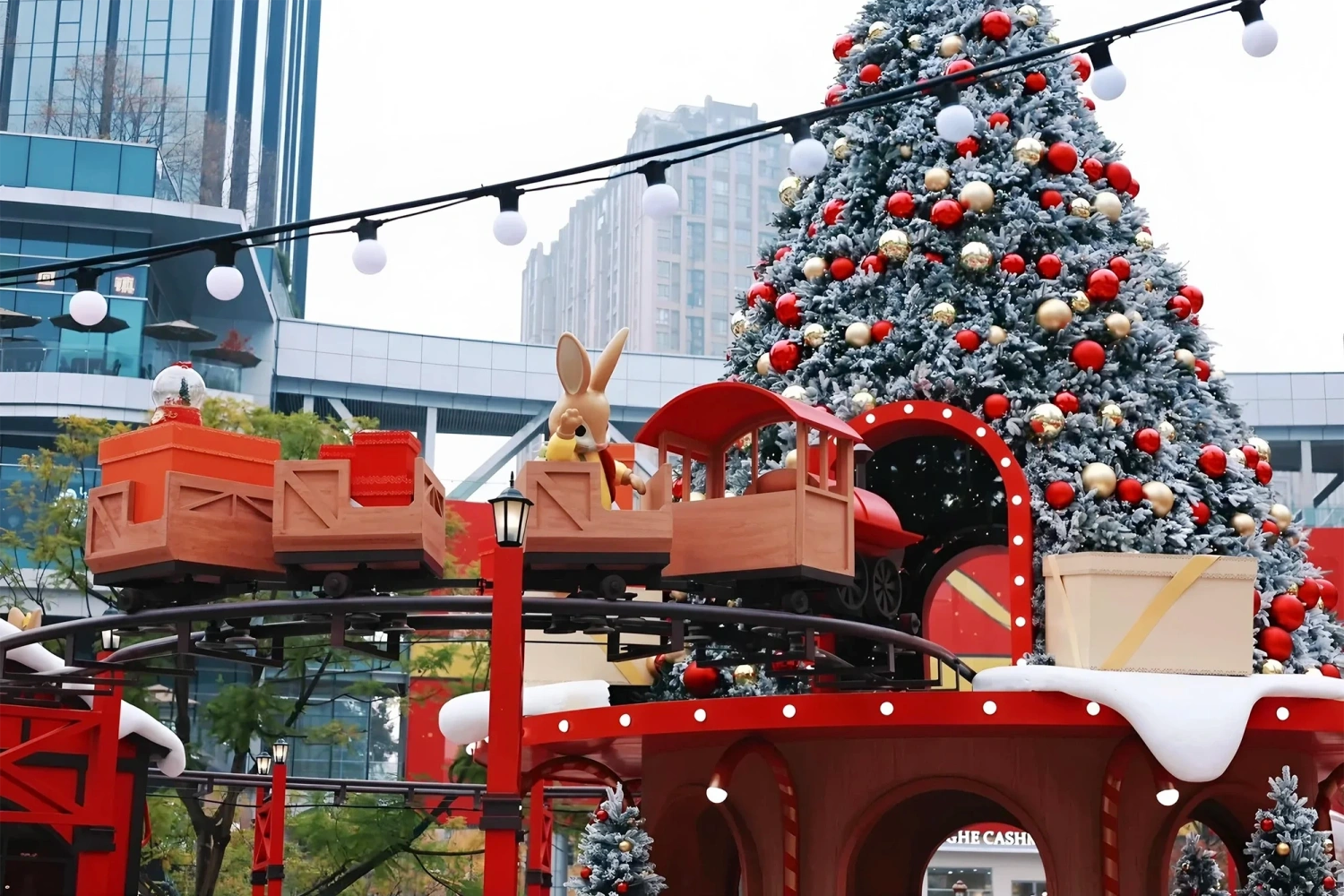
Every year, as the holiday season approaches, mall operators and display design teams wrestle with the same question: which material delivers both visual impact and the durability to withstand tens of thousands of visitors a day, constant bumps and knocks, and repeated installation and teardown? Building Christmas displays for malls is about more than craftsmanship. It demands a careful balance of materials science, fire safety, construction schedules, and long-term operating costs. Drawing on hands-on experience from the factory floor, this article compares three mainstream materials—FRP (fiberglass-reinforced plastic), EPP (expanded polypropylene) foam, and stainless steel—to help you make better-informed material decisions for high-traffic commercial environments.
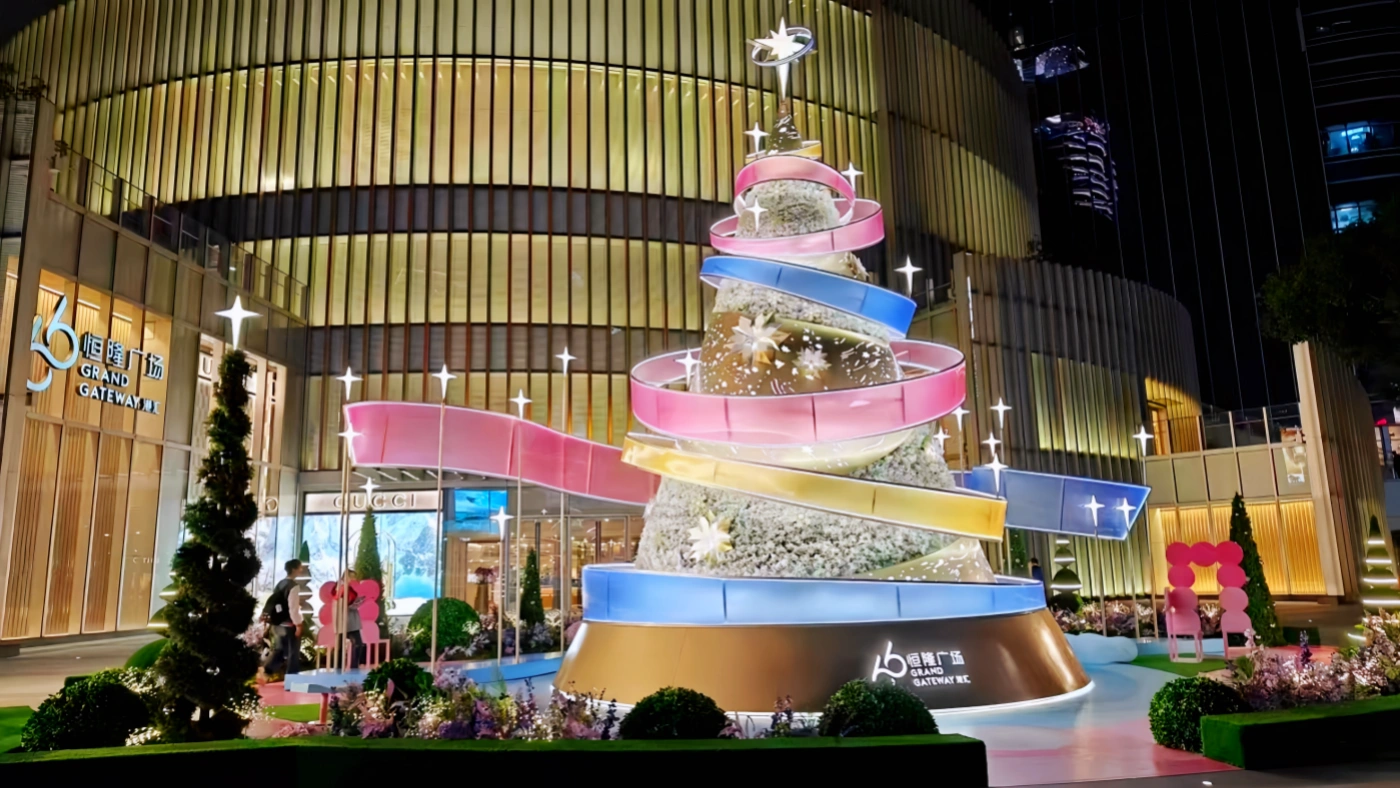
Malls are textbook high-traffic commercial environments. During the Christmas season, daily foot traffic can run two to three times higher than on a typical day. That means installations and props must meet several non-negotiable requirements at the same time:
Fire resistance and flame retardancy that comply with local fire safety regulations (for example, the U.S. NFPA 701 standard for flame retardancy testing of decorative materials);
Impact and scratch resistance to withstand daily wear and tear, such as children climbing on props or shopping carts bumping into them;
Weather resistance and color stability over long display periods;
A modular, reusable structural design that cuts the cost of rebuilding every season.
This is why professional mall Christmas prop manufacturers evaluate structural strength, fire safety compliance, and long-term maintenance together at the material selection stage, rather than simply comparing headline quotes.
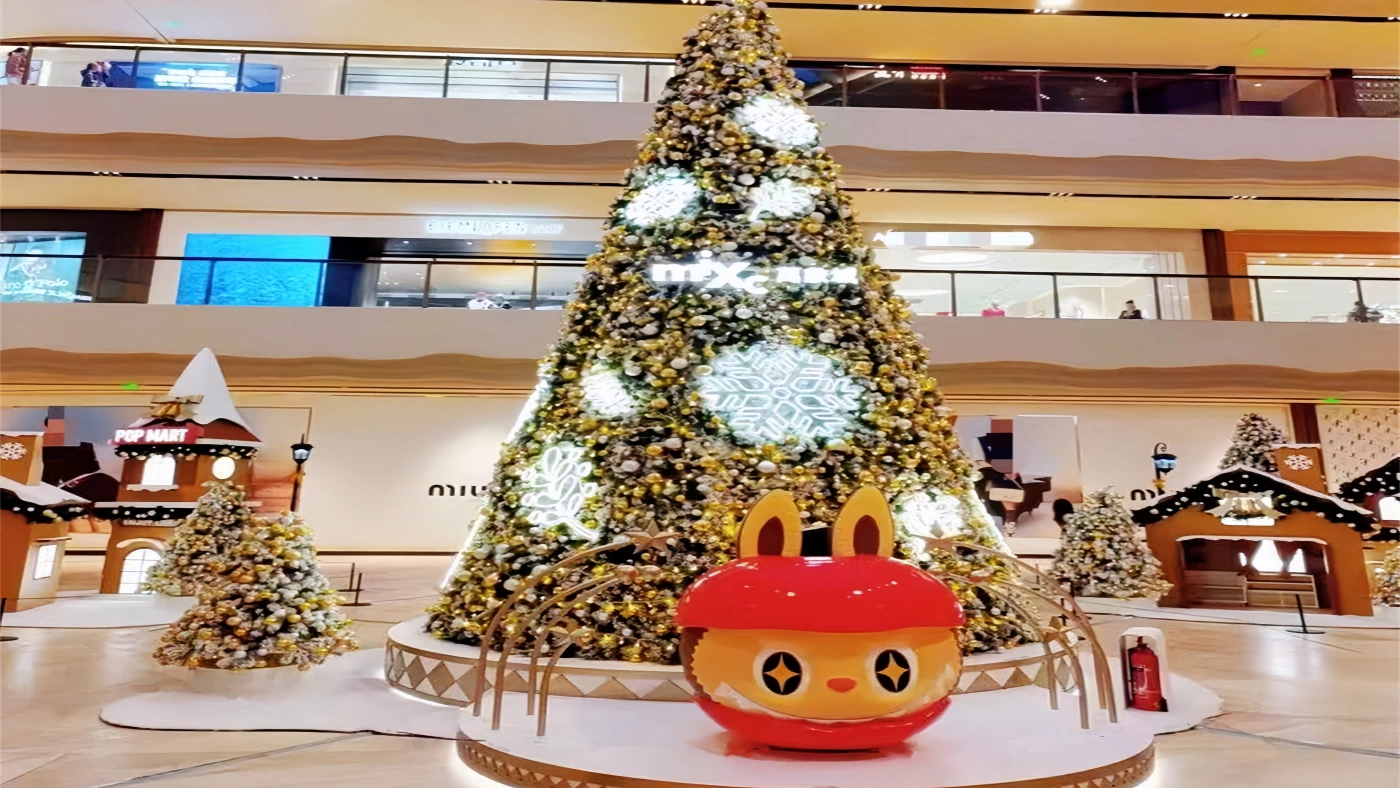
FRP is one of the most widely used structural materials in the production of Christmas props for large shopping malls.
FRP is a composite of polyester resin and glass fiber, and its strength-to-weight ratio is far superior to that of standard plastics of comparable thickness. Pound for pound, FRP composites can outperform many metals, a property frequently cited in architecture and commercial construction as evidence of long-term reliability under heavy foot traffic. For structural props in malls, such as oversized snowmen, Christmas tree frames, and arches, FRP allows for complex forms and smooth surfaces, and it resists scratches and holds its color. It is also lighter than stainless steel, which makes rigging easier and supports reuse across multiple seasons.
FRP is an organic composite. It will burn when exposed to open flame and can produce dense smoke. To be used in public areas of a mall, it must be formulated with flame-retardant resin and meet the rating required by local fire codes (such as the ASTM E84 Class A flame-spread rating). In addition, FRP mold development has a relatively long lead time, so the material is better suited to standardized designs that will be reused for many years than to one-off, highly customized, small-batch props.

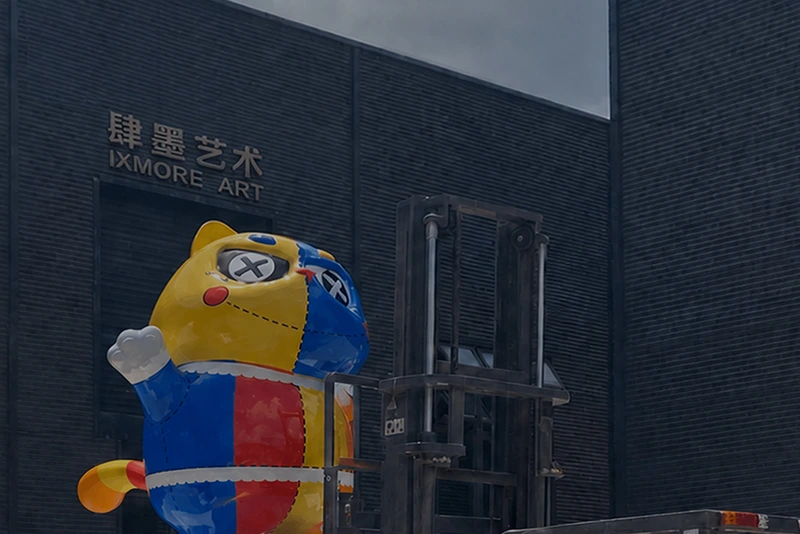
In recent years, EPP has become an increasingly popular choice for custom Christmas props in shopping malls. It is especially well suited to large-volume, ultra-lightweight display pieces such as snowmen, gift boxes, and cartoon characters. Thanks to its closed-cell foam structure, EPP offers excellent impact resistance and resilience. Even after repeated knocks from children or collisions with shopping carts, it holds its shape and does not break into sharp fragments, which makes it a safer option than rigid plastic or wooden structures. EPP is also available in a wide range of densities, so designers can choose a lightweight solution based on prop dimensions and significantly reduce the labor costs of rigging, transportation, and on-site installation.
EPP is not inherently flame-retardant. For foam décor that will be hung or displayed at scale in a mall, it typically needs to pass flame testing under UL 1975 or an equivalent standard, and the test report must be kept on file. This is a key item that many fire marshals look at closely when reviewing production plans for mall Christmas props. In addition, EPP has a relatively soft surface, and prolonged sun exposure or repeated friction can cause slight discoloration or surface indentation. It is therefore better suited to seasonal use, annual replacement, or indoor display areas than to outdoor settings with long-term exposure to the elements.
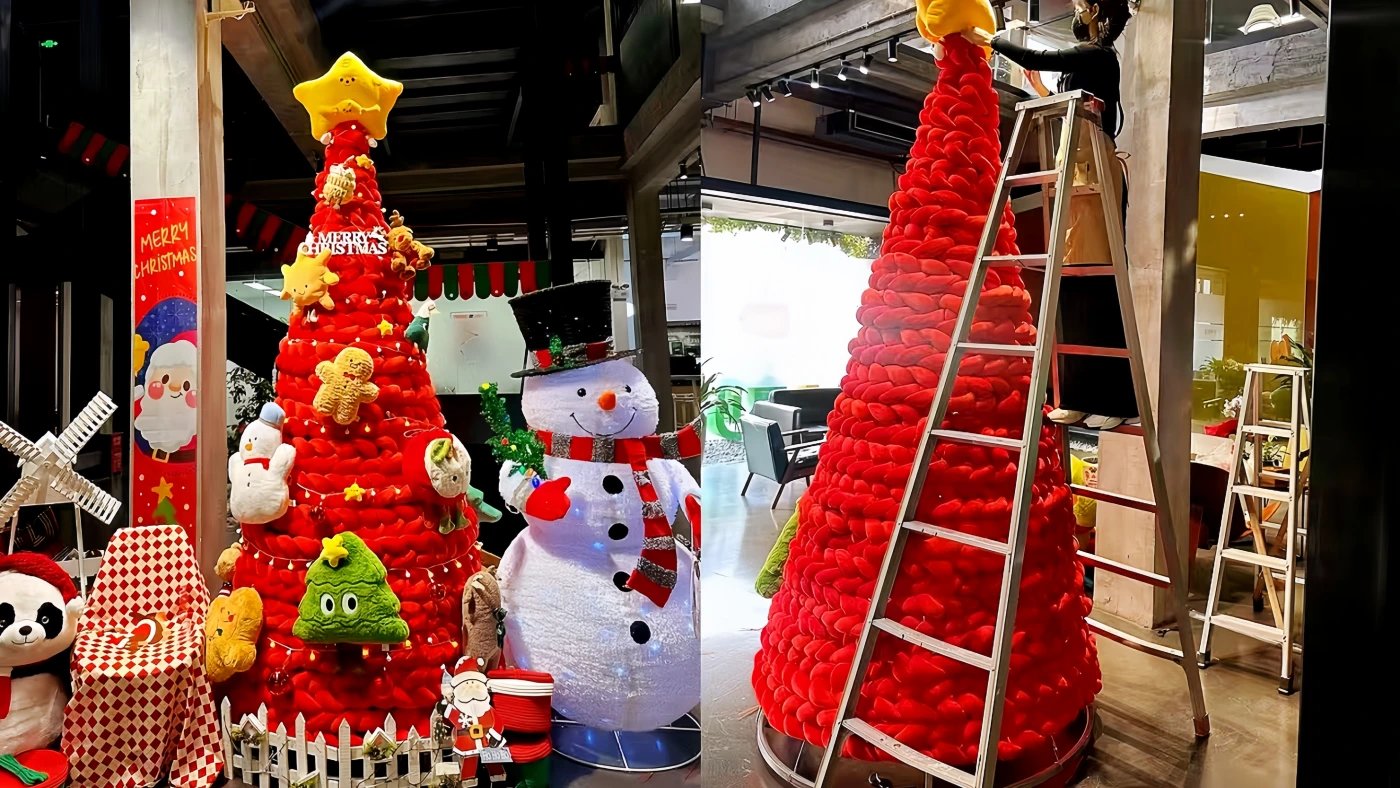
Stainless steel is the go-to material for skeletal frames, structural supports, and exposed hardware in high-traffic areas of malls. It is particularly common in handrails, guardrails, snowflake hangers, and any component that carries a sustained load or sees frequent contact. Grade 304 stainless steel offers good corrosion resistance in most indoor environments, while molybdenum-bearing Grade 316 performs more reliably in humid or coastal locations and in commercial spaces that undergo frequent cleaning and disinfection. Stainless steel is widely regarded as the most durable structural material for malls and other high-traffic retail settings. This is why many mall Christmas prop manufacturers specify 316-grade stainless hardware for high-traffic sites such as shopping centers and airports.
Stainless steel costs considerably more to process than FRP or EPP, and it is much heavier. Tooling and welding for complex curved forms also take longer. Building large-scale props such as giant snowmen or Christmas trees entirely from stainless steel significantly increases rigging difficulty and on-site installation costs. In real-world projects, therefore, stainless steel is more often used for structural frames, internal supports, and select exposed hardware rather than for the entire outer shell.
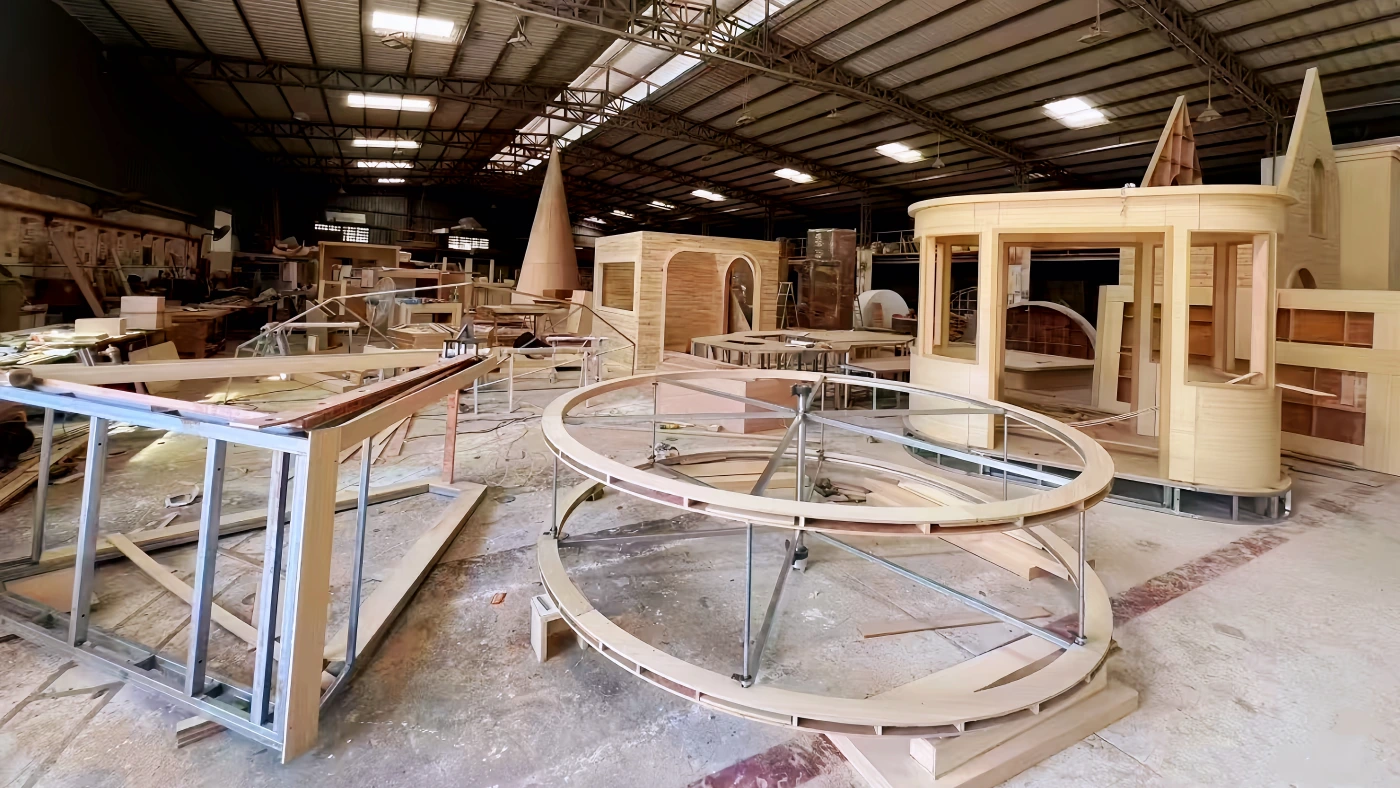
Weight: FRP is moderate in weight and considerably lighter than metal. EPP is the lightest of the three, which simplifies rigging and transportation for large-volume props. Stainless steel is the heaviest and is typically used for framework rather than as a full outer shell.
Impact Resistance: FRP offers good impact resistance. EPP, thanks to its closed-cell foam structure, is highly resilient and unlikely to produce sharp fragments even after repeated impacts. Stainless steel delivers the highest structural strength and resists deformation over long-term use.
Flame Retardancy: FRP requires a flame-retardant resin formulation and must pass the relevant rating tests. EPP is not inherently flame-retardant and needs additional testing to meet standards such as UL 1975. Stainless steel is non-combustible and requires no additional flame-retardant treatment.
Design Flexibility: FRP suits complex curves and intricate detailing. EPP suits large, irregularly shaped props. Stainless steel is better suited to skeletal structures and linear designs, although machining complex curves costs more.
Typical Applications: FRP is commonly used for the outer shells of large structural props. EPP is often used for ultra-lightweight cartoon characters and snowman display pieces. Stainless steel is frequently used for structural frames, exposed hardware, and components intended for long-term display.
Overall Cost: EPP is the most economical, FRP sits in the middle, and stainless steel carries the highest material and processing costs.
No single material meets every requirement for a mall Christmas display. Professional custom Christmas prop services typically rely on a hybrid “frame + shell” build: stainless steel for the load-bearing frame, FRP for the sculpted shell, and EPP foam for select decorative elements to reduce overall weight. This approach keeps the project compliant with fire and structural safety requirements while holding down rigging and transportation costs. Before you settle on materials, it helps to clarify the following points: whether the props will be reused over multiple seasons, whether they will be displayed outdoors for extended periods, the maximum size and weight limits for each individual prop, and the fire safety approval requirements at the project location.
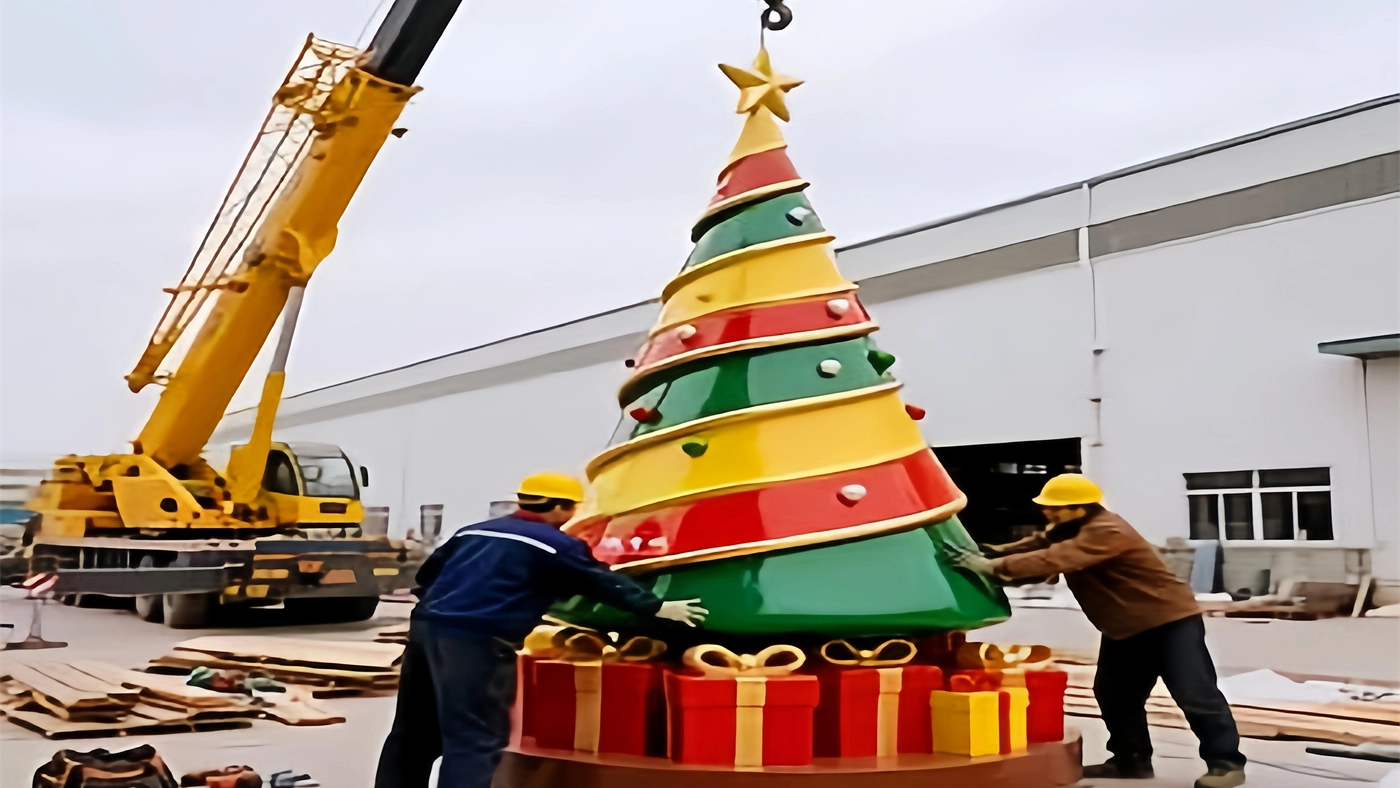
Comparing materials is only the first step. What ultimately makes or breaks a project is the manufacturer’s practical experience in structural engineering, flame-retardant treatment, and on-site installation. A custom commercial-space prop and installation manufacturer with a long track record serving overseas mall clients will typically evaluate material flame ratings, shipping size restrictions, and destination installation requirements together at the front end of a project. This helps avoid the scenario where props arrive on site only to fail fire inspection or turn out too large for the installation space. It is also why a growing number of mall operators, when procuring Christmas props, favor manufacturers with proven large-scale commercial project experience over those that simply offer the lowest quote.
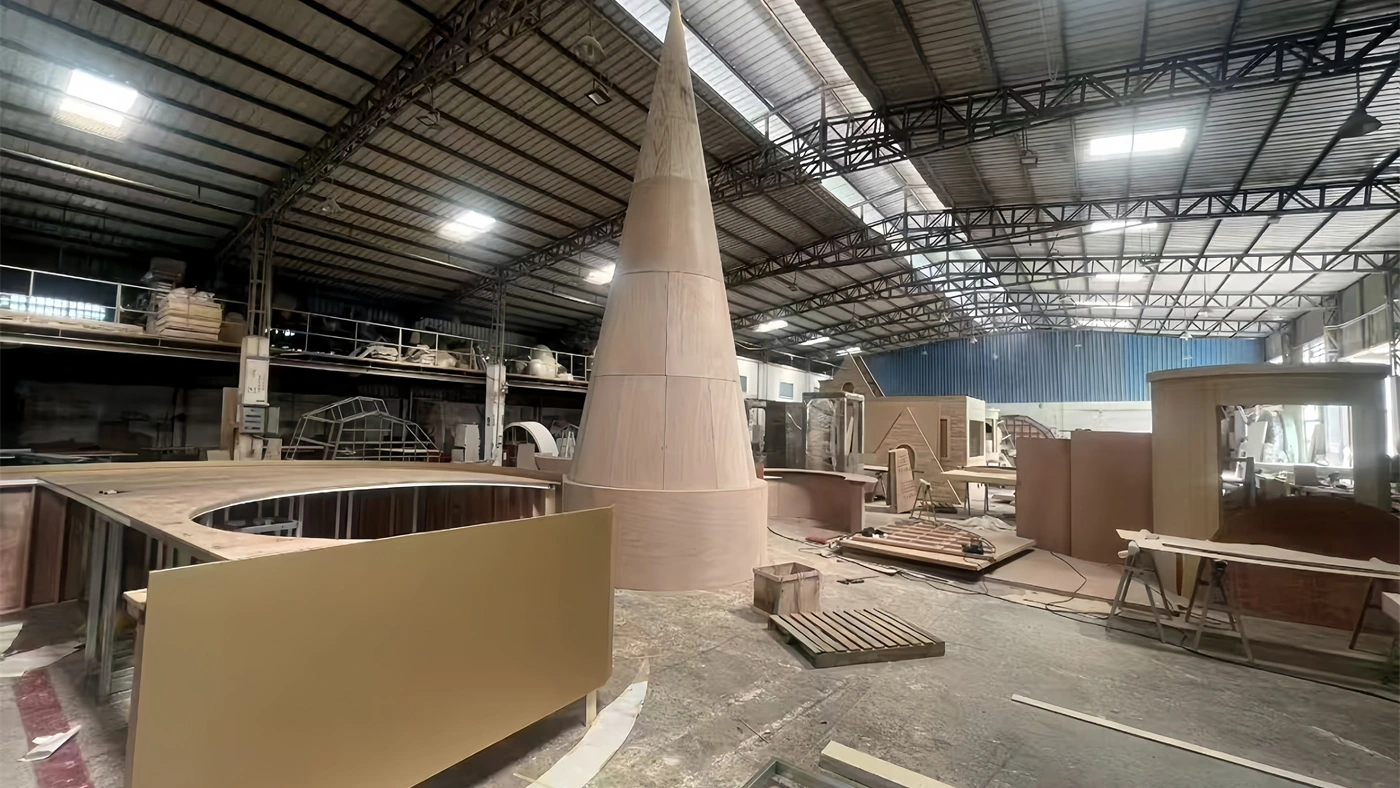
A: Large structural props (such as snowman frames, Christmas trees, and arches) typically use FRP or stainless steel frames, while lightweight decorative components commonly use EPP foam. The right choice depends on the prop’s size, display duration, and fire safety requirements.
A: They serve different purposes. FRP is better suited to large prop shells that need long-term, repeated use and high structural strength. EPP is better suited to large-volume display pieces that must stay lightweight and are likely to be touched by children, such as cartoon snowmen.
A: Yes. Malls and shopping centers are, for the most part, densely occupied public commercial spaces. Decorative materials that are hung or displayed there generally need to meet the flame-retardant ratings set by local fire codes. Specific standards are determined by the fire authority in the project’s location.
A: Generally, yes. Material and processing costs for stainless steel are typically higher than for FRP and EPP, especially for complex curved designs. That is why, on most projects, stainless steel is used for frames and hardware rather than entire shells, striking a balance between cost and structural safety.
A: Beyond the quote, look at whether the manufacturer has large-scale commercial project experience, can supply flame-retardant test reports for its materials, and has a solid shipping and installation plan in place. These factors directly shape the final outcome of the project and its chances of passing fire inspection.
Whether you ultimately go with FRP, EPP foam, or stainless steel, the heart of mall Christmas prop production is always the same: balancing visual impact, structural safety, fire code compliance, and long-term operating costs. Rather than debating the merits of any single material, you are better off partnering with an experienced manufacturer to develop a mixed-material solution tailored to your specific project. That is the core decision-making logic this article sets out to convey.
July 27, 2026
July 27, 2026
July 27, 2026
July 27, 2026
July 27, 2026
July 27, 2026
July 27, 2026

July 26, 2026
July 26, 2026
July 26, 2026
July 26, 2026
July 26, 2026
July 26, 2026
July 26, 2026
July 26, 2026
July 26, 2026

July 26, 2026
July 25, 2026
July 25, 2026

July 25, 2026