October 26, 2026 Ixmore Art
Every year as the Christmas season approaches, large shopping malls face the same challenge: turning a sprawling, intricately designed themed installation, one that must satisfy crowd-safety and fire code requirements, from a concept sketch into a photo-ready, interactive attraction within a tight window. “Fluffy Bear’s Winter Invitation” was exactly that kind of project. As a factory specializing in custom installations and props for commercial spaces, Ixmore Art took end-to-end responsibility for this custom shopping mall Christmas installation, covering structural design, material selection, factory fabrication, packaging, freight, and on-site installation. Drawing on actual project imagery, this article breaks down the technical rationale behind each key element. It is intended as a practical reference for commercial real estate operators, event agencies, and brands currently planning Christmas or seasonal campaigns.
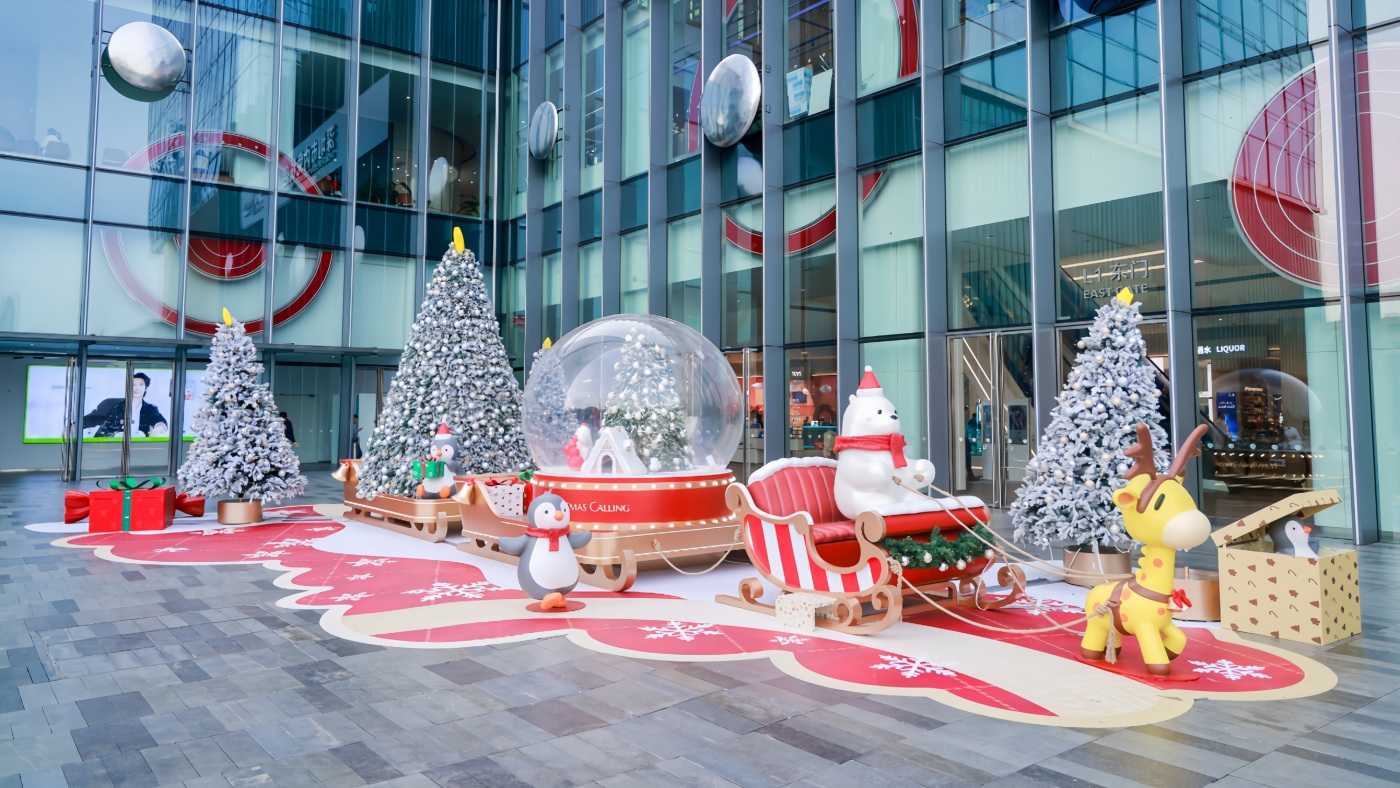
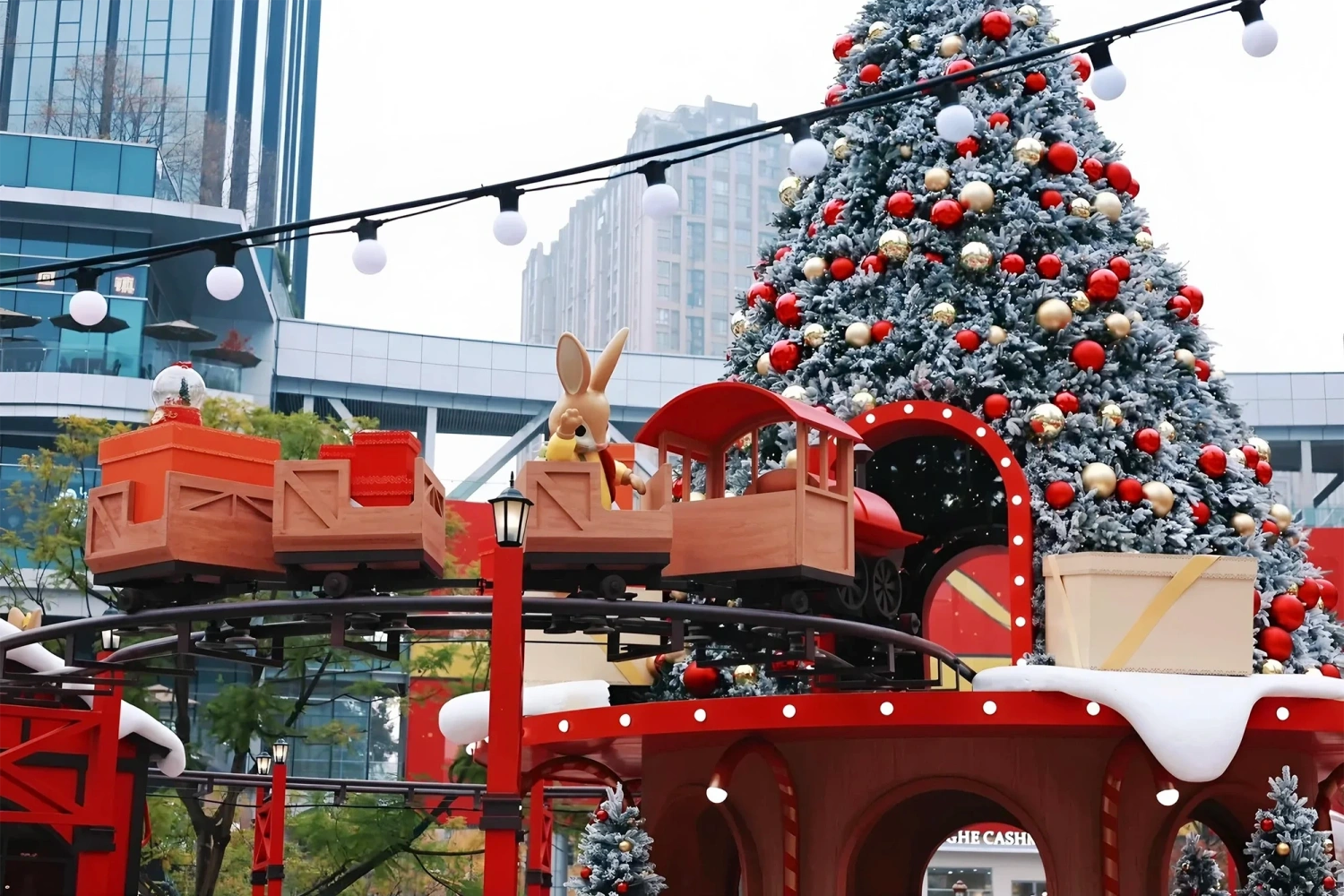
“Fluffy Bear’s Winter Invitation” comprises two principal scenes: an indoor atrium and an outdoor plaza. The atrium is anchored by a white polar bear seated with an open book, dressed in a red scarf and Santa hat. Around it sit a candy cane slide, a mini train on a circular track, a red archway, a bench platform, a giant green Christmas tree, a yellow giraffe, and a grouping of flocked Christmas trees. The outdoor plaza is built around a snow-covered cottage, complemented by a sleigh, crystal snow globes, penguins, gift boxes, and bells. Both scenes share red-and-white checkerboard floor graphics with snowflake motifs, which gives the project a single, cohesive visual language. An installation of this scale is not a simple stack of individual elements. It is a scene system that demands integrated planning from the outset.
A shopping center operator’s brief for this type of themed installation typically comes down to four priorities. First, the visual impact must be strong enough to boost dwell time and prompt shoppers to take photos and share them on social media, generating organic “check-in” traffic. Second, the structure and materials must be safe, and must meet fire safety and anti-tip requirements for high-footfall areas. Third, the schedule is tight, with a very short window for load-in, installation, and commissioning. Fourth, the installation must be fully struck after the event, with selected components stored for reuse. Every technical decision that follows is made against these four priorities.
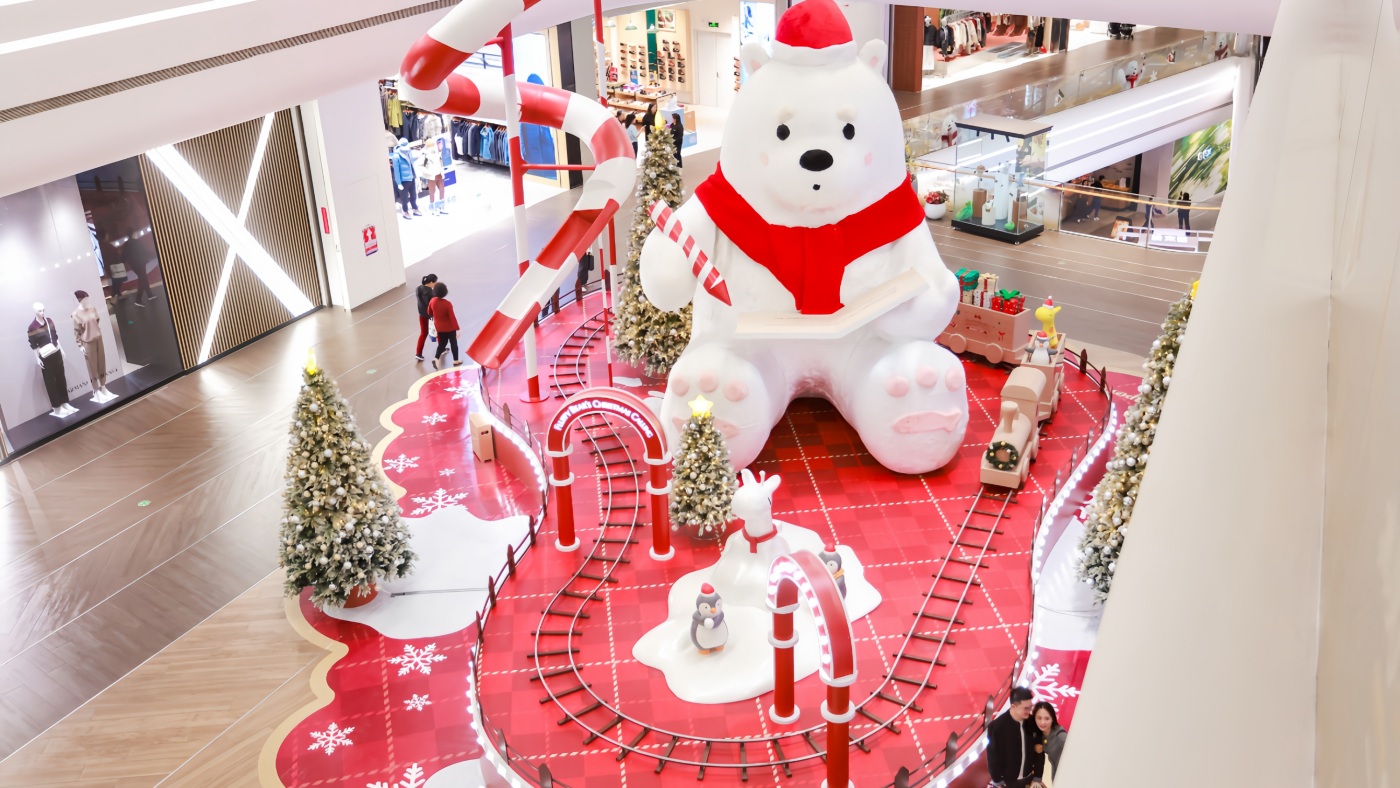
The giant polar bear was the most demanding element of the entire project. It is massive, with a high center of gravity, and its surface is almost entirely curved. During detailed design, we broke the figure down into four layers: the load-bearing skeleton, the sculpted outer shell, functional components, and the lighting and electrical systems. Each layer was engineered separately before being integrated. A steel structural skeleton serves as the primary load-bearing system inside, while the outer shell is built from lightweight materials so that its weight does not bear down on the skeleton’s joints. Protruding elements, such as the book and the candy cane held in the bear’s paws, were given dedicated support points to prevent deformation under long-term cantilevered loads.
Shopping mall atrium floors are typically finished in stone or wood, with limited load-bearing capacity, and drilling for anchors is often prohibited. For this reason, at the concept design stage we confirm the floor’s load rating, floor protection requirements, and fire egress widths with property management. Where anchoring is not permitted, we lower the center of gravity with wider bases, maximize the contact area with the floor, and add counterweights. Outdoor plazas call for additional consideration of wind loads and rainwater drainage, and the snow cottage, sleigh, and Christmas trees all require wind-resistant fastening. The viewing zones defined by railings and ground markings are themselves part of the safety design, since they reduce the likelihood of visitors climbing directly on the main structure.
The disassembly plan must satisfy three conditions at once: components must be able to reach the site through freight elevators or loading and unloading passages; they must pack efficiently into shipping containers; and on-site assembly steps must be kept to a minimum. We pre-assign locating pins, connecting flanges, and serial numbers on the drawings, and wherever possible place seams along natural design lines such as scarf edges, hat brims, and pleats. After installation, these seams are easy to touch up and do not detract from the overall finish.
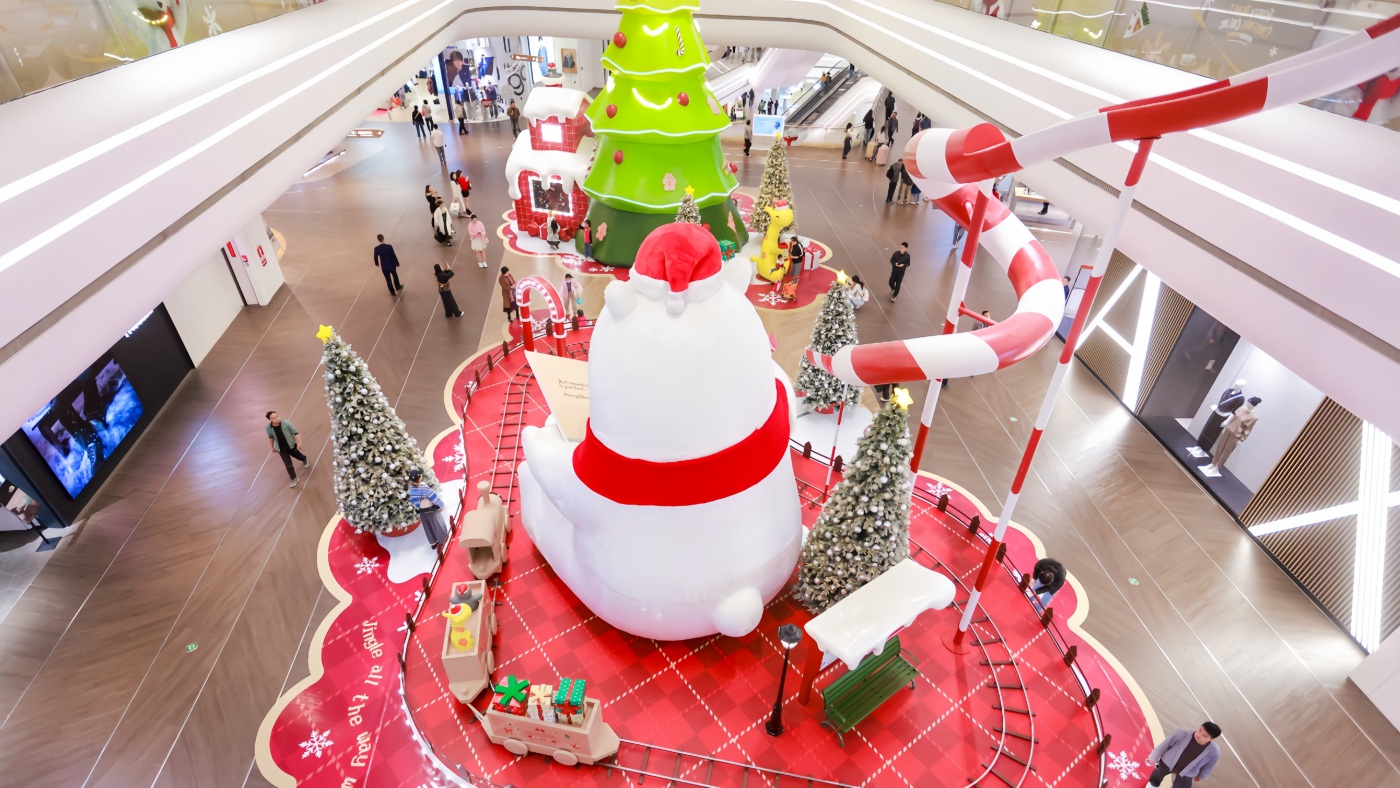
The load-bearing structure is primarily steel. Low-rise elements such as the miniature train, platform, and fencing use timber framing and panels, which are easier to fabricate and lend a handcrafted feel. Steel components undergo rust removal and anti-corrosion treatment before leaving the factory, and outdoor components feature enhanced waterproofing and drainage details.
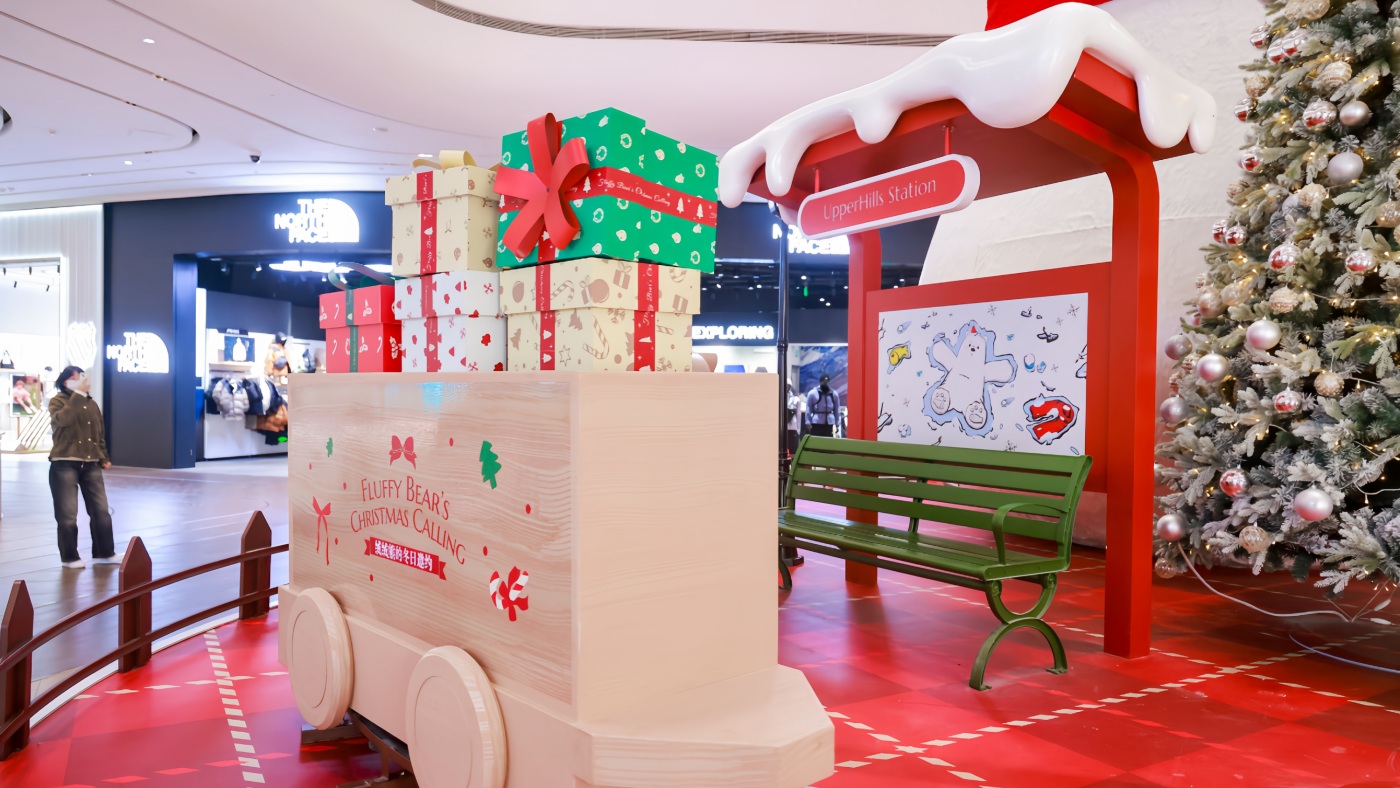
The polar bear is sculpted from foam, then surface-hardened and sanded before being wrapped in faux fur fabric. Details such as pink paw pads and fish-shaped patterns heighten the character’s expression. Smooth-surfaced pieces, including the yellow giraffe, penguins, green Christmas tree, and gift boxes, are better suited to fiberglass construction, which is wear-resistant, easy to clean, and allows for a contrast between glossy and matte finishes. The snow-covered roof of the cottage is rendered with a white sculpted layer accented with colored dots.
In high-traffic commercial venues, the flame-retardant performance of decorative materials is critical. In the North American market, plush fabrics, films, and textiles are typically evaluated against the NFPA 701 flammability test standard for textiles and films. However, the specific test required is ultimately determined by the local fire authority where the project is located. For this reason, during quotation and material selection we proactively confirm the fire safety regulations of the destination country or the specific mall with the client, then select materials and prepare the corresponding test documentation accordingly.
Arch bulbs, railing light strips, Christmas tree lighting, and illuminated details on the bears all work together to build the nighttime atmosphere. We design the lighting as independent low-voltage circuits and build in access panels so that fixtures can be swapped out quickly after opening, while ensuring that no wiring is exposed in areas accessible to visitors.
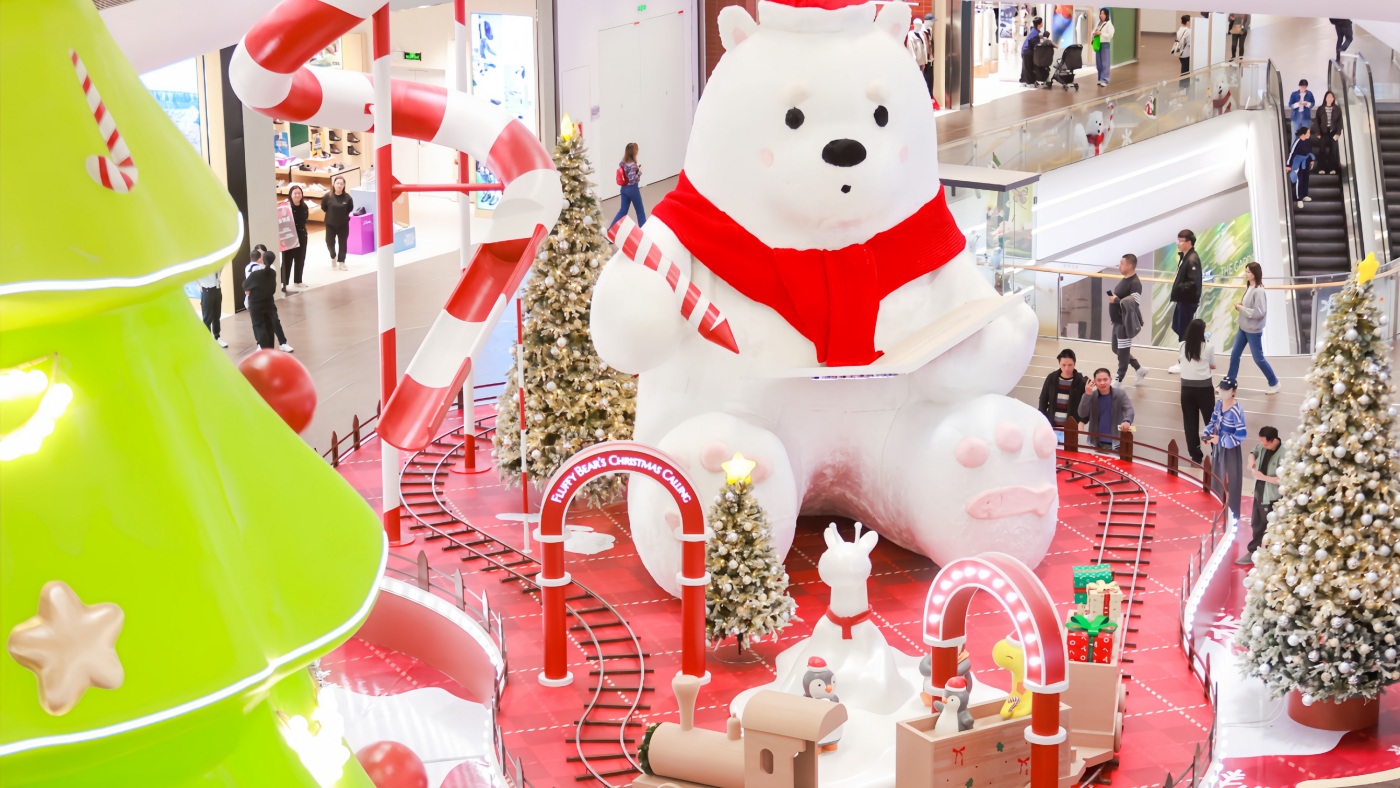
The biggest risk with character-based Christmas props is losing the likeness. Before scaling up, we build small-scale prototypes or samples of key parts to verify the polar bear’s facial proportions, eye expression, plush texture, and color. Only then do we scale up to final size, so that any off-model expression is caught early rather than after the full-size piece is finished.
Steel structure welding, foam carving, fiberglass molding, spray painting, plush sewing, and lighting wiring run in parallel by module, rather than waiting for one process to finish before the next begins. Each module is numbered and travels with a process card, and quality inspectors sign off at key checkpoints, so any deviation can be traced quickly.
Before shipment, we pre-assemble the major modules at the factory to inspect seams, alignment pins, and lighting function, and we document the process with photos and video. Correcting issues found during factory pre-assembly costs far less than resolving them at an overseas site.
Different components call for different packaging methods. Plush surfaces are protected with layered dust-proof film and bubble wrap, fiberglass components sit in custom foam trays, and lighting fixtures and small accessories are packed in separate boxes. Where solid wood is used for export crates and pallets, it must comply with the International Plant Protection Convention standard ISPM 15, be heat treated, and carry the required stamp, so as to avoid inspection holds and detention at the port of destination. Engineered wood products such as plywood are generally exempt from this requirement.
The key to shipping an installation like this is the container loading sequence. We load in the reverse order of on-site installation, so that the components installed first are loaded last. Each container carries a packing list, assembly diagrams, and a hardware list. Module numbers and orientation are also marked on the crates, so the installation team does not have to dig through containers for parts on arrival.
The most common source of disputes on overseas projects is where the goods change hands and who bears the risk. We recommend specifying the applicable Incoterms 2020 rule explicitly in the contract, such as FOB port or DAP to a named place, and clearly defining responsibility for destination customs clearance, inland transportation, and unloading. Only a clear allocation of responsibility prevents finger-pointing when delays at arrival or customs occur.
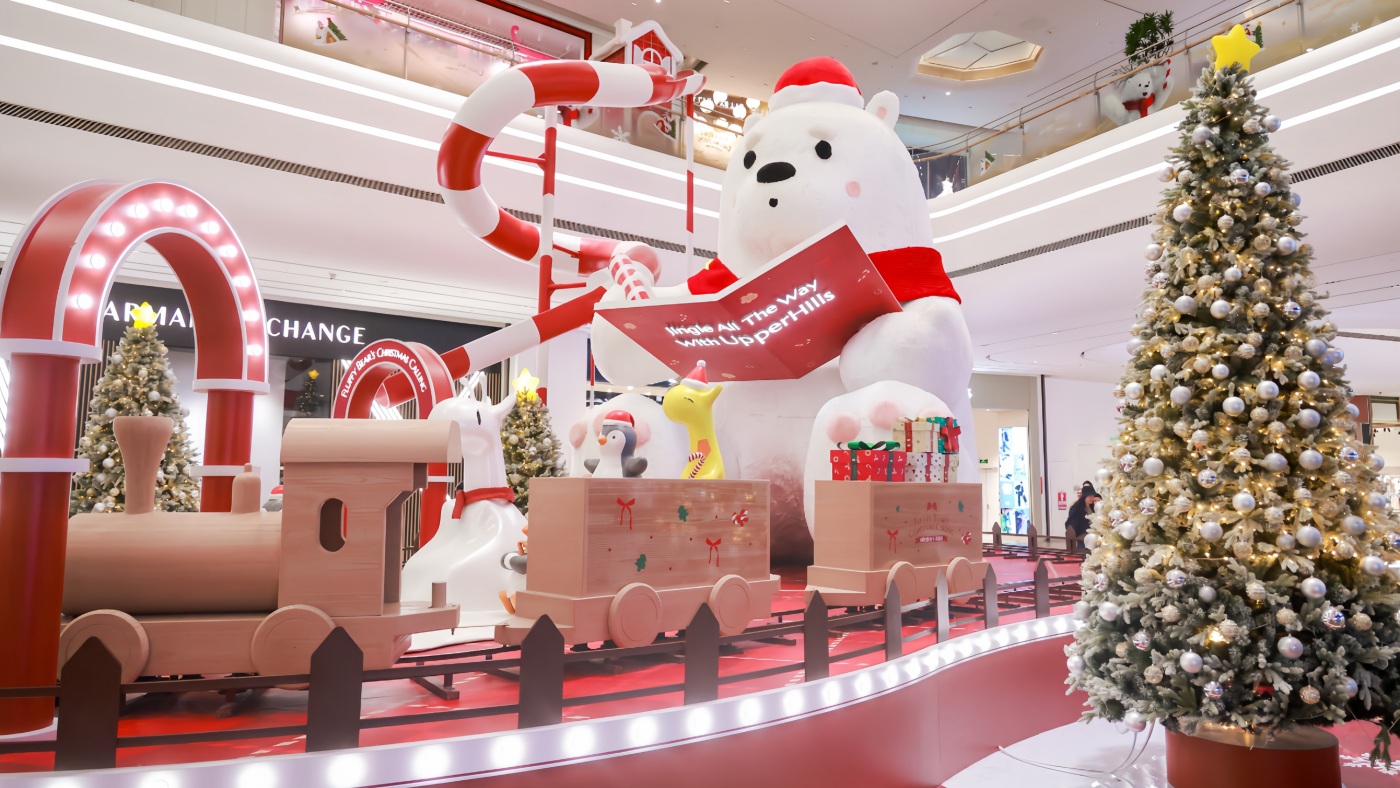
Before formal installation begins, our team conducts a site survey to verify floor elevations, power outlet locations, freight elevator dimensions, fire safety facilities, and the mall’s operating hours. Many shopping centers only permit work at night or after closing. We therefore schedule crews and work sequences accordingly, lay protective coverings over the floors, and control noise and dust.
Atrium installations follow a sequence of layout first, main structure next, and decoration last. First, we mark out the layout and install the floor graphics and fencing. Next, we assemble the polar bear structure, the candy cane slide, and the large Christmas tree. Finally, we install the train, tracks, smaller Christmas trees, gift boxes, and lighting. For work at height, we use aerial work platforms and coordinate the scope of work in advance with the mall’s security and engineering departments.
The priorities outdoors are stability and weatherproofing. For the snow cottage, sleigh, and snow globe structures, we secure the bases first and then assemble the upper sections, making sure every seam is waterproofed. Lighter components, such as Christmas trees and gift boxes, must be fastened down against strong winds to keep them from being blown over.
Once installation is complete, we run a full power-up test, check the lighting effects, and carry out a safety inspection covering fence stability, edge finishing, and all visitor-accessible areas. This confirms there are no sharp edges or loose parts before the installation is handed over to the operator for acceptance.
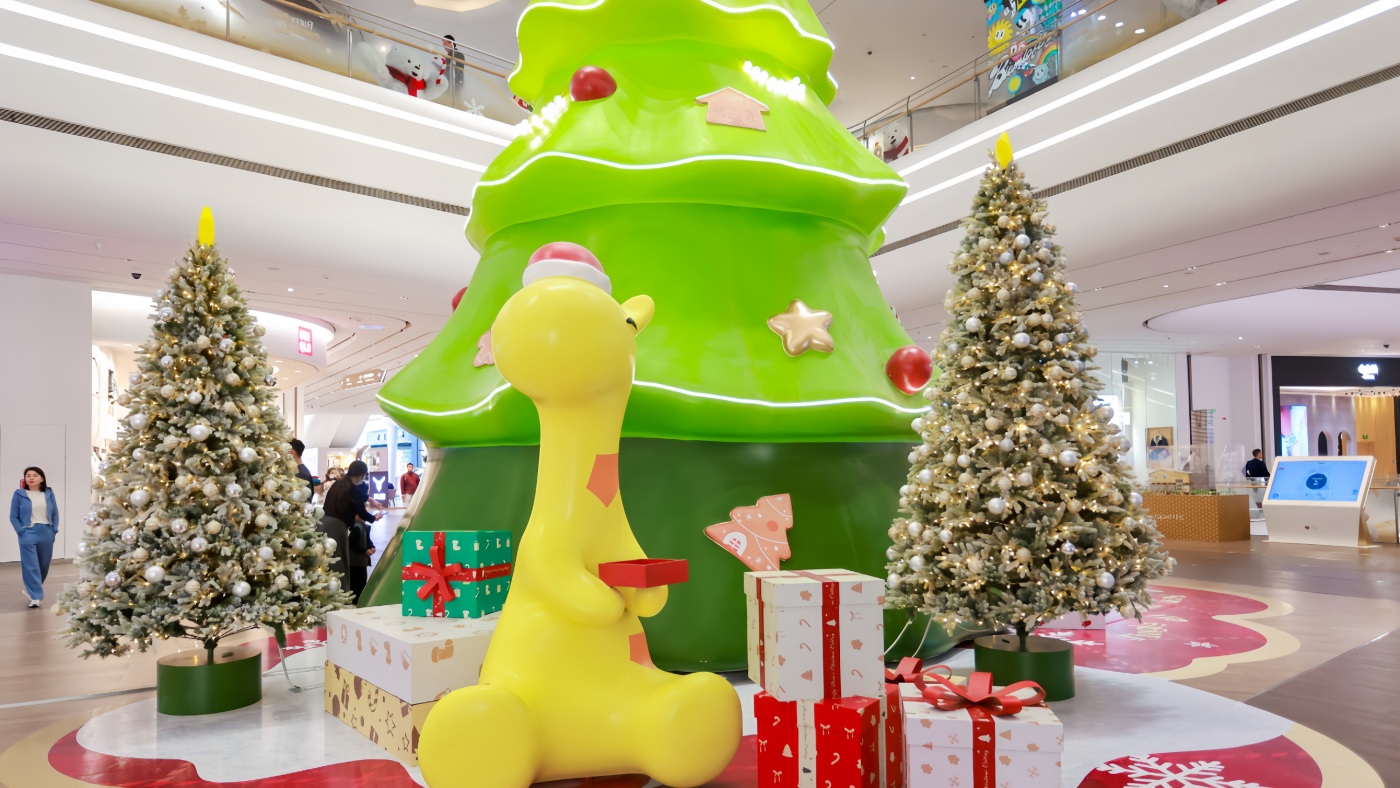
While the installation is open to the public, we recommend scheduling daily inspections, with a focus on lighting fixtures, plush surfaces, and seams. Minor damage from visitors climbing on or bumping into the structure should be repaired by trained personnel after closing. Once the event concludes, strike the installation in the reverse order of assembly. Reusable components should be returned to inventory, and remaining materials sorted for responsible disposal to keep waste to a minimum.
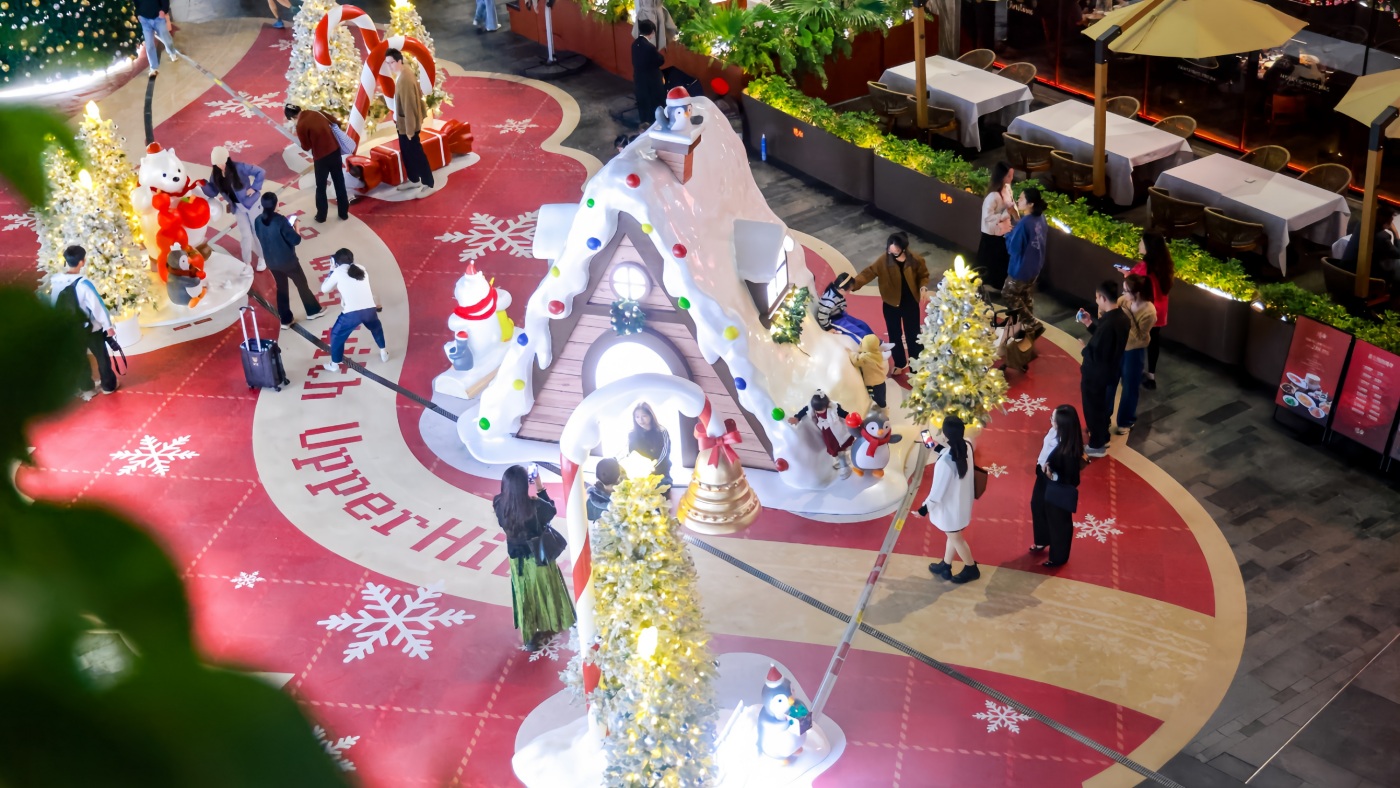
Looking back at this project, three key lessons stand out. First, structural engineering and logistics must be addressed together at the design stage, rather than working out how to break the piece down after the model is already finished. Second, safety and compliance come first: materials, lighting, and anti-tip measures should all be confirmed with the venue operator in advance. Third, factory pre-assembly, a clear numbering system, and well-defined trade responsibility boundaries are the three most effective ways to de-risk an overseas installation.
For shopping centers and brands seeking a one-stop custom Christmas installation service, choosing a commercial space installation manufacturer that can integrate design, production, transportation, and installation into one seamless process is often more important than simply comparing quotes. If you are planning your next Christmas or seasonal installation project, contact Ixmore Art. We can develop a practical solution tailored to your venue conditions and budget.
The timeline depends on project scale, design complexity, and shipping method. It generally spans several stages: design development, prototype approval, production, transportation, and installation. For large-scale installations like this one, we recommend opening the conversation well ahead of the Christmas season. The specific schedule is set after we review the design drawings and site conditions.
This is achieved primarily through an internal steel structure, widened bases, counterweights, and floor anchoring where permitted, combined with barriers that establish a safe perimeter. Whether anchoring is possible must be confirmed in advance with property management, based on the floor conditions.
Requirements vary by country and by shopping center. For plush, fabric, and film materials, flame-retardant test methods such as NFPA 701 are commonly referenced, but the final requirements are governed by the local fire authority and the shopping center. We recommend sharing the destination details during the quotation phase.
This depends on the trade terms specified in the contract. Under FOB terms, the buyer is typically responsible for ocean freight and everything that follows. Under terms such as DAP, the seller is responsible for delivery to the named place. Responsibility for customs clearance must also be clearly stipulated in the contract.
Yes. Once components are disassembled by module number and properly packed, steel, wood, and fiberglass components can generally be reused many times. Plush surfaces and lighting fixtures may need to be replaced or repaired, depending on the extent of wear and tear.
Yes. We can dispatch an installation team to the site to handle the site survey, assembly, power-up testing, and acceptance inspection. Alternatively, we can provide installation drawings and remote guidance to support your local construction crew in completing the installation.
July 27, 2026
July 27, 2026
July 27, 2026
July 27, 2026
July 27, 2026
July 27, 2026
July 27, 2026
July 26, 2026

July 26, 2026
July 26, 2026
July 26, 2026
July 26, 2026
July 26, 2026
July 26, 2026
July 26, 2026
July 26, 2026
July 26, 2026
July 25, 2026
July 25, 2026

July 25, 2026