November 5, 2026 Ixmore Art
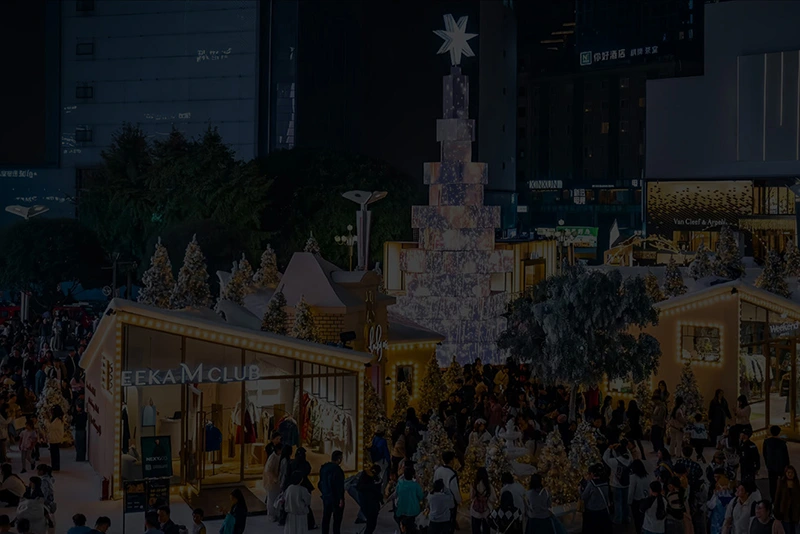
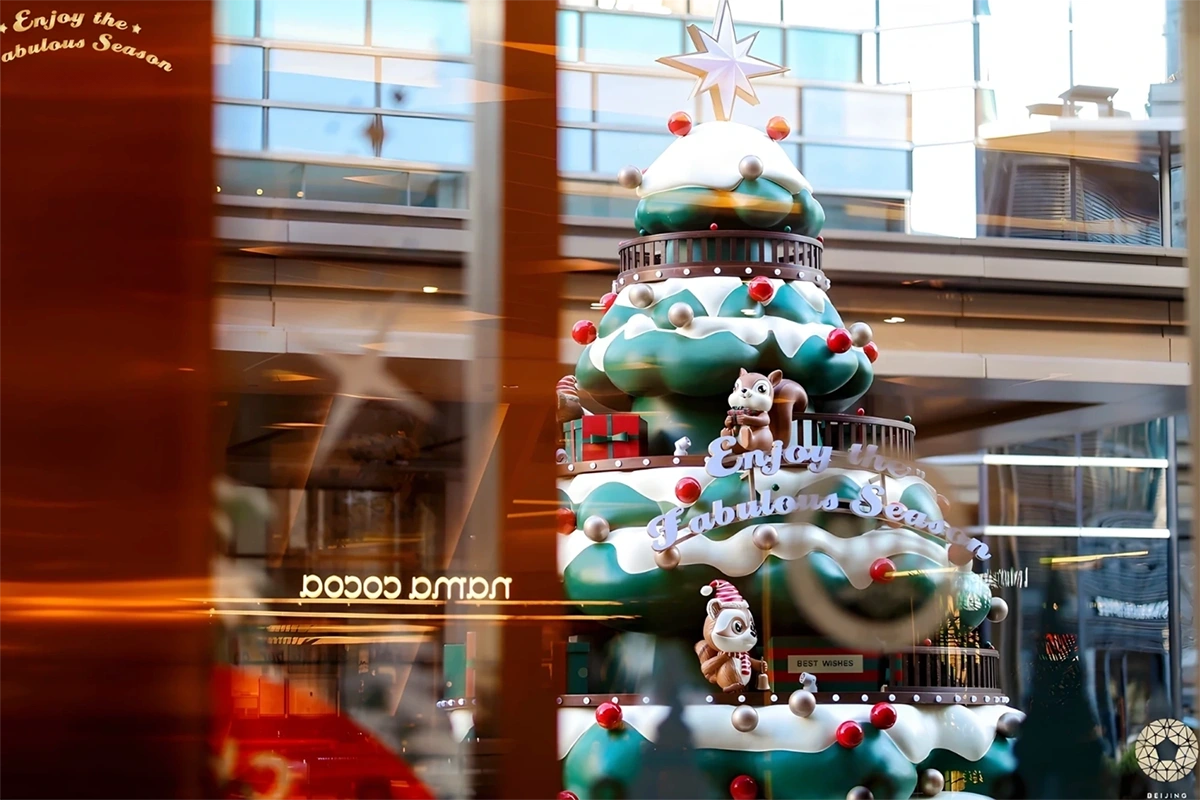
For shopping centres, commercial property developers, brand activations and major festive events, Christmas is about much more than creating a seasonal atmosphere. It is also a valuable opportunity to attract visitors, elevate the look and feel of a space, and deliver memorable brand experiences. In a large commercial environment, a successful Christmas installation is the result of a coordinated process that can include project planning, design development, structural fabrication, material processing, factory assembly and on-site installation. Turning a concept into a finished installation is not simply a matter of reproducing a rendering. It requires creative thinking to work hand in hand with structural engineering, manufacturing expertise, logistics planning and a clear understanding of the installation site.
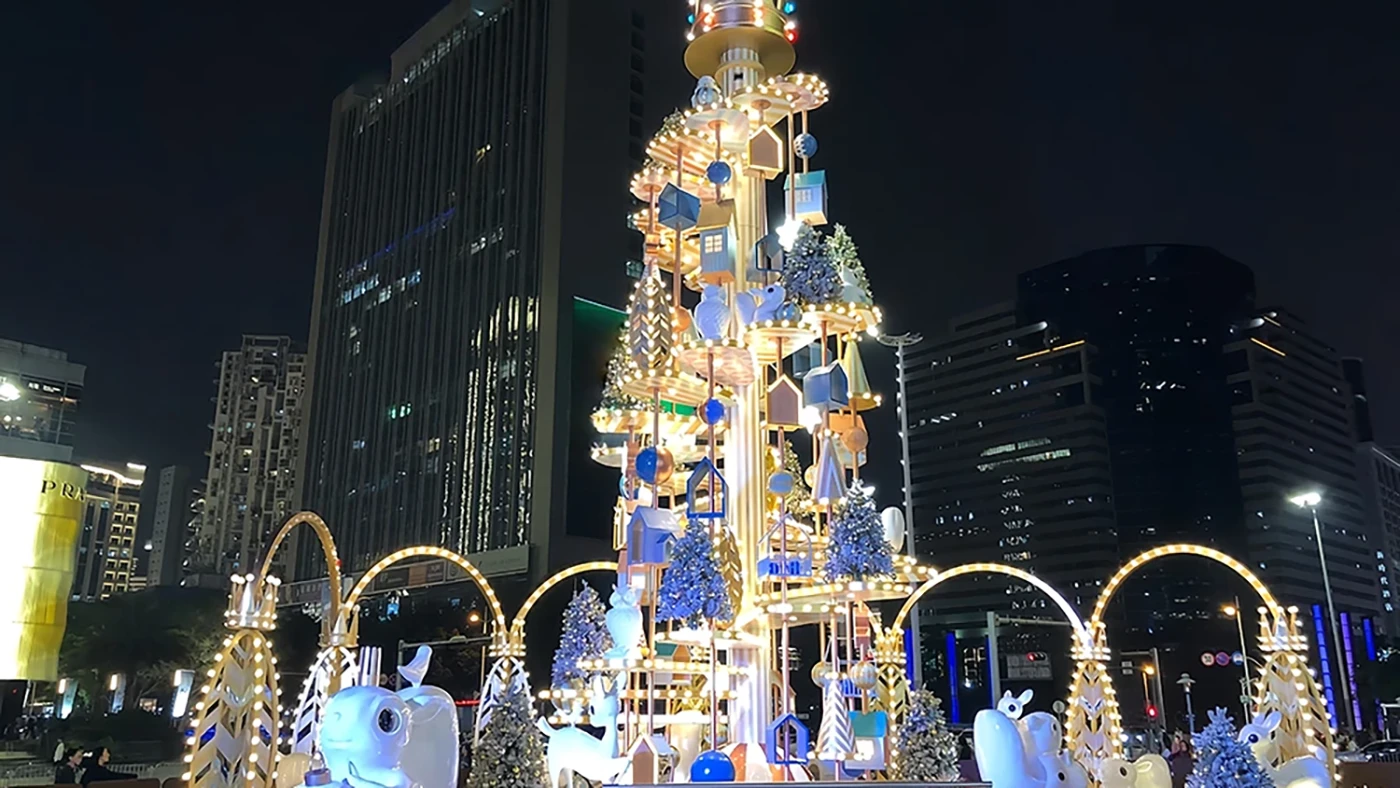
For clients, understanding how large-scale Christmas installations and props are produced makes it easier to plan budgets and delivery schedules. It also provides a practical way to assess whether a prospective manufacturing partner has the experience and resources to deliver a complex commercial project. This is particularly important for installations such as shopping centre atrium displays, oversized Christmas trees, themed arches, giant gift boxes, interactive features and immersive festive environments, where decisions made at every stage can affect the finished result.
As a specialist manufacturer of bespoke installations and props for commercial environments, we see a successful Christmas project as a process that runs from the initial brief and design development through structural assessment, production, quality control, shipping and on-site installation, followed by acceptance, maintenance and potential reuse. The key stages are outlined below.
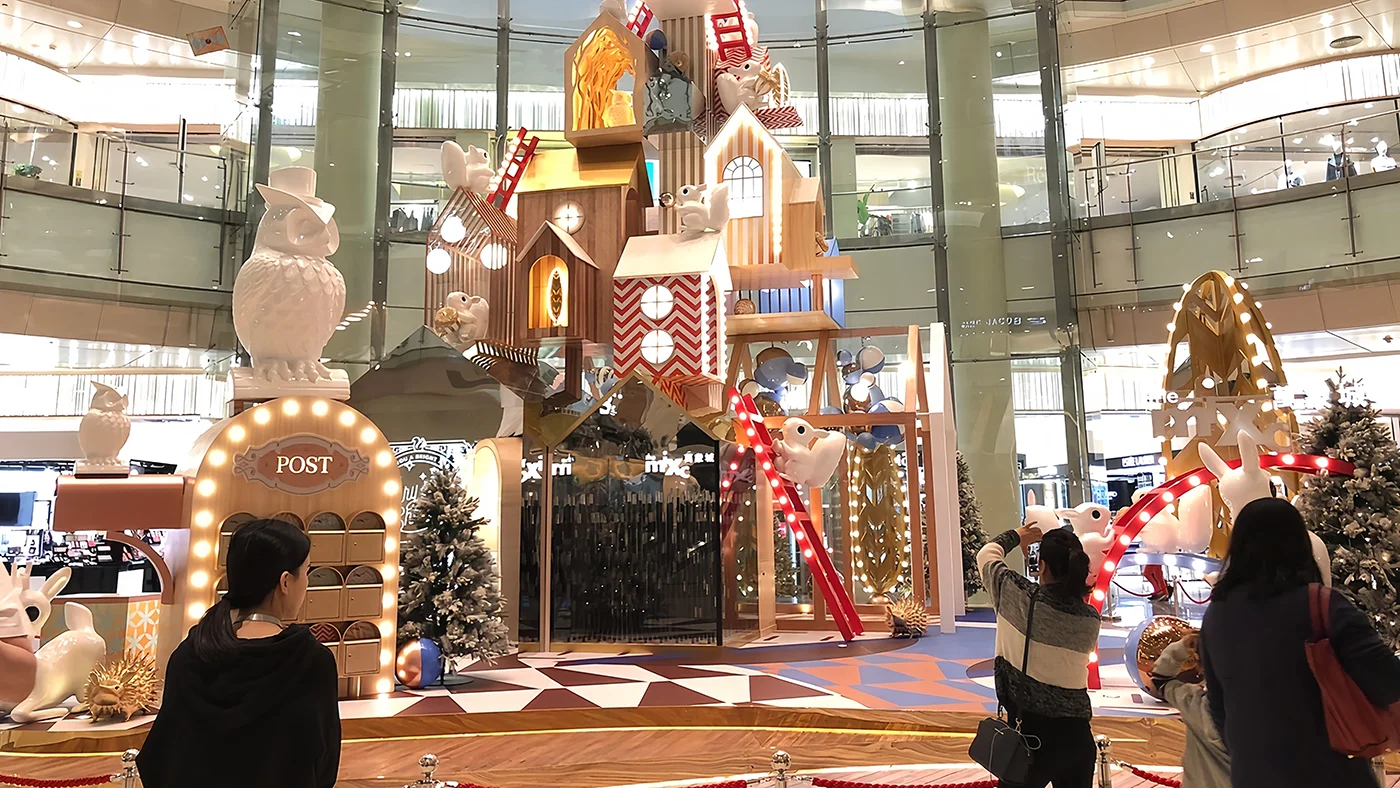
The first step in a large-scale installation project is not to start manufacturing straight away. It is to understand exactly what the client needs and how the finished installation will be used.Requirements can vary considerably from one commercial setting to another. A shopping centre atrium may call for a central feature with a strong visual presence. An entrance display may need to reinforce brand recognition while setting a festive tone. A retail environment may need to balance product visibility with customer interaction and photo opportunities. Outdoor festive events, meanwhile, require additional planning around weather exposure, ground conditions and public safety.
Before design development and production begin, a manufacturer specialising in large-scale Christmas installations should clarify the following information with the client
1.Project location Will the installation be positioned in a shopping centre atrium, commercial plaza, building entrance, retail space or outdoor event area
2.Dimensions and quantities Confirm the overall height and width, floor area, number of individual modules and spatial relationship between different elements.
3.Design direction and visual theme Establish whether the concept includes Christmas trees, snowy landscapes, reindeer, Santa Claus figures, gift boxes, festive arches or other themed features.
4.Display period Confirm how many weeks or months the installation will remain in place and whether it is intended to be reused in future seasons.
5.Budget and project schedule Agree the production budget, manufacturing lead time, shipping period, on-site installation window and planned opening date.
6.Site constraints Check ceiling height, floor loading capacity, freight lift dimensions, delivery routes, fire exits and the time slots available for installation work.
For complex, large-scale commissions, clients should ideally provide site photographs, floor plans, dimensioned drawings, design renderings and any relevant technical documentation.For example, when planning an 8-metre Christmas tree for a shopping centre atrium, confirming the visual concept is only part of the brief. The team also needs to establish the actual atrium height, the footprint available for the base, nearby pedestrian flows, the route for moving components into the space and the access requirements for installation equipment.The more complete the project information is at this stage, the less likely the team is to encounter avoidable redesign, dimensional discrepancies or installation problems later in the process.
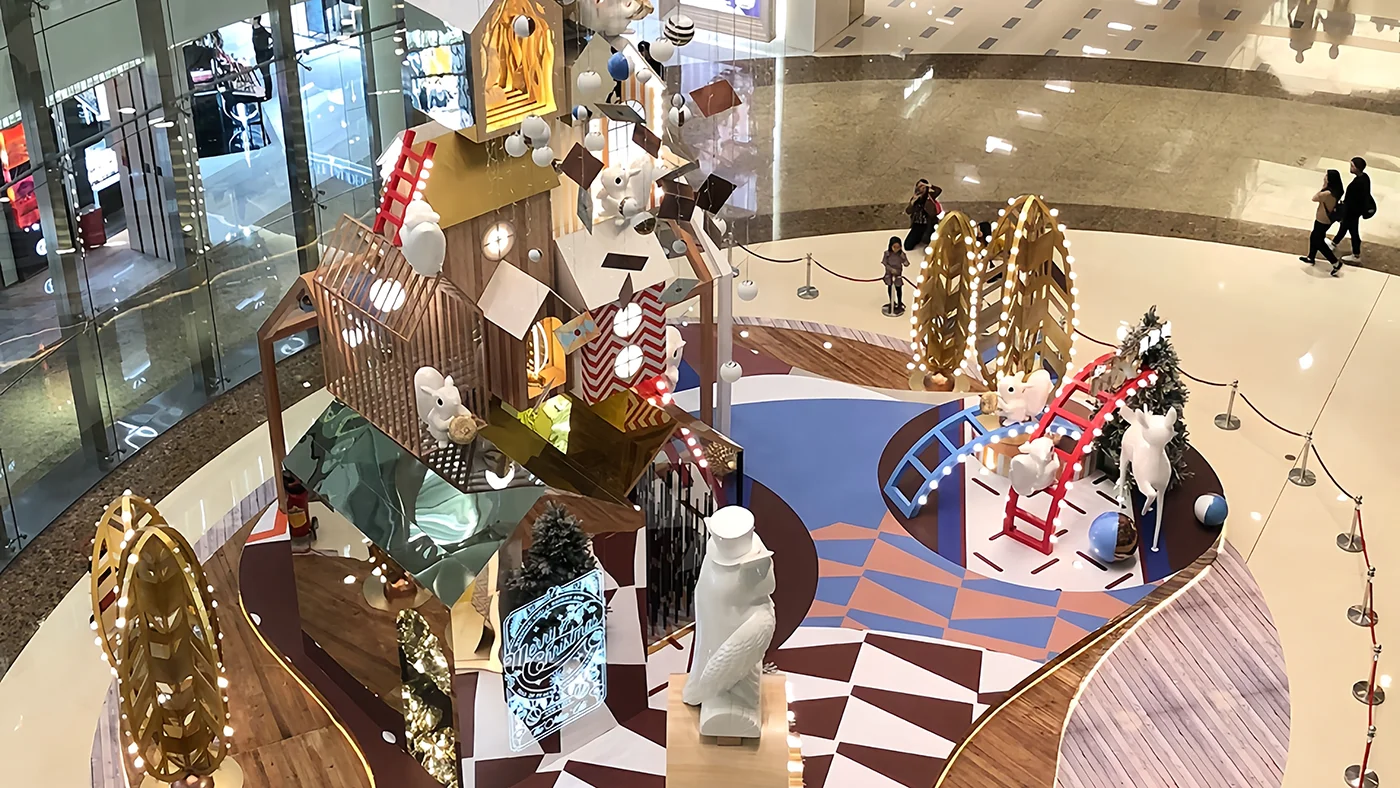
Once the project brief has been agreed, the next stage is design development.Client-provided renderings are useful for communicating the overall look and feel of an installation, but they are not necessarily suitable for direct use on the factory floor. Complex features such as oversized Christmas trees, sculptural snow scenes, three-dimensional character figures and large themed arches need further technical development before a reliable manufacturing plan can be established. Their appearance, structure and assembly requirements must be translated into practical production details.A specialist manufacturer will typically work through the following tasks.
The installation is divided into workable modules according to its appearance, dimensions, fabrication requirements and transport constraints. Each module must be suitable for manufacture, handling, transportation and eventual assembly on site.
A large Christmas-themed castle, for example, may need to be broken down into its main frame, façade elements, towers, gateways, roof sections and integrated lighting modules.A well-planned modular design can make oversized structures easier to transport, simplify installation on site and improve access for future maintenance.
Large-volume or tall Christmas installations need internal support systems designed around their intended use and actual site conditions.Typical structural materials include steel, aluminium alloy, timber and other suitable engineering materials. The right specification depends on the installation’s dimensions, self-weight, external form, installation method and operating environment.
The design team must also define how the modules will connect. This may involve bolted joints, welded connections, plug-in or spigot-and-socket connections, and other module-fixing methods. The connection details should allow the components to be assembled in the correct order and secured as intended.
Depending on the complexity of the project, design development should go beyond overall visualisations and produce the technical information needed for fabrication and installation. This may include
(1)Overall 3D models and exploded views of the installation.
(2)Key structural dimensions and details of critical joints.
(3)Manufacturing dimensions and material schedules for individual modules.
(4)Specifications for surface colours, textures and finishes.
(5)Locations and installation details for lighting, electrical and interactive equipment.
(6)Packing dimensions, transport breakdown plans and the proposed on-site assembly sequence.
The move from a concept rendering to a set of production-ready drawings is a defining part of bespoke installation fabrication.Once the design has been properly developed, the designers, engineers and factory production teams can work to the same technical brief. This helps keep the finished installation aligned with the approved concept and reduces the risk of costly discrepancies.
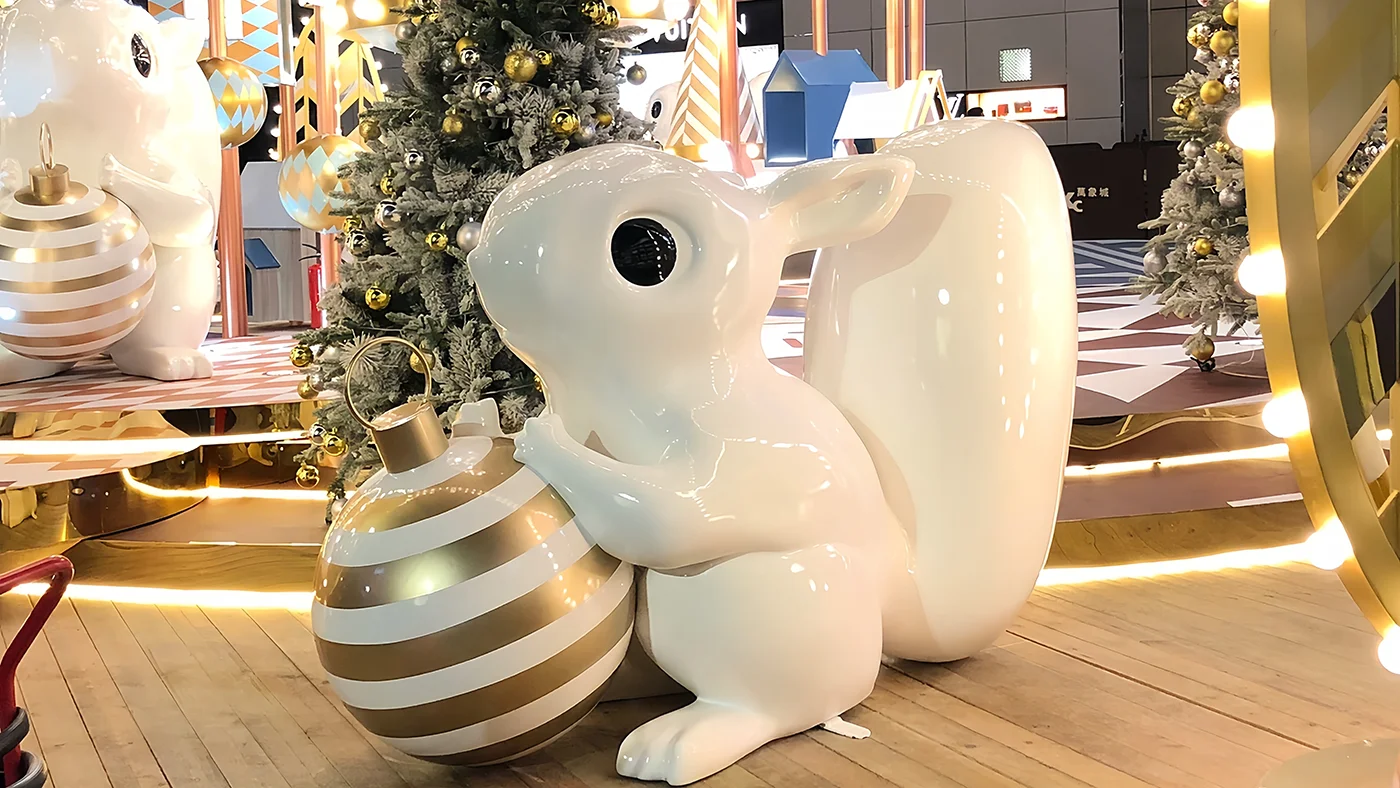
After the design has been developed, the structure and its safety requirements must be assessed against the conditions in which the installation will operate.This stage is especially important for tall atrium features, suspended installations, giant Christmas trees and outdoor festive displays.
The safety of a large installation cannot be judged simply by looking at the thickness of its outer panels or the weight of the materials used. A proper assessment needs to consider the complete structure, connection details, base support, installation method and conditions at the site.
The assessment should consider the installation’s centre of gravity, base support, structural connections and load paths.For tall, freestanding features, stability needs to be evaluated in relation to the overall height, base dimensions, structural arrangement and site conditions. For suspended installations, the team must verify the proposed suspension points, connecting components and suspension system, as well as the allowable loading conditions confirmed by the building owner.
Where a project involves load-bearing structures, areas accessible to the public or specialist suspension systems, the necessary calculations and technical reviews should be carried out by suitably qualified and experienced engineers.
Indoor and outdoor installations are exposed to different operating conditions.For displays inside shopping centres, key considerations typically include public access and contact, the possibility of accidental impact, base anchoring, fire safety requirements and the safe management of electrical cables.
Outdoor installations require additional consideration of wind loads, rainfall, temperature changes, ground conditions and general weather exposure.For large outdoor Christmas and holiday displays, the manufacturer should set out the design conditions and limitations clearly. A blanket assurance that an installation is suitable for every kind of weather is not a substitute for a project-specific assessment.
Commercial venues often have substantial pedestrian traffic. Installations should therefore be designed and finished to avoid sharp edges, exposed fasteners, trapping or pinch points around moving components, and cables that could create trip hazards or obstruct circulation routes.
The UK’s Health and Safety Executive (HSE) publishes guidance on the safe erection and dismantling of temporary demountable structures. This guidance can provide a useful reference when planning structural controls and construction safety for event projects.
Safety planning needs to cover both installation and dismantling. It should not focus solely on whether the finished display is safe once it is open to the public.Specific engineering reviews, fire safety provisions and site acceptance requirements will depend on the country or region, the venue operator’s rules and the installation’s intended use. These requirements should be confirmed for each project.
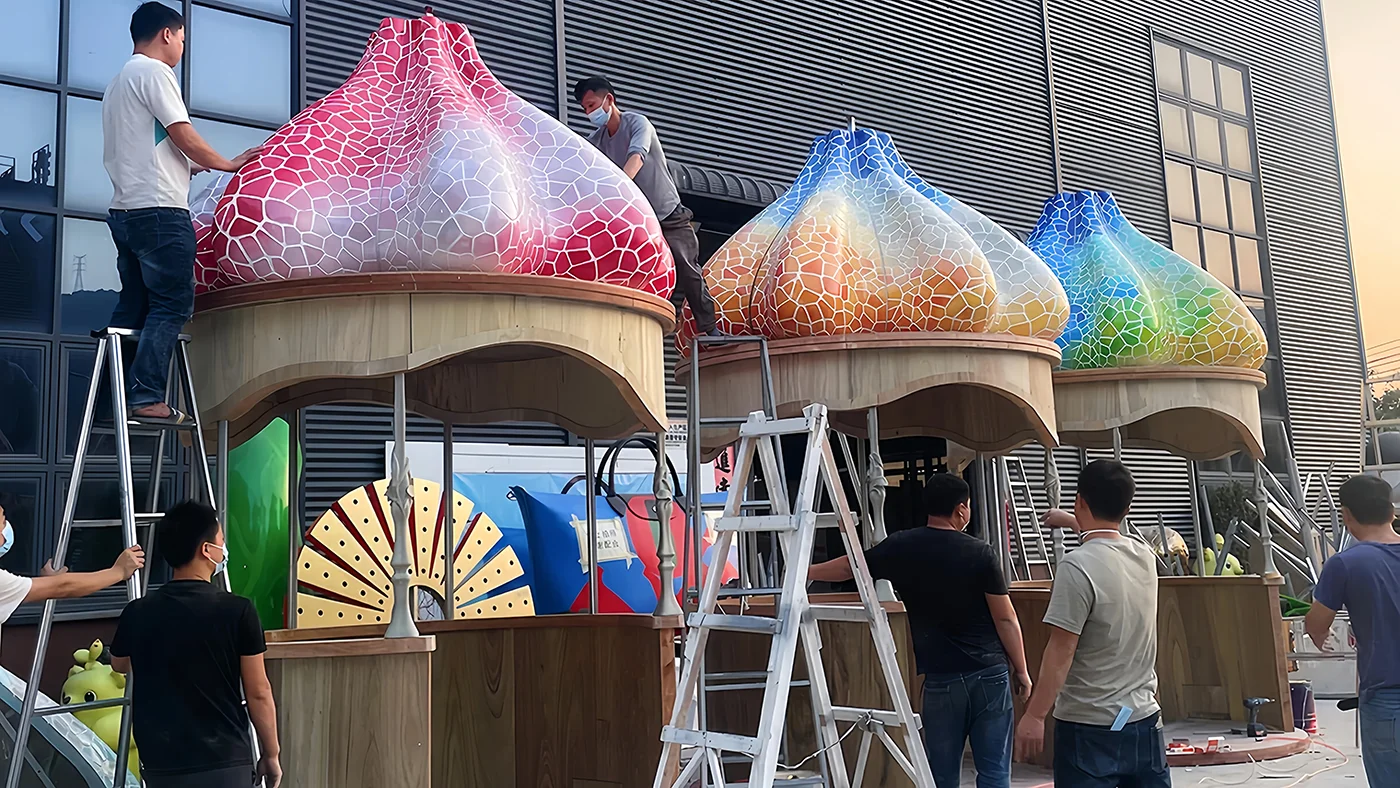
Once the design has been developed and the necessary structural assessments completed, the project can move into material selection and prototyping.Material choices have a direct bearing on the appearance, structural performance, overall weight, manufacturing complexity and long-term maintenance costs of a bespoke Christmas installation.There is no single material that works for every project. The specification needs to reflect the purpose, form and operating conditions of each installation.
Materials commonly used to manufacture large-scale festive installations include
(1)Metals Steel and aluminium alloys are commonly used for internal frames, structural connections and decorative elements where the metal is intended to remain visible.
(2)Timber and sheet materials Plywood and MDF can be used for shaped bases, decorative surfaces and support components, depending on the design and application.
(3)Acrylic and other transparent materials These are suitable for transparent display elements, light-diffusing features and selected decorative forms.
(4)Fibreglass and composite materials These work well for irregular curved surfaces, three-dimensional character figures and more complex sculptural shapes.
(5)Foam and lightweight modelling materials These can be used to create large decorative forms, but may need surface reinforcement and protective finishing to suit the intended environment.
(6)Textiles and flexible materials These are useful for decorative backdrops, soft sculptures and selected visual details.
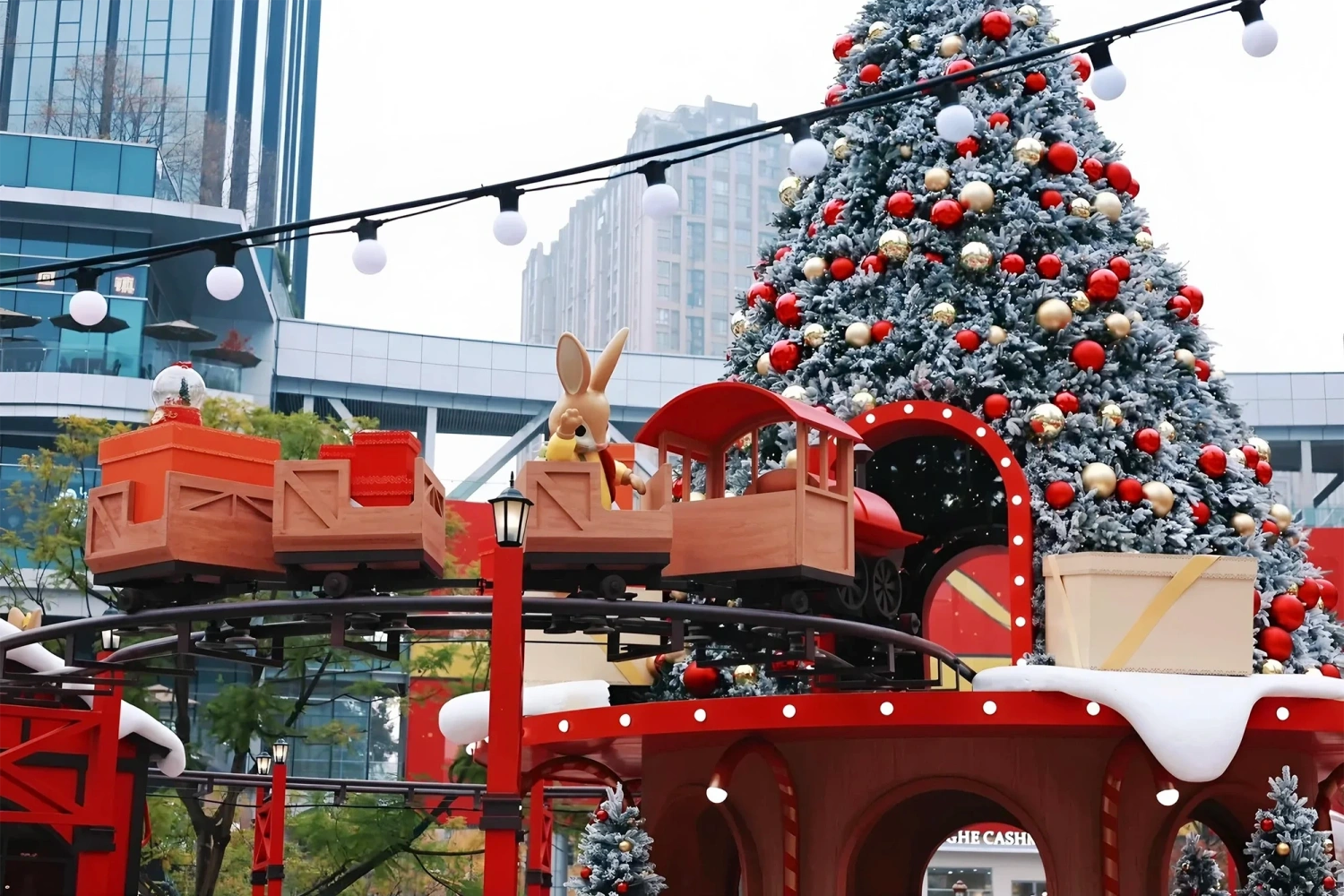
For installations such as large Christmas trees, three-dimensional arches and oversized gift boxes, a combination of materials is often required. An internal frame provides the supporting structure, while other materials create the external form and decorative finish.
For projects involving special colours, distinctive textures, transparent effects or complex curved surfaces, it is advisable to produce material samples or partial prototypes before full production begins.
For example, the team may need to
(1)Approve key festive colours, such as red, gold and green.
(2)Review spray-painted, brushed or other finishes on metal surfaces.
(3)Check the transparency and light-diffusion performance of acrylic components.
(4)Inspect engraved textures, sculptural forms and decorative detailing.
(5)Test how localised lighting interacts with the selected surface materials.
For large Christmas and holiday installations where visual consistency is important, approving samples in advance helps reduce the risk of discovering differences in colour, texture or workmanship after full-scale production is already under way.
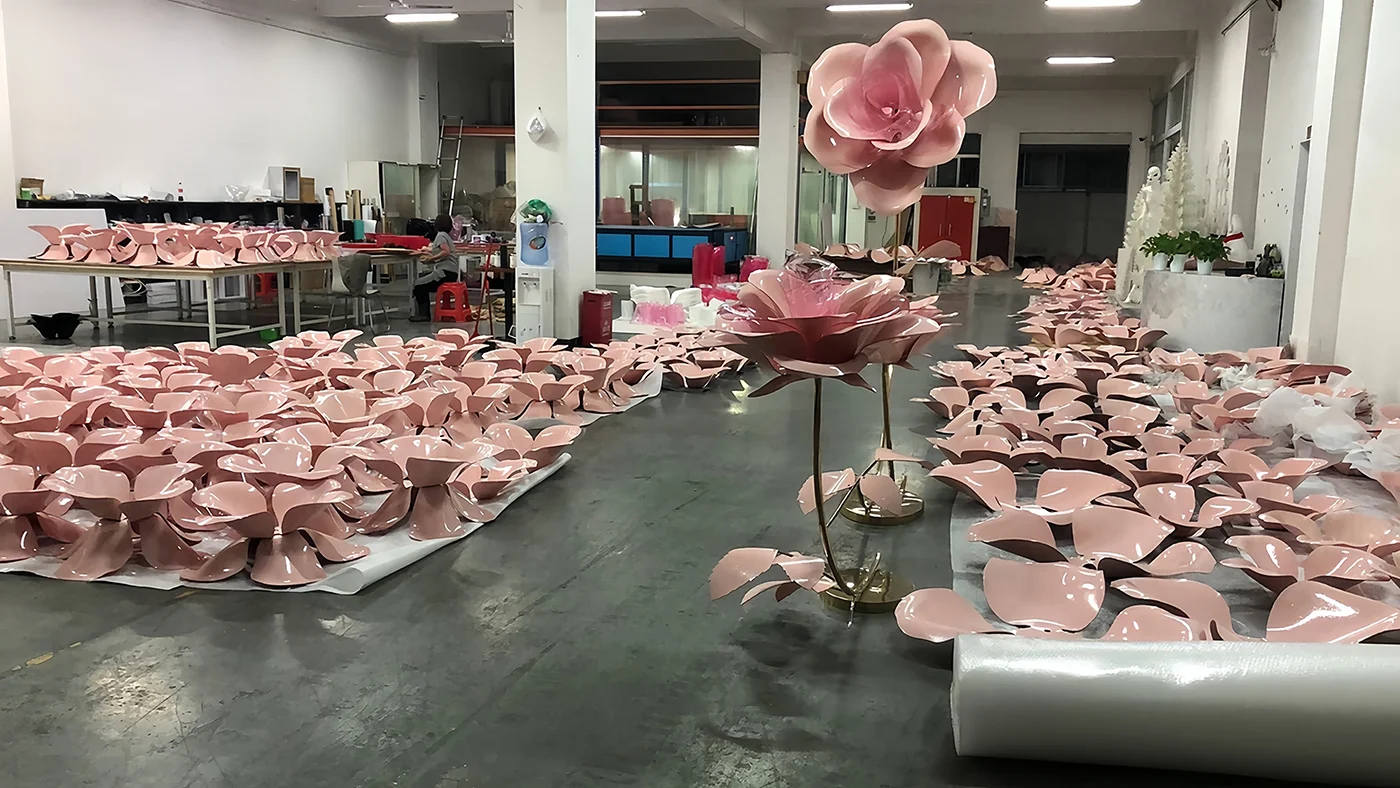
Once the materials and manufacturing processes have been confirmed, the project moves into factory production.This is a central stage in the Christmas installation production process and one of the clearest indicators of a manufacturer’s practical fabrication capabilities.
Large installations are rarely made by simply joining a collection of materials together. They usually require several specialist trades to work in coordination, following the approved drawings, structural design and process requirements.
The first step is to fabricate the metal frame or other supporting structure in accordance with the structural drawings.Depending on the design, production work may include cutting materials to size, welding, drilling, making connectors and assembling structural components to the specified dimensions.
For large Christmas trees, themed structures and three-dimensional decorative models, the internal frame must follow the external design while providing the required overall support. It also needs to leave sufficient room for the subsequent installation of cladding, decorative finishes and other components.
Once the frame is ready, the factory can begin producing the external structure and decorative elements.The processes involved will depend on the design and may include woodworking, sheet-material cutting, CNC machining, carving, forming curved surfaces, fibreglass fabrication and other bespoke techniques.
For example
(1)An oversized Christmas gift box involves fabricating the box body, corner details, decorative ribbons and surface finish.
(2)A three-dimensional Santa Claus figure requires the production of the internal structure, facial features, costume details and outer coating.
(3)A large snow-scene installation may involve a series of elements at different heights and in different shapes, together with carefully developed surface textures.
(4)A Christmas-themed arch requires a main supporting frame, external decorative components and secure connection details.
Different materials and shapes call for different fabrication methods. A production process cannot be reliably worked out from a visual rendering alone.
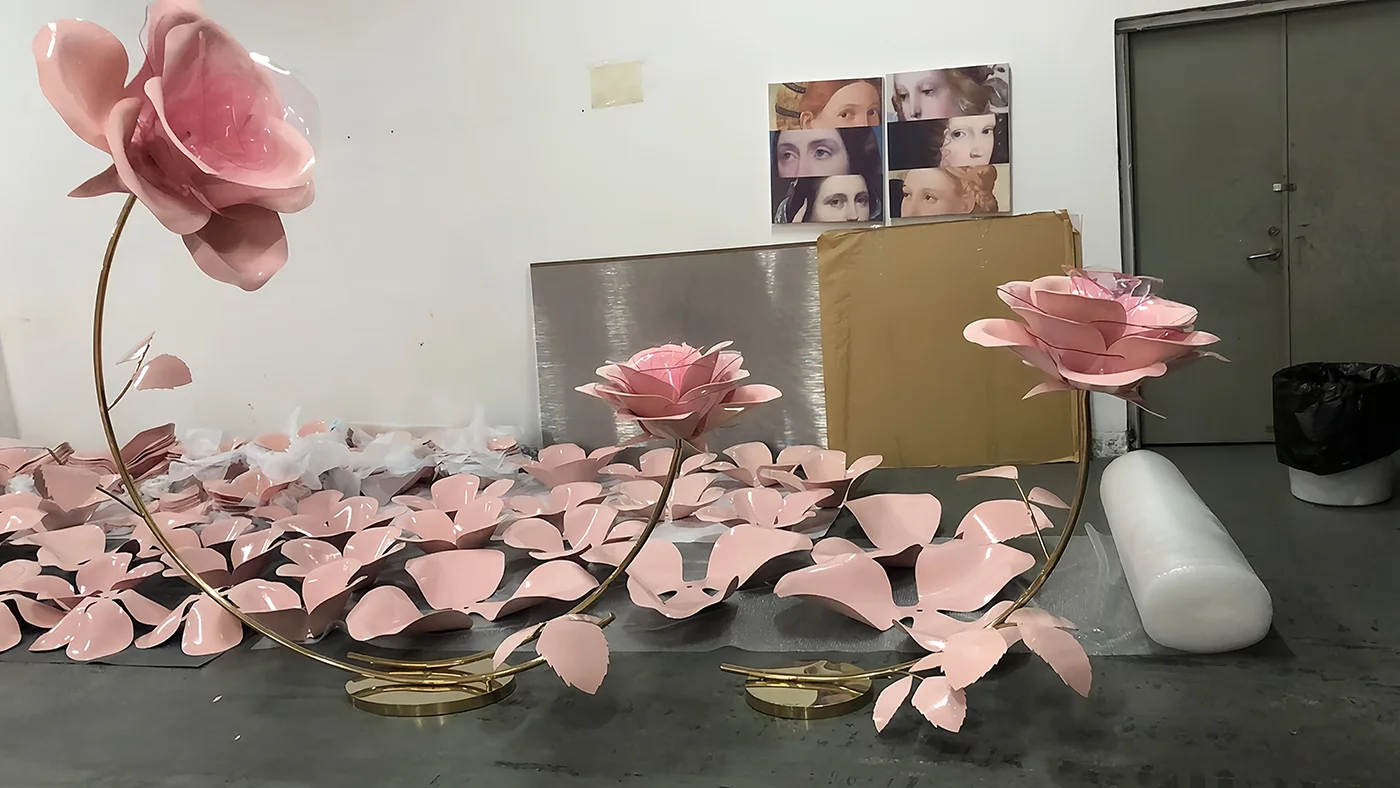
After the external form has been fabricated, it moves through the required finishing processes. These may include sanding, filling and touch-ups, priming, spray painting, protective coating and the installation of decorative details.Where the design calls for wood-grain effects, metallic finishes, snowflake patterns, stone-like textures or specialist coatings, the relevant treatment needs to be selected and applied to match the approved specification.
For Christmas installations that will remain on display in shopping centres for an extended period, the finish should also be suitable for routine cleaning, public contact and occasional scuffing or impact. The team should consider the additional wear that may occur during later transport and storage, particularly if the installation is intended for reuse.
If the installation includes LED strips, illuminated lettering, string lights, programmed lighting effects or interactive equipment, the factory should allow for the necessary wiring routes, mounting interfaces and maintenance access during production.Electrical components must be specified and installed in line with the applicable electrical safety requirements. Checks should cover circuit protection, connection methods and whether components can be accessed for inspection and maintenance.
On large Christmas trees and immersive festive displays in particular, lighting is often a major part of the visitor experience. Fixture positions, brightness, cable routing and control arrangements should therefore be planned before fabrication is complete, rather than treated as an afterthought.
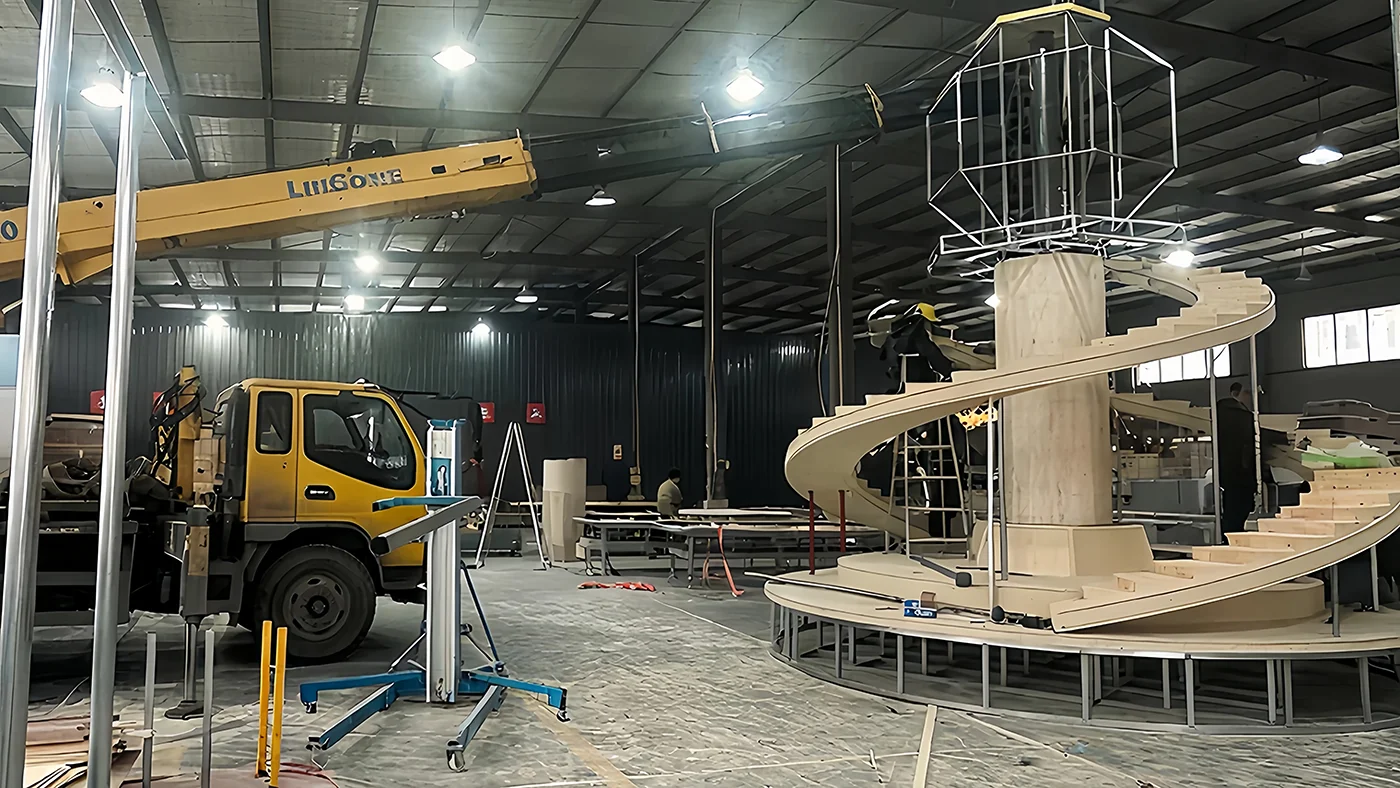
Completing the individual components does not automatically mean that an installation is ready to be packed and shipped.For large bespoke projects, factory pre-assembly is recommended where the scale or complexity of the design makes it appropriate. This involves carrying out a trial assembly and the relevant checks at the factory, using the intended on-site installation sequence as a reference.
Pre-assembly gives the team an opportunity to identify dimensional, connection, design and electrical issues before the components leave the factory. It can significantly reduce uncertainty during installation at the project site.
Confirm that the finished components match the approved drawings. Checks should cover the overall height and width, base dimensions, module interfaces and the specified positions of individual components.
For installations destined for shopping centre atriums, it is also important to check whether the largest assembled or transported sections can pass through freight lifts, doorways and internal access corridors.
For modular installations, verify that every section can be connected and, where required, dismantled correctly.
A large Christmas tree, for example, may be manufactured in separate sections comprising the trunk, upper tree sections and base decorations. During pre-assembly, the team should check that these modules align properly and fit together as intended.Bolts, connectors, supports and other critical connection points should also be checked for looseness, deformation and visible manufacturing defects.
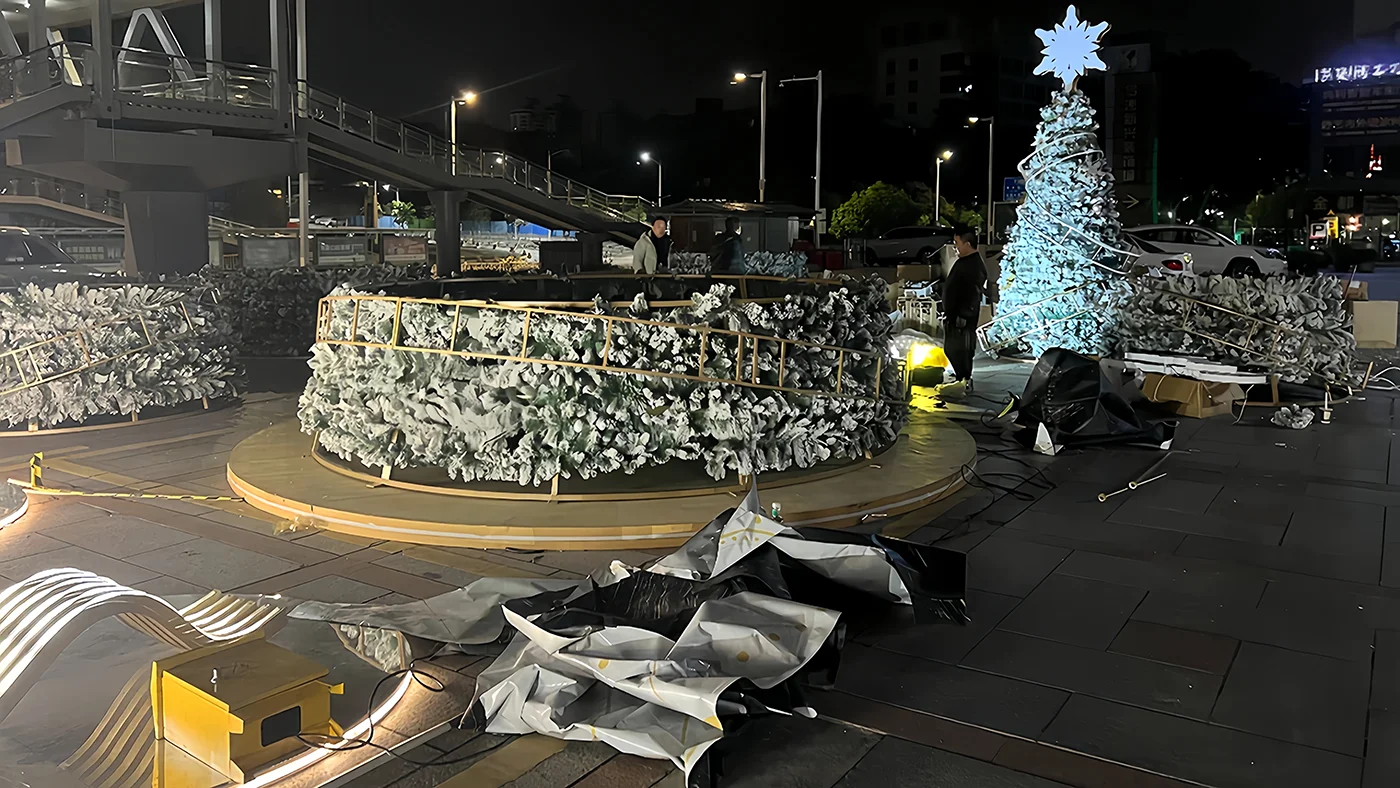
The inspection should cover the following points
(1)Does the finished installation match the approved design intent
(2)Do the surface colours and materials match the approved samples
(3)Are there any noticeable scratches, dents, cracks or coating defects
(4)Are all decorative details securely attached
(5)Are the lighting effects working as specified
(6)Have visible connection points been properly concealed and finished
For illuminated festive installations, carry out the necessary power-on tests in accordance with the design specification. Confirm that the lighting fixtures, wiring, control systems and connection interfaces all work correctly.
Where the installation contains several independently controlled lighting zones, check the programmed sequence, control method and overall visual effect in each area.The main benefit of factory pre-assembly is that as many potential issues as possible can be dealt with before dispatch, rather than being left for the team to resolve at an overseas project site.
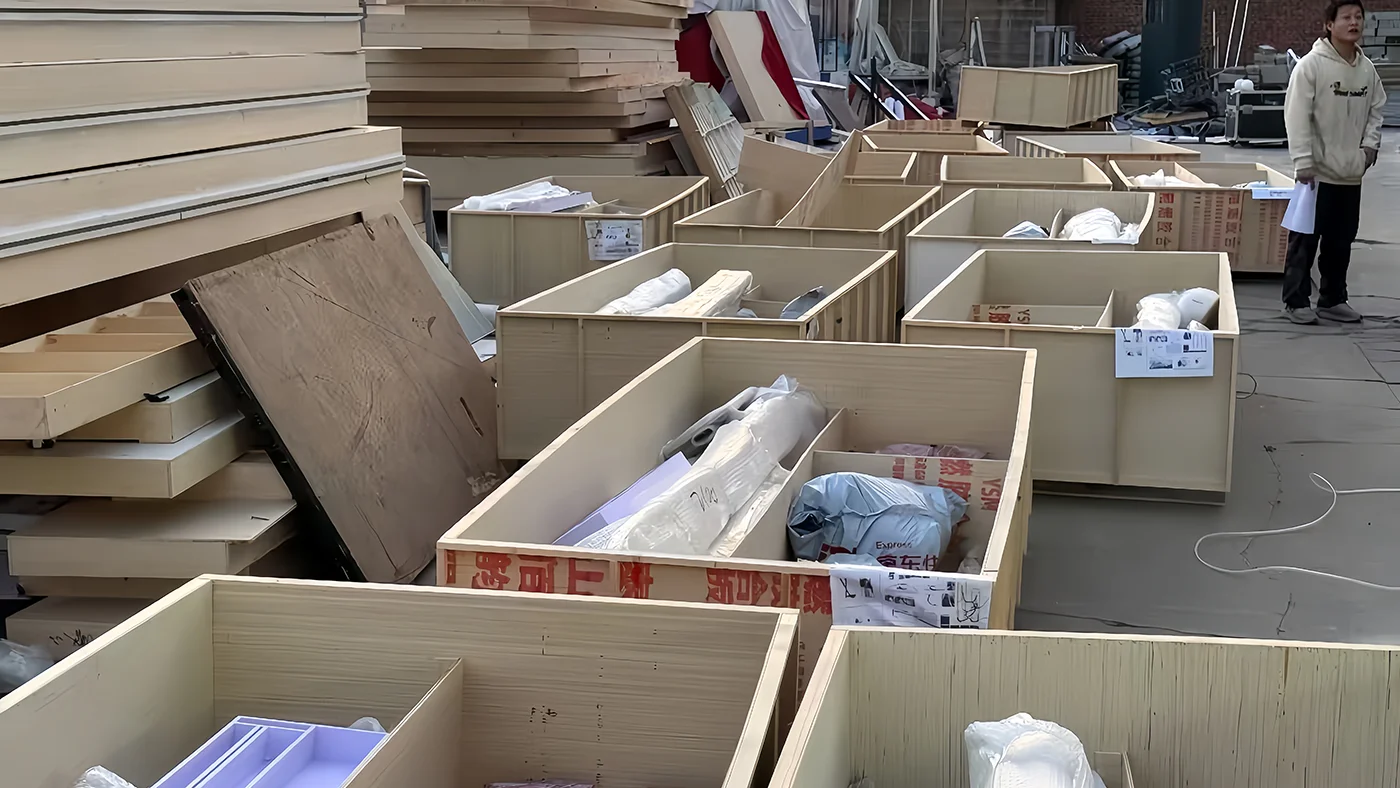
For international commercial installation projects, packaging and shipping affect more than the logistics budget. They also have a direct impact on the condition of the finished product when it reaches the client.
This is particularly relevant to oversized festive props, irregularly shaped components and installations with intricate surface details. Even a well-manufactured product can arrive with scratches, deformation, impact damage or missing parts if the packing plan is not suitable for the journey.
Different materials and structural forms need different levels and types of protection.
For example
(1)Metal structures should be securely restrained and given appropriate rust protection where required.
(2)Acrylic and other transparent components should be protected against surface scratches and pressure from hard objects.
(3)Delicately decorated parts should be wrapped or packed individually with suitable cushioning materials.
(4)Large, irregularly shaped components need properly positioned supports that take their shape and centre of gravity into account.
(5)Lighting fixtures and electrical components should be sorted, packed and protected appropriately.
Fragile or particularly delicate parts are best packed separately, with each package clearly labelled to show the component name and its installation location.
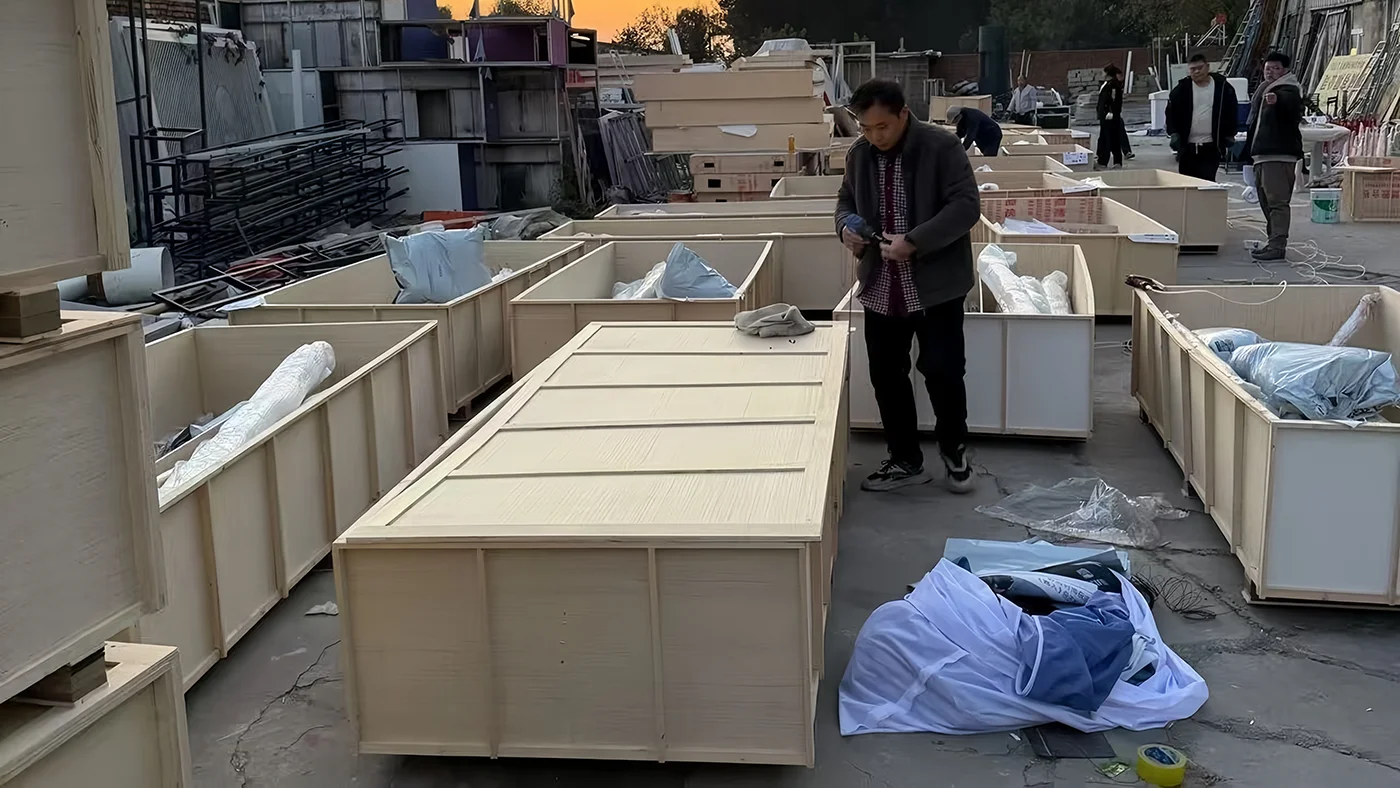
International logistics planning may need to account for sea freight, air freight, road transport, customs clearance at the destination and final delivery to the project site.Transport constraints should be considered from the design stage. A sensible modular layout can help keep individual packages within practical size limits and make handling more straightforward.
A large Christmas tree, for instance, can be divided into several trunk sections and separate decorative components. These can be packed and shipped individually, then assembled on site in accordance with a pre-agreed installation sequence.
Before dispatch, it is advisable to prepare the following documents
(1)A complete component list.
(2)A packing list showing the shipping packages or containers and their identification numbers.
(3)Component reference numbers and their corresponding installation locations.
(4)Assembly drawings and on-site installation instructions.
(5)Relevant material, electrical and test documentation.
(6)Weight and dimensional details required for transport and lifting operations.
For complex projects, photographs should be taken as each component is packed. The records should link container or package numbers with component references and their final installation locations.This makes it easier for an overseas installation crew to identify each item and avoids wasting valuable site time searching through packages for the right parts.
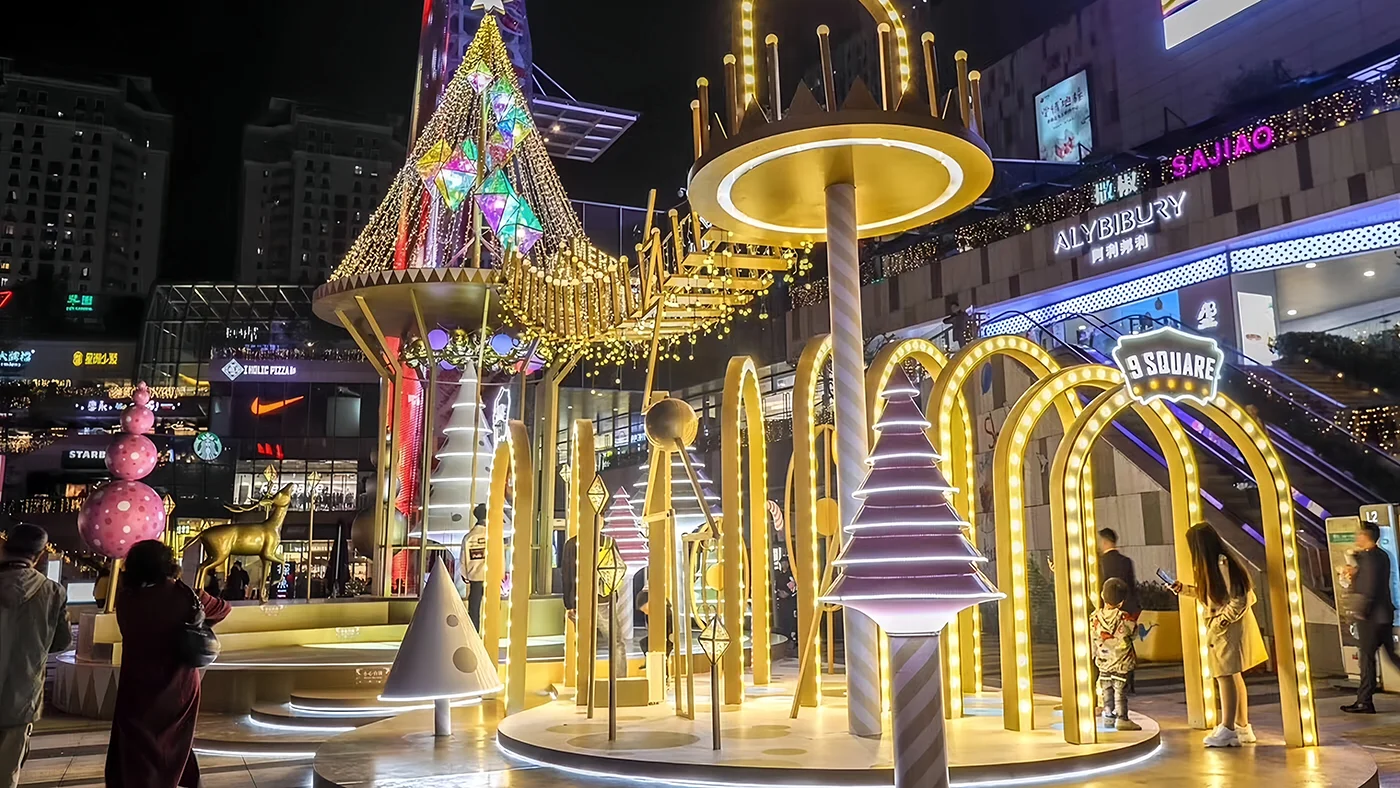
Once the installation arrives at the project site, the on-site assembly and final handover stage can begin.
For a large bespoke Christmas installation, the quality of the on-site work is just as important as the quality of factory production. Even a carefully fabricated structure can fall short of the approved design if it is positioned incorrectly, connected improperly or fitted with lighting that has not been adjusted correctly.
Before work starts, the installation team should reconfirm the following details against the actual site conditions
(1)The exact position of the installation.
(2)Floor conditions and the proposed method of securing the base.
(3)Available architectural space and installation height.
(4)Routes for moving components and bringing equipment into the area.
(5)Temporary work zones and designated routes for personnel.
(6)Power supply locations and cable routing.
(7)Shopping centre opening hours and the arrangements for obtaining work permits.
For commercial venues such as shopping centres, the project team will usually need to coordinate with the venue operator on work schedules, delivery routes and site safety procedures.
The installation crew should follow the factory’s assembly drawings, module references and construction plan.A typical sequence for a large installation may include setting out the base, assembling the internal structure, fitting the external finishes, connecting the lighting and electrical systems, completing the decorative details and carrying out a final inspection.
Where an installation is particularly tall or heavy, or requires specialist lifting methods, suitable equipment and competent personnel must be used. The relevant safety arrangements should be developed to suit the actual site conditions.
The Institution of Structural Engineers (IStructE), in its guidance on the procurement and use of temporary demountable structures, highlights the importance of involving suitably qualified personnel in design, erection and inspection. It also notes that technical specifications should reflect local requirements and that contingency arrangements for severe weather should be considered where relevant.The safety of a large temporary installation depends not only on its design and fabrication, but also on correct site assembly, inspection and operational management.
Relevant professional resource IStructE Guidelines on the Procurement and Use of Temporary Demountable Structures.
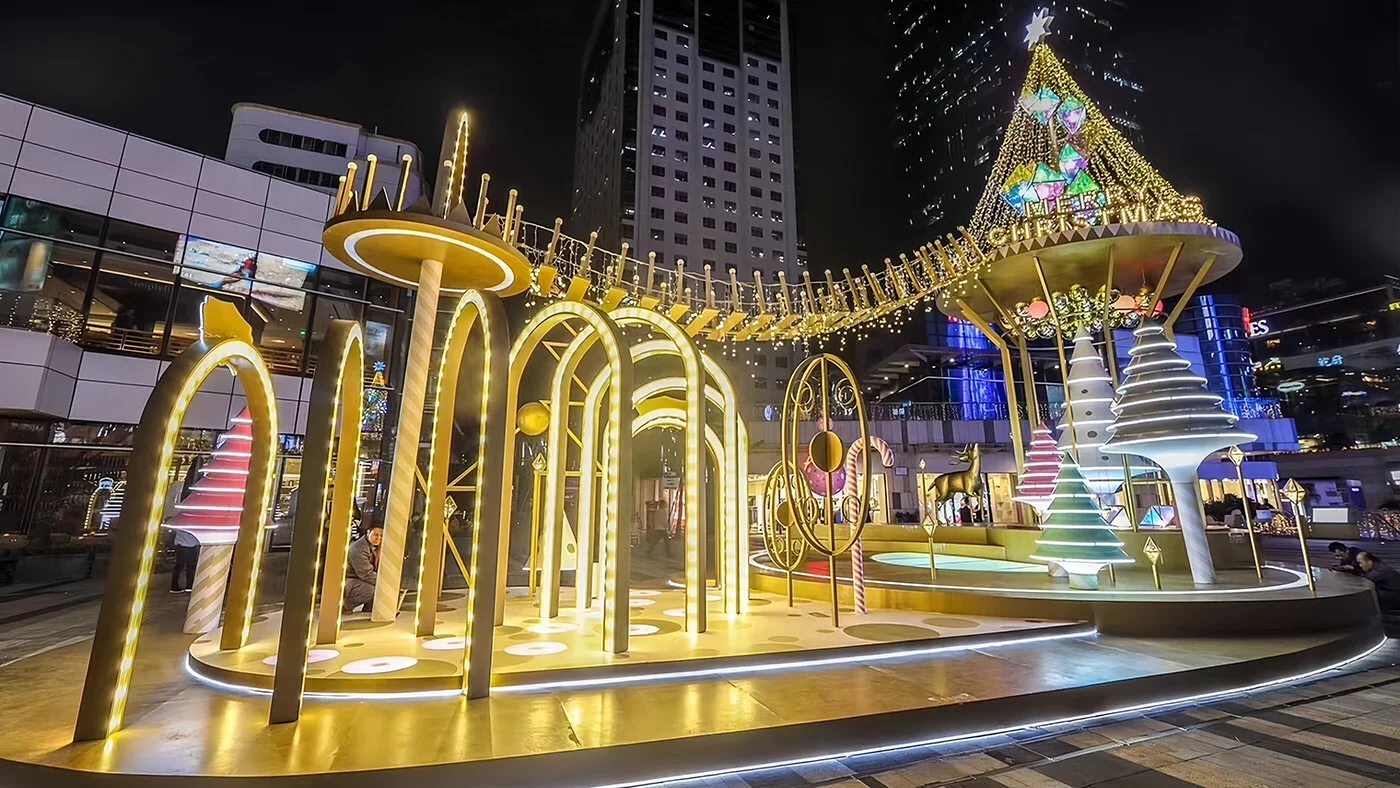
Once the main structure is in place, the team should complete the final lighting, electrical and detail checks.For Christmas scenes incorporating LED strips, illuminated structures or interactive systems, confirm that every lighting unit is operating correctly, that wiring is adequately protected and that the lighting effect in each display zone matches the approved design.Decorative elements, connection points, base supports and any areas that visitors may touch should also be checked carefully.
Final acceptance should involve more than checking whether the installation looks like the original rendering. The structure, surface finishes, lighting and suitability for the intended operating conditions all need to be reviewed.
Acceptance can be organised around the following criteria
(1)Visual acceptance Overall proportions, dimensions, colours, shapes and decorative details.
(2)Structural acceptance Connection joints, base fixings, support structures and overall stability.
(3)Lighting acceptance Lighting effects, electrical connections and control functions.
(4)Operational acceptance Routine maintenance, cleaning, public access, and ease of inspection and repair.
(5)Documentation handover Installation drawings, parts lists, maintenance instructions and the necessary technical documents.
Where the installation is intended to be dismantled and reused, the handover should also define the dismantling sequence, storage arrangements, and the packaging and transport requirements for future use.
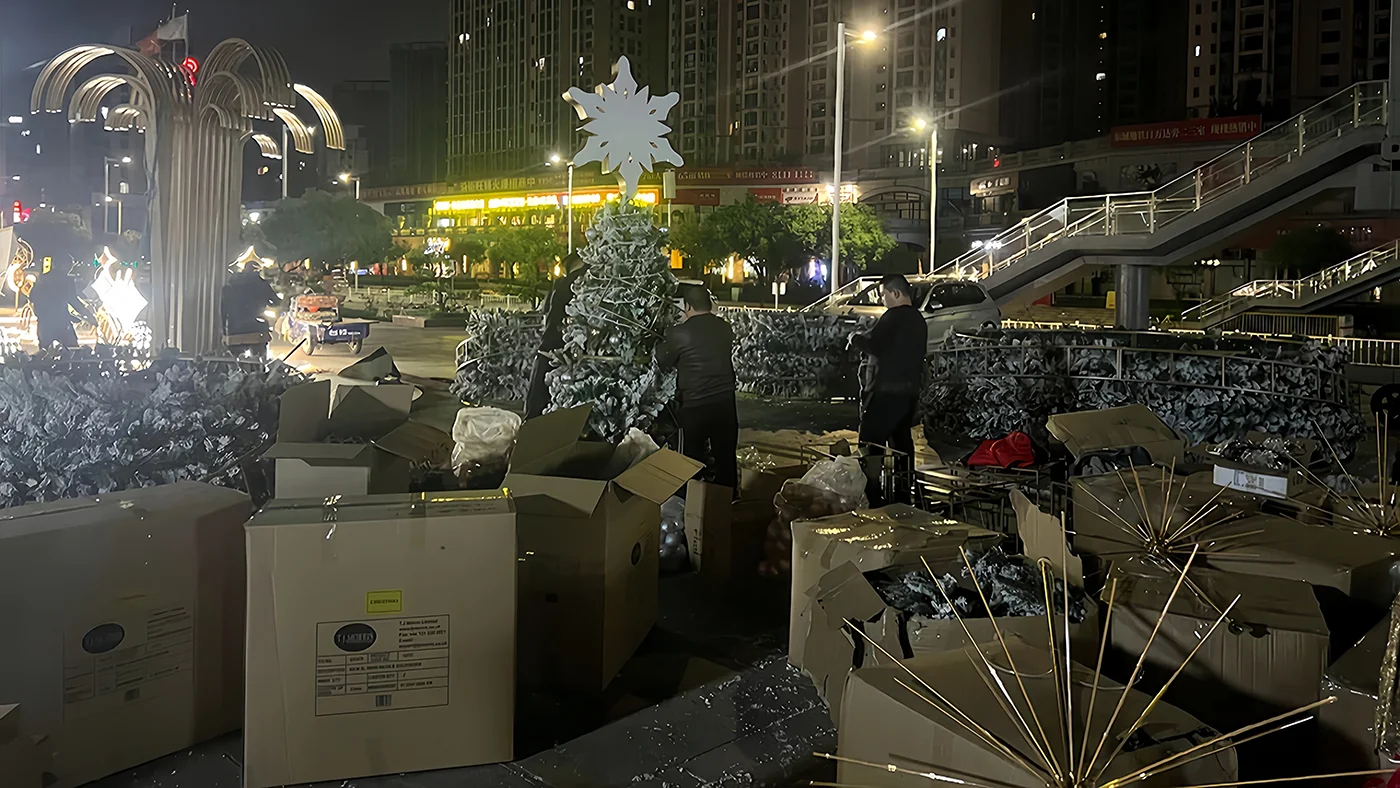
For commercial venues that stage Christmas events year after year, rebuilding every installation from scratch is not always necessary.When a project is designed from the outset with a practical modular structure and durable materials, some large installations can be used again in later seasons. The overall look can be refreshed by replacing decorative elements, updating the lighting or introducing new thematic details.This is why the design and fabrication of a large festive installation should take account of its full lifecycle, rather than focusing only on the visual impact of its first installation.
Once the display period has ended, the installation should be dismantled in a planned sequence. Each component should be identified, numbered and sorted before it is packed away.
Large primary frames, external cladding, lighting modules and intricate decorative pieces should be packaged and stored separately, with the method of protection suited to each material.
During the display period, inspections should be carried out at appropriate intervals based on the installation’s operating environment and the requirements of the project. Particular attention should be paid to connection points, areas vulnerable to impact, lighting fixtures and electrical wiring.
Any loose components, damaged surfaces or lighting faults should be addressed promptly. Early repairs can prevent minor problems from developing into more significant issues.
Large Christmas trees, themed arches, gift boxes and selected themed structures may be suitable for reuse if their decorations, colours, lighting or individual design elements can be updated without replacing the main structure.
ISO 201212024, Management Systems for the Sustainability of Events, provides a framework for managing the environmental, social and economic impacts of events in a more sustainable way.Considering material use, the potential for reuse and the full project lifecycle from the design stage can help reduce unnecessary resource consumption.
Related reference ISO 2012:12024, Management Systems for the Sustainability of Events.
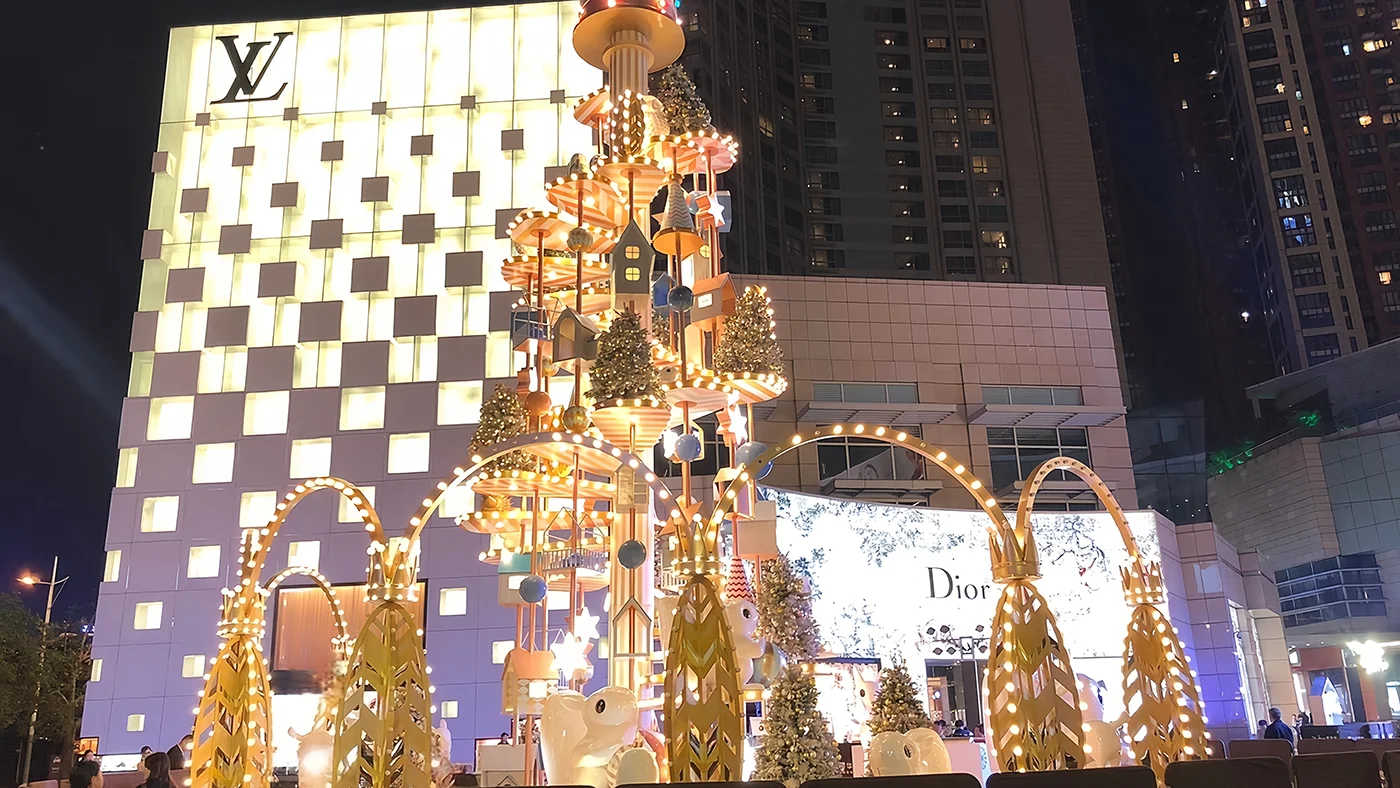
For overseas buyers, choosing a supplier should involve more than comparing quotations and design renderings. It is also important to establish whether the manufacturer has the technical expertise, production resources and project management capabilities to take the work from detailed design through to successful delivery.A manufacturer with experience in large-scale Christmas installations should be able to provide clear answers to the following questions.
Ask whether the factory has produced Christmas trees for shopping centres, festive displays for commercial spaces, themed arches, oversized decorative props or other installations of a comparable scale.
Request evidence such as photographs of completed projects, factory production images, on-site installation photographs and relevant project case studies.
Can the manufacturer turn the client’s renderings into production drawings, structural plans, bills of materials and a practical modular breakdown
A supplier that can only provide a quotation based on a rendering, but cannot explain how the installation will be fabricated, connected or assembled, may leave significant execution risks unresolved.
Find out whether the factory has the relevant in-house or managed production capabilities, including metalworking, woodworking, carving, surface finishing, model making and lighting installation.
It is also worth confirming whether the supplier can provide a production schedule, material or sample approvals, factory pre-assembly and pre-dispatch quality checks.
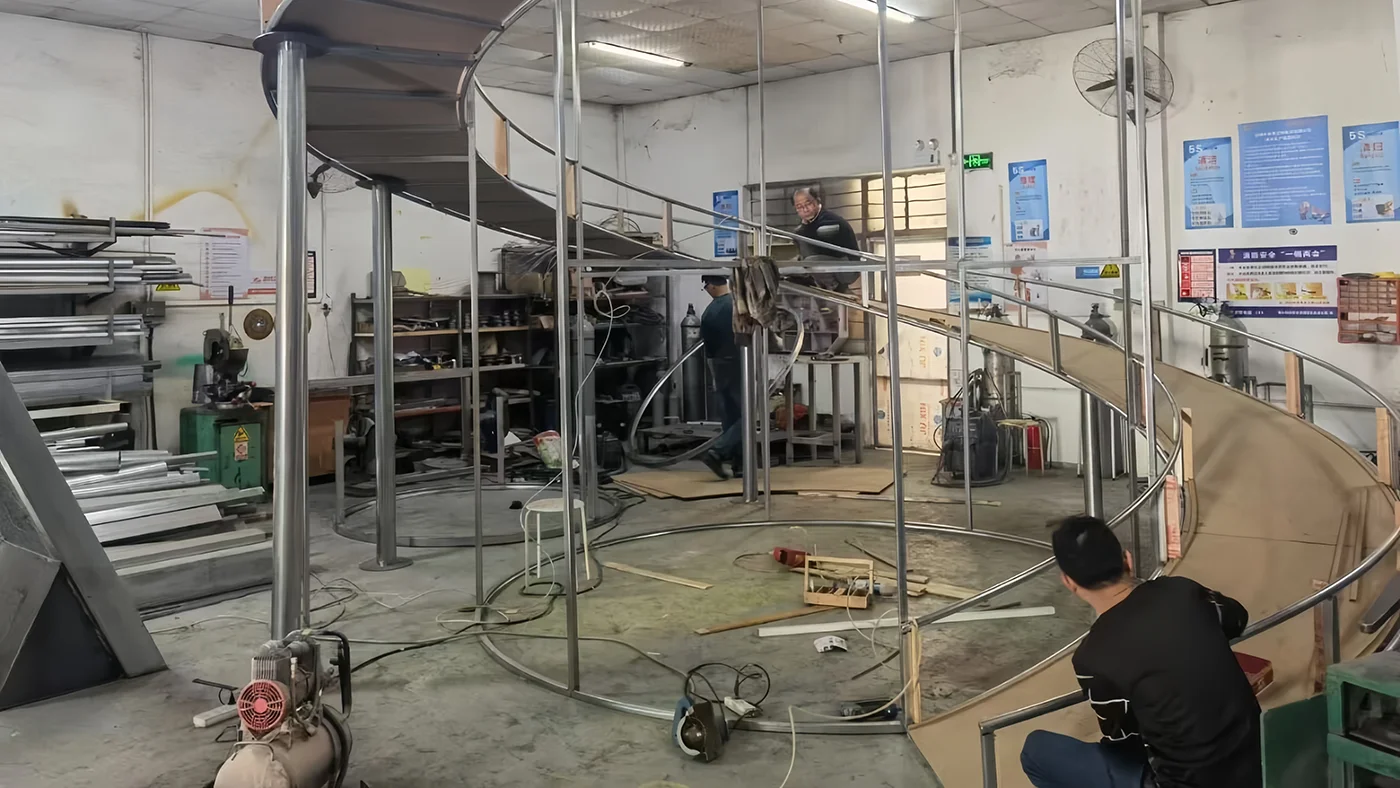
For overseas projects, the installation needs to be packed at the factory, shipped internationally, delivered to the destination and moved into position for assembly.
A capable manufacturer should consider component dimensions, packing methods, shipping weight, installation drawings and the on-site assembly sequence from an early stage. These details are an important part of assessing whether a supplier can deliver the project successfully.
A professional supplier should be able to provide clear, timely information throughout the project. This may include technical drawings, material approvals, production schedules, quality inspection records, packing lists and installation documents.
Having this information properly organised helps reduce communication gaps in cross-border projects and gives clients better visibility and control over the full delivery process.
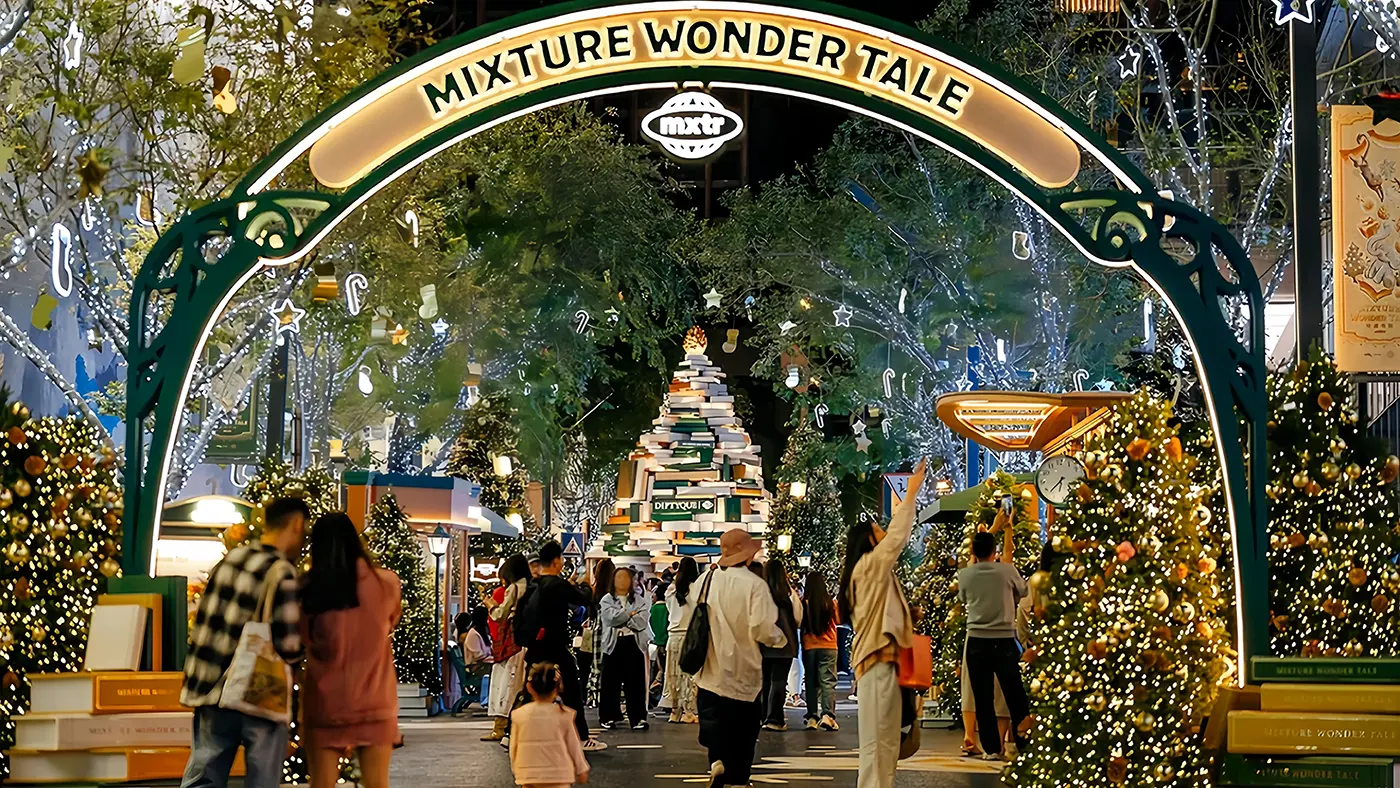
A successful commercial Christmas display is not defined by attractive visuals alone. It also depends on a reliable production process, sound structural design, appropriate material selection, thorough quality control and professional on-site installation.
From the initial project briefing and design development to structural assessment, material processing, factory pre-assembly, international shipping, on-site installation and final acceptance, every stage relies on close coordination between the people responsible for design, engineering, fabrication, logistics and installation.For shopping centre operators, commercial property developers and event agencies, working with a manufacturer that has the production capabilities and project delivery experience to manage large-scale Christmas installations can help keep product quality, delivery schedules and on-site risks under control.
If you are planning a Christmas display for a shopping centre, a large themed Christmas tree, a festive event installation or another seasonal project in a commercial environment, it is worth discussing the brief with a specialist bespoke installation manufacturer at an early stage. This gives the design team and production team the opportunity to consider fabrication, transport and installation requirements from the outset.Professional fabrication of large-scale installations and props involves more than achieving the intended visual effect, is about more than achieving the intended visual effect. It is about making sure the installation is produced safely, transported in good condition, assembled accurately and kept in sound working order throughout the display period.
The production lead time depends on the installation’s dimensions, quantity, design complexity, materials and manufacturing processes. Straightforward bespoke decorations may have a relatively short production cycle, while large Christmas trees, themed castles and immersive festive environments require more time for design development, structural fabrication, surface finishing and factory pre-assembly.
For overseas projects, the schedule must also allow for international shipping, delivery to the destination and on-site installation. We recommend defining the project requirements as early as possible and allowing sufficient time for design approval, manufacturing and logistics.
A design rendering is a useful starting point for an initial project discussion. However, the manufacturer will usually need further information, including dimensions, the intended application and any relevant technical requirements.
An experienced manufacturer can use the rendering as a basis for design development, turning the visual concept into structural breakdowns, production drawings and material fabrication plans.Projects involving large structures, specialist suspension systems or complex installations may also require an appropriate engineering assessment.
Yes. Modular fabrication is a common way to manufacture and deliver large commercial installations.
During design development, the manufacturer can divide the installation into modules according to its overall dimensions, transport limitations and site installation conditions. Each module can then be fabricated and checked at the factory, shipped to the project site and assembled in accordance with the installation drawings.The connection details, dimensions of individual components, packing arrangements and on-site assembly sequence all need to be planned in advance.
Typical materials include steel, aluminium alloy, timber, plywood, MDF, acrylic, fibreglass and foam modelling materials.
The final specification should reflect the installation’s structural requirements, intended appearance, overall weight, operating environment and expected service life. Many large installations use a combination of materials, with an internal support structure and separate materials for the external form and decorative finish.
For installations with complex structures, substantial dimensions or modular construction, factory pre-assembly is recommended where practicable.
A trial assembly allows the manufacturer to check component dimensions, connection methods, structural fit, appearance and lighting systems before dispatch. It also helps identify potential issues that could otherwise affect installation at the project site.Whether a full trial assembly is necessary depends on the complexity of the project and its transport requirements.
Yes. The appropriate arrangement depends on the manufacturer’s service scope and the conditions at the destination site.
A client may commission the factory to handle design development and manufacturing, then appoint a local installation contractor. Alternatively, depending on the project requirements, the client may choose a more comprehensive service that includes factory production, packaging and transport coordination, and on-site installation support.Where installation is handled by a local team, the manufacturer should provide complete installation drawings, component reference numbers, connection instructions and the necessary technical documentation in advance.
Yes, provided that reuse is considered during the design and fabrication stages.
Modular structures, detachable connections and durable, maintenance-friendly surface finishes can make it easier to dismantle, sort, pack and store an installation after the event.In the following season, the same structure may be adapted for a different festive display by updating its decorations, lighting, colours or selected design elements.
We recommend assessing the factory’s experience with large commercial projects, design development capabilities, structural fabrication expertise, material processing methods, quality control procedures and track record in overseas project delivery.It is also worth reviewing genuine project case studies, production-process photographs, factory pre-assembly records, packaging plans and installation documentation.
Do not make a decision based on a single rendering or quotation. Assess the supplier’s overall ability to turn a design concept into a well-made product and deliver it successfully to the project site.
July 27, 2026
July 27, 2026
July 27, 2026
July 27, 2026
July 27, 2026
July 27, 2026
July 27, 2026

July 26, 2026
July 26, 2026
July 26, 2026
July 26, 2026
July 26, 2026
July 26, 2026
July 26, 2026
July 26, 2026
July 26, 2026

July 26, 2026
July 25, 2026
July 25, 2026
July 25, 2026