October 26, 2026 Ixmore Art
On large-scale commercial space projects, material selection drives everything downstream: the visual impact of the installation, production cost, freight efficiency, on-site installation, and long-term maintenance. For projects that have to balance brand presentation, festive atmosphere, and the public-space experience, producing shopping mall installations is about far more than turning design drawings into physical objects. It calls for a joined-up assessment of design complexity, structural performance, operating environment, project schedule, and total life-cycle cost. EPS foam carving, FRP (fiberglass-reinforced plastic), and metal frameworks are the three most common materials and structural approaches in commercial installation fabrication. Each has genuine strengths, and each has clear limits in application. Looking at the question from the factory floor through to project handover, this article breaks down the cost structure, durability, best-fit applications, and selection methods for all three, helping mall developers, brand owners, and event planning teams build sounder project plans.
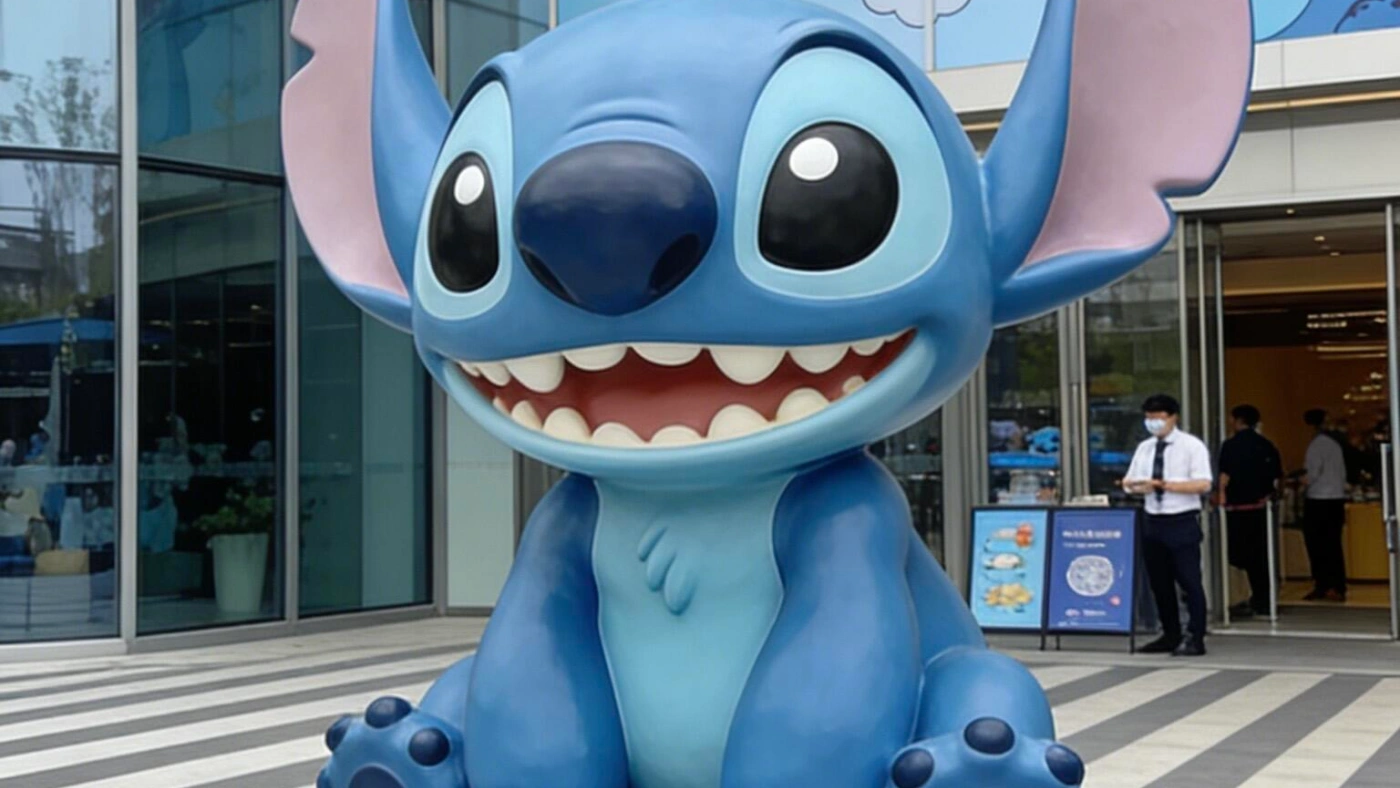
At the procurement stage, many project teams lean heavily on material quotes as their primary decision criterion. In doing so, they overlook the fabrication processes, structural design, packing and freight, and site conditions that sit behind those materials. For large-scale commercial installations, a lower material unit price does not automatically translate into a lower total project cost.
A complete commercial installation project typically spans design development, material procurement, structural engineering, fabrication, surface finishing, painting, lighting integration, quality inspection, packing and shipping, and on-site installation.
Different materials change the workload at each of these stages. EPS foam, for instance, is easy to cut into complex forms, but achieving a smooth, durable surface usually requires a hard-coat layer and careful sanding. FRP (fiberglass-reinforced plastic) calls for mold making, sectional molding, demolding, and assembly. Metal frameworks involve profile processing, welded or bolted connections, anti-corrosion treatment, and structural inspection.
When comparing quotes, therefore, confirm that every supplier is pricing the same dimensions, surface standards, structural requirements, and scope of supply. Comparing price per kilogram of material, or comparing quotes on the visual design alone, rarely reflects the true cost of the project.
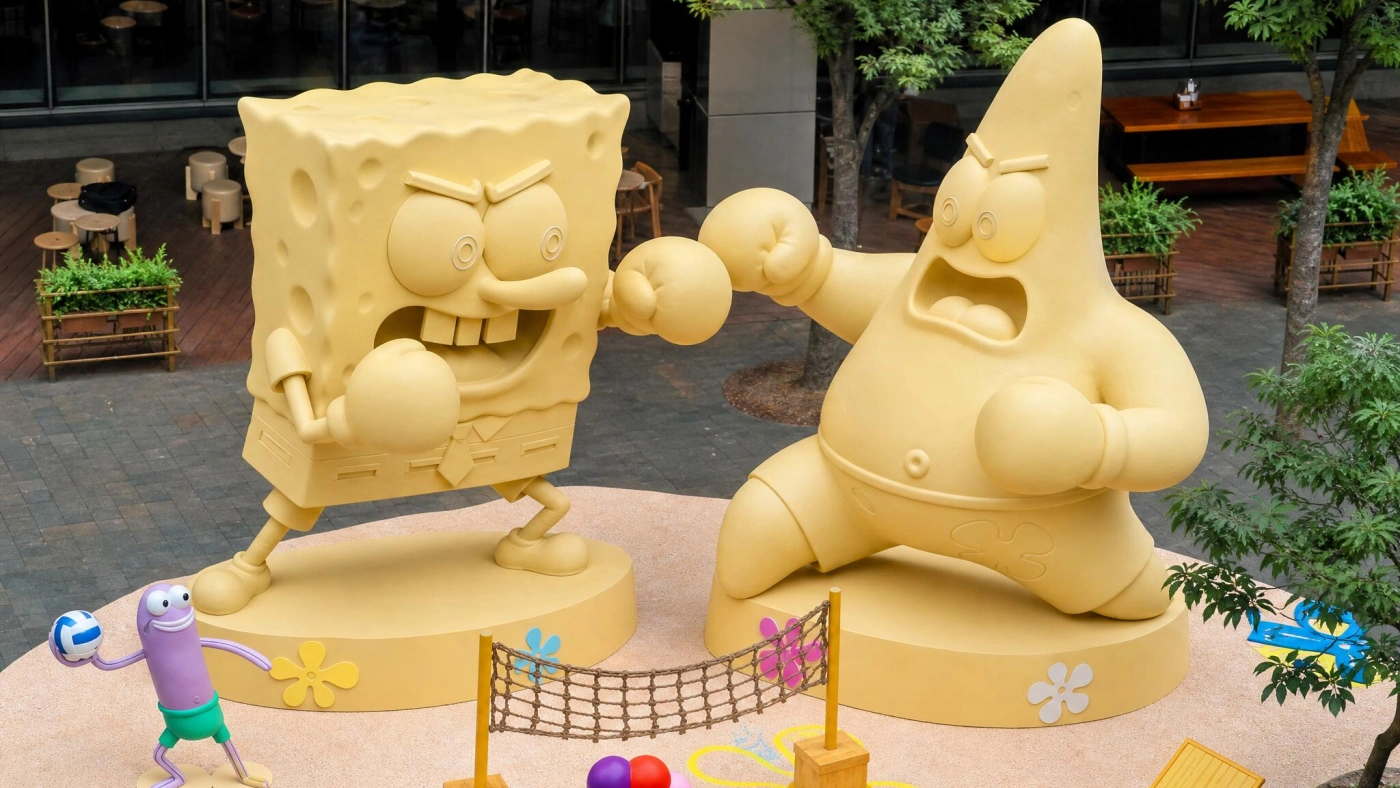
Shopping centers are typically defined by heavy foot traffic, tight installation windows, and strict fire safety requirements. Outdoor rooftops, plazas, and open-air retail districts can add strong wind, rainfall, UV exposure, and wide temperature swings.
A lightweight holiday installation in a mall atrium, for example, may prioritize visual impact, low weight, and fast installation. A large animal sculpture in an outdoor plaza, on the other hand, demands closer attention to structural stability, surface weather resistance, foundation anchoring, and long-term upkeep.
A professional manufacturer of large-scale shopping mall installations should understand the installation location, usage cycle, expected number of redeployments, and on-site constraints before quoting, rather than settling on materials from renderings alone.
If an installation is meant only for a short promotion or a festive event lasting a few weeks, fast turnaround and budget control may matter most. If it is planned for continuous display across several quarters, or for annual reuse during the Christmas season, brand events, and retail renovations, then durability, repairability, and storage costs will have a major impact on total investment.
When selecting materials, weigh production, logistics, installation and dismantling, maintenance, and the expected number of uses together. Only then can you tell which option is genuinely more cost-effective.
EPS stands for Expanded Polystyrene, a molded polystyrene foam. In commercial installation fabrication, it is commonly used for oversized lettering, cartoon characters, festive-themed sculptures, stone-effect decorative pieces, and visual props with complex curved surfaces. Using CNC cutting, hot-wire cutting, and hand finishing, EPS can be worked into components of virtually any size and contour.
First, the material is lightweight, which makes it easier to transport and install.
Compared with many solid structural materials, EPS foam has a lower density. On large installations, using foam as the primary body material can cut component weight, ease handling, and simplify parts of the freight and on-site installation process.That said, final weight still depends on the installation’s dimensions, internal supports, surface coatings, and supporting structure. The overall weight cannot be judged from the foam alone.
Second, it offers high design flexibility.
For oversized festival characters, brand props with exaggerated proportions, and sculptural installations, EPS can achieve complex contours through a combination of CNC machining and hand shaping. This approach gives projects that need iterative revisions and intricate design details a high degree of flexibility.
Third, it suits certain short-turnaround projects.
When an installation does not require complex molds and the shaping process is relatively straightforward, EPS can shorten certain production stages. That makes it a good match for seasonal mall decorations, pop-up stores, promotional events, and short-term themed displays.
The raw material cost of EPS typically holds a certain advantage, but the final price is also shaped by foam density, model volume, carving precision, surface hardening process, paint specification, and internal support structure.
This is especially true for large outdoor props. If you need stronger surface impact resistance, waterproof protection, and a reliable mounting structure, the cost of coatings and structural components can account for a significant share of the budget.
On service life, bare EPS foam is not suited to frequent impact, prolonged outdoor exposure, or harsh weather. Once cracks form in the surface coating, moisture, impact, and temperature cycling can all accelerate damage. Proper hardening, waterproofing, and maintenance planning can improve performance, but results still depend on actual site conditions.
EPS is also a combustible material. Project teams should verify local fire codes, venue requirements, and material test reports. Ordinary foam, or foam treated with a coating alone, should never be assumed to meet fire safety requirements. For further detail on the properties of EPS, consult the relevant material performance data and technical references.
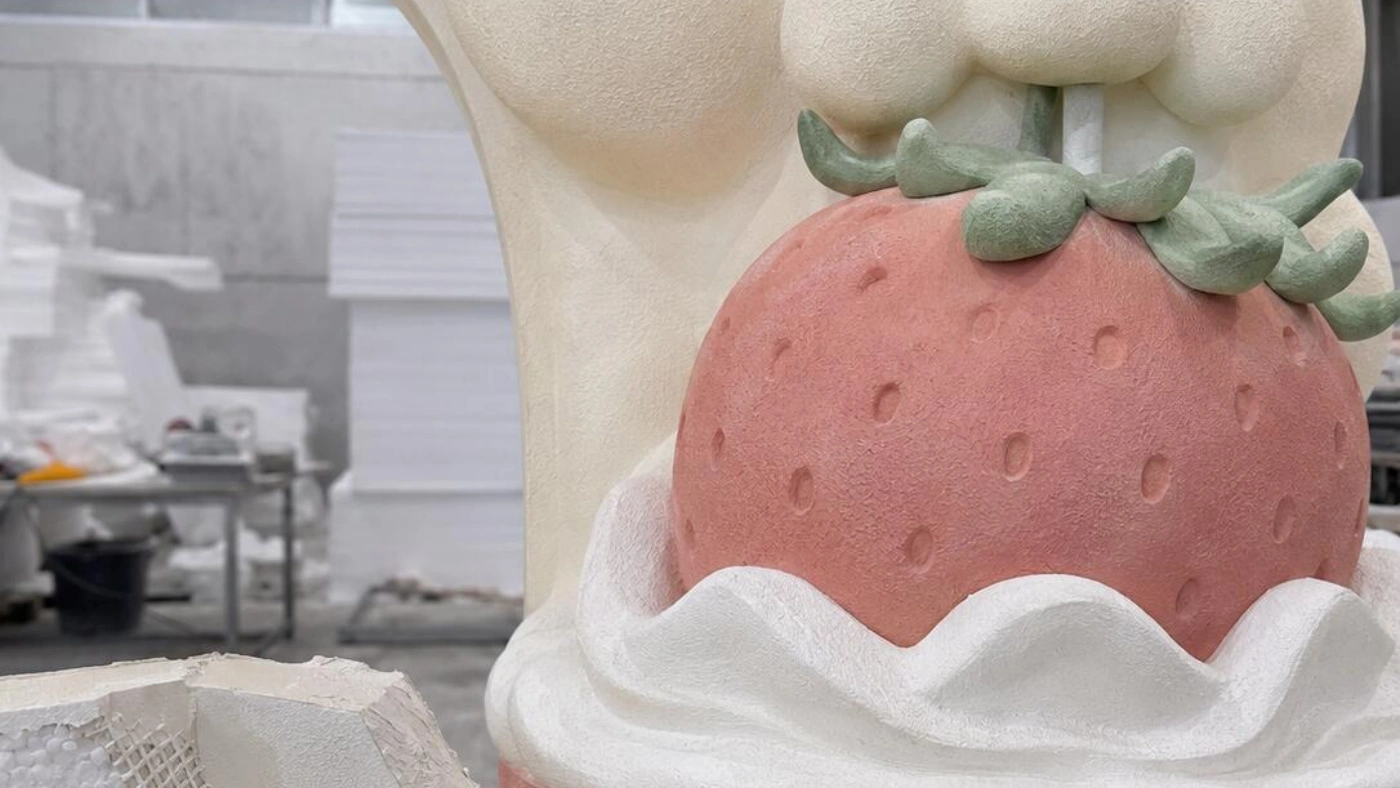
EPS is particularly well suited to the following scenarios
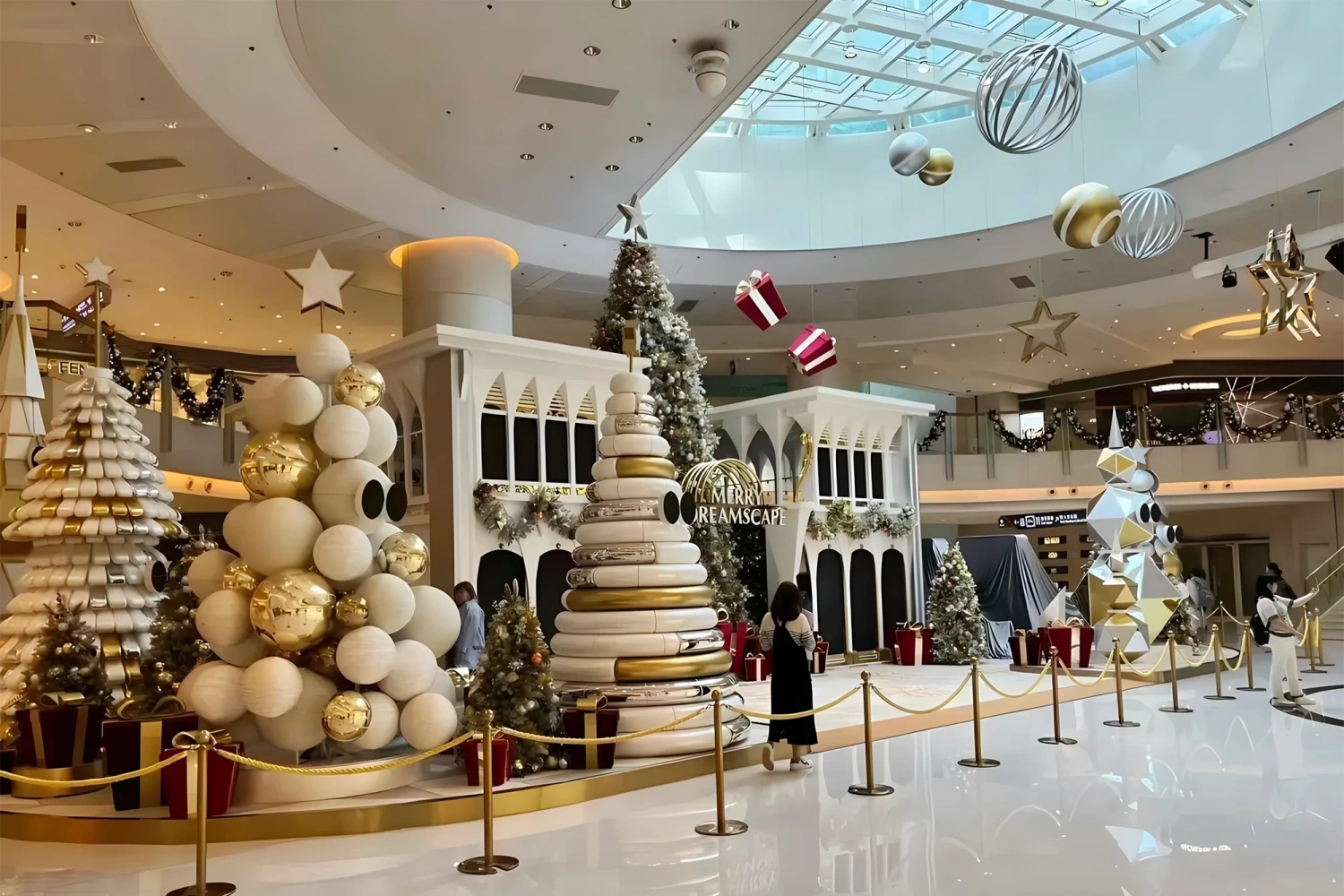
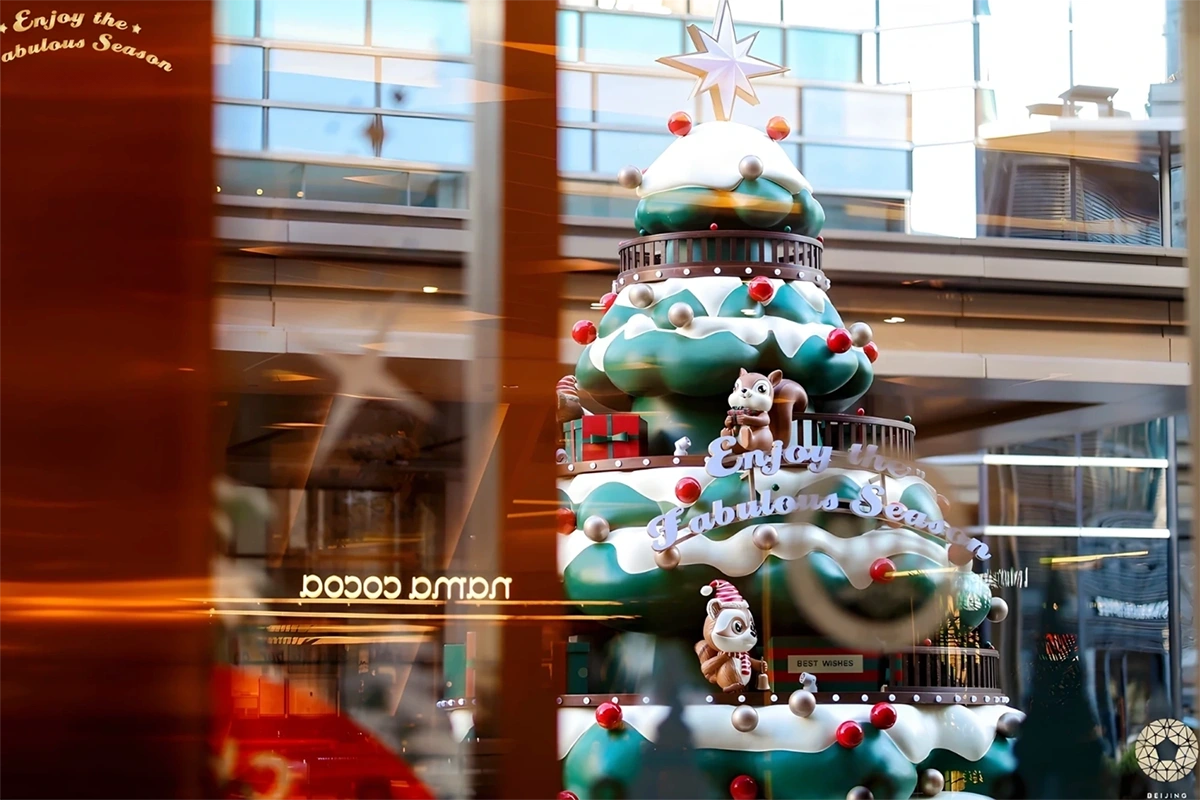
1.Large Christmas-themed gift boxes, snowmen, decorative lettering, and lightweight themed props.
2.Brand logos, enlarged product models, and short-term display installations for pop-up stores.
3.Decorative structures that call for rapid production, involve complex shapes, and are sensitive to overall weight.
4.Commercial space installations built mainly for short-term events, provided appropriate protective measures are in place and a safety assessment has been completed.
If a project involves long-term outdoor display, frequent relocation, or large overhangs with demanding structural requirements, the decision should not rest on EPS’s shaping capability alone. Internal support systems, external protective layers, and mounting solutions need further evaluation.
FRP stands for Fiberglass-Reinforced Plastic, a composite typically made of a resin matrix reinforced with glass fiber. Through molding and lamination, it can be formed into rigid shells with complex curved surfaces.
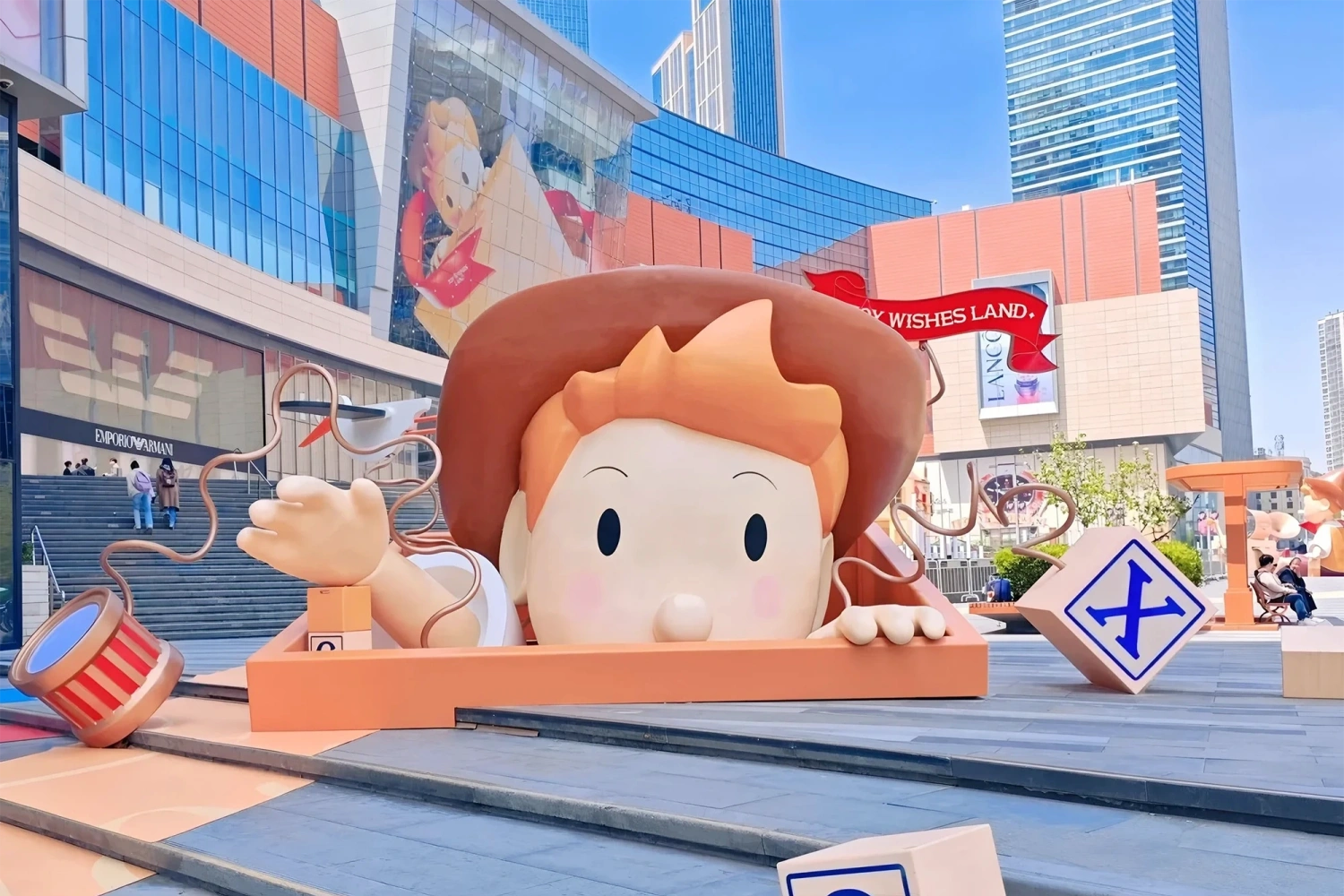
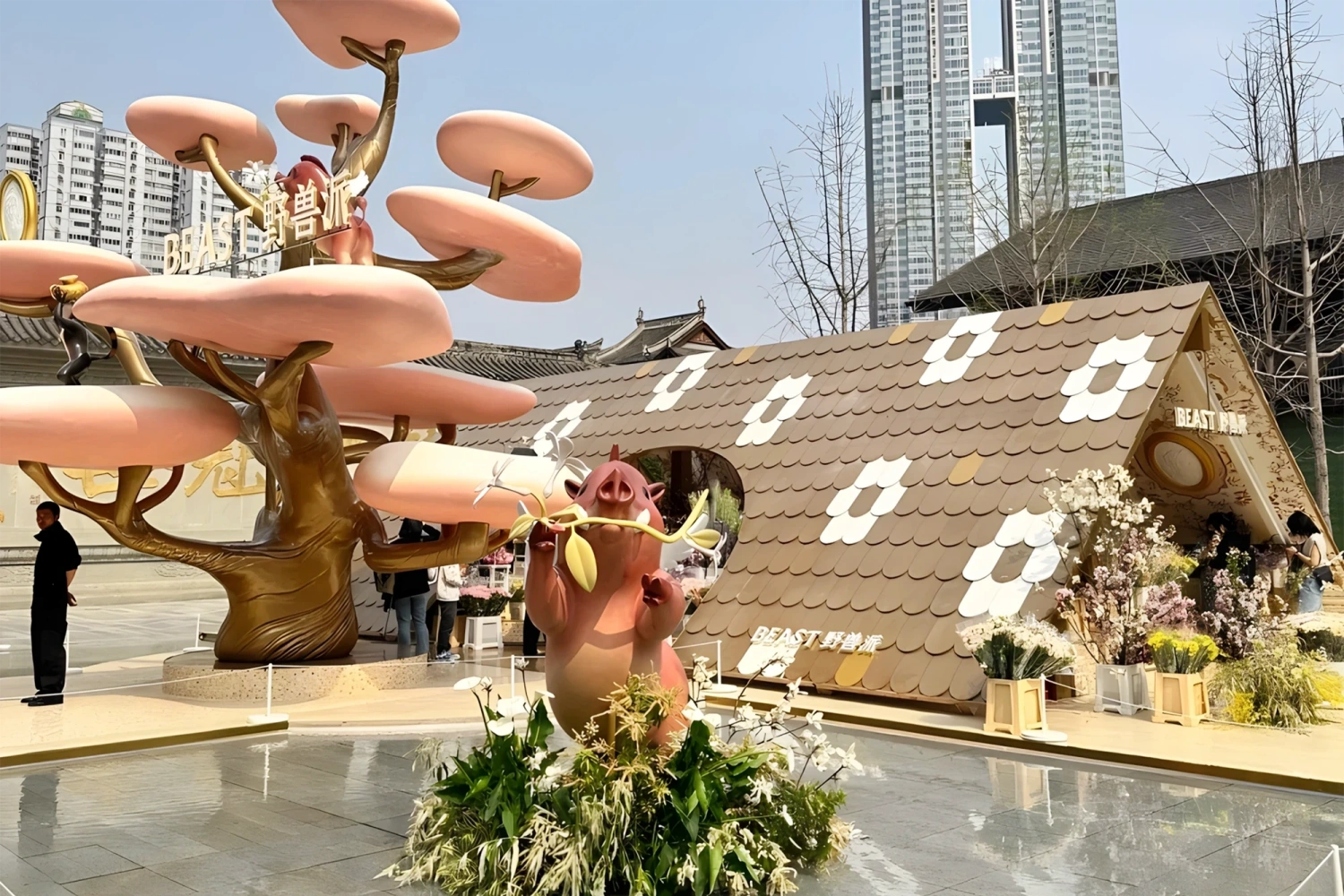
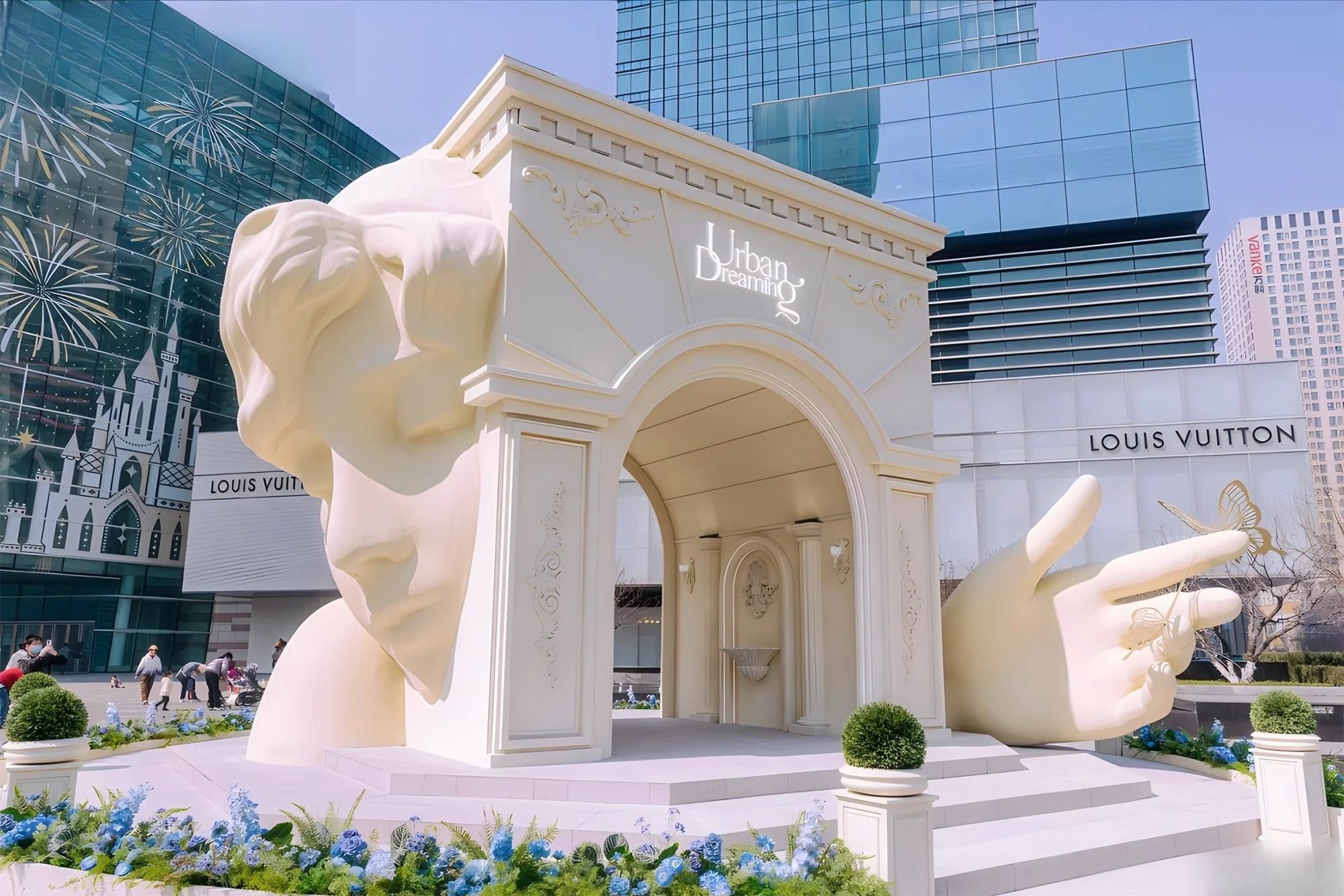
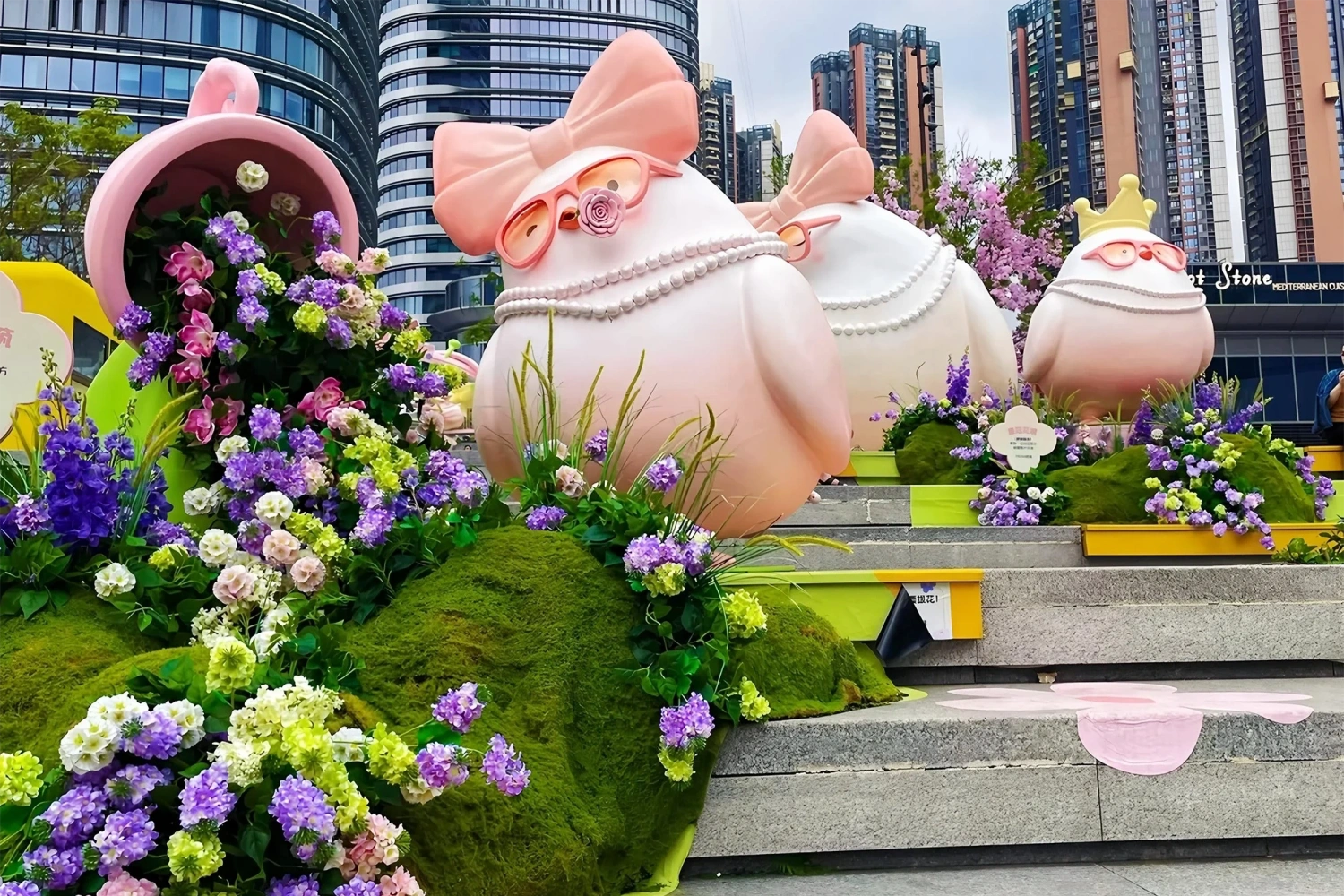
In large-scale commercial installation fabrication, FRP is commonly used for animal sculptures, brand IP characters, themed figures, public art installations, and custom props that demand a high-grade surface finish.
First, it delivers complex forms with a stable, consistent appearance.
FRP reproduces design details through molds, which makes it a strong choice for projects that need repeat production of similar components or a high standard of visual consistency. For details such as eyes, noses, hair contours, brand logos, and complex curved surfaces, sound mold design and surface treatment help deliver a superior finished result.
Second, it offers significant potential for weight reduction.
Compared with many solid materials, an FRP shell of appropriate thickness can keep weight in check while preserving visual integrity. That does not mean FRP is necessarily lighter than every alternative, however. Actual weight depends on shell thickness, internal reinforcement, metal supports, and connection methods.
Third, it suits installations intended for repeated use.
For sculptures that will be redeployed across different shopping malls, commercial events, or festive settings, FRP can be paired with an internal metal framework, removable bases, and modular connection systems. This makes maintenance easier and simplifies transport and storage.
It bears emphasizing that FRP on its own is not a complete load-bearing structure. The stability of a large installation still hinges on internal bracing, connection joints, base design, and on-site installation conditions.
The upfront cost of FRP typically covers far more than resin and fiberglass. It also includes mold fabrication, part-by-part design, hand lay-up or other forming processes, curing, demolding, assembly, sanding, and painting.
If the design is highly customized and only a single piece is required, mold costs can weigh heavily on the total price. If the project calls for multiple identical pieces, the mold cost can be spread across the finished units.
Buyers should therefore separate two types of cost:
1.One-time development costs: design refinement, prototyping, molds, and first-article validation.
2.Per-unit production costs: materials, molding, assembly, surface treatment, quality inspection, and packing.
For large brand sculptures or commercial installations rolled out across multiple locations, comparing quotes on the first piece alone is not enough. The calculation should also account for follow-on quantities and the expected frequency of use.
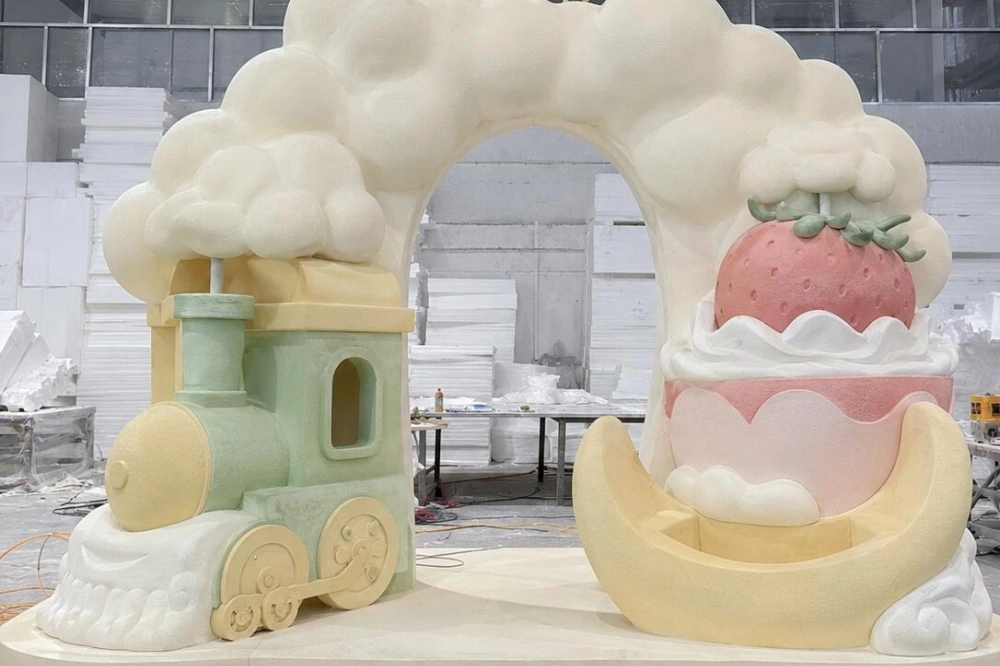
When properly engineered, reliably manufactured, and well maintained, FRP is generally better suited to sculpture projects that need a durable shell and repeated use. However, there is no single service life that applies to every product.
The resin system, fiberglass lay-up, shell thickness, seam sealing, surface coating, and exposure to UV radiation, humidity, and temperature cycling all influence long-term performance. FRP can also develop issues such as surface chalking, coating fade, cracking, or localized delamination.
For research and data on the long-term durability of FRP composites, consult the relevant technical literature. When assessing durability, you need to look at the material system, the environmental exposure conditions, and the available test data. Service life cannot be inferred from the material name alone.
1.Large-scale animal sculptures, brand IP mascots, and themed art installations.
2.Shopping mall display projects that call for fine surface finishes and stable forms.
3.Commercial props planned for multiple shipments, disassembly and reassembly, or reuse across different venues.
4.Complex installations that pair a sculptural shell with an internal metal framework.
If a project has a tight budget, a short service life, and a sculpture that will not face significant impact, FRP may not be the most cost-effective route. Conversely, if the project needs intricate detailing, surface quality, and long-term reusability in balance, FRP typically earns a spot on the shortlist for evaluation.
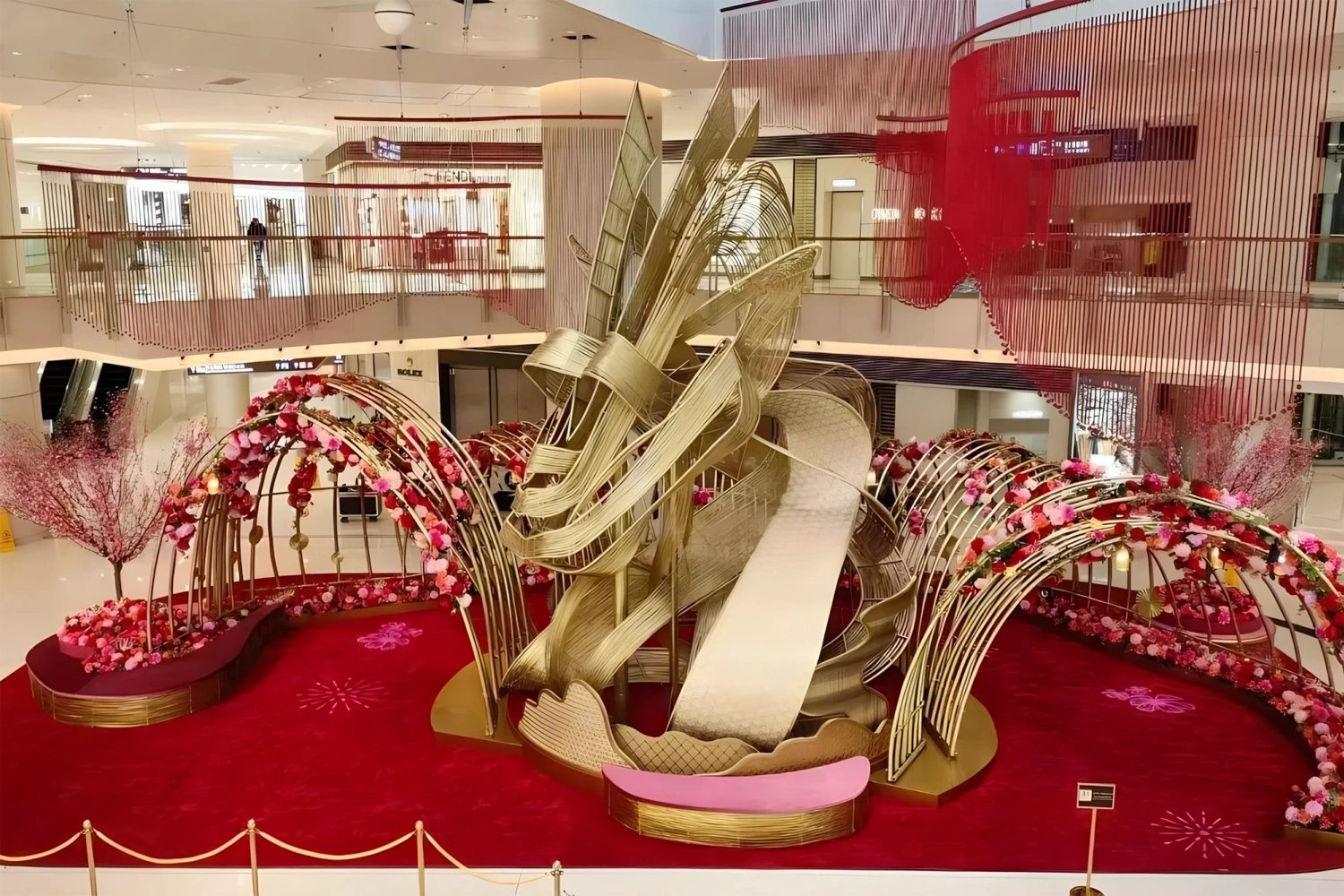
Metal frames are typically built from carbon steel, galvanized steel, or aluminum profiles. The right choice depends on load-bearing requirements, installation weight, operating environment, and transport method. In large commercial spaces, metal structures are commonly used for load-bearing frames, internal reinforcement, bases, suspension supports, and modular connection systems.
Unlike EPS and FRP, which mainly serve as shaping elements or outer shells, a metal framework exists primarily to provide structural support. It can function as a standalone display frame or be combined with foam sculpture, fiberglass shells, wood panels, and lighting components.
First, they suit projects with defined load-bearing requirements.
When an installation is large, tall, or includes cantilevers, overhead elements, heavy shells, and lighting equipment, a metal framework can carry the necessary support for the entire structure.That said, high material strength does not mean that every metal framework is inherently safe. Profile specification, wall thickness, connection method, weld quality, load paths, base design, and anchoring conditions all need to be properly engineered.
Second, they lend themselves to modular fabrication and on-site assembly.
For large shopping mall atrium installations, outdoor themed sculptures, and cross-regional event projects, breaking the framework down into transportable modules reduces the freight constraints imposed by oversized single components and makes on-site handling easier.The factory can prefabricate connection nodes, alignment holes, and installation interfaces, then run a trial assembly before shipment. This helps minimize on-site rework and is especially valuable on commercial projects with tight installation schedules.
Third, they combine readily with other materials.
A metal framework can supply structural support, EPS can form lightweight shapes, and FRP can provide a durable sculptural shell. This layered approach lets you assign each material to the function it handles best, rather than forcing one material to meet every requirement at once.For example, a large Christmas-themed sculpture might use a metal base frame with internal bracing, an FRP shell, and localized EPS decorative elements. The exact configuration should be determined by dimensions, usage environment, and structural calculations.

The cost of a metal frame is driven by the price of steel or aluminum profiles, material specifications, cutting and welding labor hours, surface corrosion protection, machining precision, structural verification, and on-site installation requirements.
For small display frames with simple geometry, fabrication costs can stay relatively manageable. For large, irregular installations, however, complex connection joints, cantilevered sections, reinforcing members, and lifting requirements can push costs up considerably.
On service life, the main risks for metal structures are corrosion, fatigue, loosening of connections, and localized deformation. Carbon steel typically needs corrosion protection tailored to the operating environment. Galvanized steel offers a degree of corrosion resistance, but cut edges, weld seams, and any subsequent coatings still need proper treatment. With aluminum profiles, the specific alloy, cross-section, and connection method all matter, and aluminum should not be assumed suitable for every outdoor load-bearing application.
The metal framework should also be designed in step with the installation’s outer shell. If the connection between shell and frame is poorly detailed, the shell can crack, or fasteners can loosen or suffer localized damage, even when the frame itself is strong enough.
1.Large atrium suspended installations and themed displays with cantilevered elements.
2.Large sculptures in outdoor plazas, rooftop terraces, and open commercial spaces.
3.Installations that must withstand wind loads or other foreseeable external forces.
4.Complex projects that require disassembly for transport, repeated reassembly, and long-term deployment.
5.Integrated installations that house lighting, electrical equipment, or multiple decorative components.
For projects involving high-level suspension, areas open to the public, strong outdoor winds, or complex anchoring conditions, we recommend that suitably qualified and experienced engineers handle the design, review, and necessary on-site inspections in line with local codes and regulations. Structural safety should never be judged from renderings or a factory’s track record alone.
Once you understand the characteristics of the three materials, the next step is to compare them against an actual project. One point is worth stating up front: EPS and FRP are generally better suited to shaping, forming, and shell fabrication, while metal frames mainly serve a structural function. The three are therefore not directly interchangeable in every scenario.
If a project centers on short-term display, lightweight forms, and a tight budget, EPS is generally worth prioritizing. Its manufacturing process is relatively straightforward, though complex shapes, fine surface finishes, and protective coatings will still add to production cost.
If a project needs complex curved surfaces, a high-grade surface finish, or volume production of similar designs, FRP may be the better fit. Calculate mold, part-splitting, molding, assembly, and painting costs carefully, and consider whether the mold cost can be amortized across subsequent production runs.
If a project involves large-scale support structures, suspended components, or complex connection systems, a metal framework should be the primary consideration. Beyond the cost of the steel or aluminum itself, budget for fabrication, welding, corrosion protection, pre-assembly, and on-site installation.
A professional quote for shopping mall installations should therefore be built on a complete design proposal and a defined scope of work, not on a simple comparison of unit purchase prices across the three materials.
A material’s service life depends on manufacturing quality, operating environment, maintenance frequency, and structural design. It does not depend on the material’s name alone.
EPS can meet project requirements when used mainly for short-term indoor events and properly protected during dismantling. If long-term outdoor display or repeated handling is required, however, surface protection, impact damage, and repair costs need thorough evaluation.
FRP is generally well suited to sculptures that need a durable outer shell and are intended for reuse, but coating condition, joint locations, seam sealing, and internal bracing still need to be inspected.
A metal framework can provide the structural foundation for reuse, but its long-term performance hinges on corrosion protection, connection quality, load-bearing conditions, and regular inspection. During procurement, we recommend asking suppliers to specify maintenance procedures, repair conditions, and applicable material specifications, rather than accepting unverified promises of a fixed service life.
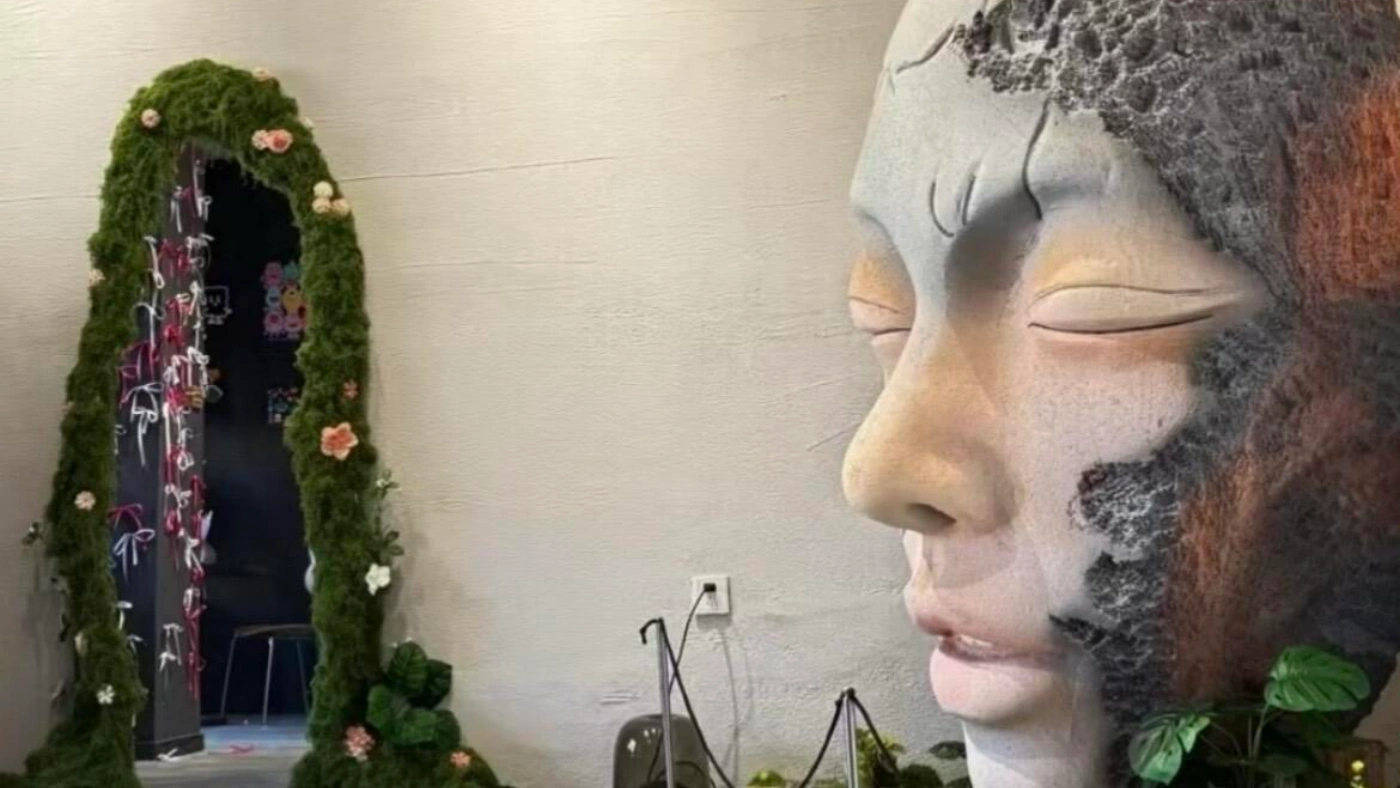
On overseas commercial installation projects, freight and on-site installation can account for a substantial share of the budget. EPS has the advantage of being lightweight, but larger sculptures can still take up a lot of packing volume and must be protected against crushing and impact.
FRP can balance sculptural integrity with freight convenience through well-thought-out modular design, but joint locations, connection methods, and packaging protection requirements need to be settled at the design stage. Metal frameworks can adopt a modular structure, which makes knock-down shipping and on-site assembly easier, but the dimensions, weight, lifting method, and connection interfaces of each module need to be planned in advance.
On cross-border projects, a manufacturer of large-scale shopping mall installations should verify container dimensions, shipping routes, venue entrances, freight elevators, and on-site lifting conditions before production starts. Otherwise, you risk discovering after completion that the installation cannot actually be brought into the building.
When evaluating material costs, we recommend factoring in fabrication, freight, installation, maintenance, storage, and the number of times the installation can be reused, all at once.Consider an EPS installation with a low fabrication cost. If it can only serve a single event and cannot be reused after dismantling, it may have to be remade for the next one.By contrast, an FRP piece with sound structural design, surface protection, and modular planning may be redeployed across multiple events, spreading the upfront investment over a longer period. The value of reuse, though, has to be grounded in actual maintenance conditions and acceptable refurbishment costs. Do not assume that FRP or metal will have a lower total life-cycle cost purely on the strength of the material name.
On real-world commercial installation projects, many designs do not call for choosing just one of EPS, FRP, or a metal framework. For large-scale sculptures, holiday-themed scenes, and integrated commercial displays, combining these materials is often the more sensible approach from an engineering standpoint.
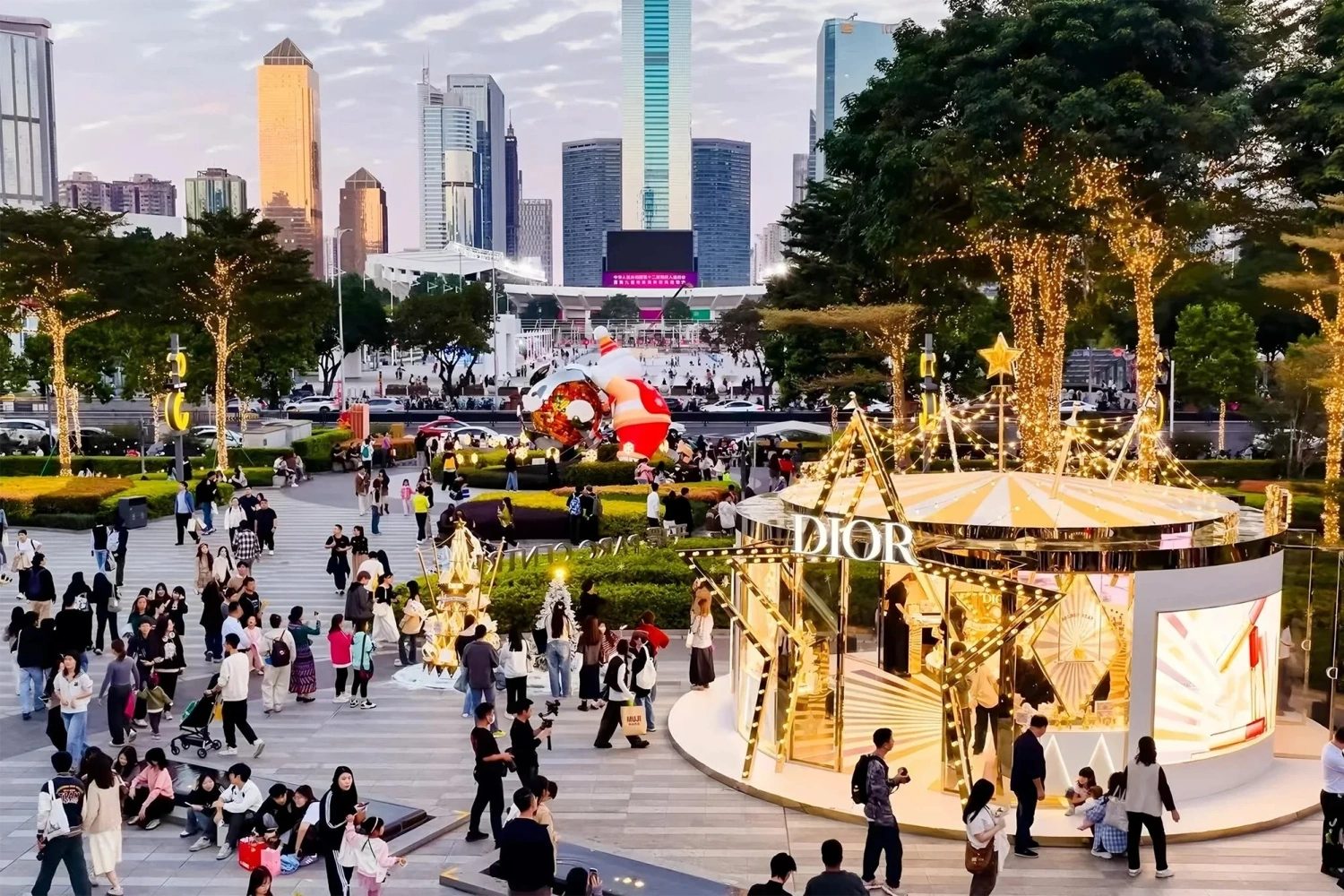
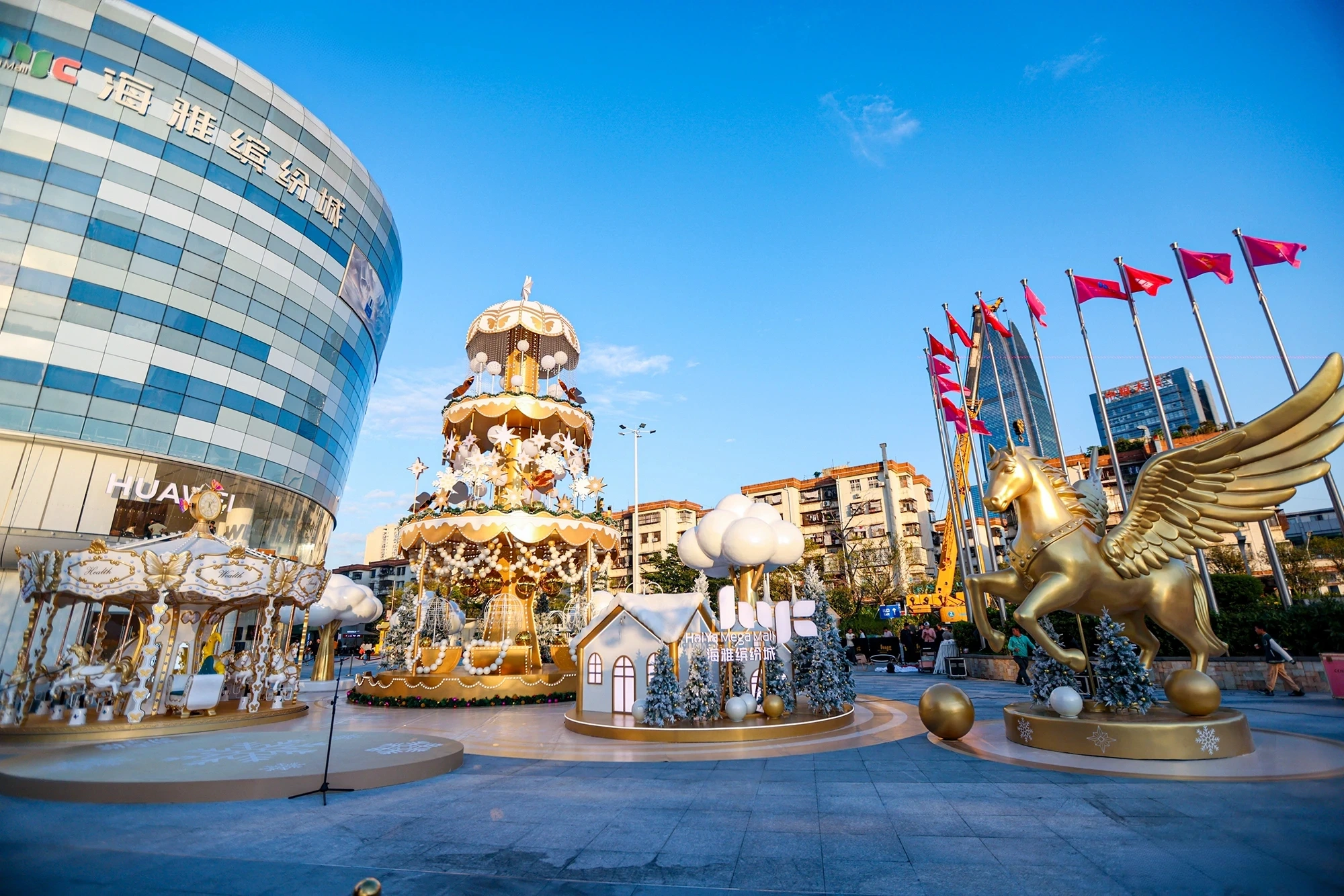
Take large-scale installations such as Santa Claus figures, gift boxes, snowmen, or themed entrance structures. Depending on the design, a metal base frame or internal support structure can carry the load, with EPS used to form certain lightweight sculptural elements, then upgraded with suitable surface treatments to improve the visual finish.
This approach works well for projects that prioritize visual impact, production efficiency, and budget control, provided that structural weight, connection methods, operating environment, and fire safety requirements have all been thoroughly evaluated. If the installation is intended for long-term outdoor display, or sits in a high-traffic area prone to collisions, surface protection, structural reinforcement, and alternative materials call for further evaluation.
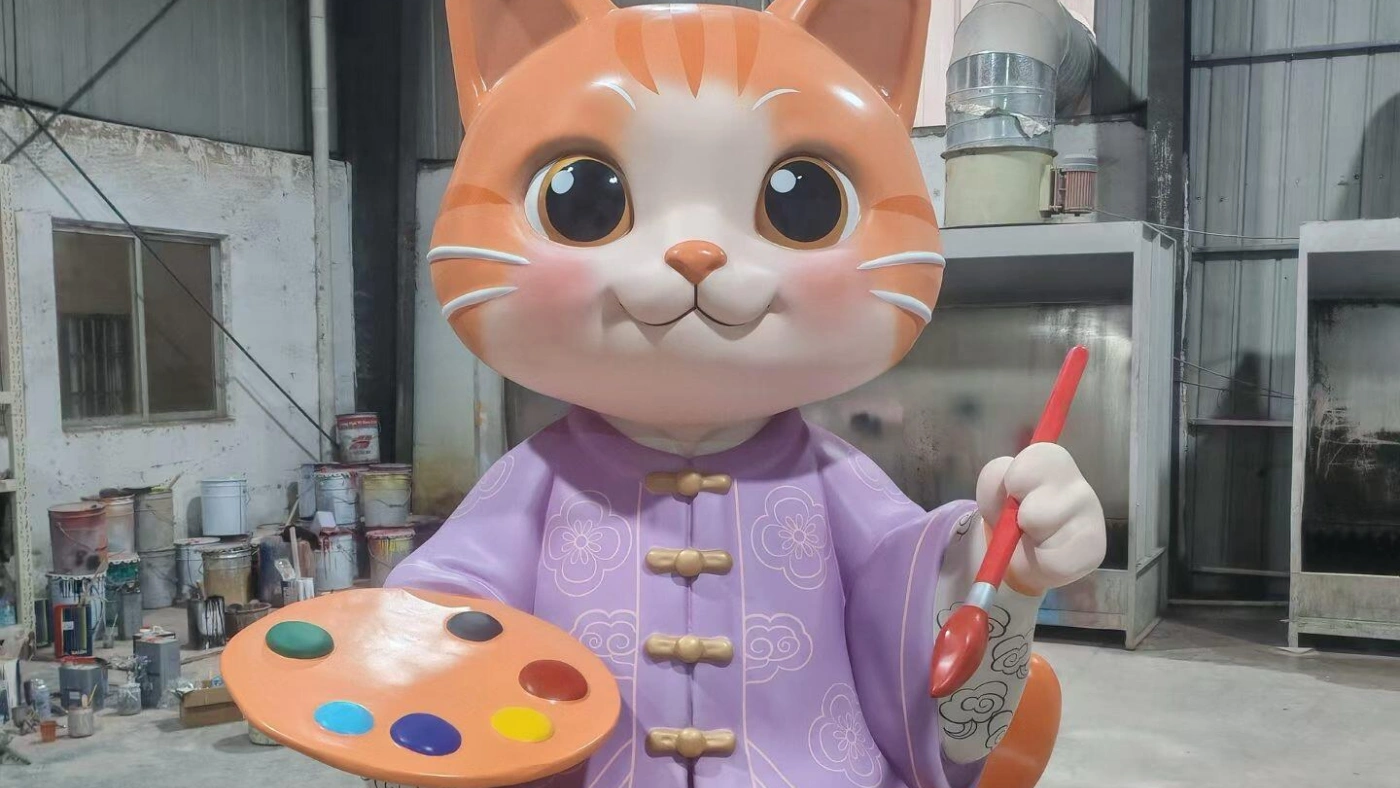
For animal sculptures, cartoon characters, or brand IP figures intended for long-term display, consider using FRP for the outer shell while a metal skeleton, reinforcing ribs, and a base provide the necessary structural support.This configuration balances aesthetic detail with internal support, and it allows a large sculpture to be split into multiple modules to meet freight constraints.
For example, a brand animal sculpture several meters tall may need the head, body, limbs, and base designed as separate modules, then joined at predetermined connection points. Those split points must make transport practical while also protecting visual integrity, ensuring clean seam treatment, and keeping future maintenance straightforward.
The final structure should still be determined by the installation’s dimensions, center of gravity, load-bearing conditions, and on-site circumstances. No single fixed structure works as a one-size-fits-all answer for every project.
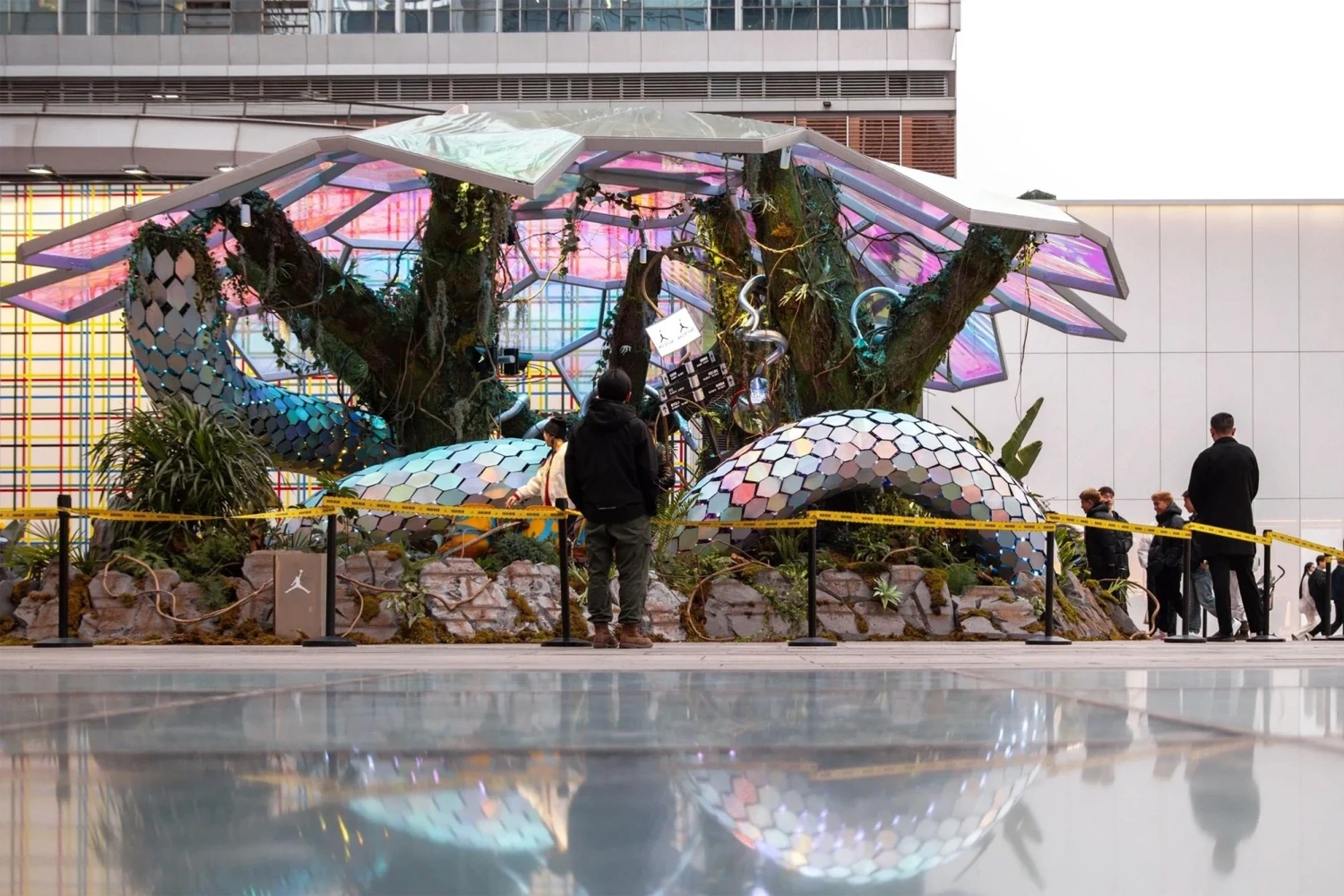
For public art installations, commercial plaza sculptures, and rooftop themed displays, material selection should be approached at the whole-system level.
The scope extends well beyond exterior cladding to include the internal framework, fasteners, corrosion protection, foundation anchoring, drainage, lighting wiring, and access for future maintenance. For outdoor installations, you also need to evaluate how wind loads, rain, temperature swings, and UV radiation affect each material.
Tall, cantilevered, or wind-exposed installations in particular should have their structural design and verification carried out by qualified professionals in accordance with applicable local codes. A smart material combination is no substitute for engineering calculations, and factory pre-assembly is no substitute for the necessary on-site safety inspections.
For projects that involve public activities, refer further to the applicable requirements of local regulatory authorities on temporary structures, public event facilities, and installation operations, and include the safety documentation in the project delivery checklist.
Whether a material solution makes sense ultimately comes down to the supplier’s ability to integrate design, fabrication, freight, and installation seamlessly. For overseas buyers, supplier evaluation should go beyond finished-product photos and quotes. It also means understanding the factory’s actual production processes and quality management capabilities.
A professional factory should be able to take design renderings and work them through to confirmed dimensions, component breakdowns, material composition, connection methods, and installation interfaces.
For large-scale installations, the factory should also supply structural drawings, material specifications, installation instructions, and relevant engineering documents where applicable. For structures that involve load-bearing or public safety, it must be clearly defined who is responsible for engineering calculations, reviews, and final acceptance.
If a supplier can only produce the exterior from renderings but cannot explain how the installation will be shipped, secured, and installed, the project faces a high risk of rework down the line.
For large-scale commercial installations, we recommend setting up key inspection points during production, including:
1.Verification of the finished product’s dimensions, visual proportions, and color requirements.
2.Inspection of FRP joint quality, EPS surface treatment, and metal frame connections.
3.Functional checks on lighting, electrical components, and removable parts.
4.Test assembly of modular components to verify connection points and installation sequence.
5.Review of the packing plan, lifting points, and transport securing methods.
For extra-large installations that cannot be pre-assembled as a single unit, uncertainty during on-site assembly can be reduced through modular test assembly, dimensional records, photographs of connection points, and installation videos.
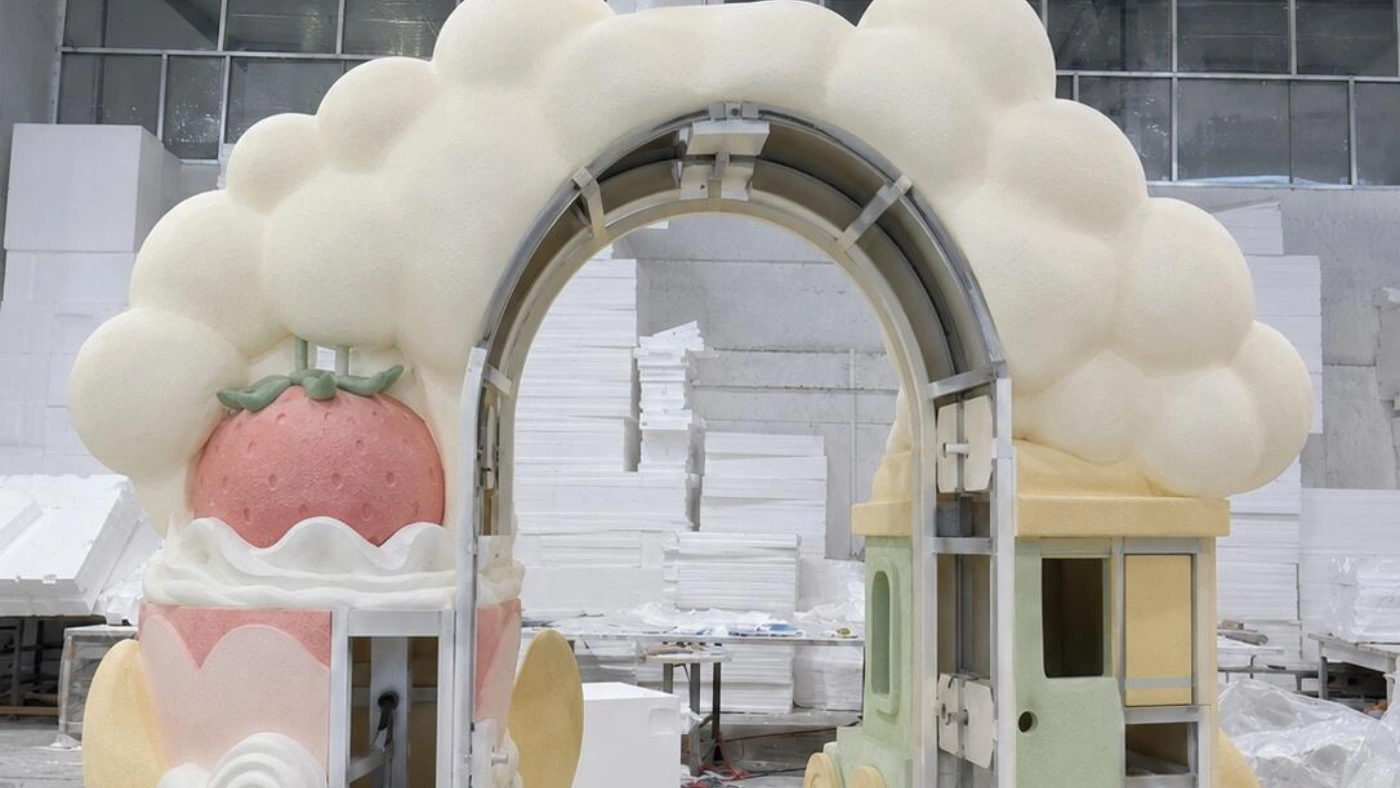
For overseas projects, production quality is measured not only by the finished piece at the factory, but by the overall result once shipping and installation are complete.
Before production begins, confirm whether the installation needs to be broken down and packed separately, whether it can pass through container doors, venue entrances, or freight elevators, and whether the site has lifting equipment and temporary storage space.
For FRP sculptures, packing must focus on protecting protruding parts, surface coatings, and seams. For EPS installations, packing should guard against compression and localized impact. For metal frames, connection surfaces, coatings, and positioning interfaces need protection.
If the project requires on-site assembly overseas, the factory should also provide clear module numbering, installation sequences, connection instructions, and the necessary technical support in advance.
Depending on the project location, venue, and procurement contract, the buyer may require material technical data, applicable fire resistance test reports, structural documentation, installation instructions, or electrical component specifications.
One point deserves attention: a particular material may carry a specific property, but that does not automatically mean an entire installation built from it will satisfy every venue requirement. The combination of materials, coatings, adhesives, electrical components, and the finished product can all influence a compliance determination.
Before signing a contract, therefore, we recommend clarifying the scope of application, issuing authority, test subjects, and acceptance criteria behind the test documentation. This avoids the unpleasant surprise of finding out on arrival at site that the materials do not meet requirements.
To make procurement decisions more efficient, we recommend that project owners settle the material plan in the following order.
Establish the installation dimensions, location, service life, expected number of reuses, visual effect, and budget range. For outdoor installations, also confirm local climate, wind load conditions, foundation type, and venue safety requirements as early as possible.

Evaluate EPS, FRP, metal frameworks, or hybrid solutions based on design complexity, load-bearing requirements, surface quality, and environmental conditions. Do not judge the suitability of a material from renderings alone before the structural design has been finalized.
Bring design development, materials, fabrication, surface treatment, packing, freight, installation, and maintenance into one unified budget. For installations planned for reuse, also factor in the costs of dismantling, storage, maintenance, and redeployment.
Before production, pin down dimensional tolerances, colors, surface quality, connection methods, material specifications, pre-assembly requirements, and delivery conditions. If the project involves fire safety, outdoor structures, or electrical equipment, confirm the applicable codes and documentation requirements in advance.
Confirm shipping dimensions, packaging protection, module numbering, on-site access routes, lifting conditions, and installation time windows. For cross-border projects, also clarify freight responsibilities, delivery terms, the scope of on-site installation, and related costs, so that different suppliers do not interpret the scope of supply differently.
EPS foam carving, FRP (fiberglass-reinforced plastic), and metal frameworks each serve a distinct functional purpose.
EPS suits lightweight, complex designs and budget-sensitive projects. FRP is the strong option for installations that put a premium on sculptural detail, surface finish, and reusability. Metal frameworks are used mainly to provide structural support, connections, and an installation foundation.

For large commercial spaces, material selection should not hinge on the upfront quote alone. It should take in the installation environment, manufacturing processes, structural safety, freight and installation, and ongoing maintenance. On large or complex projects, a combination of materials is often more effective than forcing a single material to balance aesthetics, cost, and engineering requirements.
For a professional manufacturer of large-scale shopping mall installations, the value delivered goes beyond bringing a design to life. It lies in integrating design development, material selection, factory production, quality inspection, packing and shipping, and on-site installation into one seamless process. For overseas clients, defining project requirements clearly, confirming acceptance criteria, and completing technical discussions before production begins are essential steps for controlling budgets and minimizing delivery risk.
If you are planning holiday decorations for a shopping mall, brand-themed sculptures, public art, or pop-up store projects, we recommend engaging a factory with relevant experience as early as the design phase. With a well-planned production approach for mall installations, you can strike a better balance among visual impact, budget control, structural safety, and long-term value.
There is no one-size-fits-all answer.
The raw material and some shaping costs for EPS are typically lower, but complex coatings, internal supports, and protective measures can add to the expense. FRP may involve mold and molding costs, and metal frames depend on specifications, welding, and structural complexity. We recommend comparing quotes against the same set of design drawings, identical surface requirements, and the same scope of supply.
Not necessarily.
If the project prioritizes short-term display, light weight, and budget control, EPS may be the better fit. If a finely sculpted appearance and reusability are required, FRP deserves serious consideration. If the installation involves load-bearing, suspension, or complex support structures, the metal framework and overall structural design need careful evaluation. Many projects use a combination of materials rather than relying on a single one.
They can be considered, provided they are properly designed and protected and meet project requirements. Standard EPS, however, should not be assumed suitable for every outdoor environment. Waterproofing, surface impact resistance, UV exposure, mounting structures, and fire safety requirements all need to be evaluated. For projects involving long-term outdoor use or harsh environments, we recommend comparing against FRP shells and other better-suited material options.
The service life of FRP depends on the resin system, manufacturing process, shell design, surface coating, operating environment, and maintenance practices. Products vary significantly, so it is not advisable to commit to a fixed service life based on the material name alone. When purchasing, ask the supplier to specify the material composition, surface protection methods, and maintenance recommendations, and to confirm whether test data or project references exist for an environment similar to your target conditions.
A metal framework provides internal support, base connections, and modular installation interfaces for large installations. It is especially suited to tall or cantilevered structures, and to those that must withstand external loads. That said, not every installation needs a metal framework of the same specification. Whether a framework is needed, and how it should be designed, should be determined by weighing the installation’s weight, center of gravity, load conditions, installation method, and applicable codes together.
At a minimum, we recommend preparing renderings or reference images of the installation, estimated dimensions, installation location, project site, target delivery date, quantity, budget range, and expected service life. If the project involves outdoor display, suspended structures, or lighting and electrical systems, also provide as much information as you can on site conditions, venue specifications, and relevant technical requirements. The more complete the documentation, the easier it is for the manufacturer to evaluate material options, production processes, shipping methods, and delivery timelines, and the more likely you are to receive comparable quotes.
Ideally, lock in the primary materials and structural design during the detailed design and formal quotation phases, rather than waiting until fabrication is complete to consider material substitutions. Materials affect component dimensions, internal bracing, connection joints, surface finishes, packing methods, and installation procedures. Finalizing these specifications early helps minimize later design changes and additional costs.
July 27, 2026
July 27, 2026
July 27, 2026
July 27, 2026
July 27, 2026
July 27, 2026
July 27, 2026
July 26, 2026
July 26, 2026
July 26, 2026
July 26, 2026
July 26, 2026
July 26, 2026
July 26, 2026
July 26, 2026

July 26, 2026

July 26, 2026
July 25, 2026
July 25, 2026
July 25, 2026