October 21, 2026 Ixmore Art
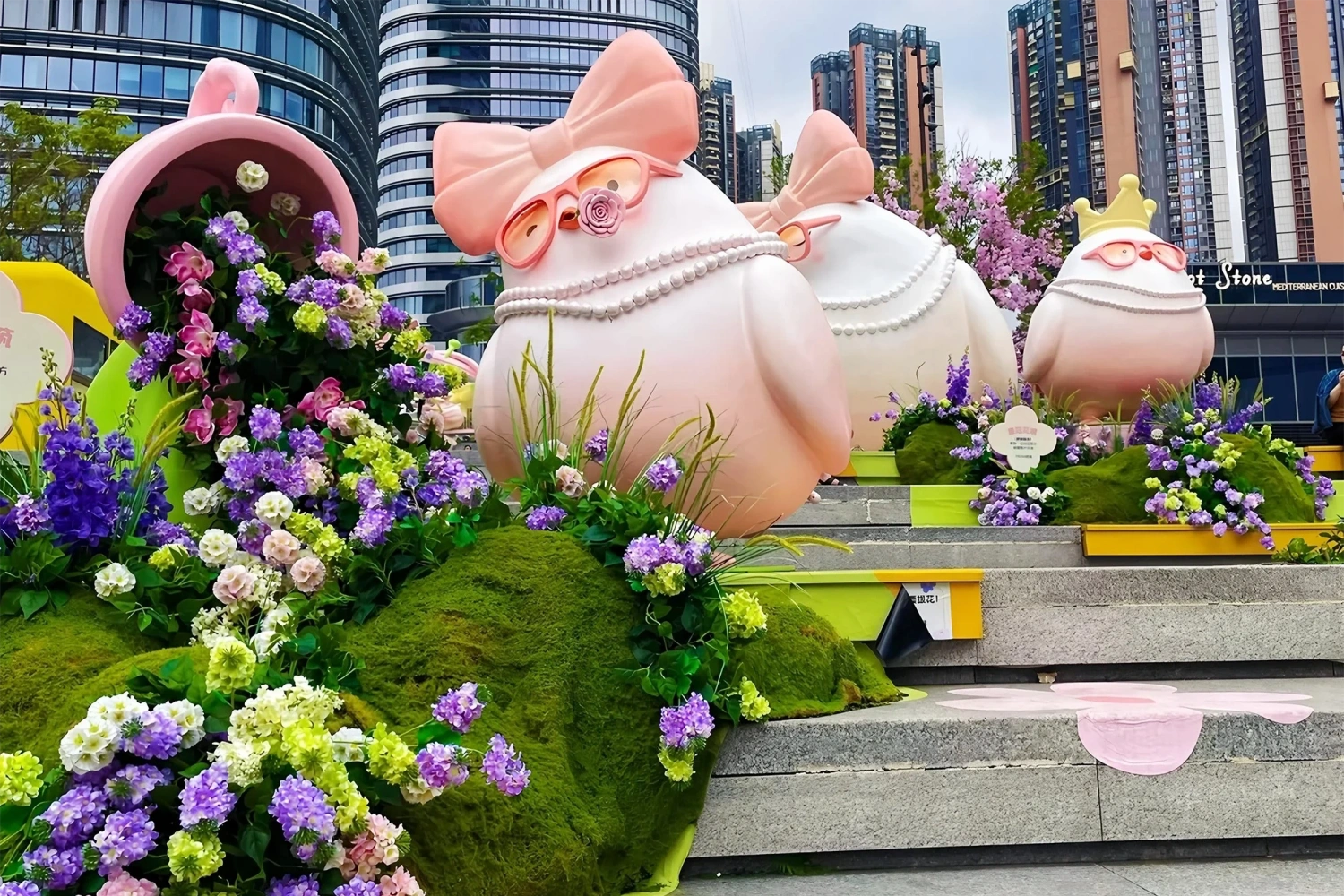
Throughout the commercial prop manufacturing process, surface finishing plays a critical role in determining a product’s appearance, weather resistance, and service life. From large entrance displays in shopping malls and seasonal holiday props to public art sculptures and pop-up retail installations, different finishing techniques create distinct textures, gloss levels, and color effects. They also have a direct impact on project costs and results. For brands and commercial space operators, understanding the characteristics and applications of each process is essential to maintaining quality and managing budgets.
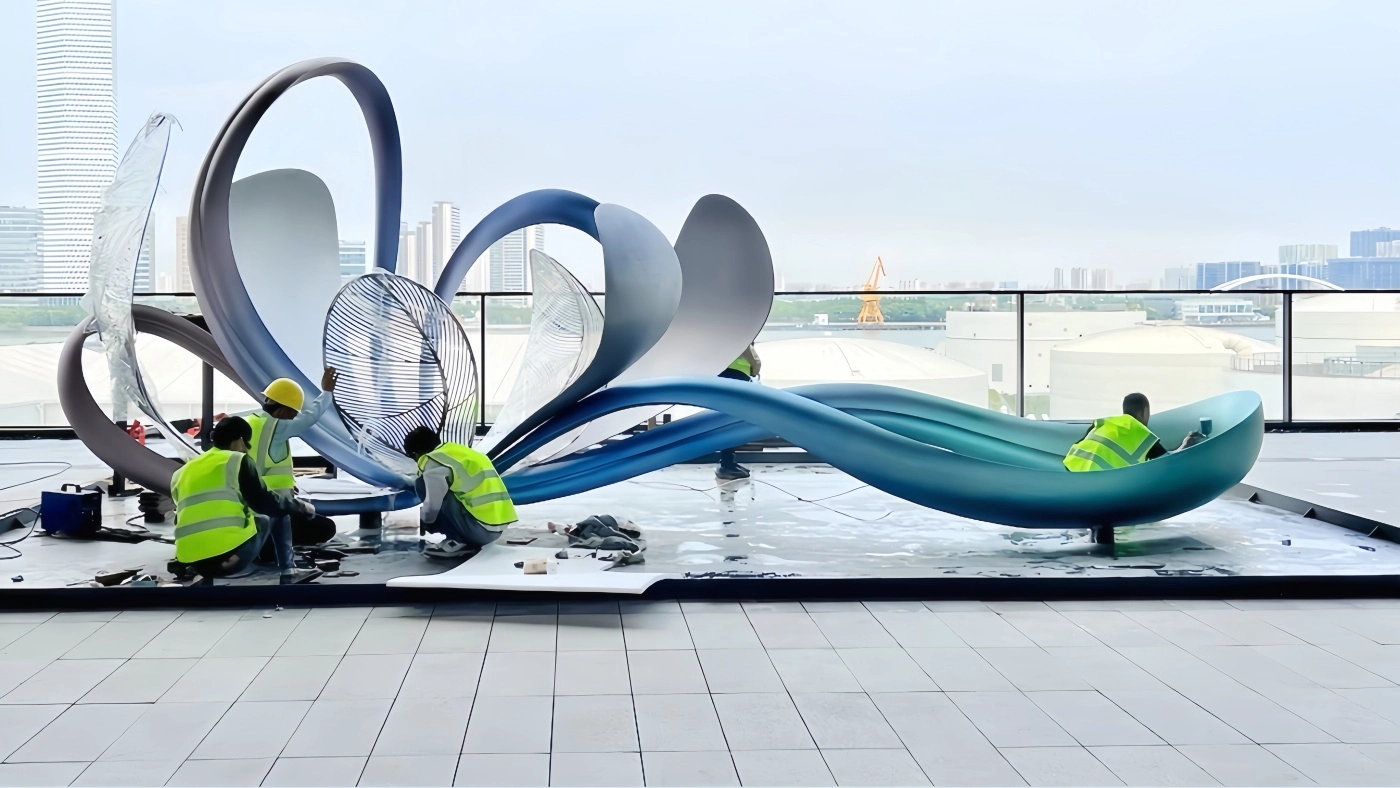
Surface finishing is often mistaken for little more than painting a prop. In professional commercial prop manufacturing, however, it serves two equally important purposes: protecting the product and shaping the visitor experience. It is a critical stage that helps determine the overall quality of the finished piece.
From a functional standpoint, surface finishing acts as a protective layer over the substrate. Outdoor installations must withstand UV exposure, rain, and temperature fluctuations, while indoor props need to resist frequent handling, stains, and everyday wear. The right finishing process can significantly extend a prop’s service life and reduce ongoing maintenance costs. Experienced commercial prop manufacturers select a suitable finishing system early in the project, taking the intended application, installation environment, and expected service life into account. This helps minimize the risk of premature fading, cracking, or deterioration.
From a sensory standpoint, surface finishing shapes the visual and tactile experience. Premium metallic effects, soft velvet textures, and realistic patterns all depend on specific finishing techniques. Even when two props share the same form, different finishes can create markedly different impressions of quality and atmosphere, influencing the character of the commercial space and the way visitors experience the brand.
Four surface finishing processes are widely used in commercial prop manufacturing: spraying, electroplating, flocking, and heat transfer printing. Each serves different visual and practical requirements, with its own strengths and limitations.
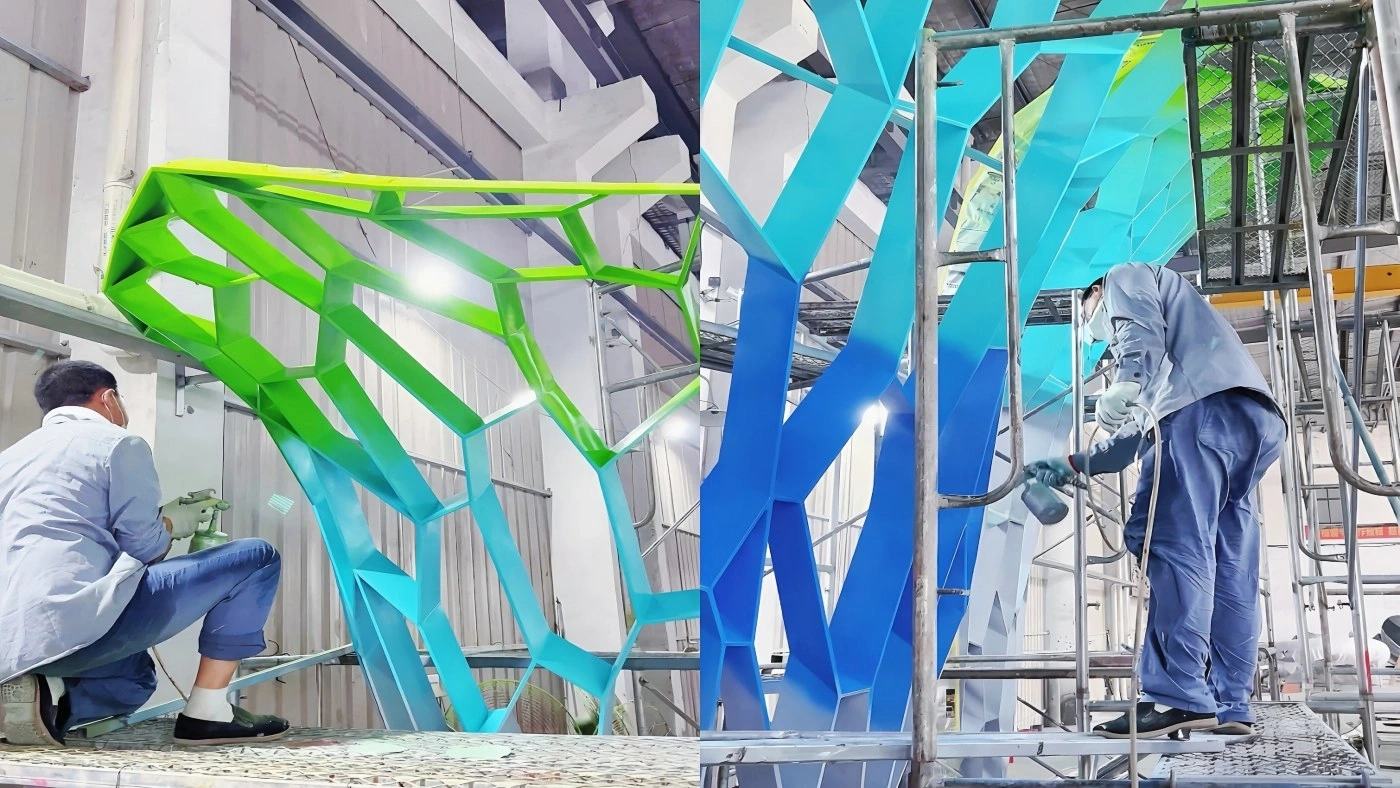
Spraying is one of the most widely used surface finishing methods in commercial prop manufacturing. A spray gun atomizes the coating and applies it evenly to the substrate, where it cures to form a continuous protective film. Spraying generally falls into two categories: liquid coating and powder coating. Liquid coatings offer considerable flexibility in color matching and are suitable for small production runs and props with complex, multicolor designs. Powder coating uses electrostatic application to create a uniform finish and, when properly cured, can provide strong adhesion and favorable environmental performance.
Typical applications include large mall installations, outdoor landscape props, irregularly shaped structures, and props with large areas of solid color. The main advantage of spraying is its broad range of color and finish options, including matte, gloss, semi-gloss, and metallic effects. It is compatible with a variety of substrates, including metal, wood, MDF, plastics, and foam-based materials. Local damage can also be relatively easy to repair, making spraying a common choice for outdoor props. One limitation is that conventional spray finishes may offer less abrasion and scratch resistance than some plated finishes, so areas subject to frequent contact can be more vulnerable to damage. Overall, spraying is a flexible, cost-conscious option that meets the finishing requirements of many standard commercial props.
According to industry data attributed to the International Surface Treatment Association, powder coating can provide coating adhesion more than 30% higher than conventional liquid spraying, while its outdoor weather resistance may last 5–10 years. These characteristics make powder coating a common option for outdoor commercial installations.
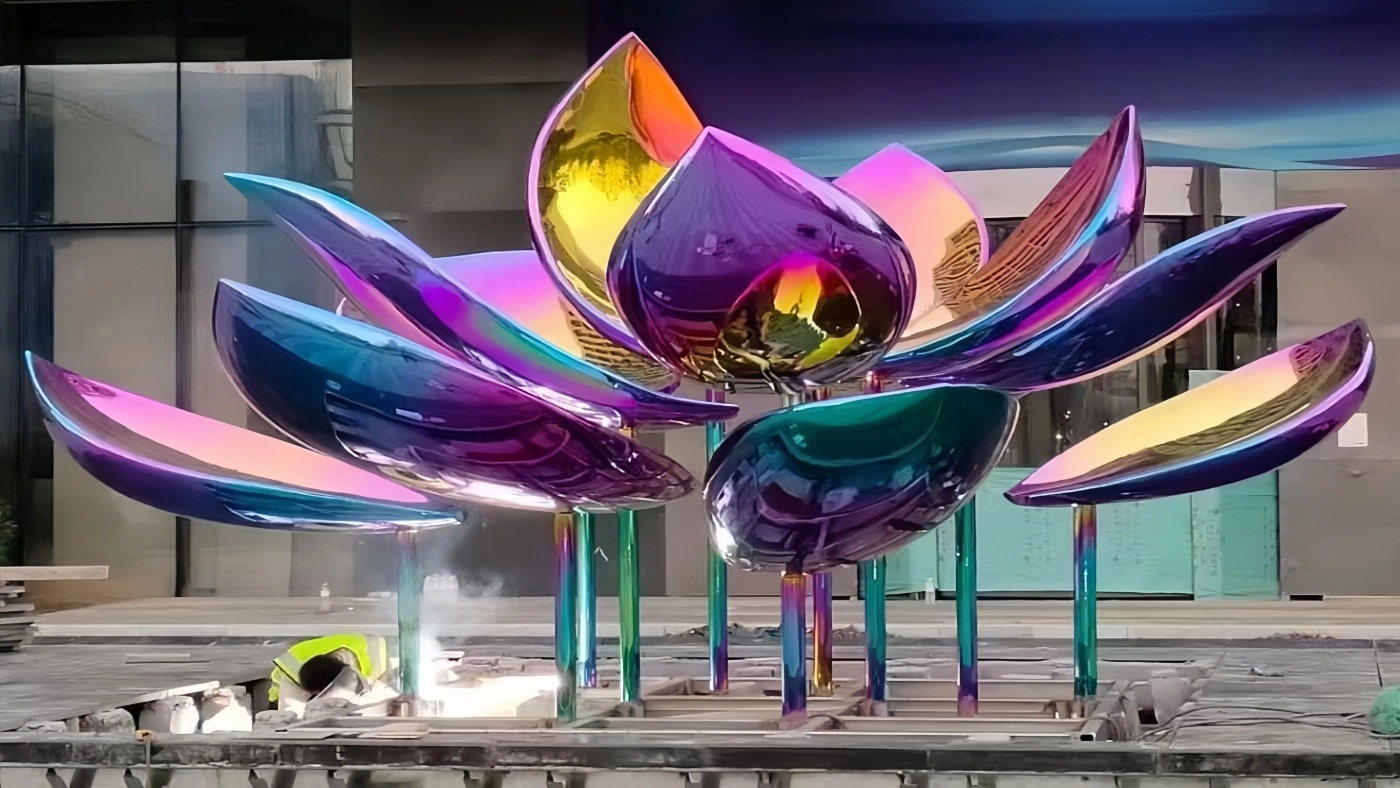
Electroplating creates a metal layer on a substrate through an electrochemical process, while related physical vapor deposition (PVD) technologies can produce metallic finishes through vacuum deposition. These methods are widely used when a refined, high-quality metallic appearance is required. Traditional electroplating is generally intended for conductive substrates, especially metals. PVD vacuum coating has expanded the range of possible applications by allowing certain non-metallic materials, including plastics and composite panels, to achieve metallic effects.
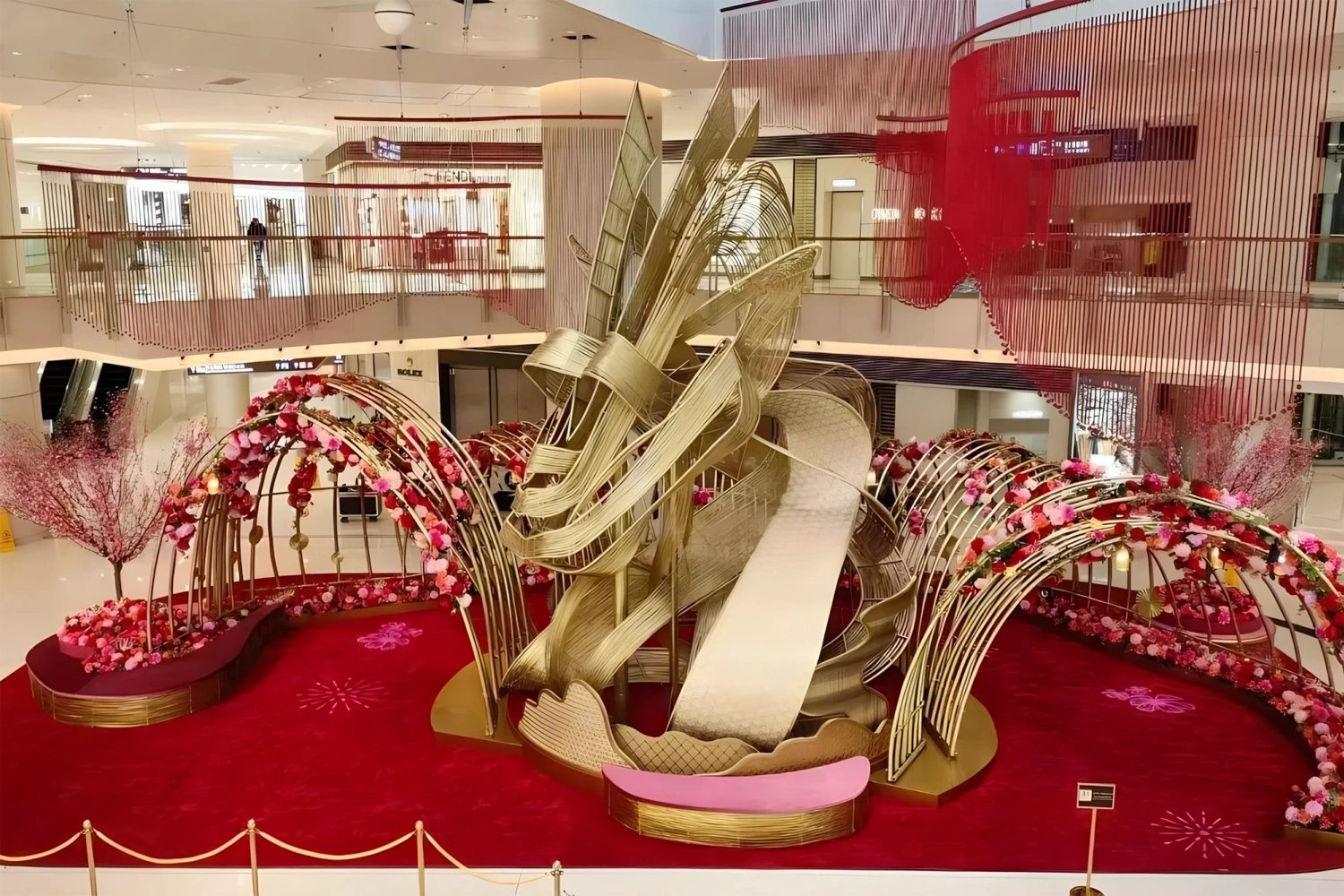
Common finishes include chrome, nickel, gold, copper, and antique copper, making the process suitable for contemporary luxury, vintage, and technology-inspired designs. Typical applications include premium brand display props, metal accents on commercial installations, components of public art installations, and decorative elements in upscale commercial spaces. The main benefit is a convincing metallic appearance, often with greater depth and visual realism than painted imitations. Depending on the coating system and application conditions, plated finishes can also offer good wear and corrosion resistance. However, some plated layers can be brittle, making them less suitable for components that must flex or are likely to be struck. In such cases, spraying or another coating system may be a more appropriate choice.
ASTM B633 specifies requirements for electrodeposited zinc coatings on iron and steel. Under the standard’s relevant qualification conditions, coatings may be required to withstand at least 96 hours of neutral salt spray testing without red rust. The applicable requirements depend on the specified coating classification and service conditions.

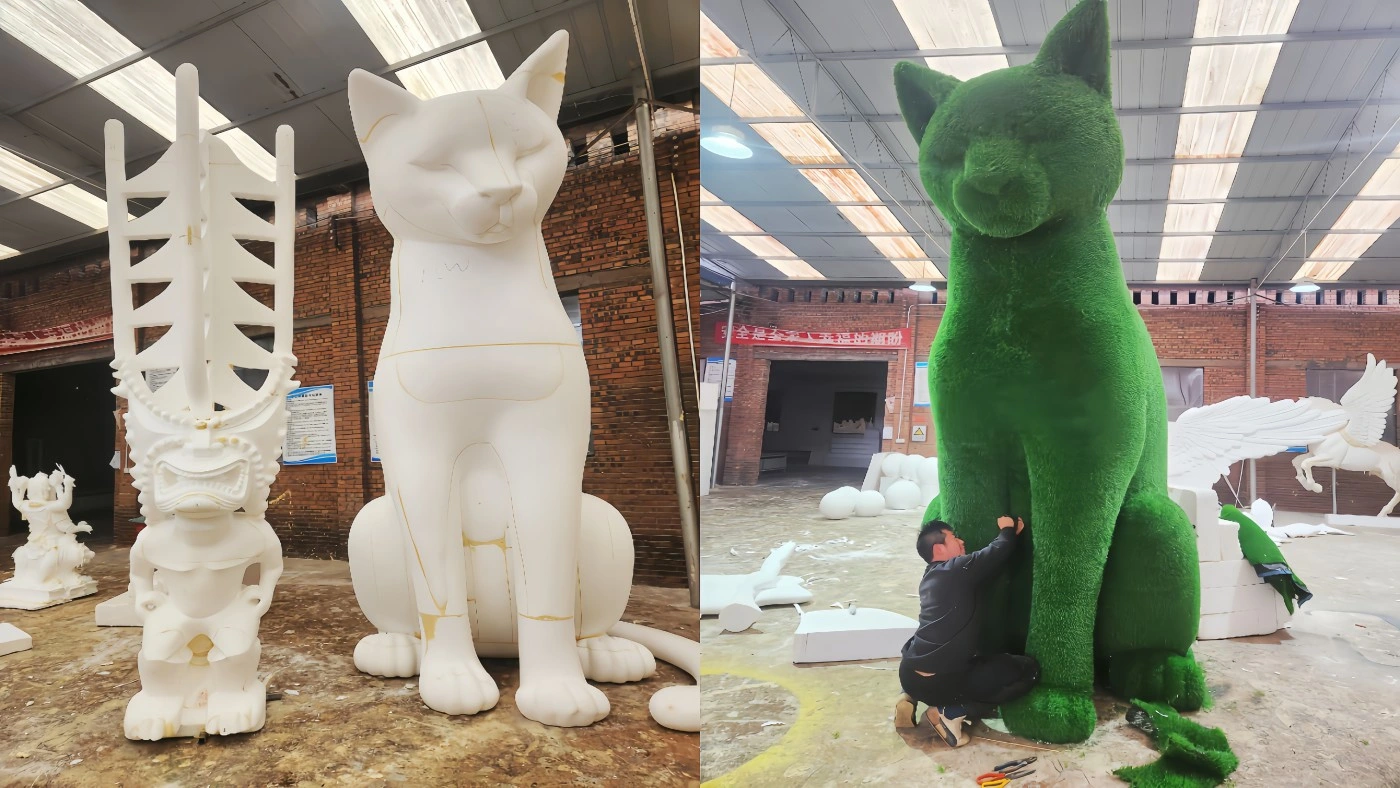
Flocking is a distinctive finishing technique used to enhance the atmosphere and tactile quality of commercial props. It uses an electrostatic field to orient short fibers and apply them to an adhesive-coated surface, creating a soft, velvet-like finish. For commercial environments designed around ambience and visitor engagement, flocking can add a distinctive sensory dimension. Depending on the fiber length and application method, the finish can range from short velvet to longer pile, with a wide choice of colors and effects.
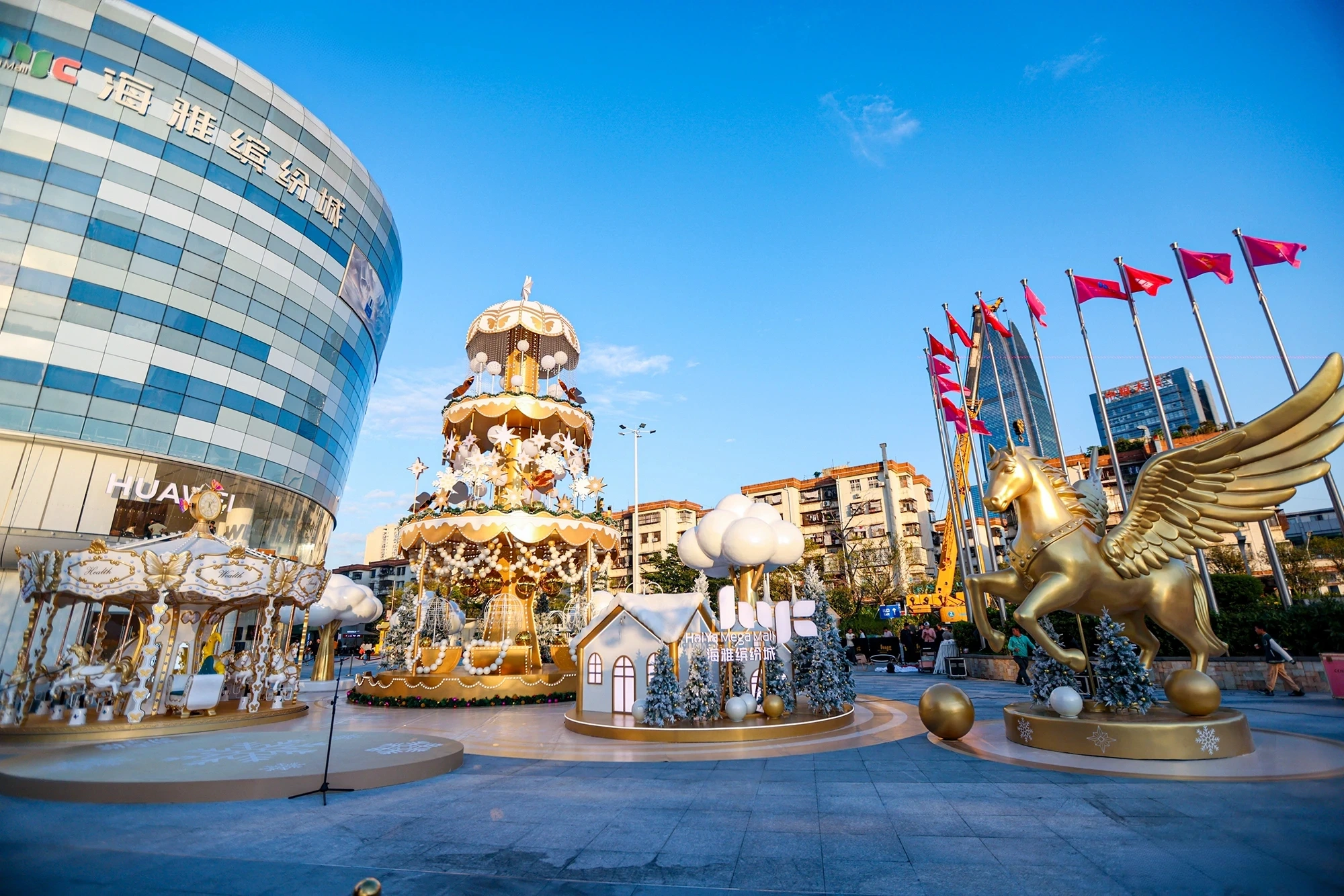
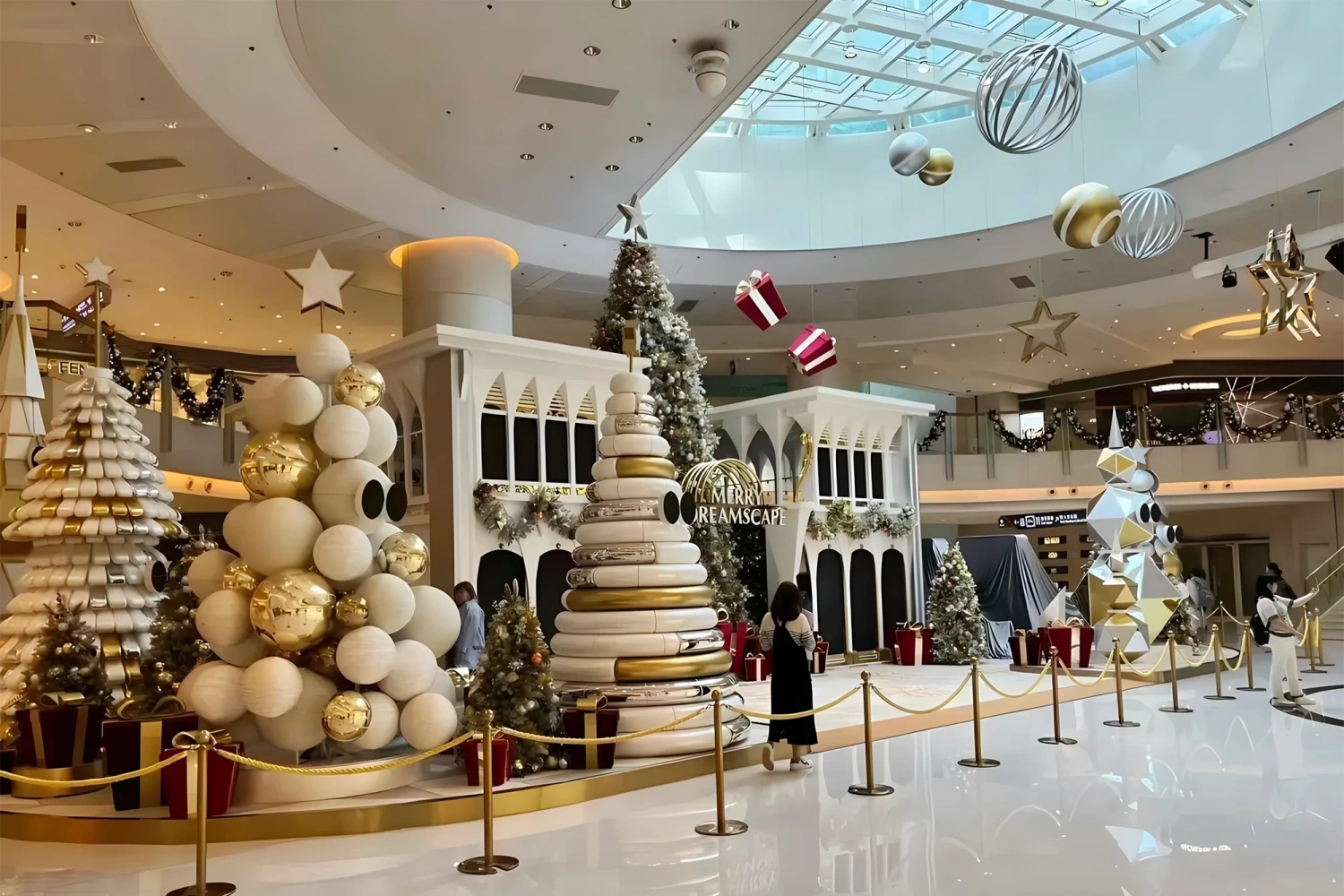
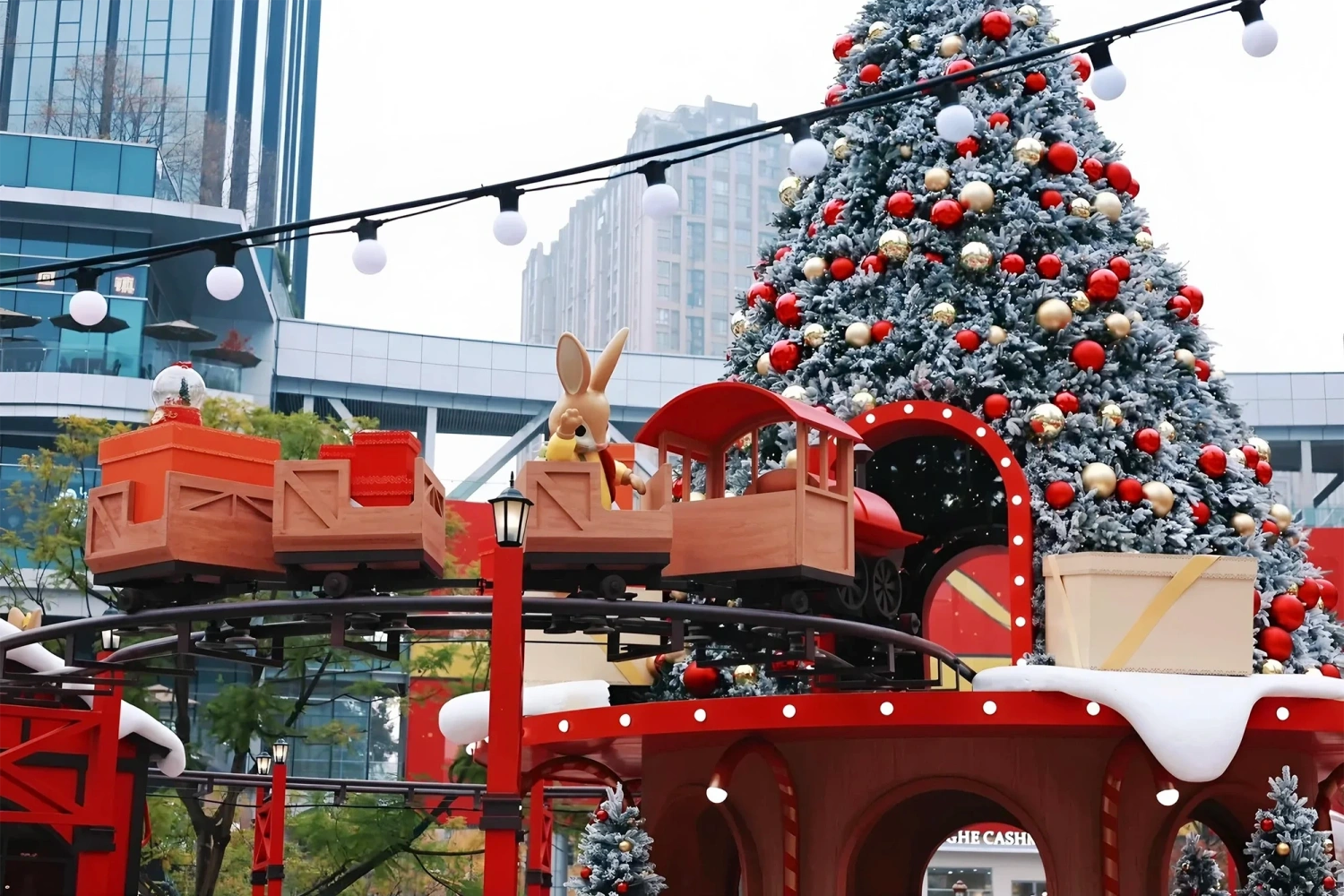
Suitable applications include holiday-themed props, interactive pop-up installations, window displays, and indoor immersive environments. Flocking offers a soft touch and a refined matte appearance, helping create a warm, luxurious, or dreamlike atmosphere. The fibers also diffuse reflected light, reducing glare, and may provide some sound absorption. However, flocked surfaces are generally unsuitable for prolonged outdoor exposure or areas subject to frequent friction, such as handrails and exposed edges. The technique is best used to enhance selected surfaces and tactile features rather than to provide all-over abrasion resistance.
According to information attributed to the Flocking Association of the United States, flocked surfaces may have approximately one-fifth the light reflectivity of conventional painted surfaces. This reduced reflectivity can help limit glare in display environments with intensive lighting.
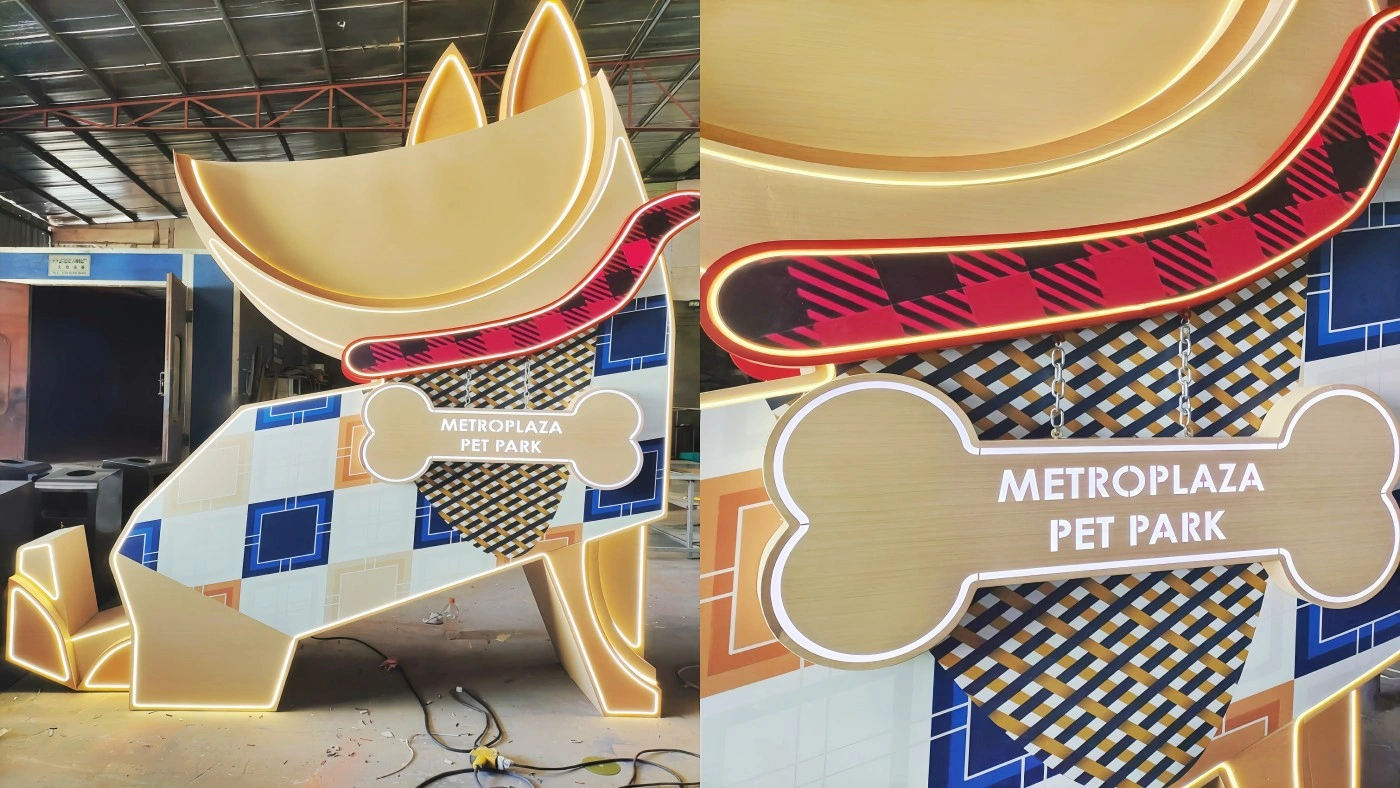
Heat transfer printing is an efficient way to apply customized patterns and textures to commercial props. Using heat and pressure, the process transfers a design from a film or carrier onto a prepared surface, allowing patterns such as wood grain, stone, licensed characters, and brand logos to be reproduced with precision. It is therefore a useful option for props that require detailed, repeatable graphics.
Common transfer methods include sublimation, water transfer, and dry-film transfer. Each has different substrate requirements and is suited to particular pattern and finish specifications. Typical applications include IP-themed installations, branded pop-up displays, props with realistic surface textures, and standardized custom products manufactured in volume. Key benefits include consistent pattern reproduction, clear detail, reliable color matching, high production efficiency, and controllable costs. Transfer printing can also create continuous patterns across a surface when the substrate and process are suitable. The main consideration is substrate preparation: scratches, surface irregularities, or uneven coatings can become more noticeable after transfer. The surface must therefore be carefully prepared and checked for flatness before printing.
When commissioning commercial props, some clients focus primarily on appearance and overlook the conditions in which the products will be used. There is no single finishing process that suits every project. The right choice depends on the intended application, operating environment, and required service life. Different types of commercial projects therefore call for different selection strategies.
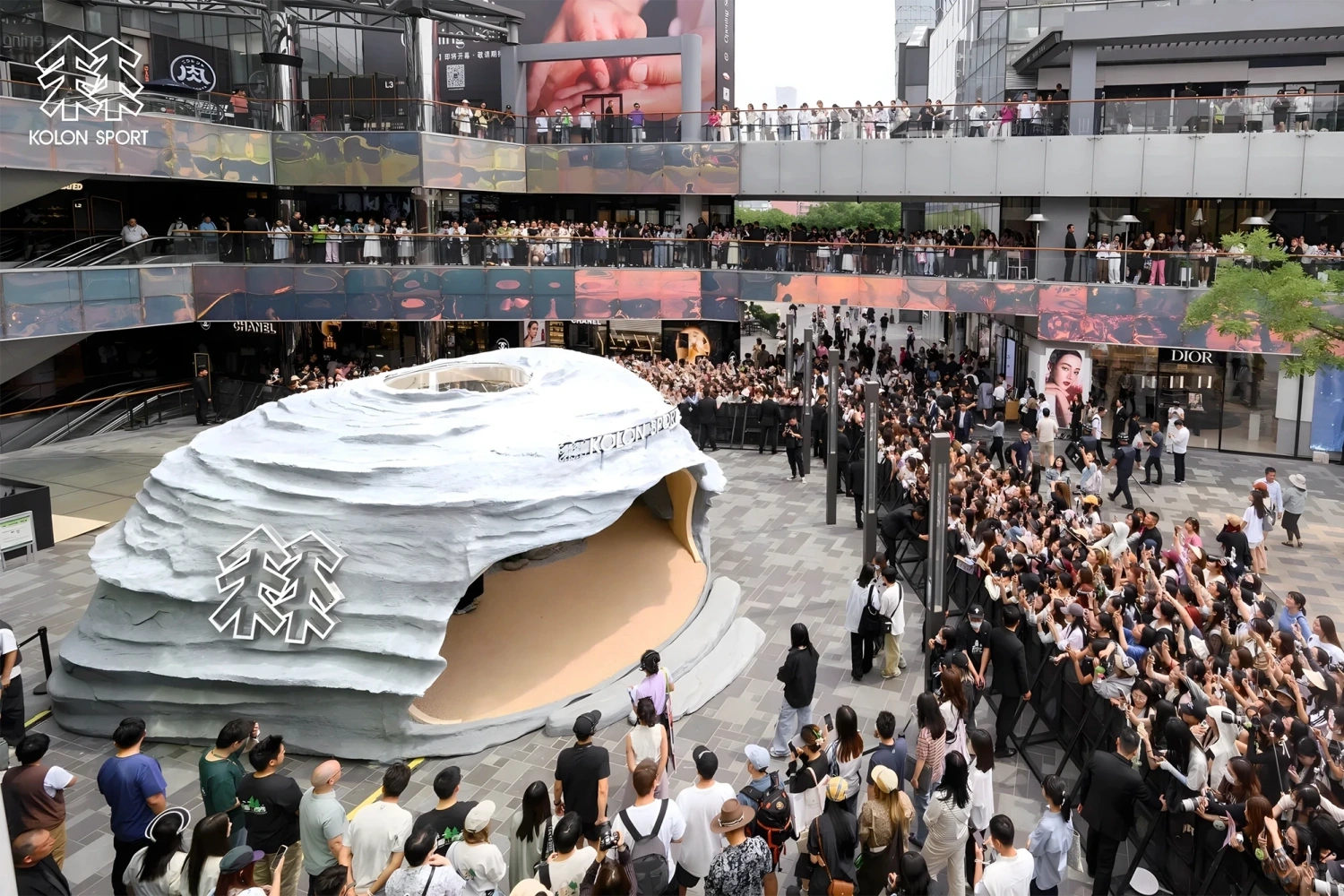
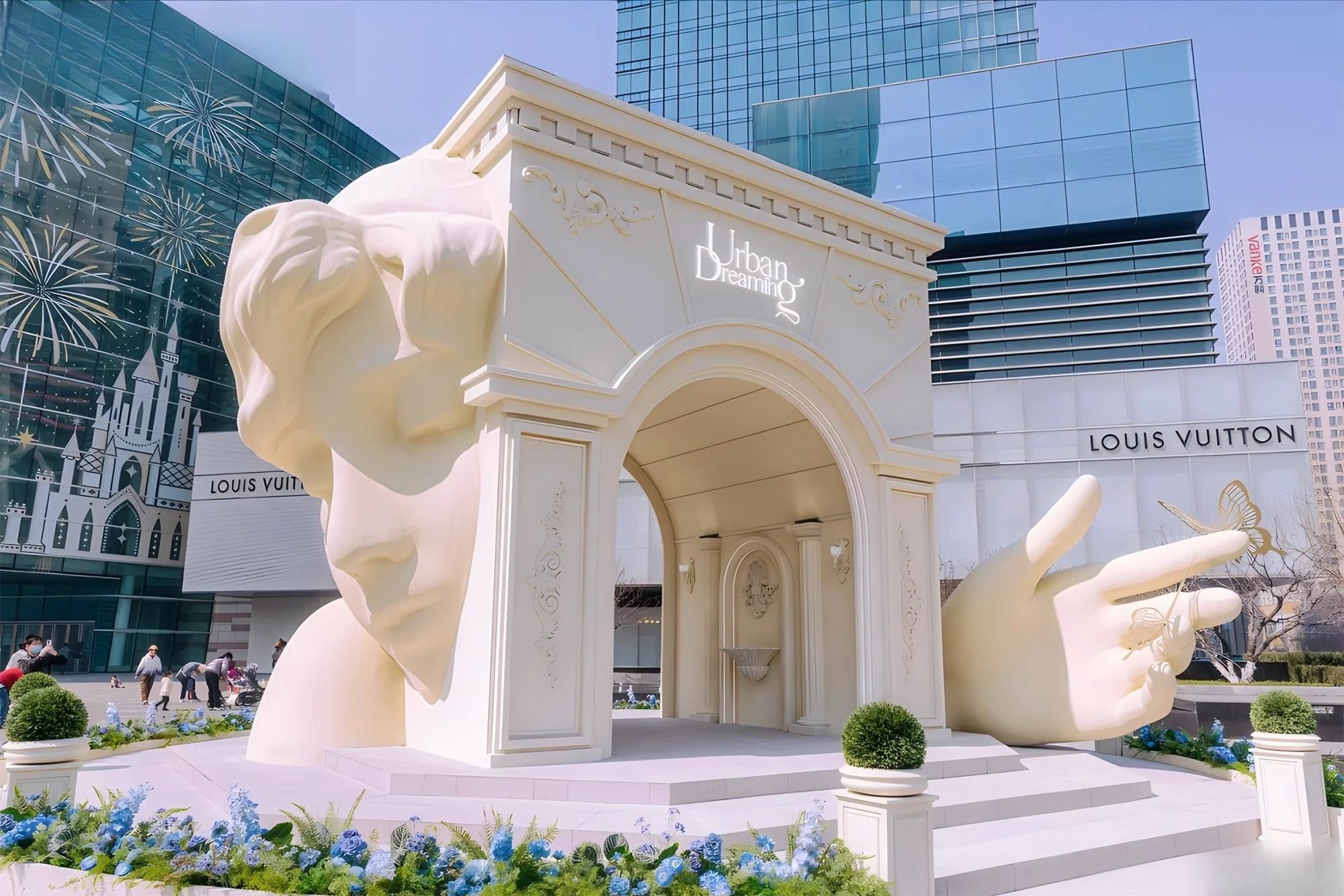
Custom installations in shopping malls are typically placed in busy indoor public areas and may remain in use for more than six months. They need to resist scratches and stains while maintaining consistent color across large surfaces. Powder coating or a high-grade polyurethane (PU) liquid coating can be suitable for these requirements. Decorative details can be electroplated to create a more refined appearance, while heat transfer printing can be applied selectively to reproduce brand graphics or IP-related patterns on seasonal installations.
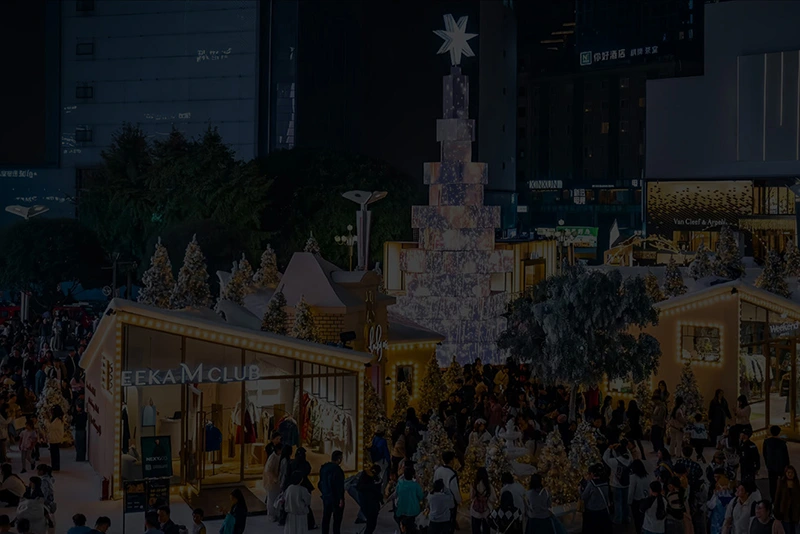
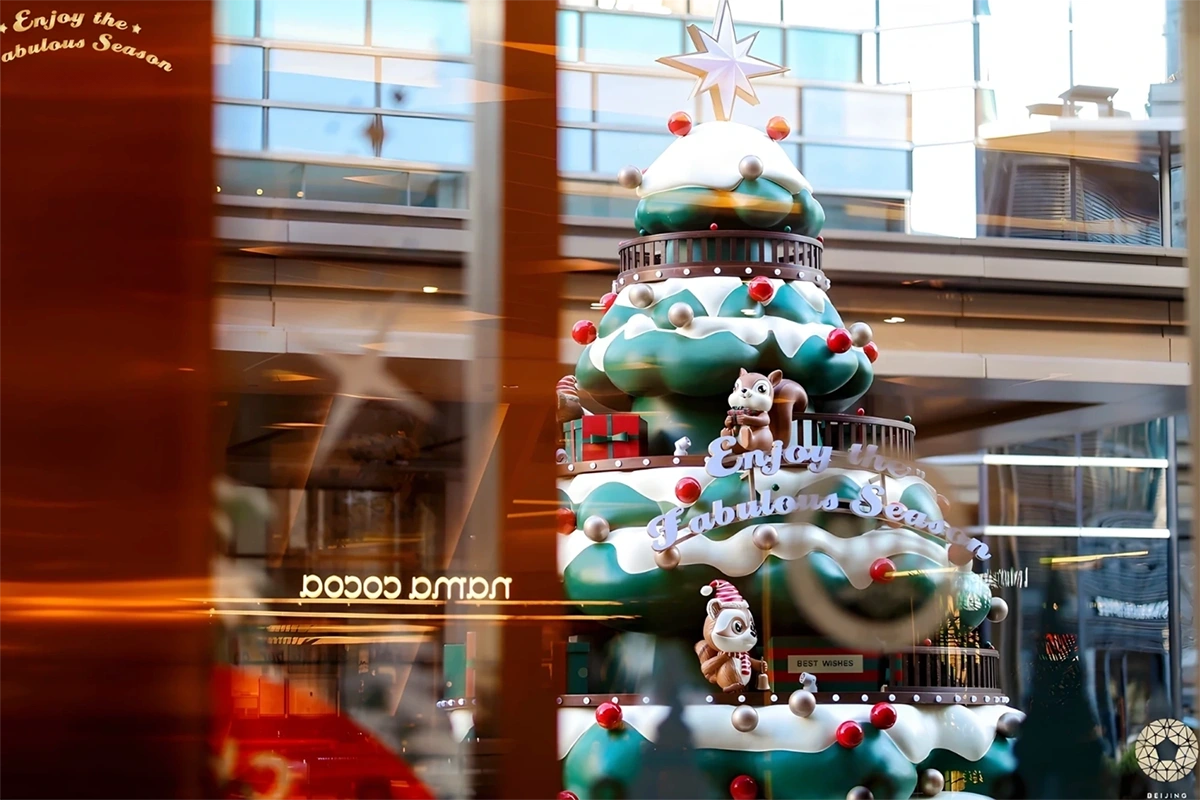
Custom holiday props projects generally have short timelines and are very theme-focused, with strong thematic requirements and typical display periods of one to three months. Cost control and efficient installation are therefore important. Combining spraying with flocking can create a distinctive seasonal atmosphere, while heat transfer printing can reproduce character graphics consistently across larger production runs of IP-themed props. Because many short-term events place less emphasis on long-term weather resistance, the finishing plan can prioritize visual impact while remaining within budget, provided it is appropriate for the actual installation environment.
Public art installations are often installed outdoors, where they must withstand prolonged exposure to sunlight, rain, and public interaction. Weather resistance, aging performance, and structural stability are therefore essential. Durable finishing systems should be selected for these projects. For metal substrates, hot-dip galvanizing followed by powder coating can provide a dual-protection system; high-performance PVD coatings may also be considered where the substrate and application are suitable. Stone and concrete surfaces can be treated with appropriate penetrating sealers or protective treatments. Finishes with limited outdoor durability, such as flocking and standard heat transfer applications, are generally unsuitable for long-term exposure.
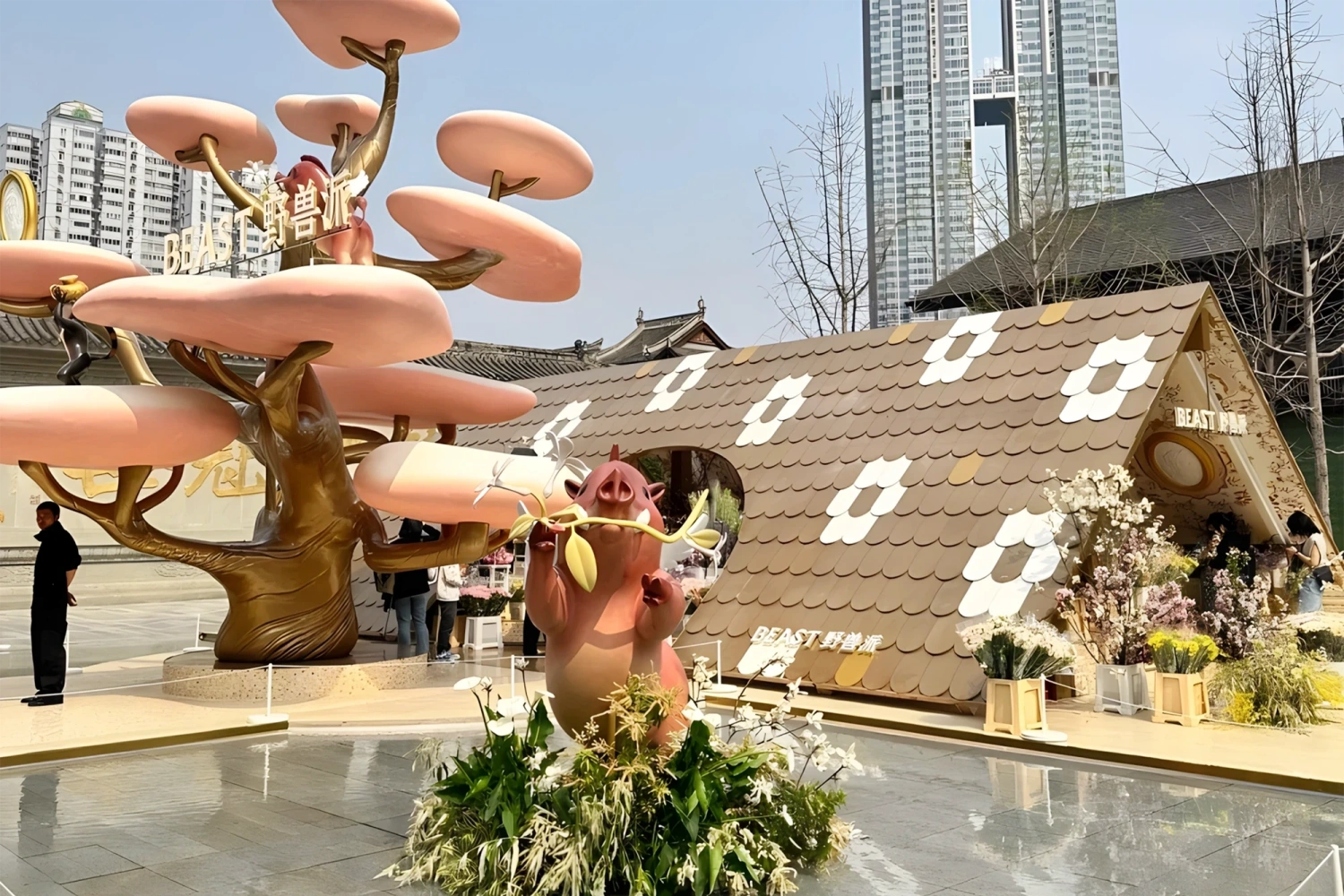
Pop-up store installations are often designed for short display periods and place a strong emphasis on creativity, interaction, and consistent brand presentation. Several finishing techniques can be combined to achieve the desired effect: flocking can add tactile interest to interactive areas, heat transfer printing can reproduce brand graphics accurately, electroplating can enhance the perceived value of key display elements, and spray painting can establish the main color scheme across larger surfaces. This combination helps maximize creative impact while keeping the project within budget.
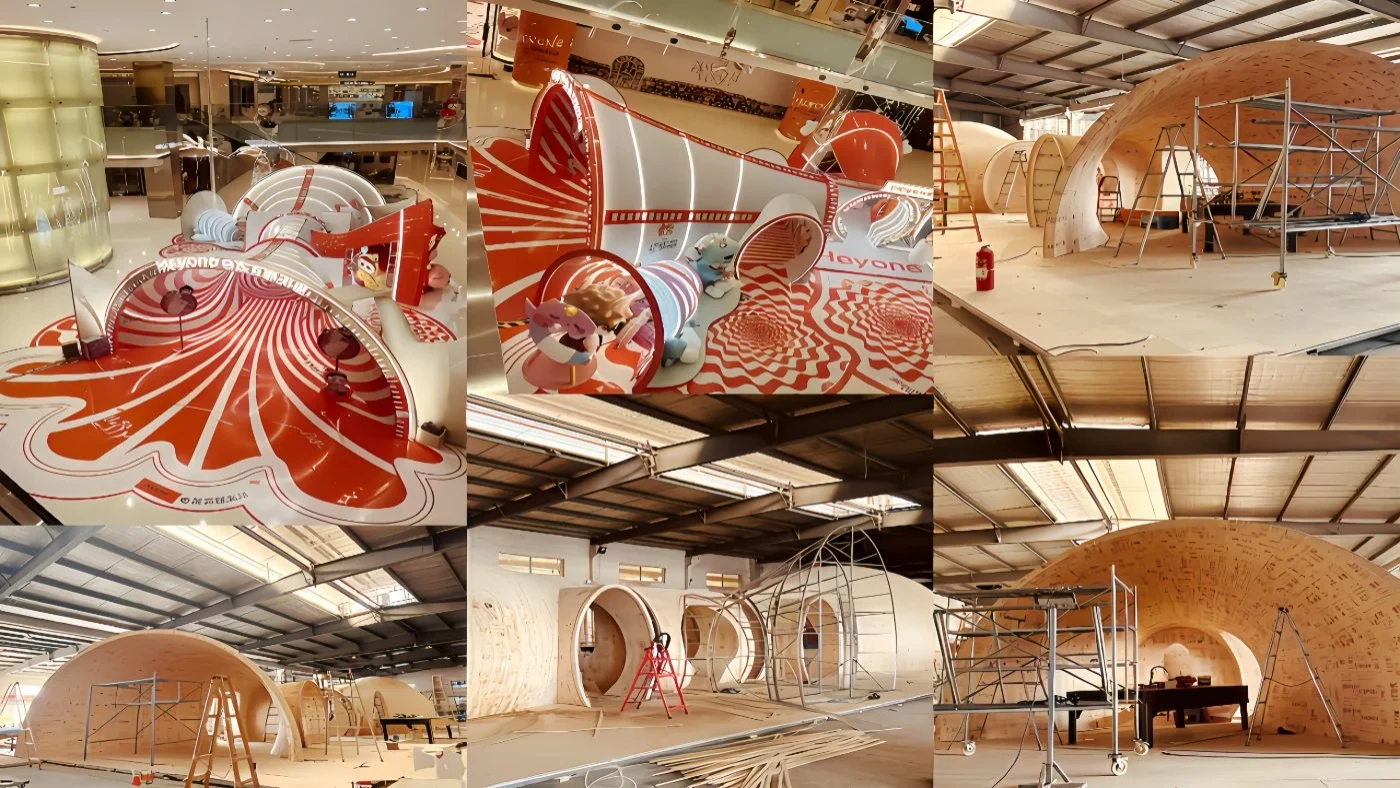
Selecting the right finishing process for commercial props requires a systematic assessment rather than a focus on a single visual effect. Brands, design firms, and commercial operators should consider several factors together. An experienced commercial prop manufacturer will typically recommend a suitable process based on the following five dimensions.
Determine whether the prop will be installed indoors or outdoors, whether it will be exposed to rain, how intense the UV exposure will be, and how much foot traffic or physical contact it will experience. These conditions are key factors in assessing the required weather resistance and durability of the finish.
For short-term events lasting less than a month, cost and visual impact may take priority. For medium-term displays lasting three to twelve months, durability and budget need to be balanced. For installations intended to remain in place for more than a year, long-term performance and ease of maintenance should take precedence.
Define the required gloss level, color accuracy, texture, and pattern complexity according to the design brief. The selected process should be capable of delivering the visual characteristics that matter most to the project.
Costs can vary considerably between finishing processes, even when treating surfaces of a similar size. As a general guide, electroplating is often among the more expensive options, followed by flocking, heat transfer printing, and standard spray painting. The most cost-effective approach is often to reserve premium finishes for focal points and use more economical processes on less prominent areas.
Consider how easily the finished surface can be cleaned, repaired, and maintained after installation. In high-traffic areas or locations without regular on-site supervision, finishes that are easy to clean and repair are often the more practical choice.
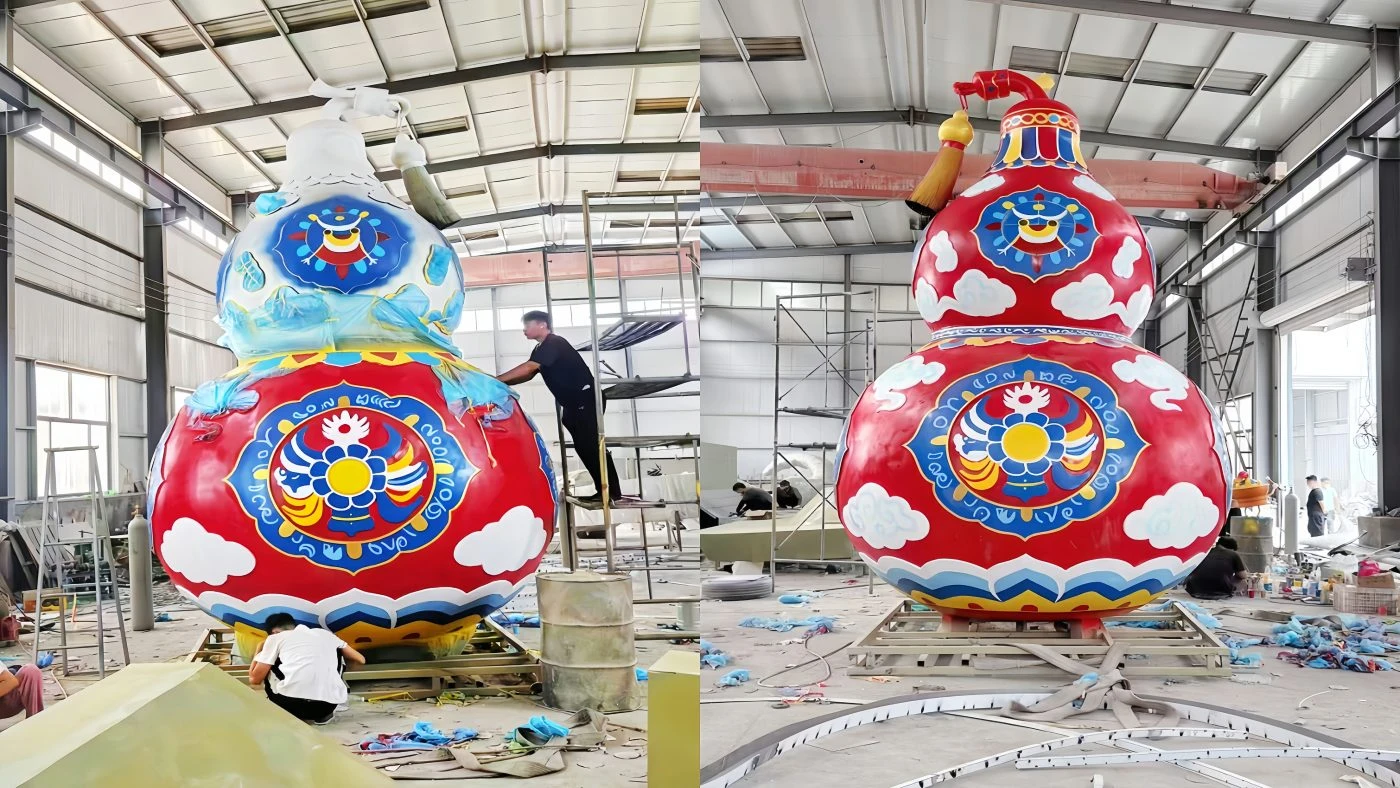
In practice, a single process may not satisfy every requirement of a complex project. Professional teams often combine techniques to achieve an appropriate balance of visual impact, durability, and cost. A comprehensive custom prop manufacturing service should also cover process selection, sample approval, production, and on-site installation to ensure the chosen solution is carried through accurately.
Powder coating is a common choice for outdoor props, provided the coating system is suitable for the substrate and exposure conditions. For metal components, a hot-dip galvanized base layer can provide additional corrosion protection beneath the powder coating. Where a metallic appearance is required, PVD vacuum coating may be an option if the substrate and intended use are compatible. Flocking and standard heat transfer finishes are generally not recommended for installations exposed to outdoor conditions over the long term.
Flocking is generally unsuitable for prolonged outdoor use. Moisture can weaken the adhesive or damage the fibers, while dust and debris can accumulate and make cleaning difficult. It may be suitable for a short outdoor event lasting one to two weeks if effective protection from rain and dust is provided. For long-term outdoor installations, another finishing method is usually more appropriate.
Heat transfer printing uses heat and, depending on the method, pressure to transfer a design from a carrier onto a prepared substrate or coating. It can reproduce detailed graphics and decorative patterns, including wood grain and stone effects, when the materials and process are compatible. Direct printing applies ink directly to the surface. Its adhesion, scratch resistance, and colorfastness depend on the ink, substrate, pretreatment, and protective coating used, so the two methods should be evaluated against the project’s specific performance requirements.
Traditional electroplating generally requires a conductive surface. PVD vacuum coating can create metallic finishes on certain plastics, including suitable grades of ABS and PC, as well as on other compatible substrates. The available options depend on the material, pretreatment, coating system, and performance requirements, so compatibility should be confirmed before production.
The surface finishing plan should ideally be confirmed with the manufacturer’s technical team during the design-development stage. Different processes can affect material selection, wall thickness, structural details, and edge treatment. Confirming the approach early helps reduce the risk of costly design changes and supports more accurate control of the production schedule and project budget.
Surface finishing is an essential part of commercial prop manufacturing, combining functional protection with visual expression. There is no universally best process; the right solution is the one that meets the requirements of the specific application. Whether the project involves a long-term installation in a major shopping mall or a short-term creative display for a pop-up event, the finishing method should be selected according to the environment, budget, and desired appearance. A reliable commercial prop manufacturer can draw on its technical expertise and production experience to support the project from sample approval through final installation, helping ensure that the finished props meet the design brief and perform as intended.
July 27, 2026
July 27, 2026
July 27, 2026
July 27, 2026
July 27, 2026
July 27, 2026
July 27, 2026
July 26, 2026
July 26, 2026
July 26, 2026
July 26, 2026
July 26, 2026
July 26, 2026
July 26, 2026
July 26, 2026
July 26, 2026

July 26, 2026
July 25, 2026
July 25, 2026
July 25, 2026