October 18, 2026 Ixmore Art
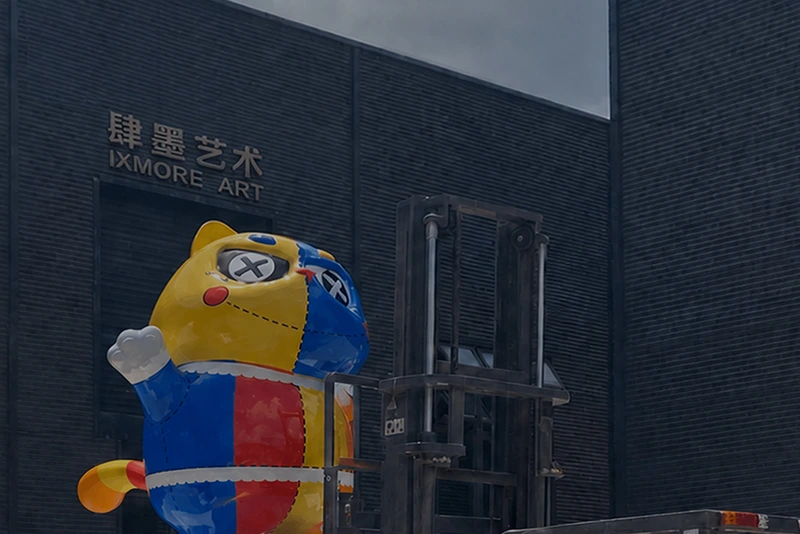
In festive marketing for commercial complexes, a successful custom commercial space installation is about more than good looks. Every stage, from design and fabrication through freight, installation, and post-install maintenance, has to hold up under scrutiny. Ixmore Art is a China-based factory specializing in commercial space installations and props. We have long delivered end-to-end service, from creative development through on-site execution, for shopping malls, commercial districts, cultural tourism projects, and brand activations. Using the ParcCentral Gingerbread Town project as a case study, this article walks through the full technical workflow of a large-scale Christmas-themed installation, from factory production to on-site installation. It is intended as a reference for overseas commercial property operators, event agencies, and brands.

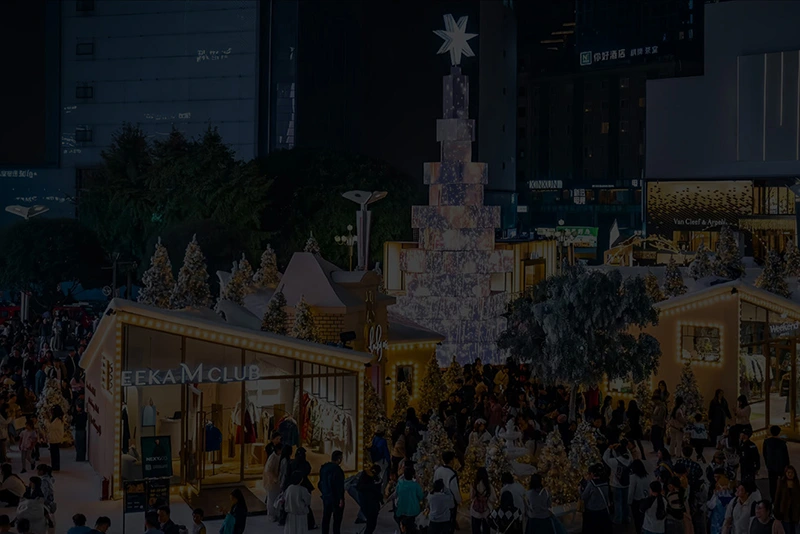
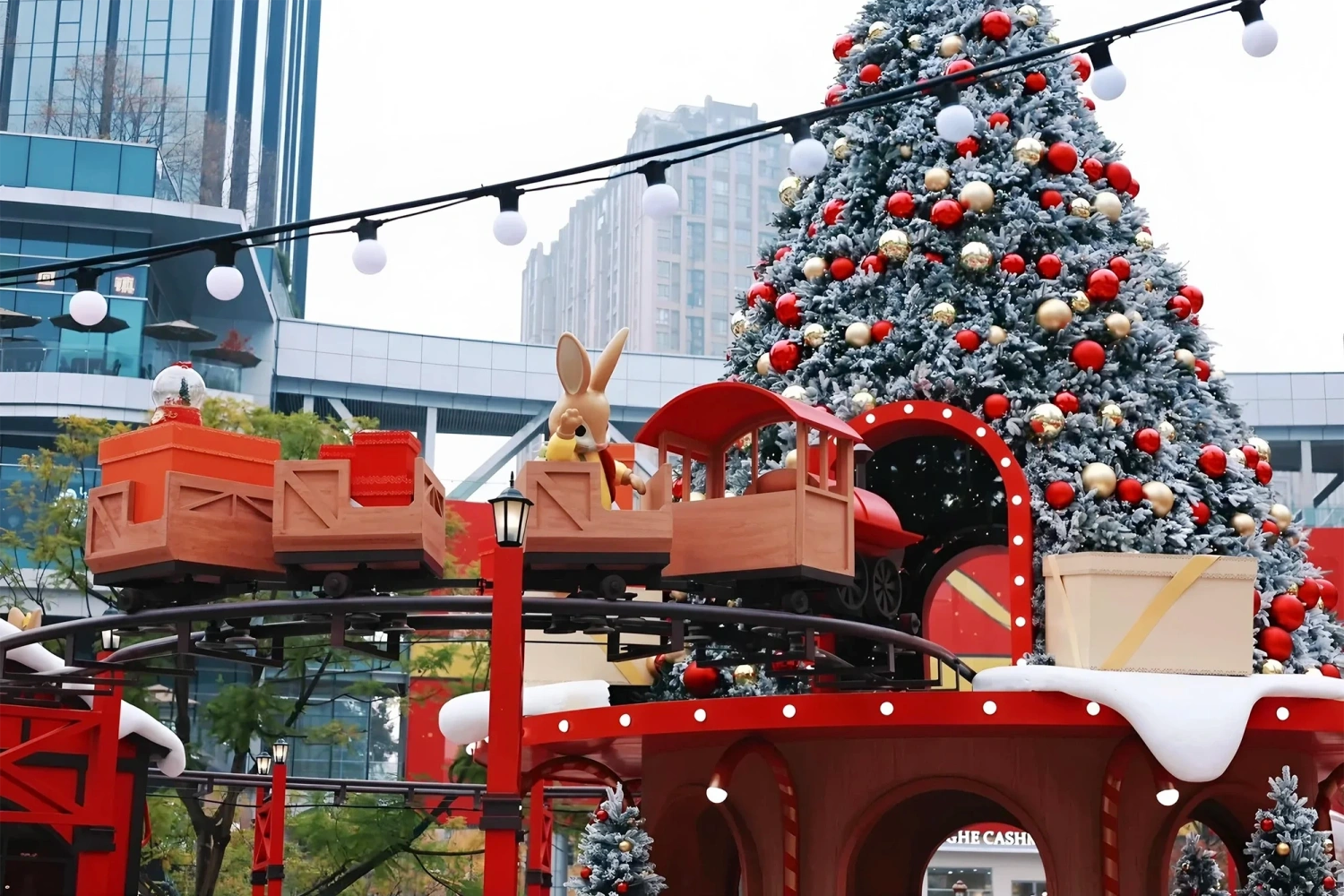
ParcCentral Gingerbread Town is a multi-element, scene-based Christmas project. Anchored in the sunken plaza of the atrium, it features a towering snowman as the centerpiece, surrounded by a rotating platform with candy columns, a cluster of gingerbread houses, a three-dimensional Christmas tree, snowflake sculptures, and a reindeer sleigh. An interactive slide featuring a gingerbread man rolling a snowball runs alongside one flight of stairs. Street-facing booths house photo-op installations built around fireplaces, sofas, and gift boxes, and an inflatable gingerbread man in the project’s signature Christmas hat sits along the outer edge of the roof.
From a fabricator’s standpoint, customizing commercial space installations of this kind comes down to four core challenges:
1.Diverse scene types: The project combines large-scale physical structures, inflatables, lighting installations, and soft furnishings, so multiple production processes must run in parallel.
2.Predominantly outdoor, nighttime viewing: Evening lighting is central to the experience, so installations must be waterproof, dustproof, and deliver consistent illumination.
3.Heavy foot traffic: Visitors will approach, touch, and photograph the installations, which places a premium on structural stability, edge safety, and concealed wiring.
4.Fixed deadlines: The Christmas season is a hard deadline. Production, freight, and installation must follow a backward-scheduled plan.

At Ixmore Art, a project starts with site conditions, not renderings. We first verify plaza dimensions, floor load capacity, step height differentials, drainage direction, power supply locations, and fire egress routes, then scale and lay out the installation accordingly. For a sunken-plaza project like Gingerbread Town, the sightlines between the main installation and the surrounding mini-scenes, visitor circulation paths, and optimal photo distances must all be settled at this stage.
Once the renderings are signed off, we build a 3D model to resolve the structurally critical details of a large-scale art installation: load paths through the framework, center of gravity, stability under wind loading, and provisions for access hatches, cable channels, and lighting mounting points. For top-heavy structures like the giant snowman, the requirements for the steel framework and base ballast are especially stringent. These must be calculated precisely before fabrication begins, not patched up on site.

The snowman’s body, the gingerbread man, the gingerbread house, and the Christmas tree are the visual anchors of the entire project. For these elements, we typically use fiberglass sculpting over an internal steel frame. The process starts with a master pattern, produced in foam or by CNC machining. We then make a mold and lay up the fiberglass. After sanding, fairing, and priming, we apply multiple coats of topcoat. Fiberglass is lightweight, highly formable, and weather-resistant, which allows it to capture the glossy sheen of the snowman’s outfit while faithfully reproducing the icing lines on the gingerbread surfaces.
The gingerbread man on the roof is an air-inflated structure. Its large scale and fast installation make it well suited to rooftops and railings where structural load capacity is limited. During production, we paid particular attention to airtight seams, correct blower selection, and the internal lighting layout, and we equipped the structure with tie-down lines and wind-resistance measures.
Night is prime time for festive installations. In Gingerbread Town, the Christmas tree and snowflake shapes are outlined in neon strip lighting, while the cottages and scene edges are lit with warm-toned string lights to create a cozy gingerbread glow. We build the lighting system into the structural design during fabrication: light channels, wiring, power boxes, and waterproof connectors are all completed before the product leaves the factory, rather than left for on-site installation.
Color mismatch between modules within the same scene directly undermines overall visual impact. We therefore use weather-resistant outdoor coatings and run color swatch comparisons across batch-produced components. Details such as the gingerbread man’s smile, the pattern on the snowman’s scarf, and the red, white, and green stripes on the candy columns are each verified one by one during painting.
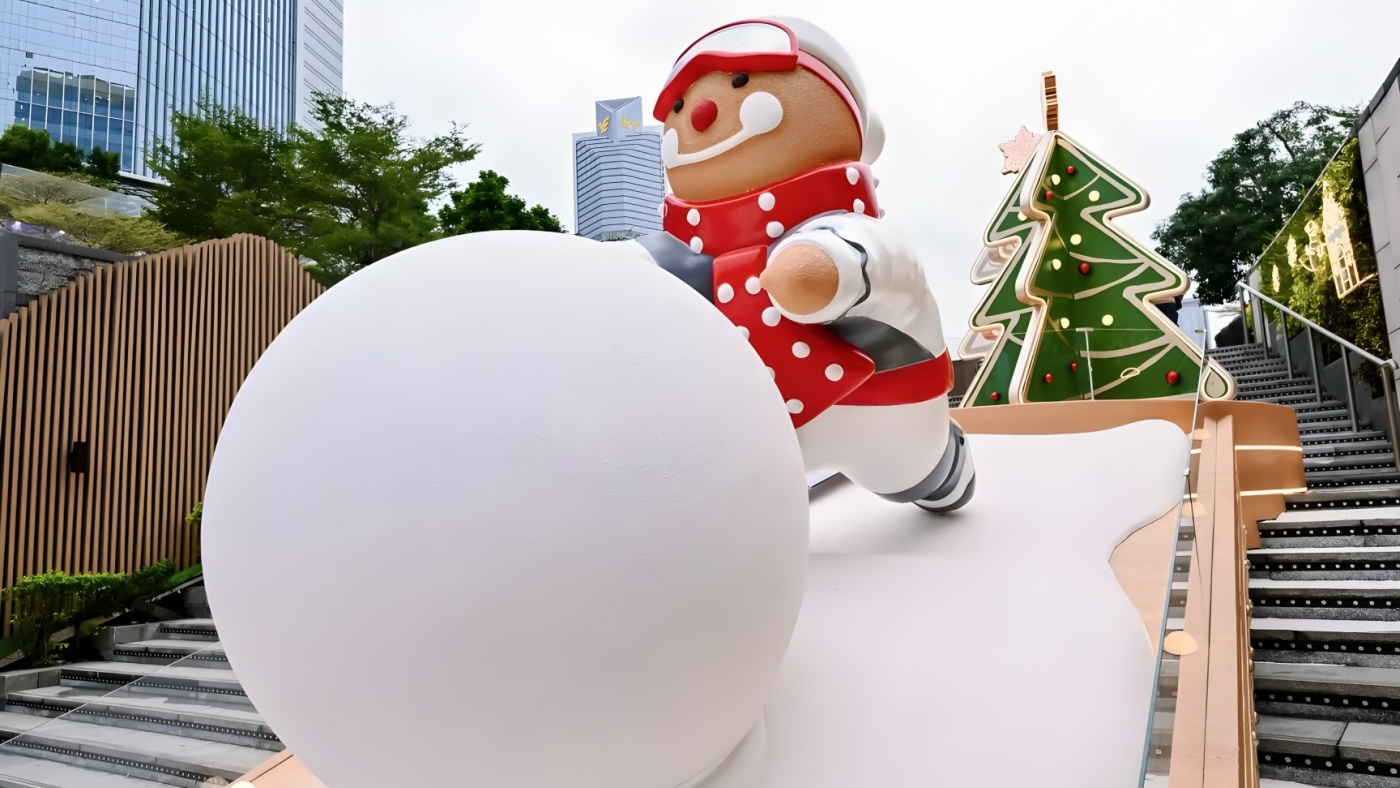
With large-scale installations, problems rarely stem from defects in individual components. They usually come from misalignment at the joints. That is why we conduct a full or section-by-section pre-assembly in the factory: verifying joint dimensions, checking gaps and transitions, powering up the installation to test the lighting, and running stability checks on load-bearing components. For custom commercial space installations, pre-assembly is the most cost-effective form of risk control. Once a module passes inspection, it is assigned a unique serial number and photographed for the record, which then serves as a reference during on-site installation.
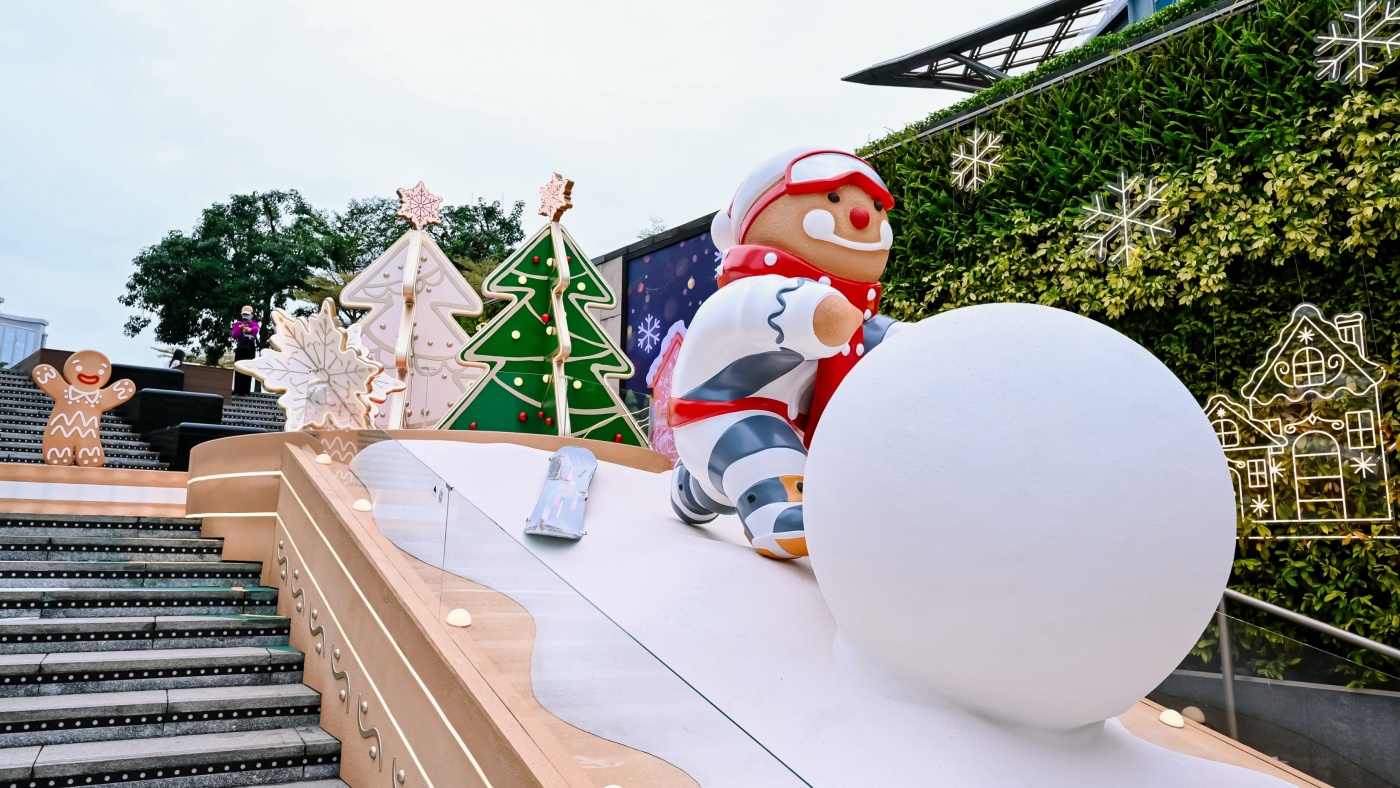
Logistics must be considered as early as the design phase. Modular breakdown should ensure that every component fits into a truck or standard shipping container while keeping the number of on-site connections to a minimum. Take the giant snowman: we would section it into base, torso, head, arms, and hat, with the seams placed away from visual focal points to simplify on-site touch-ups. For custom installations for commercial spaces, the success of transportation largely hinges on this step.
Fiberglass surfaces are prone to impact damage, while lighting fixtures and wiring are vulnerable to crushing. We wrap components in foam, bubble wrap, and corner protectors, then secure them in wooden crates or steel frames. For export projects, wooden packaging must also comply with ISPM 15, one of the International Standards for Phytosanitary Measures. The standard applies to solid wood packaging material in international trade. It requires approved treatment and a certification stamp to reduce the risk of pests spreading through cargo. We advise overseas clients to confirm the destination country’s requirements for wooden packaging at the order placement stage.
For a large, integrated installation like Gingerbread Town, the freight mode is selected based on size, project timeline, and destination. Domestic projects typically go by full-truckload direct delivery, with cargo properly secured using dedicated fixtures. Cross-border projects ship by full-container-load sea freight, with proper layering and anti-shift measures during loading. For overseas clients, we clarify delivery terms at the quotation stage. Under the Incoterms 2020 rules published by the International Chamber of Commerce, the seller’s and buyer’s responsibilities for freight, insurance, transfer of risk, and customs clearance differ depending on the term chosen. Agreeing on these terms in advance helps avoid disputes down the line.
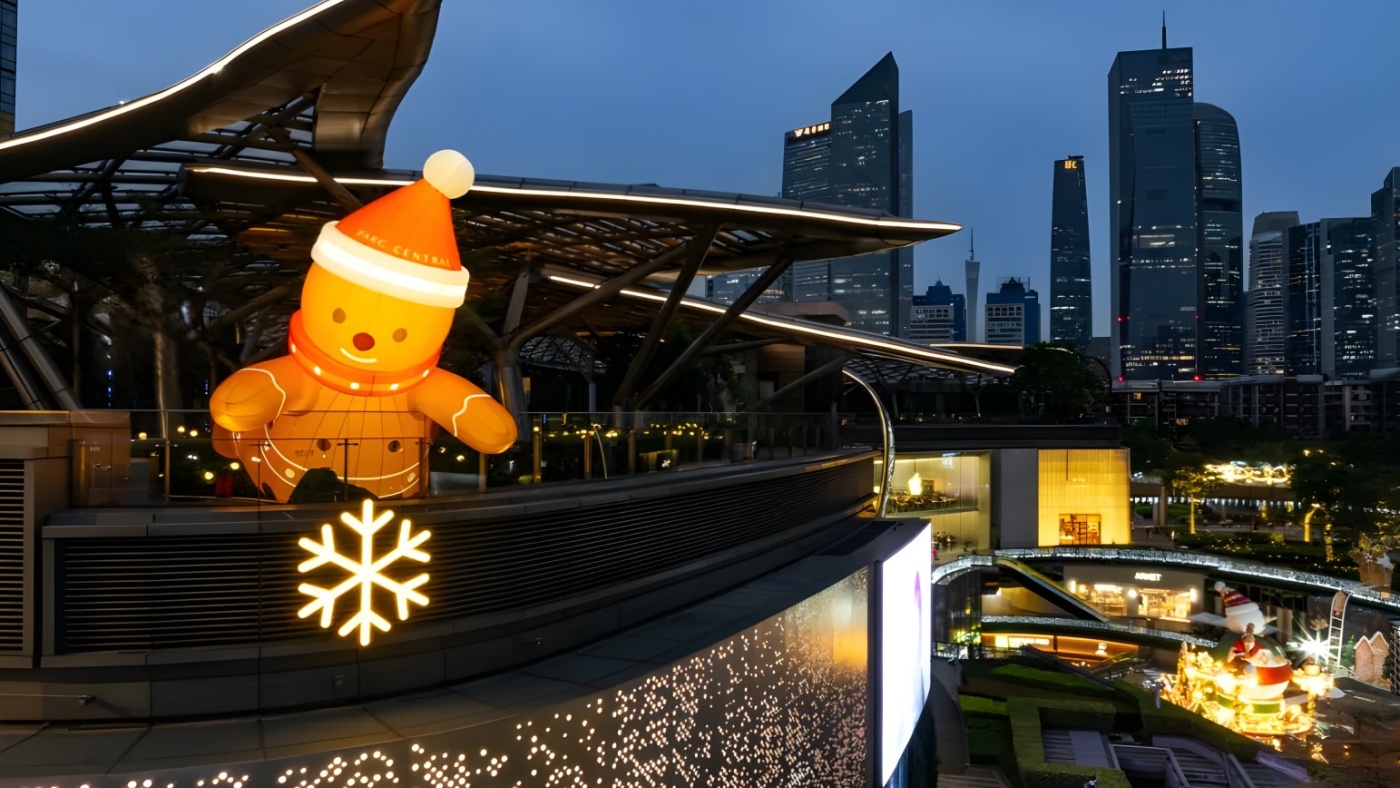
The “last mile” of custom commercial space installations is on-site installation, and it is the stage that tests a team’s experience the most.
Before installation, we determine the mounting method: base plate anchoring, counterweights, expansion bolts, or removable bases. Because commercial properties typically prohibit any damage to floor finishes, we use a base plate with ballast solution in such cases. The installation crew hoists and assembles the modules in numbered sequence, with work scheduled mainly at night or after closing to minimize disruption to mall operations and customer flow.
Lighting and power for outdoor installations must be designed to be waterproof and dustproof. We specify lighting fixtures, power boxes, and connectors in accordance with the IEC 60529 ingress protection standard. The standard uses a two-digit IP code, in which the digits indicate the degree of protection against solid foreign objects and water, respectively. Outdoor fixtures and wiring connections are selected to the appropriate IP rating, with proper drip loops, waterproof seals, and grounding in place.
Once installation is complete, we power up and test each light individually, inspect every mounting point and connection, check corner details, guardrail spacing, and cable concealment, clean up the site, and document the acceptance process with photos. Areas easily reachable by visitors, such as the interactive gingerbread man slide and the photo spots, receive a thorough second inspection.

Over the course of a festival run, installations face wind and rain, crowd impact, and aging light fixtures. We provide inspection recommendations and a spare parts list for wear-prone components so the operator can address issues promptly. When the event ends, the installation is dismantled in reverse order of its numbering. Each module can then be warehoused or refurbished for the next season’s theme change, cutting down on repeat capital outlay.

The success of a festive installation rarely hinges on how stunning the renderings look. It depends on whether production, transportation, and installation are seamlessly integrated. The ParcCentral Gingerbread Town project shows that an installation can be deployed reliably within the festive window and deliver the intended visual impact after dark only when structural design, materials and craftsmanship, lighting integration, modular logistics, and on-site installation are coordinated under one unified system.
If you are planning your next festive project, contact us. Ixmore Art will deliver a comprehensive solution for custom commercial space installations.

Timelines depend on the installation’s size, design complexity, materials, and shipping distance. In general, the process runs through several stages: design sign-off, production, pre-assembly, transportation, and on-site installation. For custom commercial space installations, we recommend engaging the factory early in project planning so that scheduling can be assessed and ample time is allowed for design and production
Yes. Fiberglass is lightweight and highly weather-resistant. Paired with outdoor-grade coatings and proper structural anchoring, it is well suited to outdoor displays in mall plazas, city blocks, and cultural tourism venues. Display duration and protection requirements can be assessed against the climate conditions at the project location.
The key lies in modular breakdown at the early stage, pre-assembly before shipment, and installation by numbered component on site. Each component has its own packaging, protection, and securing plan. On site, anchoring or counterweight methods are chosen based on foundation conditions.
Yes. We design solutions around the venue’s dimensions, visitor flow, and brand identity, covering form, color scheme, lighting, and interactive elements. The goal of customizing commercial space installations is to ensure they are consistent with both the venue and the brand’s aesthetic.
We lock in trade terms at the quotation stage, provide a packing list, a module numbering reference, and installation drawings, and offer remote guidance or dispatch technical staff to site as needed. For overseas projects involving custom commercial space installations, we recommend confirming local installation conditions, electrical codes, and packaging compliance requirements as early as possible.
We supply a checklist of key inspection points and spare part recommendations for wear-prone components. Lighting fixtures, power connectors, and mounting points are priority areas for daily inspection, and any issues found should be replaced or reinforced promptly.
July 27, 2026
July 27, 2026

July 27, 2026

July 27, 2026
July 27, 2026
July 27, 2026
July 27, 2026

July 26, 2026

July 26, 2026
July 26, 2026
July 26, 2026
July 26, 2026
July 26, 2026
July 26, 2026
July 26, 2026
July 26, 2026

July 26, 2026
July 25, 2026

July 25, 2026

July 25, 2026