October 28, 2026 Ixmore Art
For commercial real estate operators, turning the “Journey of Star Wishes” concept into a tangible, interactive experience that visitors want to share is a key challenge—and one that mall operators and installation suppliers must solve together. Custom fabrication for commercial spaces bridges creative design and the visitor experience, directly affecting visual impact, structural safety, and operational efficiency. For the MixC “Journey of Star Wishes” 2.0 project, Ixmore Art drew on more than 20 years of experience in custom large-scale commercial installations and props, a 16,000-square-meter production facility, and a portfolio of more than 300 projects worldwide. The team delivered an end-to-end technical solution covering design development, material selection, precision fabrication, factory pre-assembly and testing, export packaging and transportation, and on-site installation and commissioning. The following case study examines the implementation process and offers practical insights for overseas commercial property developers and brand owners.
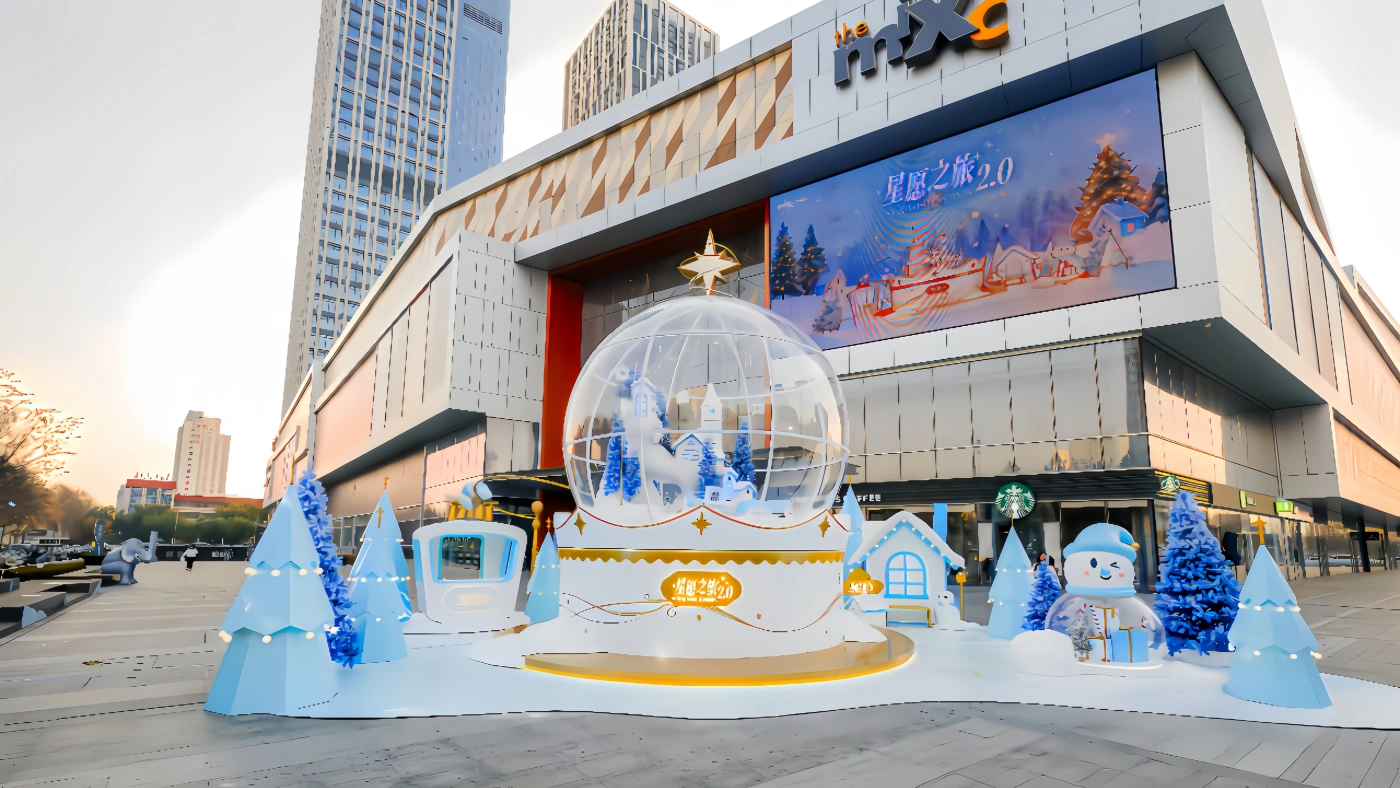
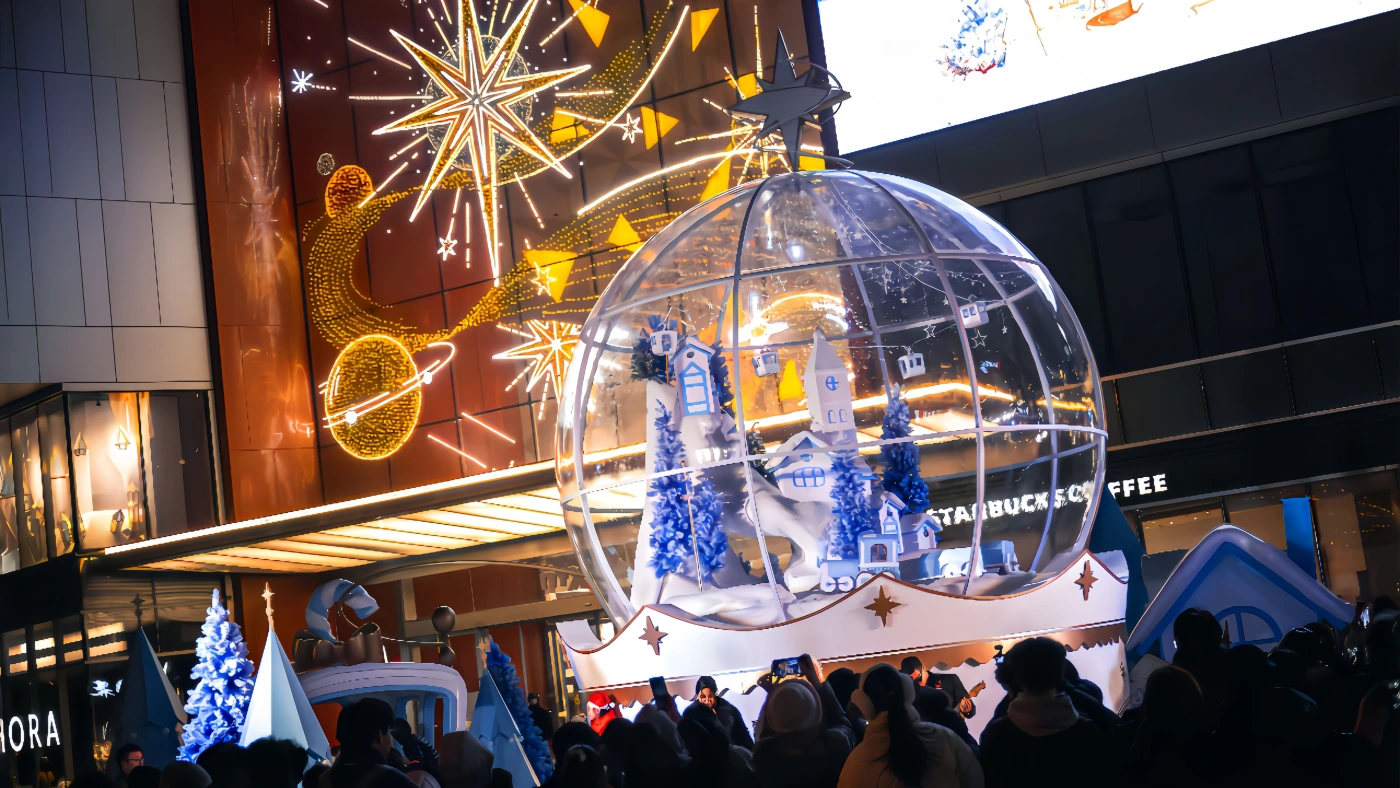
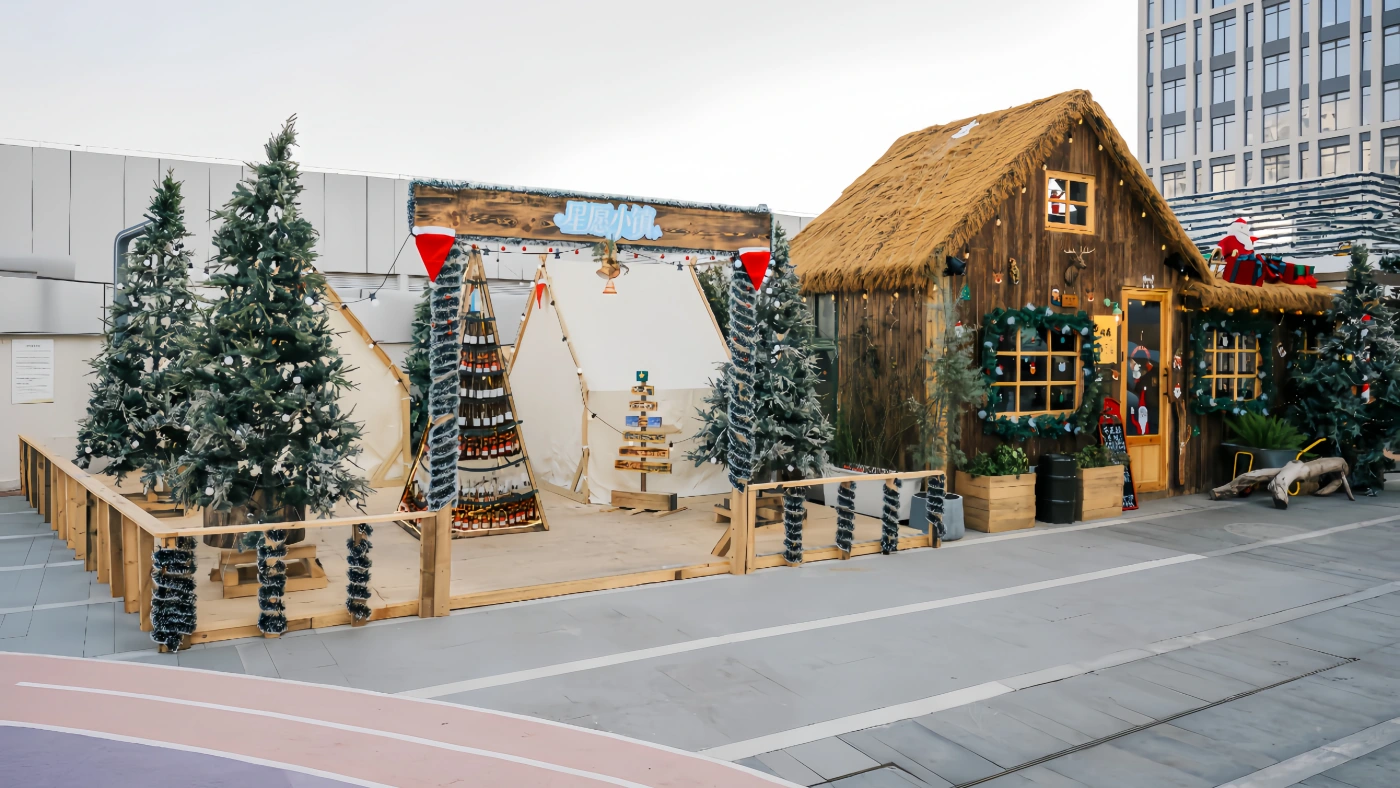
The “Journey of Star Wishes” 2.0 display is built around a giant transparent snow globe. Inside it are a miniature winter village, a blue Christmas tree, and white sculptural elements. The exterior scene features a large snowman installation, with gift boxes and candy canes incorporated into the globe’s lower section, alongside a white horse-drawn carriage, small igloos, geometric blue trees, and a coordinated snow-covered base. After dark, the installation’s lighting works in concert with the starry-sky effects on the mall’s exterior façade, creating an eye-catching destination for visitor photos. The wider concept also extends to “Star Wish Town,” with wooden cabins and tent-style settings designed to work across both indoor and outdoor spaces.
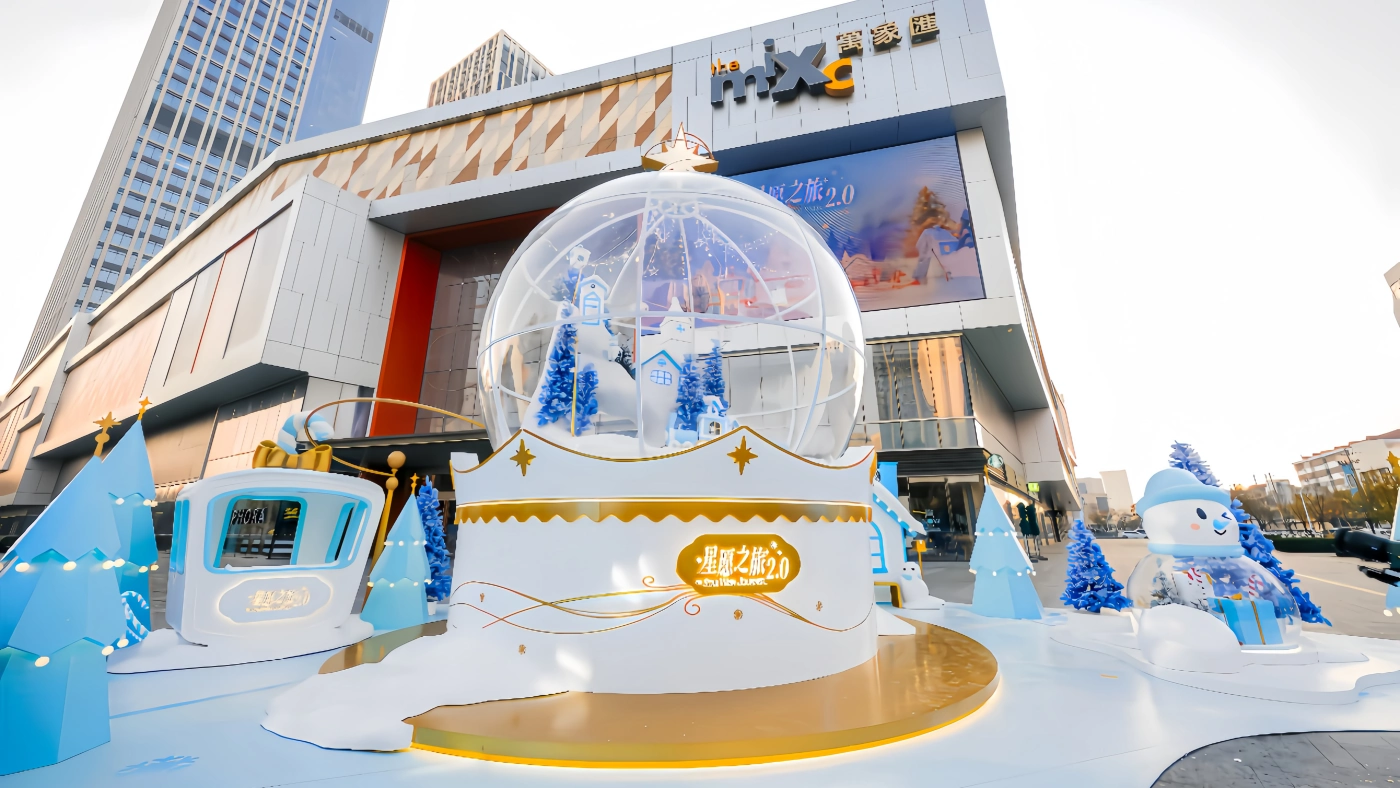
Large-scale holiday displays in shopping malls typically present three key challenges. First, they must remain structurally safe and resistant to tipping in busy public areas. Second, installation must be completed within a restricted work window, often with construction limited to nighttime. Third, the display may need to be dismantled and partially reused after the event. The manufacturer therefore needs to account for modular transport, efficient on-site assembly, and weather-resistant materials from the earliest design stages to ensure a smooth transition from factory production to final installation in the mall plaza.
A professional installation manufacturer does not move straight from a rendering to fabrication. The first step is to break the design down into buildable components and assess the loads and structural requirements. The giant snow globe uses an internal steel frame to support the transparent outer shell and the miniature scene inside. The snowman is also designed in sections: its head is a lightweight sculptural shell, while the transparent spherical abdomen functions as a separate structural assembly with space reserved for the internal display. Protruding elements, including the star-shaped rooftop ornament and the horse-drawn carriage’s wheel hubs, receive dedicated support points to reduce the risk of deformation under sustained cantilever loads.

The center of gravity and resistance to overturning must also be assessed. Because stone flooring in mall plazas often cannot be drilled, the project uses a combination of a wider base footprint and counterweights while protecting the existing floor finish. For outdoor sections, wind loads are considered to help keep the blue trees and cabin stable during the monsoon season. Modular connection points are numbered, and locating pins are incorporated into the design. Wherever possible, joints are concealed along the form’s natural curves, making transport easier and reducing the amount of adjustment required on-site.
Materials for large commercial installations must balance visual quality, weight, weather resistance, and cost. For the transparent spheres, the preferred options include high-clarity, impact-resistant engineering plastics or suitable transparent composite materials. The miniature elements inside are carved from lightweight foam and then surface-hardened. The snowman’s head and the cabin are fabricated from fiberglass-reinforced plastic (FRP), with spray finishes matched to the specified colors and a deliberate contrast between matte and gloss surfaces. The blue trees are made from geometrically cut panels with lighting integrated in advance, preserving their three-dimensional appearance while allowing them to be dismantled and reassembled.

Surface finishing is particularly important. The factory sands, primes, and topcoats exposed surfaces in multiple stages, adding UV-resistant and waterproof coatings to components intended for outdoor use. The electrical system uses independent low-voltage circuits, with access panels built in to support reliable operation and future maintenance. These decisions reflect the practical materials and fabrication expertise required to deliver complex commercial installations.
Production follows a parallel workflow: steel-frame welding, foam carving, FRP molding, spray finishing, lighting installation, and accessory fabrication proceed at the same time where practical. Each module has a process-tracking card, and quality inspectors sign off at key production milestones. For critical sculptural features, the team first produces a smaller prototype to check proportions and details. Full-size fabrication proceeds only after the design has been verified, helping ensure that the finished installation matches the approved concept.

A full-scale factory pre-assembly is completed before shipment. The snow globe, snowman, horse-drawn carriage, trees, and base are assembled to check joint fit, lighting operation, overall stability, and consistency between component labels and the assembly plan. The process is documented with photographs and video. Correcting problems during factory pre-assembly is far less costly than carrying out rework at the destination. This ability to verify fit and function before dispatch is one of the key differences between a professional installation manufacturer and a general fabrication workshop.
The oversized dimensions and irregular forms of the installation require purpose-built packaging. Transparent spheres and delicate sculptural pieces are secured in custom-cut foam supports inside enclosed wooden crates. Steel frames are packed in frame crates, with lifting points and forklift-entry directions clearly marked. Lighting equipment and small accessories are packed separately in moisture- and shock-resistant cartons. Export wooden packaging complies with ISPM 15, the International Standard for Phytosanitary Measures No. 15, and is heat-treated and marked as required to help avoid inspection-related delays at the destination port.
The loading plan follows the reverse order of on-site installation: components needed later in the build are loaded first. Each shipment is accompanied by a packing list, assembly drawings, and a hardware inventory. Components are secured at designated reinforcement points to limit movement in transit, and the effects of humidity fluctuations during ocean freight on metal and wooden parts are taken into account. These measures help the installation arrive safely from the factory in China at an overseas shopping mall or public plaza.
Before installation begins, the team revisits the site to verify the unloading area, freight-elevator dimensions, access-route widths, floor-protection requirements, power-outlet locations, and permitted construction hours. Many shopping malls allow installation only at night or after closing, making accurate scheduling and advance placement of floor protection essential.
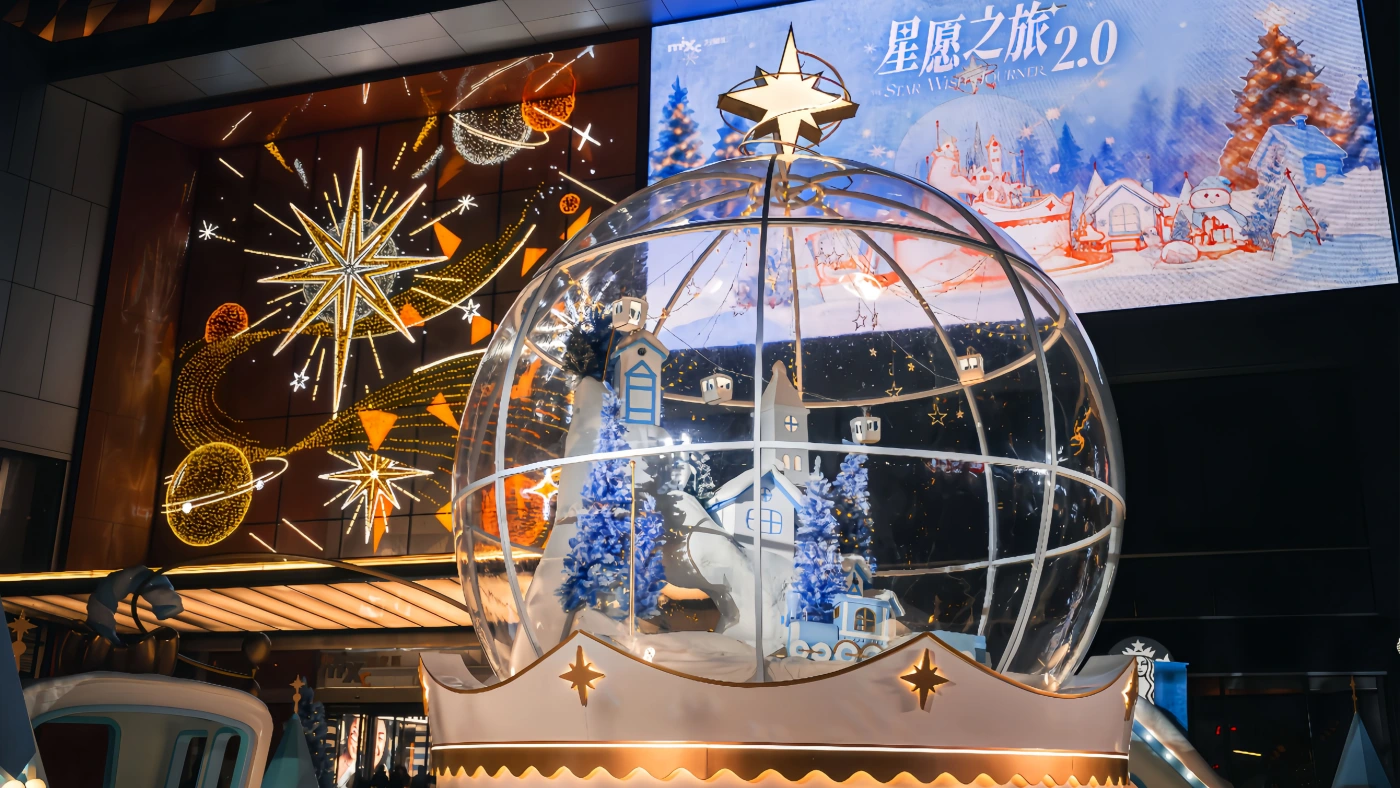
Installation follows a clear sequence: establish the positions first, assemble the primary structures next, add decorative elements, and connect and test the lighting last. The team begins with the base and floor markings, then assembles the main snow globe and snowman structures. The carriage, igloos, trees, and interior displays follow. Finally, the lighting is tested and safety checks are completed, confirming that there are no exposed sharp edges, loose components, or missing anti-tip measures. At handover, the team also provides recommendations for routine inspections and guidance for future dismantling.
In the “Journey of Star Wishes” 2.0 project, the giant snow globe and snowman became the focal photo spot in the mall plaza. At night, the lighting complemented the mall’s exterior façade, helping create a more engaging visitor experience and encouraging social sharing. The project demonstrated the value of end-to-end control in custom commercial installation work: planning for transport and installation from the design stage, matching materials to the required finish and performance, and following consistent procedures for factory pre-assembly and export packaging.
The case also illustrates why choosing a manufacturer with its own production facilities, experience delivering projects across regions, and integrated service capabilities is essential to completing holiday installations safely, on schedule, and to the required quality standard. Through its direct factory-to-client model, Ixmore Art supports commercial property developers and brands worldwide from concept development through to on-site delivery.
Answer: The full project cycle typically takes 8–16 weeks, depending on the installation’s complexity, the number of modules, and the shipping distance. Design development and prototype approval generally take around 2–3 weeks; fabrication and factory pre-assembly take 4–8 weeks; and packaging, shipping, and on-site installation take a further 2–4 weeks. Confirming the schedule early can help reduce delays and keep the overall project on track.
Answer: Outdoor components receive suitable waterproof and UV-resistant coatings. Steel structures are treated for corrosion resistance, while bases are designed with drainage and wind-resistant anchoring in mind. During the display period, regular checks of joints, seams, and lighting seals are important maintenance tasks.
Answer: Modular components, such as bases, trees, and cabin frames, can be dismantled and placed in storage. After surface repairs or refinishing where necessary, they can be incorporated into future seasonal displays, helping reduce long-term costs.
Answer: Disruption can be minimized through nighttime work, detailed scheduling, floor protection, and noise management. Any crane use and power requirements should also be coordinated in advance with the mall’s engineering and security teams.
Answer: Key safeguards include full-scale pre-assembly before dispatch, a standardized component-numbering and locating-pin system, and detailed assembly drawings and video instructions. Following the factory’s documented procedures helps the on-site team reduce assembly errors.
July 27, 2026
July 27, 2026

July 27, 2026

July 27, 2026
July 27, 2026

July 27, 2026
July 27, 2026

July 26, 2026

July 26, 2026
July 26, 2026
July 26, 2026
July 26, 2026
July 26, 2026
July 26, 2026
July 26, 2026
July 26, 2026

July 26, 2026
July 25, 2026

July 25, 2026

July 25, 2026