
October 26, 2026 Ixmore Art
For commercial-space projects for overseas markets, finishing fabrication at the factory is only one step toward a successful project. Delivery quality often depends just as much on the stages that follow, including packaging and protection, structural reinforcement, loading into export containers, international transportation, and on-site assembly at the destination. For projects primarily focused on commercial space installations, holiday displays, and large-scale event sets, professional prop manufacturers must account for transport requirements from the production-planning stage. They need to plan in advance for disassembly methods, packaging structures, loading schemes, and installation processes to prevent issues such as deformation, damage, missing parts, or inability to enter the venue once the installations arrive at the overseas site.

Unlike standard cargo, oversized props are typically characterized by large volume, irregular shapes, complex surface decorations, and numerous component assemblies. For example, installations in shopping mall atriums, Christmas-themed displays, public art installations, brand pop-up store setups, and props for large-scale festive events may simultaneously incorporate metal frames, fiberglass sculptures, wooden structures, lighting systems, acrylic panels, and finely painted components. These components have varying requirements for load-bearing capacity, impact resistance, moisture protection, and surface protection; therefore, a one-size-fits-all packaging approach is not feasible.
Drawing on our factory’s project experience, safe overseas shipping should never be treated as a last-minute logistics task after production; it needs to be built into the entire process—from design development, production, pre-assembly, quality inspection, export packaging, to overseas installation. Planning for manufacturing and transport requirements together helps control logistics costs and reduce the risks involved in cross-border delivery.
In large-scale commercial installation projects, a transport plan must account for more than product weight. Key factors include the external dimensions of individual pieces, the total volume after packaging, the center of gravity, load-bearing points, and the capabilities of the available loading and unloading equipment.
For example, a large installation may feature a lightweight fiberglass exterior, but due to its overall height, projecting features, or a narrow support base, it may still be unsuitable for transport as a single unit. Similarly, while some metal frames can be disassembled into multiple standard modules, if the connecting components, decorative panels, and internal supports lack a standardized numbering system, on-site installation may become inefficient or even impossible to assemble correctly.
Therefore, before finalizing a transportation plan, the manufacturer should confirm at least the following before finalizing the plan:
▪ The product’s final dimensions, as well as the dimensions and weight of each individual component after disassembly.
▪ The external dimensions, gross weight, and total volume after packaging.
▪ The center of gravity, lifting points, and permissible load-bearing areas for each component.
▪ Whether the cargo can be handled by loading and unloading equipment at the factory, port, airport, and destination.
▪ Whether there are any restrictions along the transportation route, such as container door heights, road height limits, turning radii, or on-site access pathways.
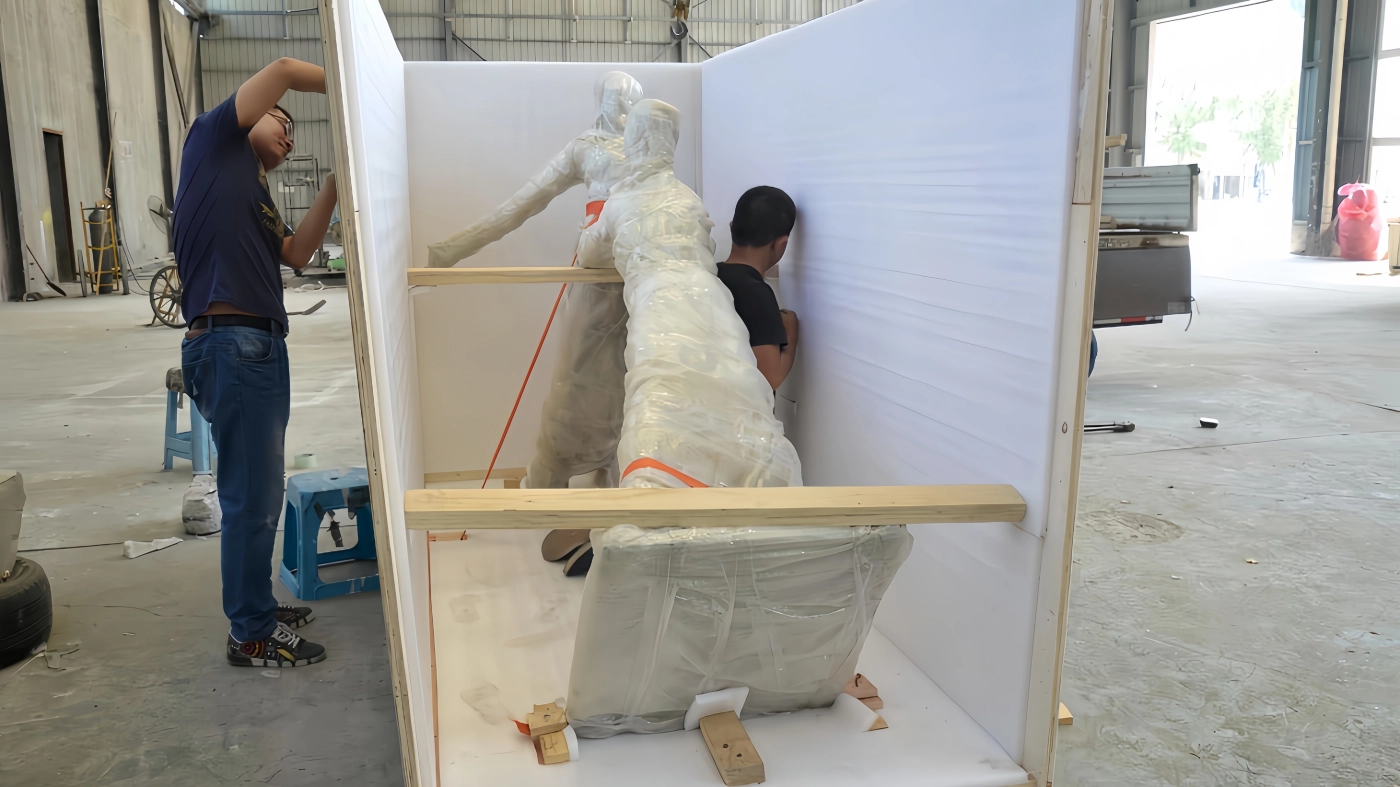
For large custom commercial installation projects, the above data should be documented in writing before production and packaging plans are finalized, rather than being measured ad hoc when the cargo is being loaded into containers.
If an installation must be reassembled at an overseas site, the structure should not be divided into sections solely to make transport easier. A sound modular design should balance visual continuity, structural stability, packaging efficiency, and on-site construction convenience. For example, large-scale festival-themed installations can be designed with the base, main frame, top connectors, exterior decorative panels, and standalone sculptural components each as separate, clearly identifiable modules. Each module should use a standardized numbering system, and technical drawings should specify connection points, fastener specifications, installation sequences, and lifting requirements. This approach ensures that custom installations for large commercial spaces are designed from the outset for transport, loading, and reassembly, thereby avoiding situations where, after factory production is complete, components are found to exceed container dimensions or cannot pass through on-site access points.
The shipment’s true destination is not the port, but the project’s actual installation site. For spaces such as shopping mall atriums, commercial complexes, and brand event venues, site conditions may directly determine whether the installation can be delivered on schedule. The factory or project team should obtain information on the destination’s unloading area, freight elevator dimensions, passageway widths, ceiling heights, hoisting restrictions, construction time windows, and on-site temporary storage conditions well in advance. If the project requires construction outside of mall operating hours, access permits, construction personnel management, and equipment usage schedules should also be coordinated in advance. For large installations, it is recommended to translate on-site constraints into specific transportation and production requirements. For example, freight elevator dimensions determine the maximum outer dimensions of modules; construction timeframes determine the degree of pre-assembly; and on-site hoisting conditions affect module weight and connection methods.
Export packaging must protect the finished surfaces while withstanding the loads imposed on the cargo during forklift handling, hoisting, stacking, and long-distance transport.
Common packaging methods include:
▪ Closed wooden crates: Suitable for intricate sculptures, lighting fixtures, and decorative components that require high levels of dust protection, impact resistance, and isolation from external elements.
▪ Frame crates: Suitable for large-volume device modules that require internal support or have irregular shapes; they facilitate inspection of the cargo’s condition and allow for the placement of reinforcement points based on the structure.
▪ Pallet packaging: Suitable for components with relatively regular dimensions that can be securely fastened and are easy to handle with forklifts.
▪ Custom steel frames or combined wood-and-steel packaging: Suitable for heavy metal frames, large bases, or components requiring clearly defined lifting and load-bearing points.
The right option depends on the component’s material, weight, center of gravity, fragility, transportation route, and loading/unloading methods. The packaging structure should not exert pressure on fiberglass thin-shell structures, acrylic panels, or delicate sculptural elements, nor should it mistakenly rely on decorative surfaces to bear the load. For export packaging of custom props, the factory must distinguish clearly between structural support, cushioning, and outer protection, avoiding packaging methods that appear sturdy but fail to effectively protect the product.
Each material is vulnerable to different types of damage and should be packaged accordingly.

Fiberglass-Reinforced Plastic (FRP) Sculptures: FRP installations may feature curved surfaces, sharp corners, protrusions, and complex textures. Before packaging, confirm that the coating has fully cured and place appropriate cushioning material at protruding areas, edges, and contact points. When securing the items, avoid localized pressure concentrations to prevent cracks, paint peeling, or surface indentations caused by transportation vibrations.
Metal Frames: Steel or aluminum frames should be thoroughly inspected for welds, bolted joints, exposed edges, and surface coatings. Prevent metal components from rubbing directly against one another; use isolation spacers when necessary, and implement appropriate anti-corrosion measures for areas prone to moisture.
Wooden and Composite Panel Components: Protect panel edges and connection holes, and account for any dimensional changes caused by moisture absorption. For components prone to moisture absorption or surface damage, use appropriate moisture-proof insulation and edge protection.
Acrylic, Transparent Decorative Panels, and Lighting Components: Pack scratch-prone surfaces separately, keeping hard components away from transparent materials. Light fixtures, power supplies, controllers, and cables should be sorted by component category and protected against impact and moisture. Packaging should also prevent electrical components from moving freely inside the crate.
Large artistic sculptures and delicate decorative pieces: Custom supports should be designed based on the shape to ensure that transport loads are transferred to verified structural points rather than directly pressing against fragile sculptural surfaces.
For modular commercial space installation projects, the best solution is not simply to add more packing material, but to design protection around each component’s load-bearing characteristics.
If solid wood pallets, solid wood crates, or other applicable solid wood packaging materials are used for international transport, export factories and logistics teams must verify the phytosanitary requirements of the destination country or territory.
ISPM 15 (International Standard for Phytosanitary Measures No. 15) is an international standard established by the International Plant Protection Convention (IPPC) that stipulates relevant phytosanitary measures for untreated wood packaging materials used in international trade. Wood packaging that meets the applicable requirements typically must undergo prescribed treatment and be marked with an officially recognized mark as required. The specific scope of application, exemptions, and import enforcement requirements are subject to the latest regulations of the destination country’s competent authorities. It is important to note that not all wood-based materials are subject to exactly the same requirements. Processed wood materials, such as plywood, are typically subject to different regulatory treatment than unprocessed solid wood packaging; therefore, the need for an IPPC mark cannot be determined solely based on the packaging material appearing to be wood.
When arranging the production of export packaging for props, factories should confirm the material type before purchasing wooden crates, pallets, and reinforcing timbers, and verify the relevant requirements with compliant packaging suppliers and freight forwarders. The use of wooden packaging that does not meet import requirements may result in cargo inspection, handling, return shipment, or additional costs.
The goal of cargo securing is not to strap every component as tightly as possible, but to restrict uncontrolled movement of the cargo during transit while preventing damage to the product from static loads. The factory should clearly define bottom support, lateral restraints, top securing, and necessary anti-tipping measures based on the component’s weight, center of gravity, shape, and packaging structure. For installation modules with a high center of gravity or a narrow base, the risk of tipping requires particular attention.
For large metal frames, supports or fixed connections can be installed at appropriate locations according to the design; for fiberglass-reinforced plastic (FRP) components, loads should be transferred through a validated support structure—strapping should never be applied directly to the fragile outer shell. If the cargo requires forklift handling, the packaging design should include designated forklift entry points and clearly specify the direction of fork insertion, support positions, and permitted handling methods.
Ocean freight often involves long transit times, during which cargo may undergo multiple handling operations, port transshipments, and continuous vibration inside containers. Fluctuations in temperature and humidity in the marine environment may also cause condensation, thereby increasing the risk of corrosion in metal components, moisture damage to wooden packaging, or damage to electrical components.
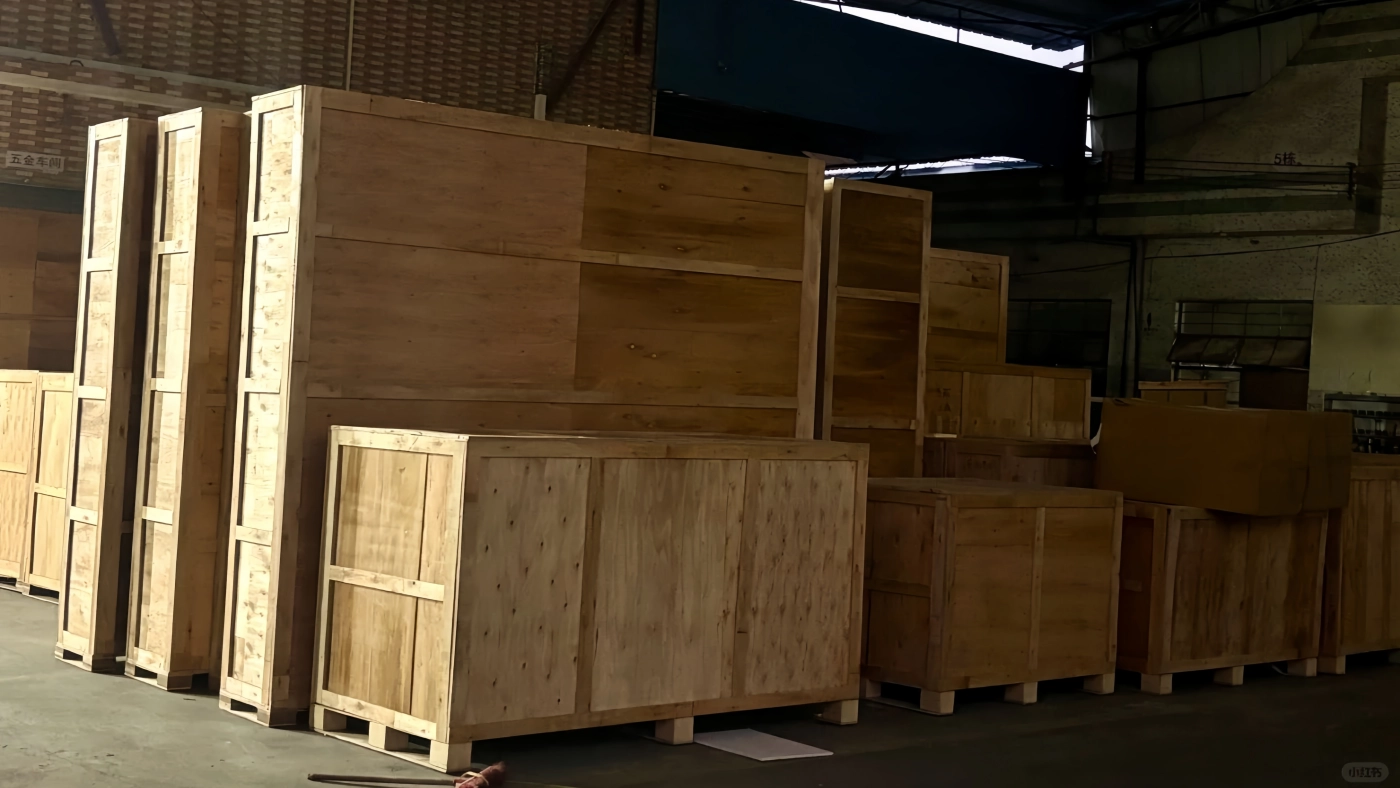
Therefore, securing large props for transport requires an integrated approach that addresses both physical and environmental risks:
▪ Use securing devices appropriate for the cargo’s weight, packaging structure, and transport conditions.
▪ Install appropriate restraints for components that are prone to rolling, tipping over, or have a high center of gravity.
▪ Apply appropriate anti-rust and moisture-proof measures to metal components susceptible to corrosion.
▪ Provide suitable isolation and protection for electrical components and delicate surfaces that must remain dry.
▪ Evaluate the use of desiccants, moisture-proof film, or humidity-indicating materials based on the actual conditions of the cargo and packaging.
▪ Avoid the formation of standing water inside the packaging, and ensure that moisture-proofing measures do not impede necessary ventilation or pose risks to other materials.
Desiccants cannot replace proper packaging sealing design, nor can cushioning materials replace structural reinforcement. Different protective measures should be combined based on the actual environment and characteristics of the cargo.
Before packaging, inspect the appearance, dimensions, structural connections, and functionality, and retain photographs or videos of critical areas.
For complex installations, focus on documenting the following:
▪ The original condition and color of the structure’s surface.
▪ Welds, connection holes, and mounting points on metal frames.
▪ Wiring, interfaces, and functional status of electrical components.
▪ The serial numbers, weights, dimensions, and packaging locations of each module.
▪ The securing status and condition of the outer packaging after packaging is complete.
Such documentation helps the factory, freight forwarders, and overseas installation teams distinguish between manufacturing defects, shipping damage, and anomalies caused by on-site operations. It also provides traceable project evidence in the event of a dispute.
If a unit has a significantly off-center center of gravity, an oversized or excessively tall structure, a large wind-exposed surface, complex lifting requirements, or requires assembly at height on-site, the factory should not rely on experience alone to determine whether the shipment is safe. When necessary, engineering personnel with the appropriate qualifications should evaluate the structure, lifting points, packaging load-bearing capacity, and loading/unloading plans. For containerized transport, the weight distribution of the cargo, lashing requirements, and the rated limits of the containers and transport equipment must also be verified. Specific requirements should be confirmed by the carrier, freight forwarder, and relevant professionals based on the actual route.
Less-than-Container Load (LCL) is typically suitable for shipments where the volume is insufficient to fill an entire container. Cargo from multiple shippers shares container space, with the logistics service provider handling the corresponding consolidation, loading, and unloading operations. For custom-made commercial props, if the shipment consists of several small-sized, stably packaged modules, LCL shipping may help avoid paying the full FCL rate for a small volume of goods. However, to determine cost-effectiveness, one must not only compare the unit price of ocean freight but also consider handling fees at the ports of origin and destination, warehousing, unpacking, transshipment, and the additional handling the goods undergo during consolidation. Special attention must be paid to the separation and protection of goods within an LCL shipment. If intricate models are shipped in the same container as other cargo, ensure that the outer packaging can withstand reasonable handling and stacking conditions and will not be damaged by the movement of adjacent cargo.
Full Container Load (FCL) is suitable for projects with large volumes, numerous modules, or those requiring greater control over the internal loading and layout of the container. Common container types include 20-foot and 40-foot dry cargo containers, as well as high-cube containers available on certain routes and under specific equipment conditions. Actual available internal dimensions, door openings, weight limits, and equipment availability should be based on data provided by the carrier; the nominal specifications of the container alone should not be used to determine whether cargo can be loaded.
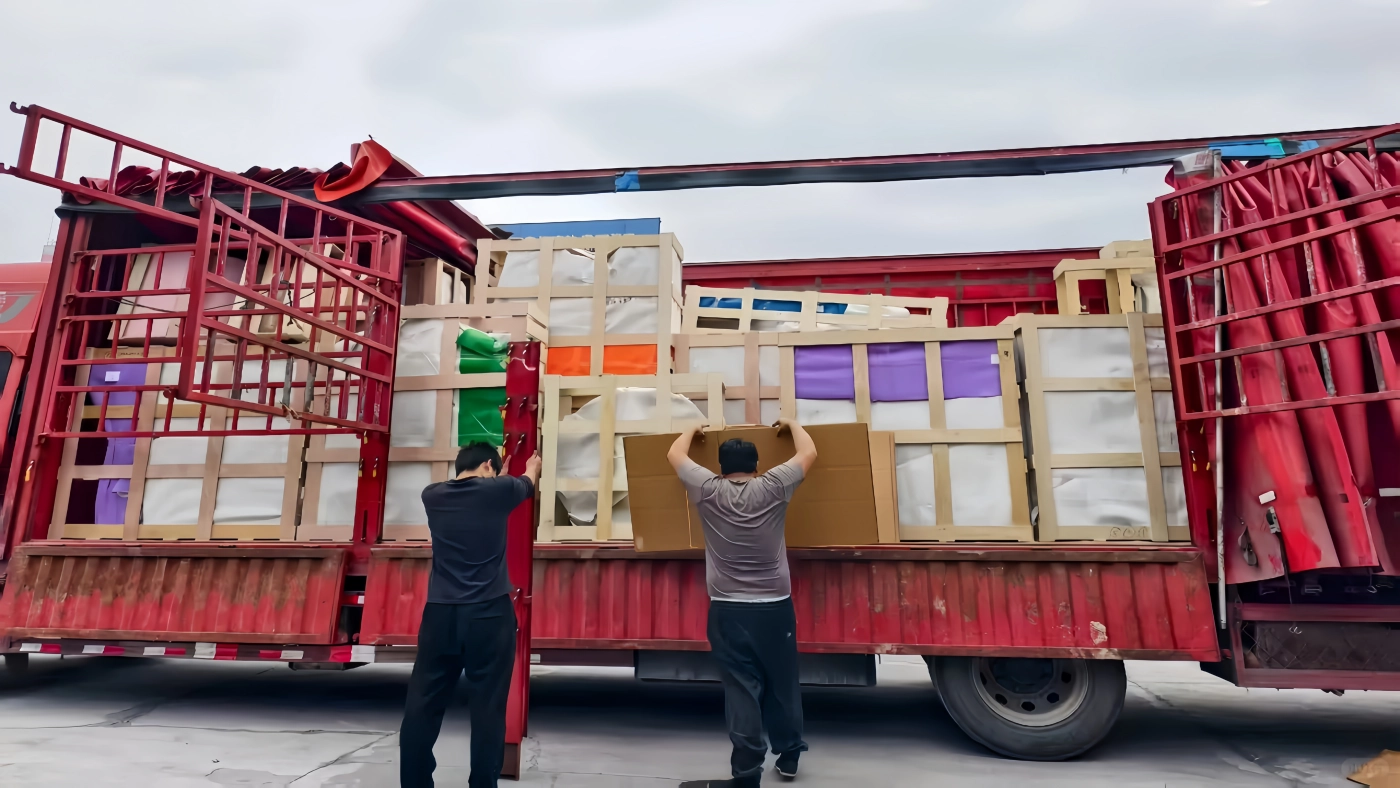
For large commercial units, the manufacturer should compare the maximum dimensions of individual components after disassembly with the container’s internal dimensions, door openings, and loading equipment capacity prior to production. The fact that cargo fits inside a container does not necessarily mean it can be loaded safely; factors such as forklift maneuvering space, lifting angles, gaps between packages, and securing points must also be considered. Shipping in a full container does not inherently guarantee cargo safety. If the loading layout is improper, cargo may still shift, become crushed, or tip over. Therefore, shipping solutions for large equipment must simultaneously address dimensional compatibility, weight distribution, loading/unloading feasibility, and securing during transit.
If certain equipment modules still exceed the dimensional limits of standard containers after disassembly, it may be necessary to further optimize the module design or consider solutions such as specialized transport equipment, flat-rack containers, or open-top containers. The feasibility of these solutions depends on the cargo’s actual dimensions, weight, loading and unloading conditions, shipping routes, port facilities, and carrier arrangements. Each equipment type has its own limitations; oversized cargo cannot automatically be accommodated in an open-top or flat-rack container. In such cases, the manufacturing plant should provide the freight forwarder with accurate cargo dimensions, weight, center of gravity, and lifting information well in advance, and request that the logistics team verify available equipment, loading methods, and related surcharges.
For shopping mall theme installations, large-scale holiday displays, public art projects, and brand event setups, ocean freight is typically the preferred mode of transportation—especially when the cargo is bulky and the delivery timeline is relatively flexible. However, project planning should not be based solely on the vessel’s time at sea. The full transportation cycle also includes factory completion and packaging, pickup, export customs clearance, port of loading operations, ocean transport, port of discharge handling, import customs clearance, inland transport, and final delivery.

Transit times can vary significantly depending on the country, port, shipping route, and season. Before booking space, a freight forwarder should provide current shipping schedules and estimated transit times, and allow for buffers to account for inspections, port congestion, transshipment delays, and on-site construction coordination. For commercial projects with a fixed opening date, it is recommended to align the shipping schedule with the on-site installation schedule in reverse order, rather than waiting until the goods leave the factory to arrange for installation personnel and equipment.
Air freight is typically suitable for time-sensitive projects, such as missing critical connectors, lighting control components that need replacement, or small quantities of delicate components that must arrive before the event begins. Air freight costs generally depend not only on actual weight but are also influenced by volumetric weight, packaging dimensions, airline cargo restrictions, and destination handling fees. For bulky, lightweight installations, the billable weight may be high even if the product itself is not very heavy. Therefore, decisions regarding air freight should be based on the dimensions and weight of the cargo after packaging is complete, and the carrier or freight forwarder must confirm the billing rules and acceptable dimensions per piece. Final costs cannot be estimated directly based on the weight of the unpackaged product.
Some large-scale commercial installation projects can utilize split shipments: the main frame and large-volume components are shipped by sea, while a small number of critical accessories or urgent replacement parts are shipped by air. This approach not only helps control the overall logistics budget but also buys time for critical installation phases. However, split shipments require unified management of packing lists, module numbers, shipping batches, and on-site installation sequences. If critical connectors arrive separately from the main unit, or if components belonging to the same module are scattered across different shipments, installation may not proceed as planned even if the main unit arrives early. Therefore, in projects involving the production and export of oversized props, staged shipments must be jointly confirmed by the production, packaging, logistics, and on-site installation teams. The purpose of each shipment, arrival times, and contingency plans for missing parts must be clearly defined in advance.
In international trade, basic export documents typically include the commercial invoice, packing list, and applicable shipping documents. Specific document requirements depend on the trade arrangement, destination country, nature of the goods, and mode of transport. The packing list should accurately list applicable information such as package numbers, goods descriptions, quantities, individual piece dimensions, gross weight, net weight, and total volume. For modular commercial installations, it is recommended to use clear, traceable module names and numbers to avoid overly general descriptions such as “decorations” or “display props.” The goods description, quantity, and transaction information on the commercial invoice should match the actual shipment and other supporting documents. For complex projects, a list of components or technical specifications may also be prepared to assist freight forwarders and the consignee in identifying different modules.

HS codes are an essential component of the international trade commodity classification system. Products with different materials, functions, and uses may be subject to different commodity classification requirements. Large installations are often composed of metal frames, plastic or fiberglass components, wooden parts, and electrical accessories; therefore, the commodity code for the entire shipment cannot be determined solely based on the project name. The manufacturer should provide a customs broker or freight forwarder with relevant experience the actual product application, material composition, functionality, structure, and commercial transaction details, so that relevant professionals can verify the classification and declaration requirements in accordance with the destination’s regulations. If the installation includes lighting, power supplies, wireless controllers, special coatings, or other regulated components, import restrictions, certification, or documentation requirements at the destination must also be confirmed in advance. The specific certifications required must be determined based on the actual product and destination regulations; no single standard can be considered a universal requirement for all installation projects.
For international projects, the applicable trade terms, delivery locations, transportation arrangements, allocation of costs, and points of risk transfer must be clearly defined during the quotation and contract phases. If the Incoterms® are used, the selected terms and corresponding designated locations or ports must be specified, and the specific responsibilities of both parties regarding customs clearance, transportation, insurance, and destination charges must be confirmed.
Transportation insurance should also be assessed based on the value of the goods, the shipping route, the method of packaging, and the level of risk exposure. It is important to note that the provision of transportation services by a freight forwarder does not automatically imply that the goods are adequately insured. The scope of coverage, deductibles, exclusions, and documentation required for claims should be verified prior to shipment.
For large custom commercial installation projects consisting of multiple modules, it is recommended to conduct pre-assembly or critical connection testing whenever factory conditions permit. Pre-assembly allows for verification of dimensional compatibility between modules, hole alignment, the number of fasteners, profile joints, lighting interfaces, and surface colors. For large-scale projects that cannot be pre-assembled as a whole, inspections should at least cover critical connection points, primary load-bearing structures, and modules prone to errors. Upon completion of the inspection, clear assembly records should be compiled, including module numbers, connection methods, a list of fasteners, installation sequence, and necessary tool requirements. For complex structures, clearly annotated installation drawings should also be provided, rather than relying solely on on-site personnel to assemble the structure based on experience.
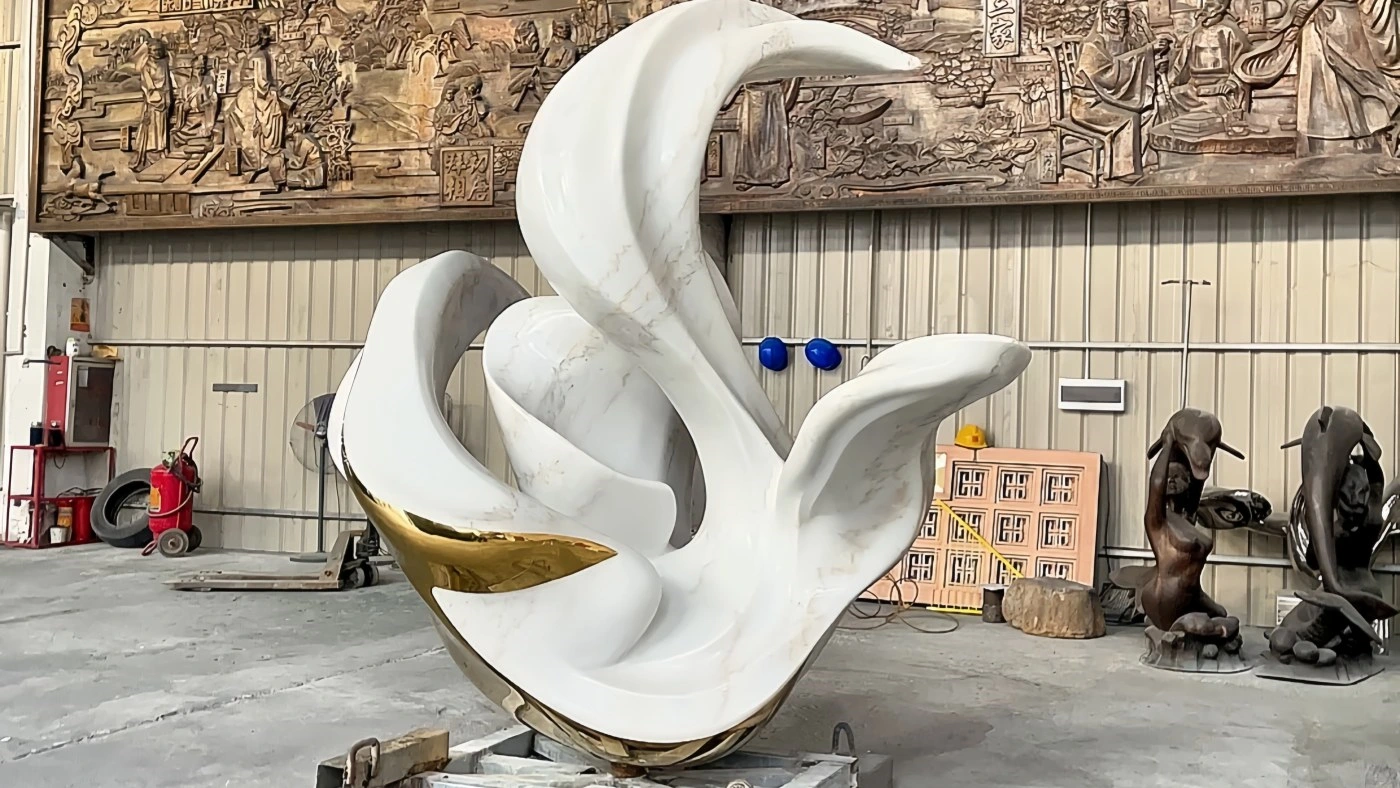
Packaging numbers should follow the same numbering system used in technical drawings, packing lists, and on-site installation documents. For example, separate module numbers can be assigned to the main frame, base, exterior trim, lighting components, and connectors, with the corresponding box number, part name, weight, dimensions, and necessary handling warnings marked on the exterior of the packaging. If certain components must be installed first and others later, the sequence should be clearly specified in the assembly instructions. For components that must be oriented correctly, the front, top, lifting points, or installation direction should also be clearly marked. This standardized approach reduces the identification burden on overseas teams and helps minimize damage caused by incorrect installation, missing parts, and repeated disassembly.
Upon arrival of the shipment, the receiving party should inspect the condition of the outer packaging before unpacking and photograph any damage to the outer boxes, signs of moisture, tilting, or obvious impact marks. When unpacking, modules and accessories should be counted against the packing list, and critical connection points, surface coatings, and electrical components should be inspected. If any abnormalities are found, the condition of the packaging, the location of damage, the box number, and relevant photographs should be documented promptly, and the responsible parties should be notified in accordance with the terms of the transportation contract and insurance policy. For damage that may involve a claim, packaging materials should not be discarded or repairs completed without first documenting the issue. On-site installation must also comply with the construction management requirements of the project location, including work area isolation, personal protective equipment, use of lifting equipment, temporary electrical power, and personnel coordination. Installation plans for large-scale equipment should be developed by a site manager with the appropriate qualifications based on the actual structure and construction conditions.
Mature prop manufacturing facilities should not leave export packaging entirely to ad hoc arrangements after production has concluded. A more effective approach is to incorporate transportation and installation requirements into the manufacturing process as early as the project initiation and technical detailing phases.
It is recommended to establish the following management milestones:
▪ Design Review: Confirm maximum external dimensions, disassembly plans, connection methods, and on-site constraints.
▪ Production Preparation: Specify materials, structure, module numbers, and special surface protection requirements.
▪ Factory Acceptance: Verify dimensions, appearance, fasteners, electrical functionality, and pre-packaging condition.
▪ Packaging Design: Determine box type, support points, cushioning structures, moisture protection measures, and handling requirements.
▪ Packing Planning: Verify dimensions of transport equipment, weight limits, loading/unloading methods, and securing plans.
▪ Export Document Review: Check invoices, packing lists, shipping information, and applicable compliance documents.
▪ Overseas Installation Handover: Provide assembly drawings, box number correspondence tables, installation sequences, and records of exception handling.
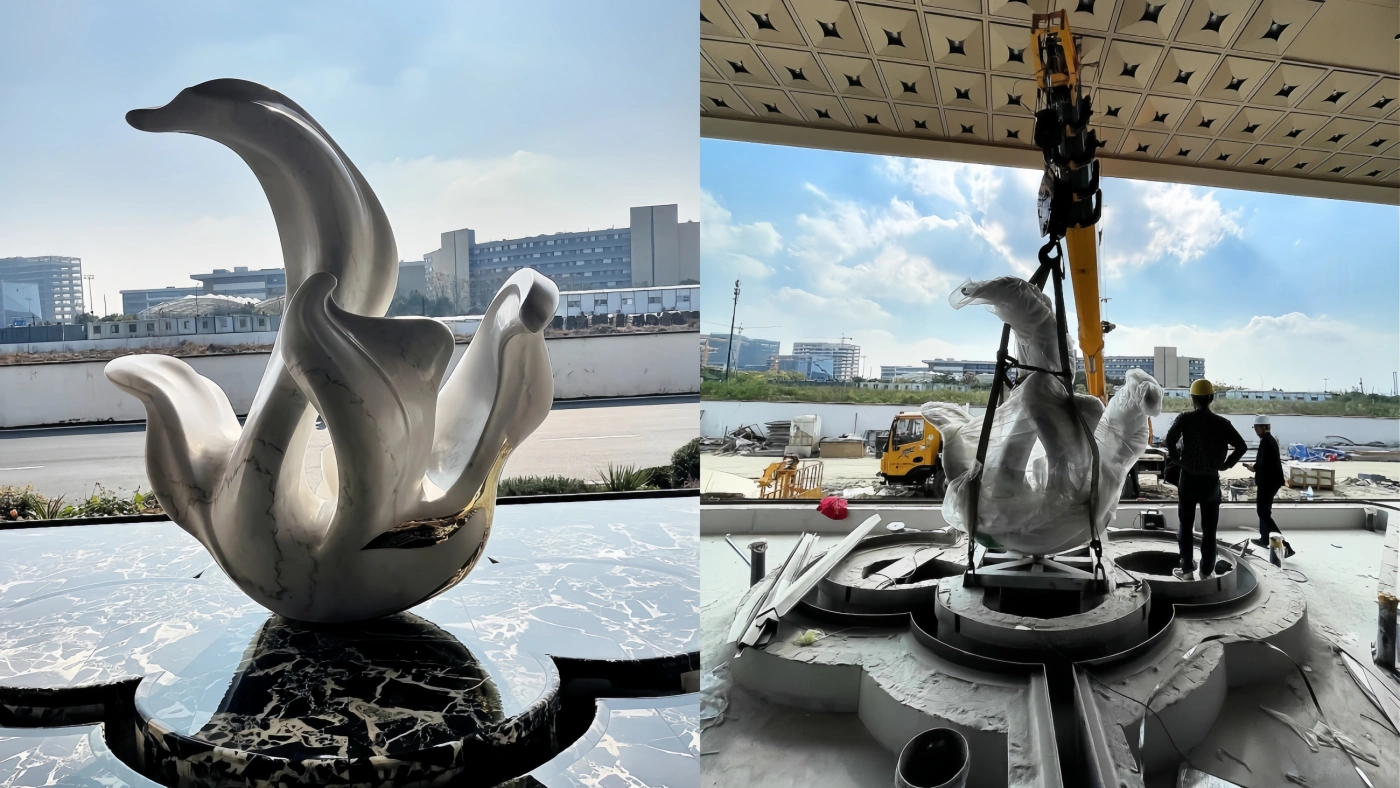
Through standardized processes, the factory can reduce repetitive communication, last-minute rework, and information gaps in the logistics chain.
Quality management involves more than just inspecting the aesthetic appearance of finished products; it should also cover the pre-shipment condition and on-site restoration results. For large-scale commercial installations, the factory can maintain records of materials, critical dimension checks, structural connection inspections, surface acceptance, pre-assembly photos, packaging photos, and final packing records. These documents help project teams identify issues in a timely manner and provide overseas recipients with clear criteria for acceptance. For brands, shopping centers, and event organizers with whom we collaborate repeatedly, we can also continuously optimize module design, packaging structures, and shipping plans based on project post-mortem findings. It is important to emphasize that quality records and packaging processes alone cannot replace applicable structural designs, professional hoisting assessments, or local regulatory requirements. For projects involving special dimensions, complex load-bearing requirements, or high-risk installations, assessments should still be conducted by professionals with the appropriate qualifications and capabilities.
When selecting a large-scale custom prop manufacturing facility, overseas procurement teams should not only compare unit prices but also verify whether the factory possesses the capabilities for modular design, packaging solution development, coordination of export documentation, and overseas installation support.
During the evaluation, focus on the following questions:
▪ Can the factory provide clear technical drawings and a list of module dimensions and weights?
▪ Does it have experience with differentiated packaging for fiberglass sculptures, metal frames, and precision paint finishes?
▪ Can it complete pre-assembly and inspection of key modules prior to shipment?
▪ Can it coordinate with freight forwarders to verify loading dimensions, wooden crate requirements, and shipping methods?
▪ Does it provide a box number correspondence chart, installation drawings, and on-site technical support?
▪ Can they outline potential transportation risks associated with the project, along with corresponding preventive and contingency measures?
These capabilities directly affect how smoothly a project moves from factory production to delivery and installation overseas. For large-scale commercial installations requiring cross-border transportation, a valuable partner does more than manufacture the product; it works with the client to solve practical challenges such as how to safely transport the product to the site, how to quickly reassemble it, and how to put it into service according to schedule.
Not necessarily. Whether disassembly is required depends on the finished product’s dimensions, container or transport equipment limitations, weight, center of gravity, loading and unloading conditions, and access routes at the destination. For bulky or irregularly shaped installations, modular transport typically offers better risk control, but the final approach should be based on a project-specific assessment.
For large-volume installations with relatively ample delivery lead times, ocean freight should generally be evaluated first. For urgent replacement parts, critical components, or a small number of time-sensitive parts, air freight may be considered. Ultimately, it is necessary to compare transit time, billable weight, packaging dimensions, destination fees, and the risk of project delays.
This depends on the type of material used in the wooden packaging, whether it falls within the scope of the standard, and the import requirements of the destination. Solid wood packaging within the scope of the standard typically must meet relevant treatment and marking requirements. Confirmation should be sought from compliant packaging suppliers and relevant professionals at the destination prior to purchasing the packaging; not all wooden materials can be treated uniformly.
Ensure that the coating meets appropriate packaging conditions, identify protrusions and edges susceptible to impact, and design a packaging structure that transfers transport loads to reliable support points. Cushioning materials, positioning supports, and external protection should be used in combination, while avoiding direct strapping pressure on fragile molded surfaces.
Not necessarily. LCL can avoid the need for a full container, but it may incur costs for consolidation, deconsolidation, warehousing, and port operations at the destination, and the cargo typically undergoes more handling steps. For fragile, oversized, or high-volume installations, one should comprehensively compare the total logistics costs and the risk of cargo damage, rather than focusing solely on the ocean freight quote.
Pre-assembly allows for the early detection of dimensional deviations, missing connectors, mismatched hole positions, incorrect module sequences, and lighting interface issues. For large installations that cannot be pre-assembled as a whole, at least the critical structural joints should be inspected, and clear installation drawings, numbered labels, and a list of accessories should be prepared.
It is recommended to provide details such as the final installation location, dimensions of passageways and freight elevators, permitted entry times, unloading areas, on-site lifting conditions, project completion dates, and the destination country. If the project involves a shopping mall or commercial complex, the venue operator’s construction, safety, and electrical requirements should also be verified in advance.
These services can be provided based on the factory’s actual operational capabilities, partnered logistics resources, and project contract arrangements; however, the boundaries of responsibility for each phase must be clearly defined. When preparing a quote, costs should be itemized separately for manufacturing, packaging, export operations, international shipping, import customs clearance, delivery to the destination, and on-site installation, and it should be clearly specified which services will be performed directly by the factory and which will be handled by third parties.
July 27, 2026

July 27, 2026

July 27, 2026

July 27, 2026
July 27, 2026

July 27, 2026

July 27, 2026

July 26, 2026

July 26, 2026

July 26, 2026

July 26, 2026

July 26, 2026

July 26, 2026
July 26, 2026
July 26, 2026

July 26, 2026

July 26, 2026

July 25, 2026

July 25, 2026

July 25, 2026