October 16, 2026 Ixmore Art
As shopping centers worldwide place greater emphasis on customer experience, custom Meny Bird installations have become a way for overseas retail destinations to create memorable environments and make more effective use of shared spaces. As a manufacturer of large-scale custom art installations with more than a decade of experience delivering international projects, we supported this project from start to finish—from structural engineering and coordinated multi-material fabrication to export preparation and on-site technical assistance. Our established manufacturing processes helped translate the creative concept into a finished installation while addressing the safety, compliance, and durability requirements of the destination market. Drawing on our experience with this project, this article examines the key production stages and technical considerations involved in delivering custom commercial displays, offering practical guidance for international shopping center operators and design firms.
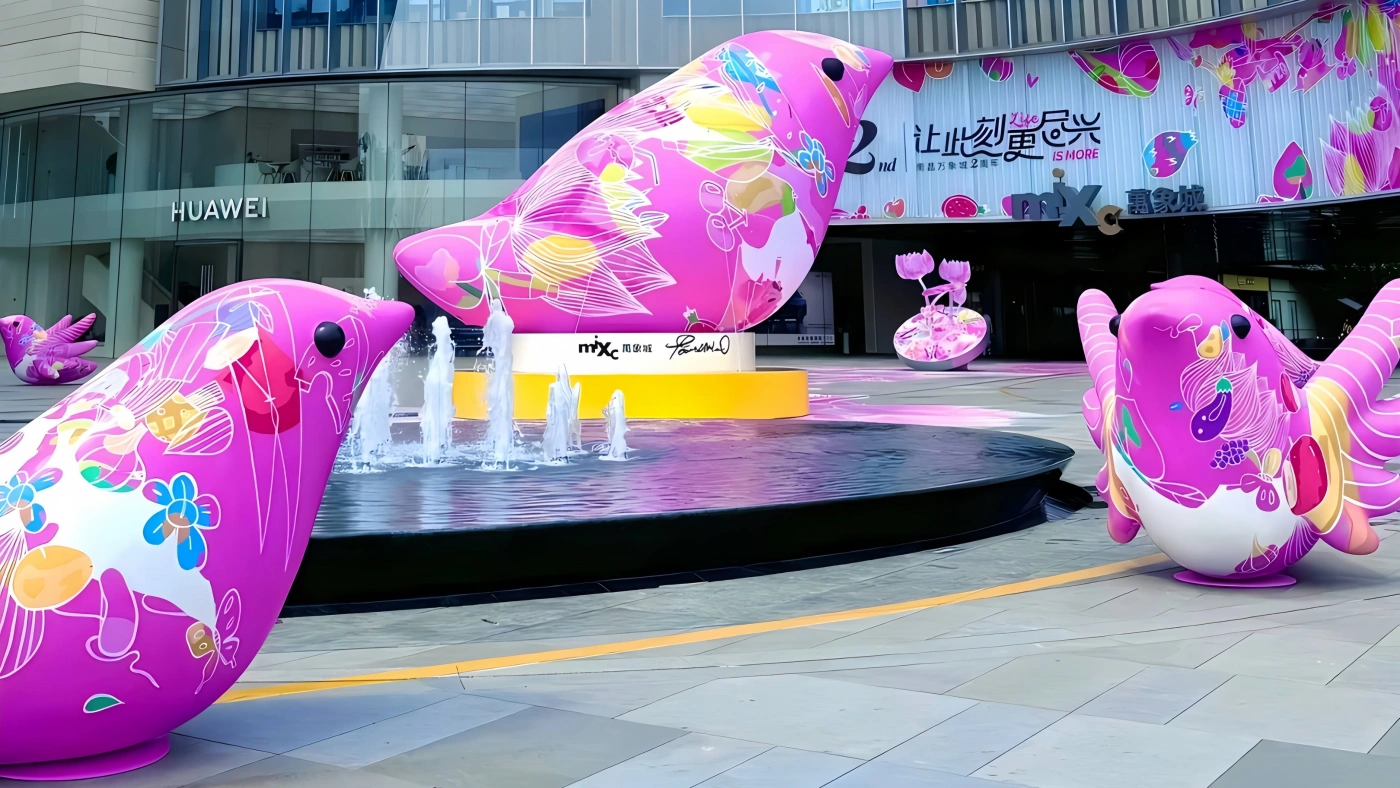
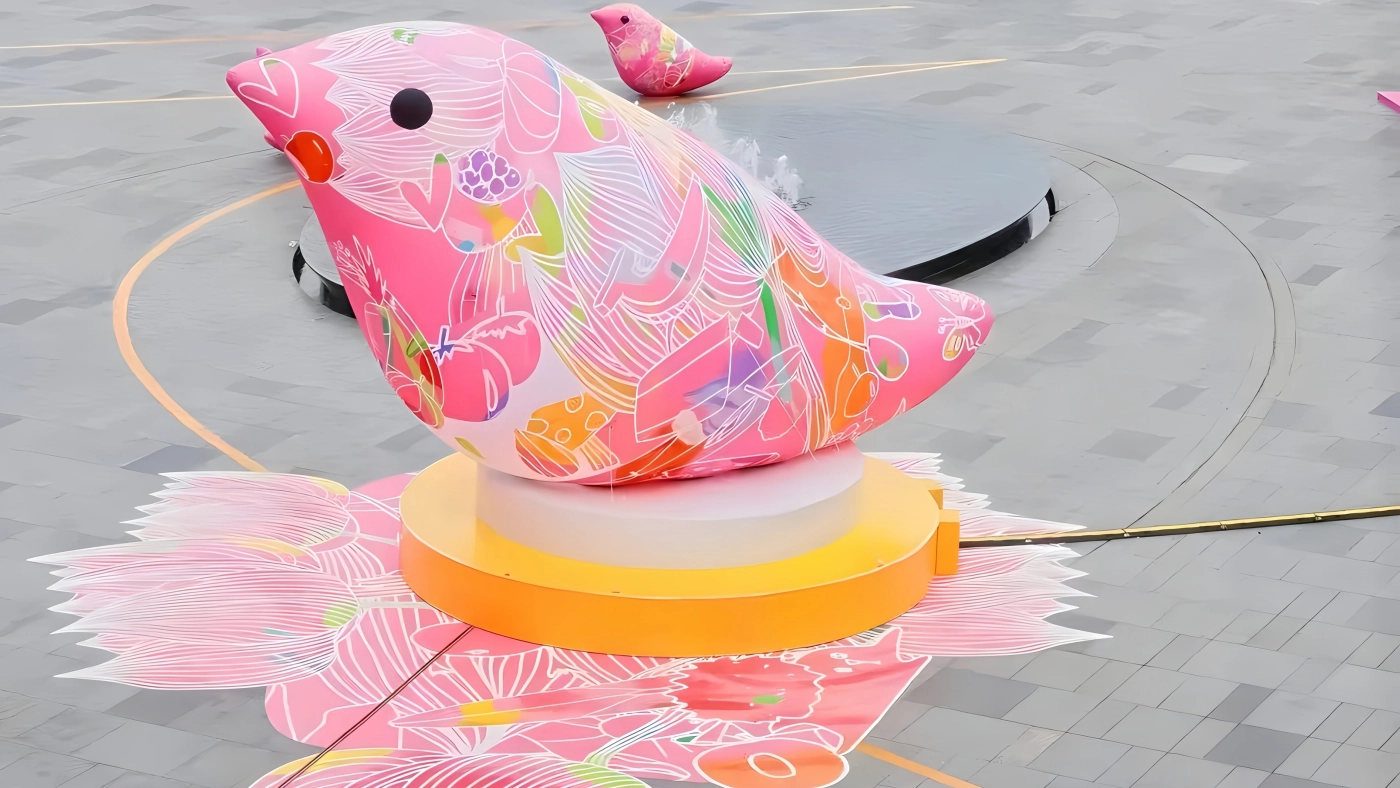
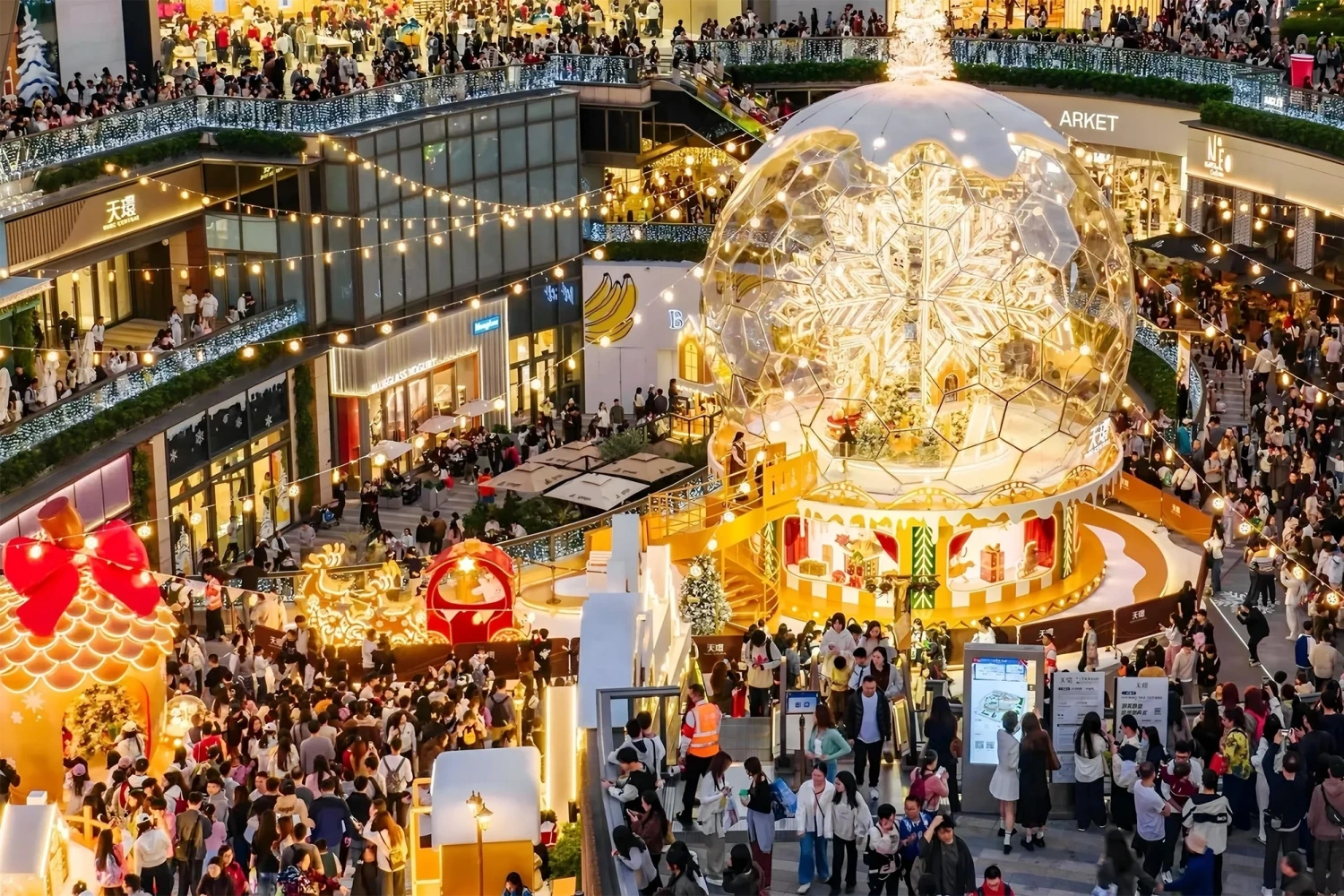
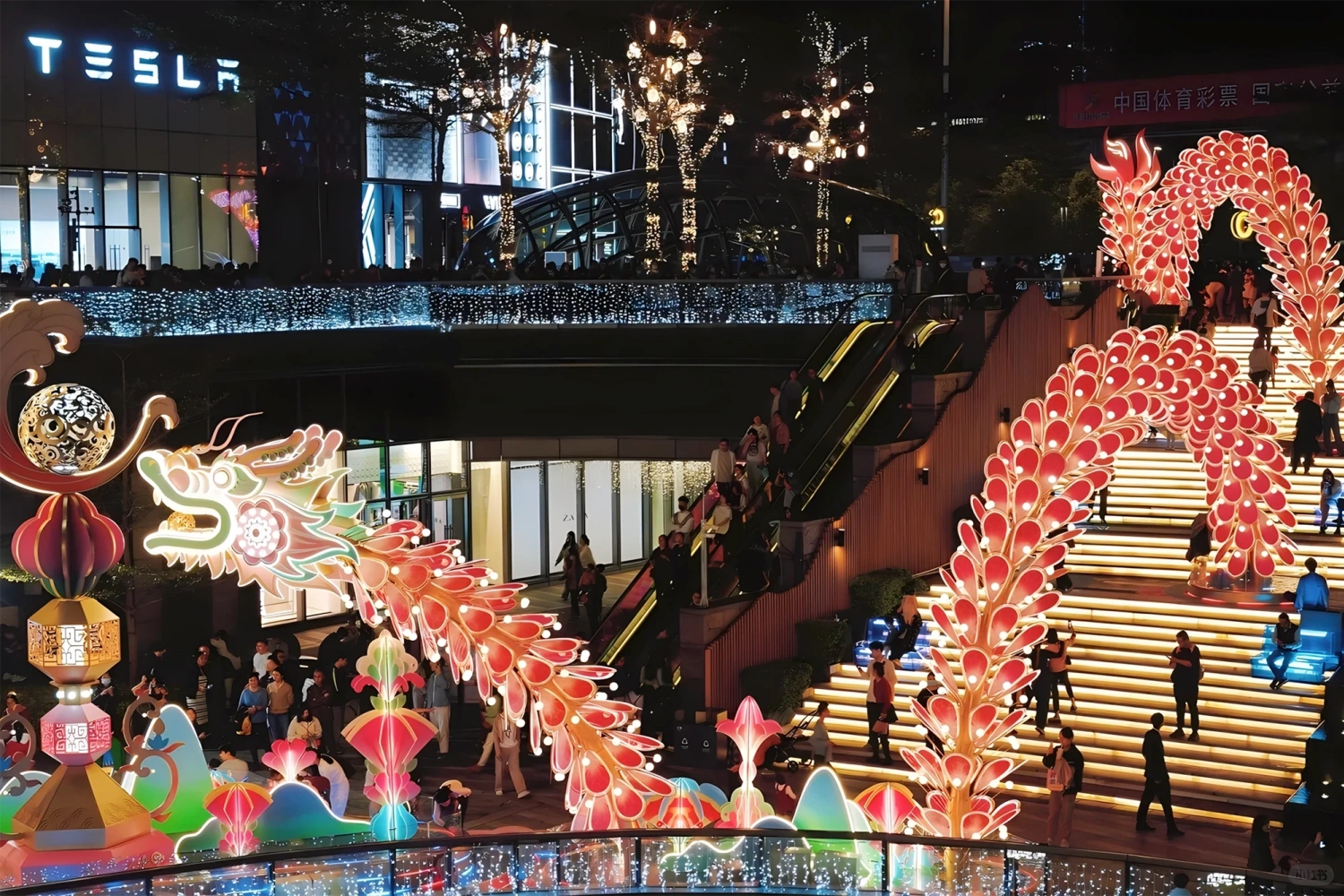
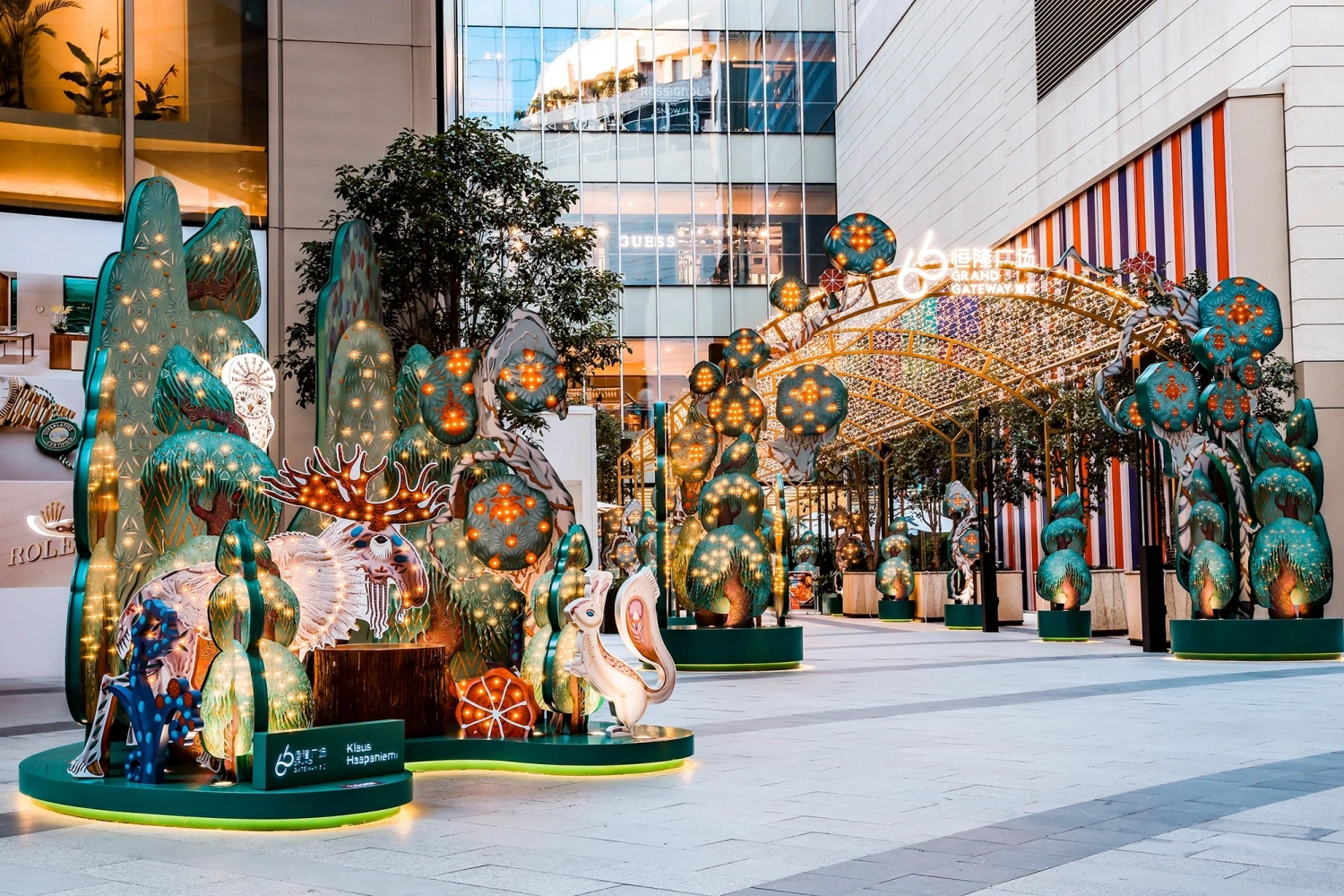
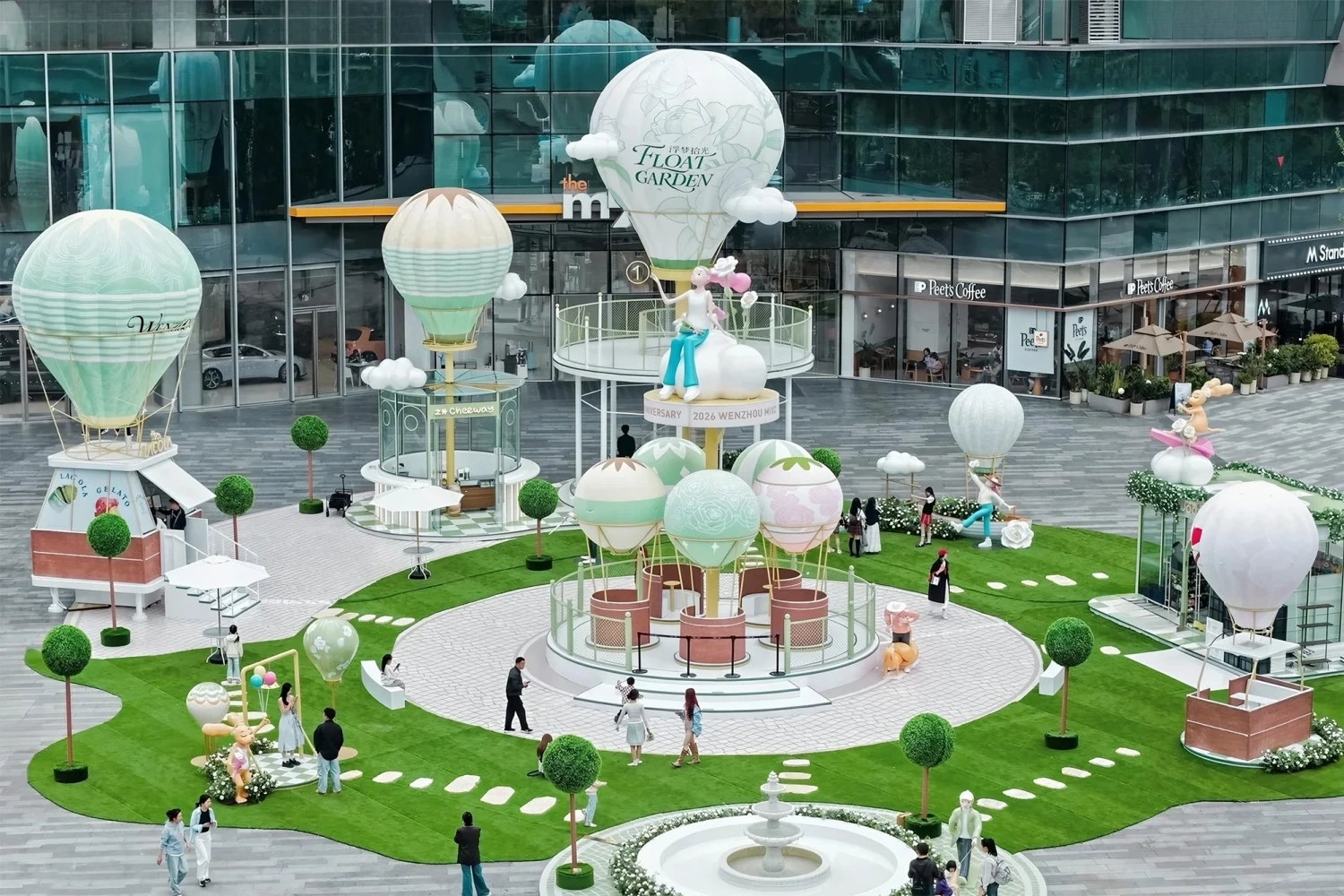
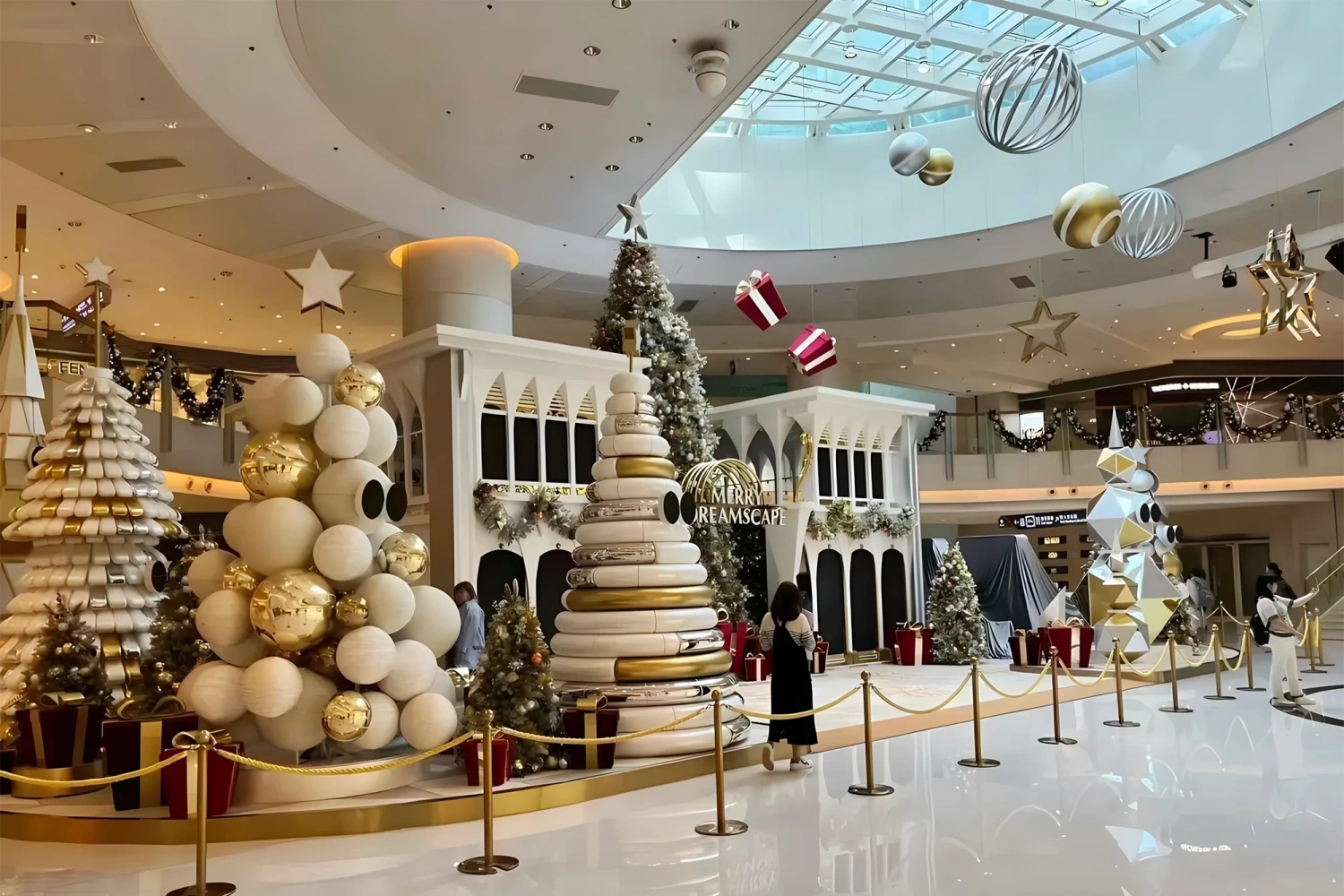
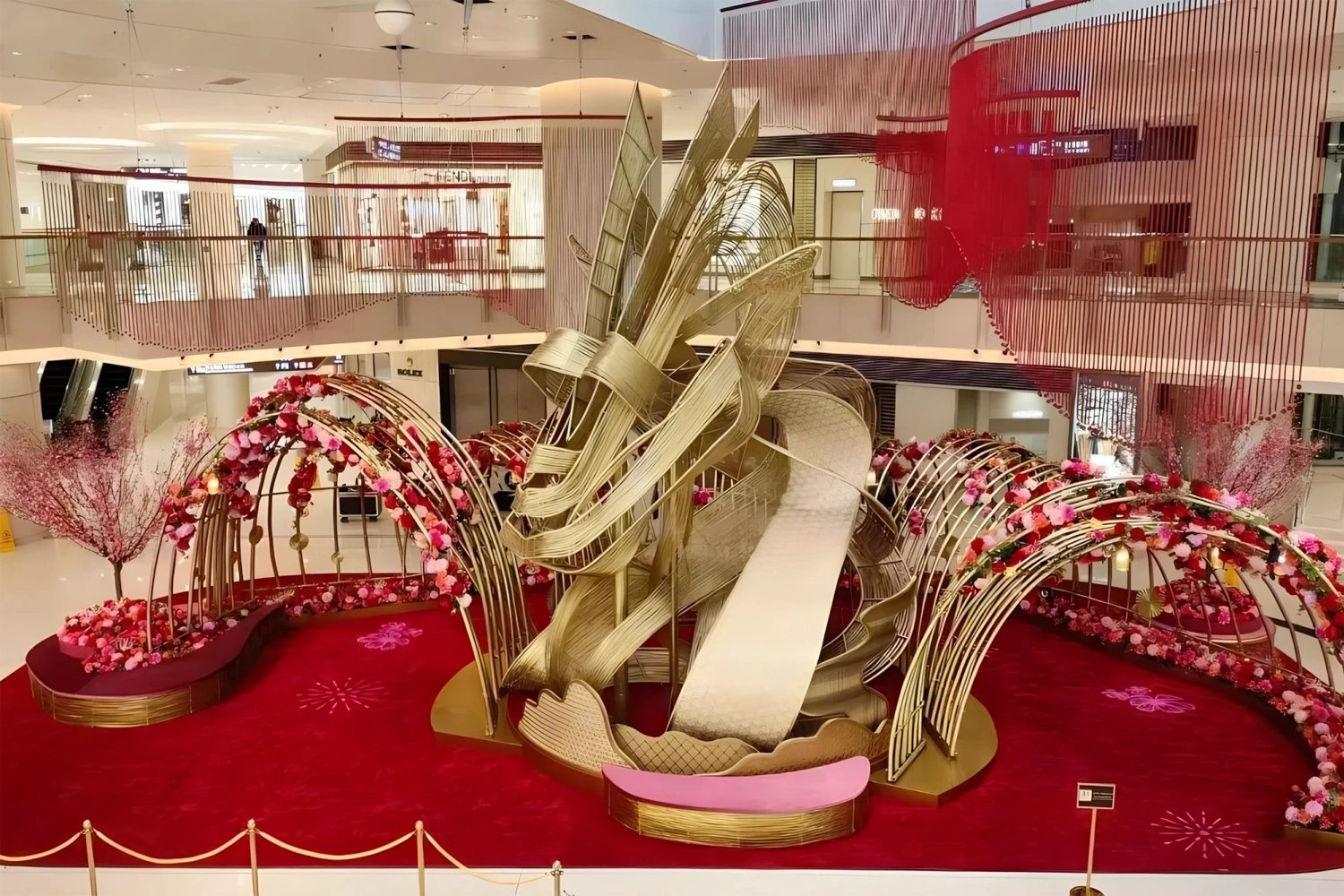
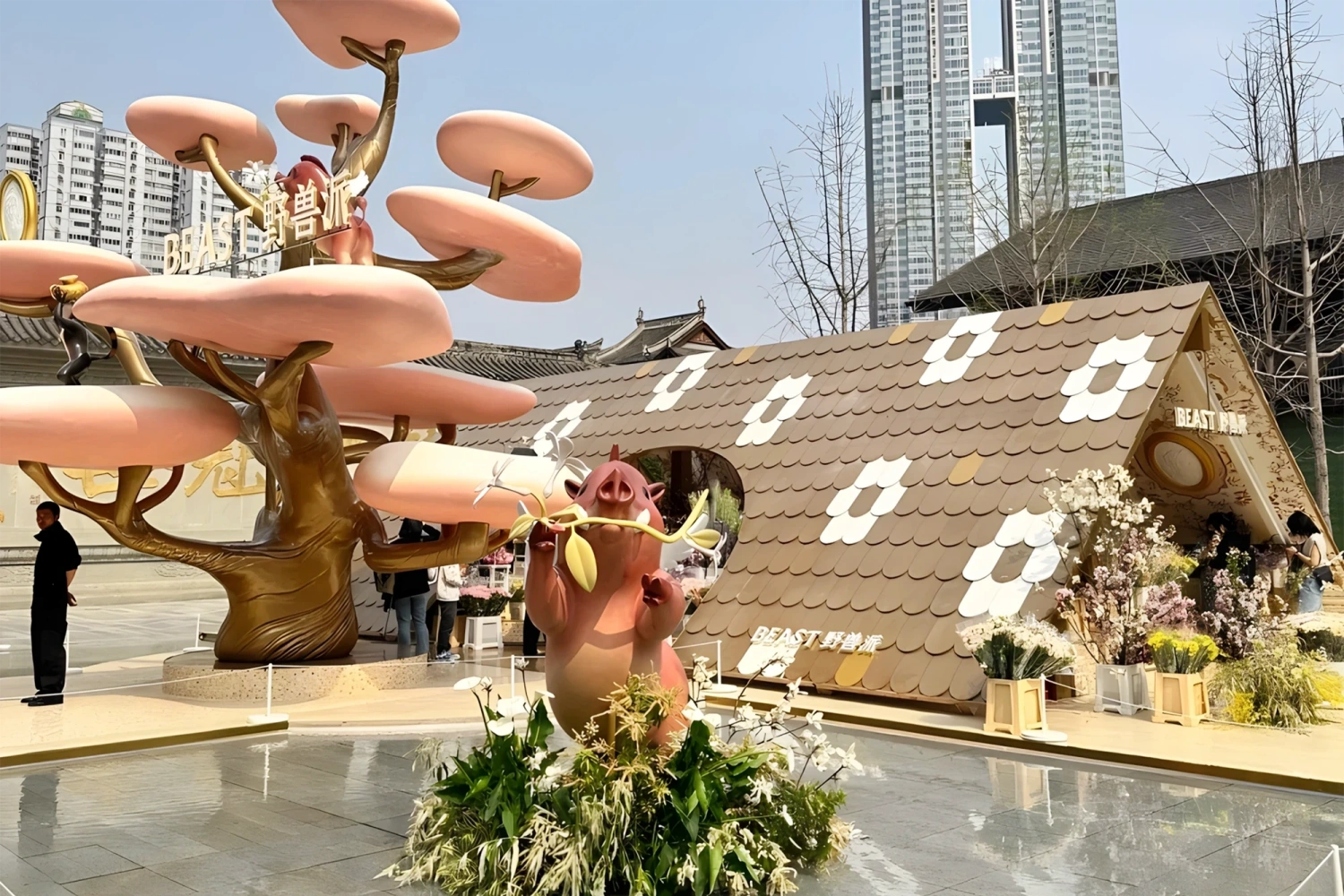
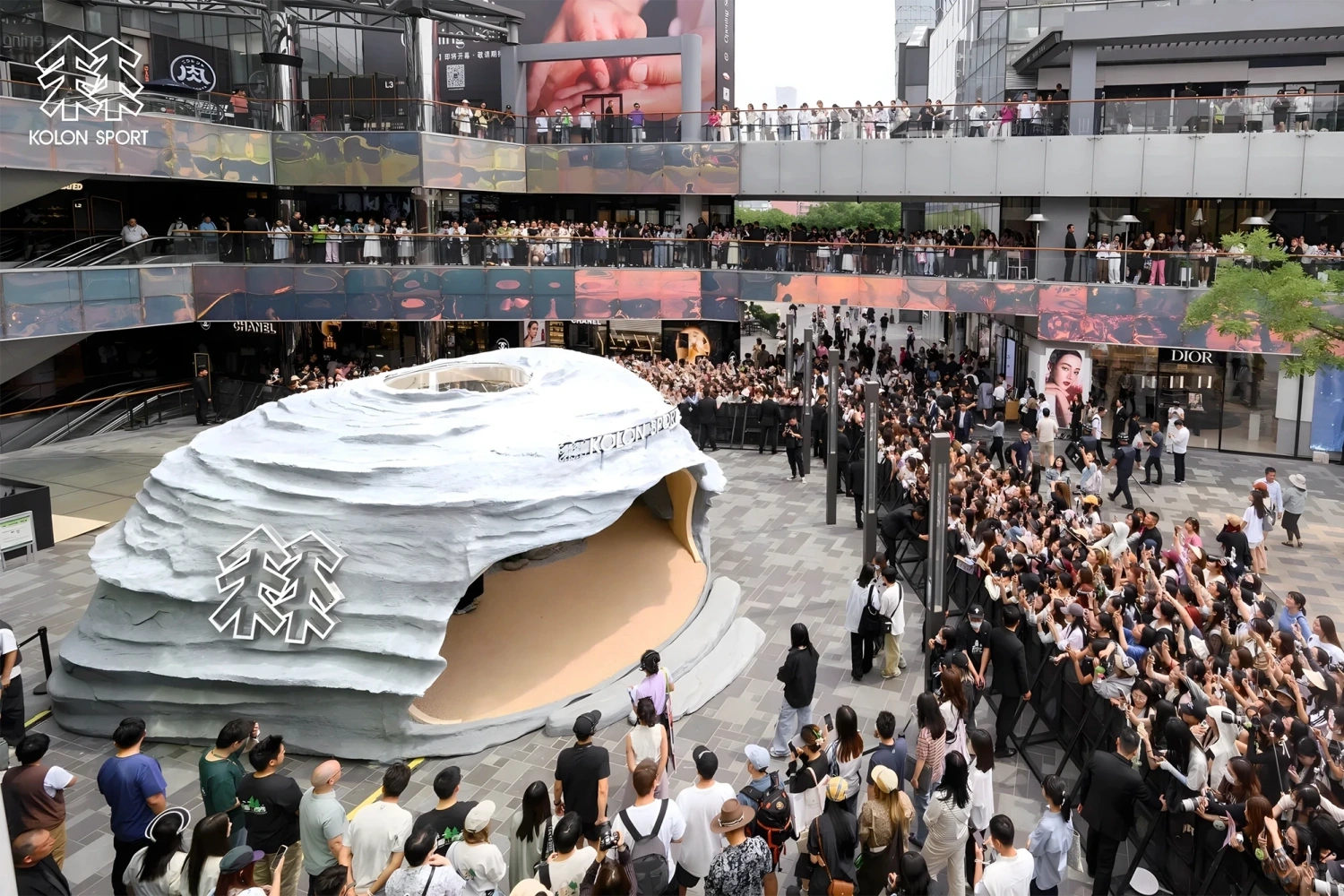
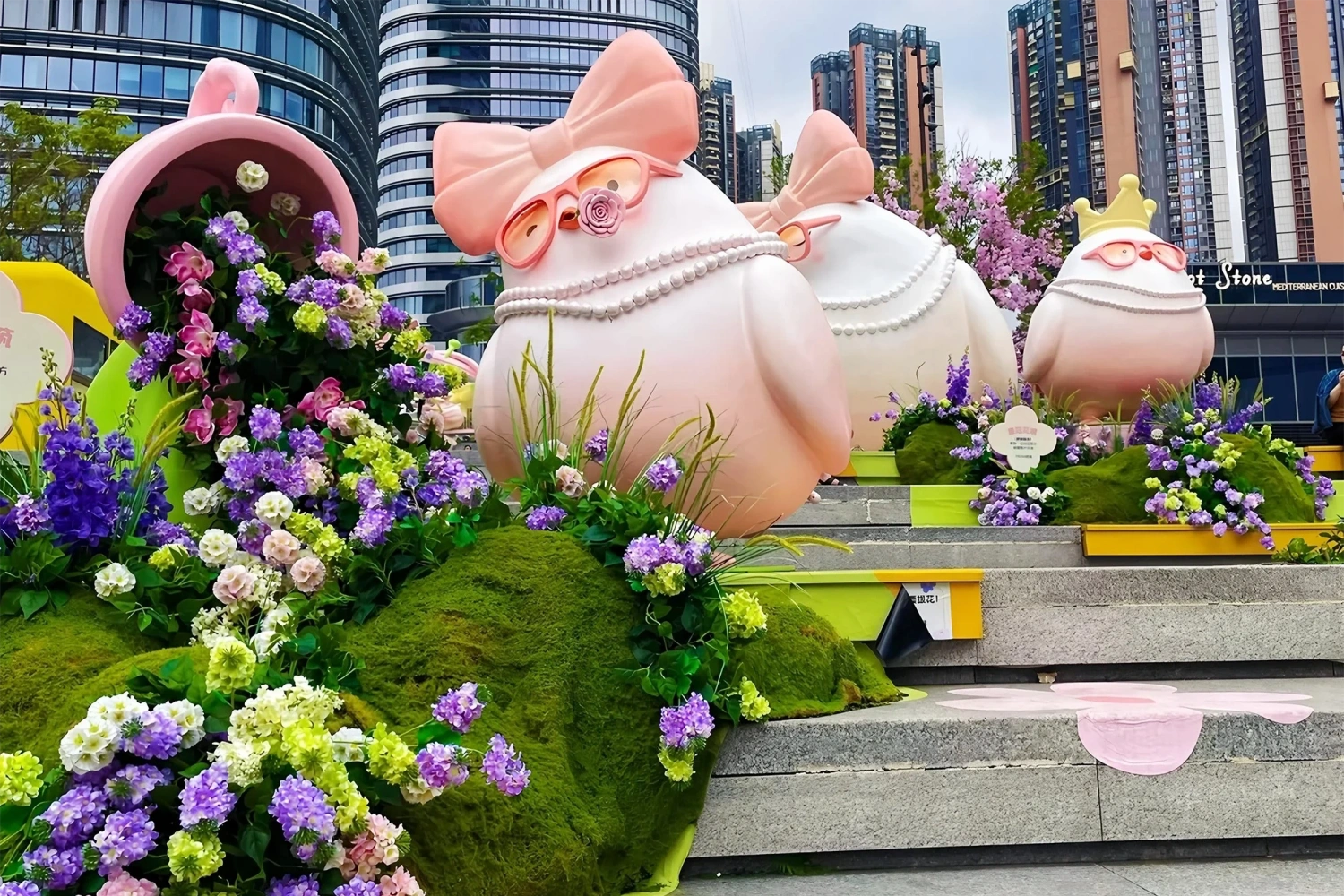
As shopping centers around the world evolve from places primarily focused on transactions into destinations for social interaction and experiences, conventional display props are often no longer enough to capture visitors’ attention. Themed installations with a distinctive visual identity, a clear narrative, and opportunities for interaction are increasingly central to retail environment design. Installed in the atrium of a mixed-use shopping center in a major commercial district in Southeast Asia, the Meny Bird project was built around a bird-themed intellectual property (IP). The client wanted an installation that could become a popular photo spot and a visual landmark within the space, appeal to families and younger visitors, and accommodate modular updates for seasonal campaigns.
For international projects, custom retail displays involve far more than reproducing a design rendering. During the initial consultation, we identified three primary requirements: the structure had to meet applicable local building and public-space safety requirements; the finished installation had to faithfully reproduce the approved design at full scale; and production and shipping had to stay on schedule for the mall’s opening. These requirements help explain why many overseas shopping centers work with specialist manufacturers rather than relying solely on local contractors. A standardized production system helps bring dimensional accuracy, manufacturing efficiency, and compliance considerations together.
Industry findings suggest that themed installations can increase dwell time in shopping center public areas by 37% and generate 2.3 times as much organic social media engagement. These figures help illustrate the commercial rationale behind projects such as Meny Bird: an installation can be more than a decorative feature—it can also help attract visitors and encourage them to spend more time in the space.
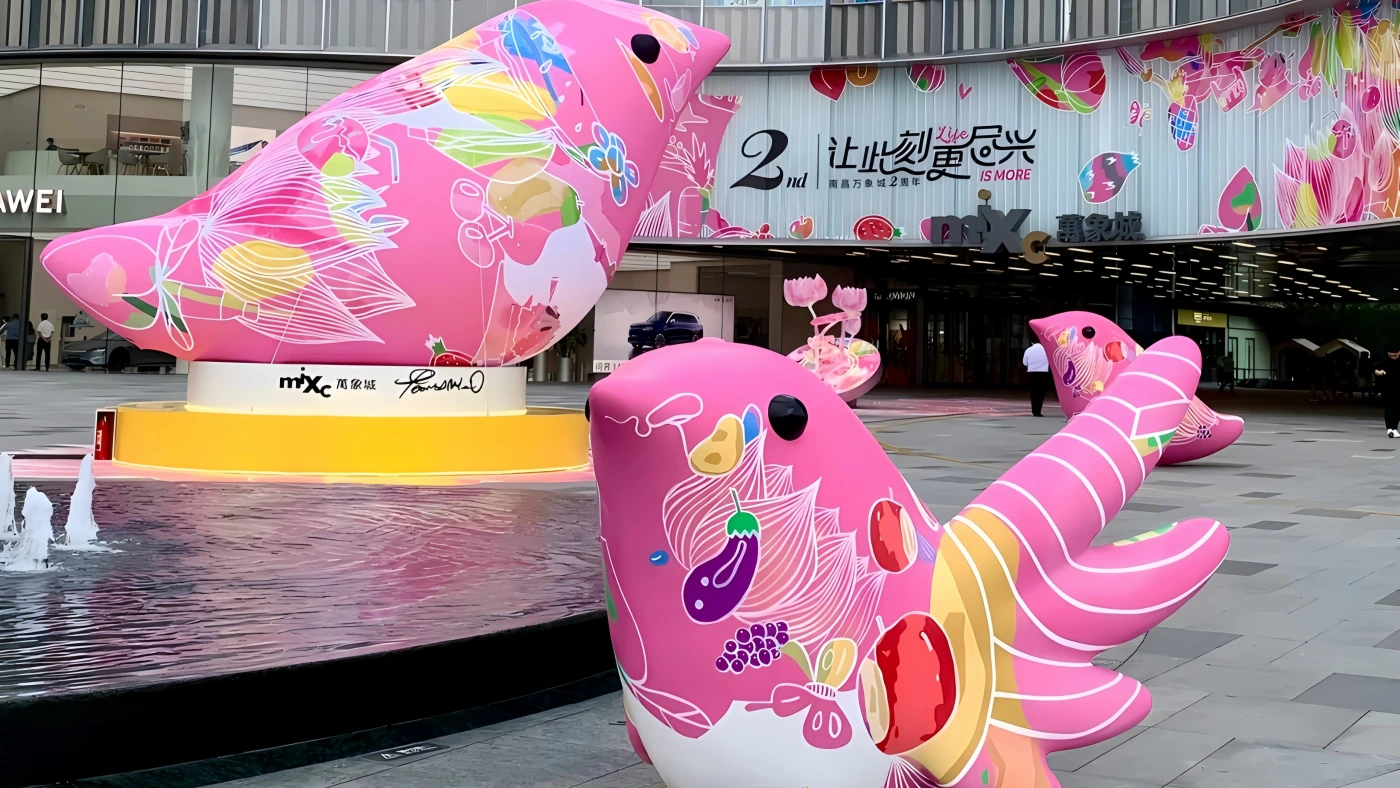
The main manufacturing challenges for the Meny Bird installation were maintaining dimensional accuracy across a large, irregular form and achieving a consistent finish across several different materials. Standing 8.6 meters tall and spanning up to 6.2 meters, the installation consists of four principal systems: a metal structural frame, a fiberglass-reinforced plastic (FRP) sculptural shell, translucent acrylic elements, and a dynamic lighting system. Because the project required more than five base materials to be processed and integrated, we implemented quality checks throughout the production cycle, from incoming materials to final inspection, with the aim of preventing rework before international shipment.
Structural safety is fundamental to any interactive installation intended for a shopping center. Our engineering team began by reviewing the design drawings and assessing the proposed structure. The main internal frame uses welded 304 stainless steel square tubing. Wind loads and loads associated with people leaning against the installation were assessed using finite element analysis. Welds were completed, ground, and passivated, with the stated corrosion-resistance specification intended to suit the humid conditions found in coastal shopping centers. To accommodate overseas mall installation requirements, we divided the overall structure into 12 modules, each weighing no more than 250 kg, to support handling by freight elevators and on-site lifting equipment.
We also considered fire safety requirements for public interiors. The specified non-metallic decorative materials were selected to meet a B-s1,d0 fire-performance classification, which indicates limited smoke production and no flaming droplets under the applicable test conditions. Such requirements should always be confirmed against the regulations and certification requirements that apply to the project’s destination and intended use.
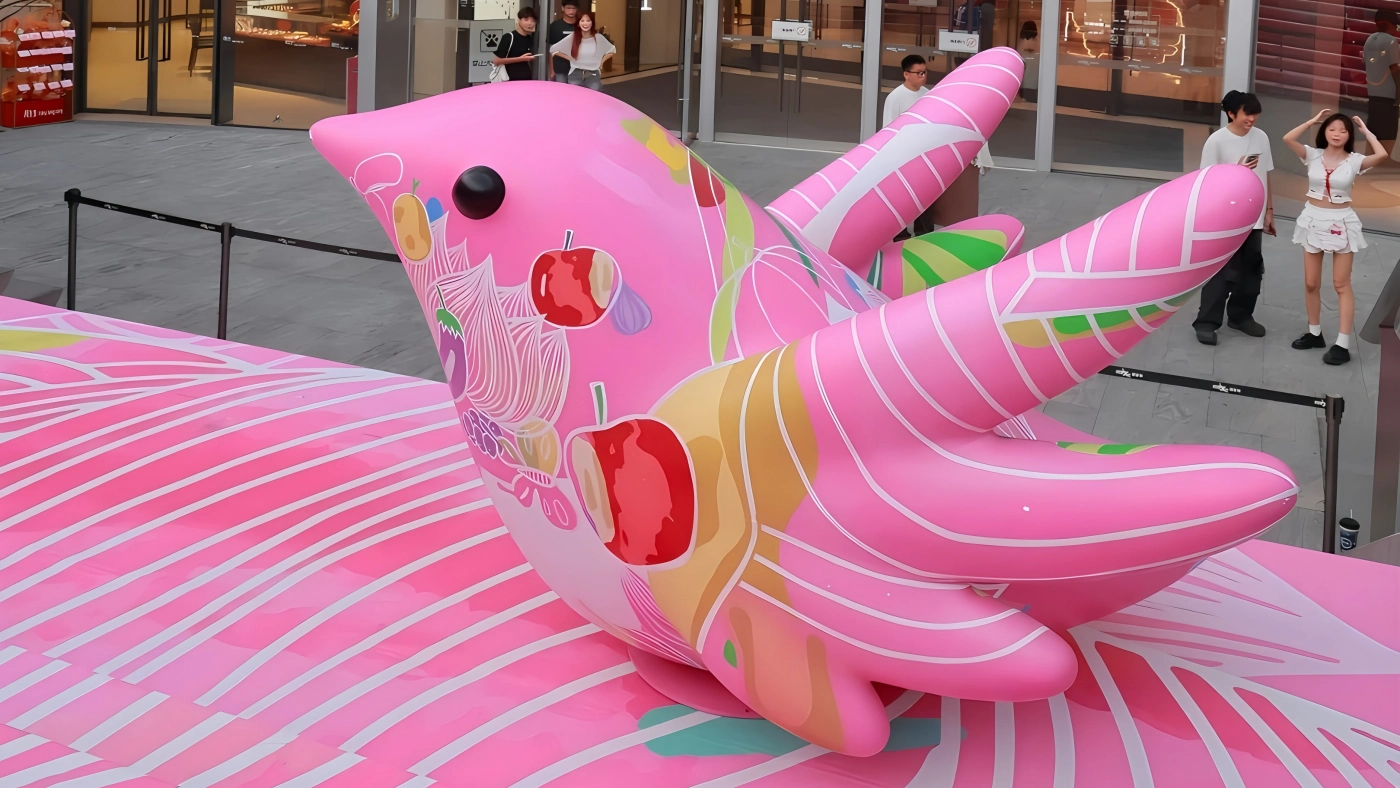
The main Meny Bird form features an irregular, bird-shaped curved surface fabricated using FRP molding. To achieve a smooth finish and reproduce fine details accurately, we used CNC milling to produce a master pattern, then created high-precision silicone molds. Resin was introduced through vacuum infusion to form the components. After demolding, each part went through three rounds of manual sanding and two coats of primer to level the surface and remove visible mold lines and ripples. The final finish uses automotive-grade paint matched to the specified Pantone colors. Gloss levels were controlled within the project’s stated tolerance of ±5°, helping maintain a consistent appearance under the mall’s overhead spotlights.
The translucent feather elements are made from imported cast acrylic and shaped through laser cutting and thermoforming. Diffused LED strips are integrated into the components to create soft, even illumination. The lighting components are specified as CE-certified and operate at a low voltage of 24 V; their suitability must also be assessed against the electrical safety requirements applicable at the installation site.
To support the delivery requirements of custom installations for overseas shopping centers, we established three inspection stages. Incoming material inspections cover material documentation and applicable fire-safety and environmental certifications. In-process checks focus on dimensional tolerances, weld quality, and paint-film thickness. Before shipment, the installation undergoes a full-scale pre-assembly inspection, including checks of overall fit, lighting performance, and structural integrity. Each component receives a unique identification number and installation-orientation markings. We also provide installation manuals and exploded-view drawings to help overseas installation teams understand the assembly sequence and reduce on-site uncertainty.
A manufacturer’s value in custom commercial installations extends beyond fabrication. Effective project delivery also depends on managing the entire process, from engineering and prototyping to packing, shipping, and installation support. For international projects such as Meny Bird, we use a coordinated delivery process with defined milestones and verification checks at each stage to help keep the project on schedule.
Before production begins, our engineering team reviews manufacturability and installation feasibility across seven areas: structural strength, material thickness, connection methods, assembly sequence, packaging dimensions, transportation risks, and site conditions. For Meny Bird, we recommended three changes. First, the fully welded upper structure was revised to use bolted connections, reducing the risk of damage during transport. Second, mounting points for base counterweights were added to improve stability on site. Third, the lighting system was designed with modular quick-connect interfaces to reduce the need for on-site wiring. These changes helped lower delivery and installation risks without compromising the approved visual design.
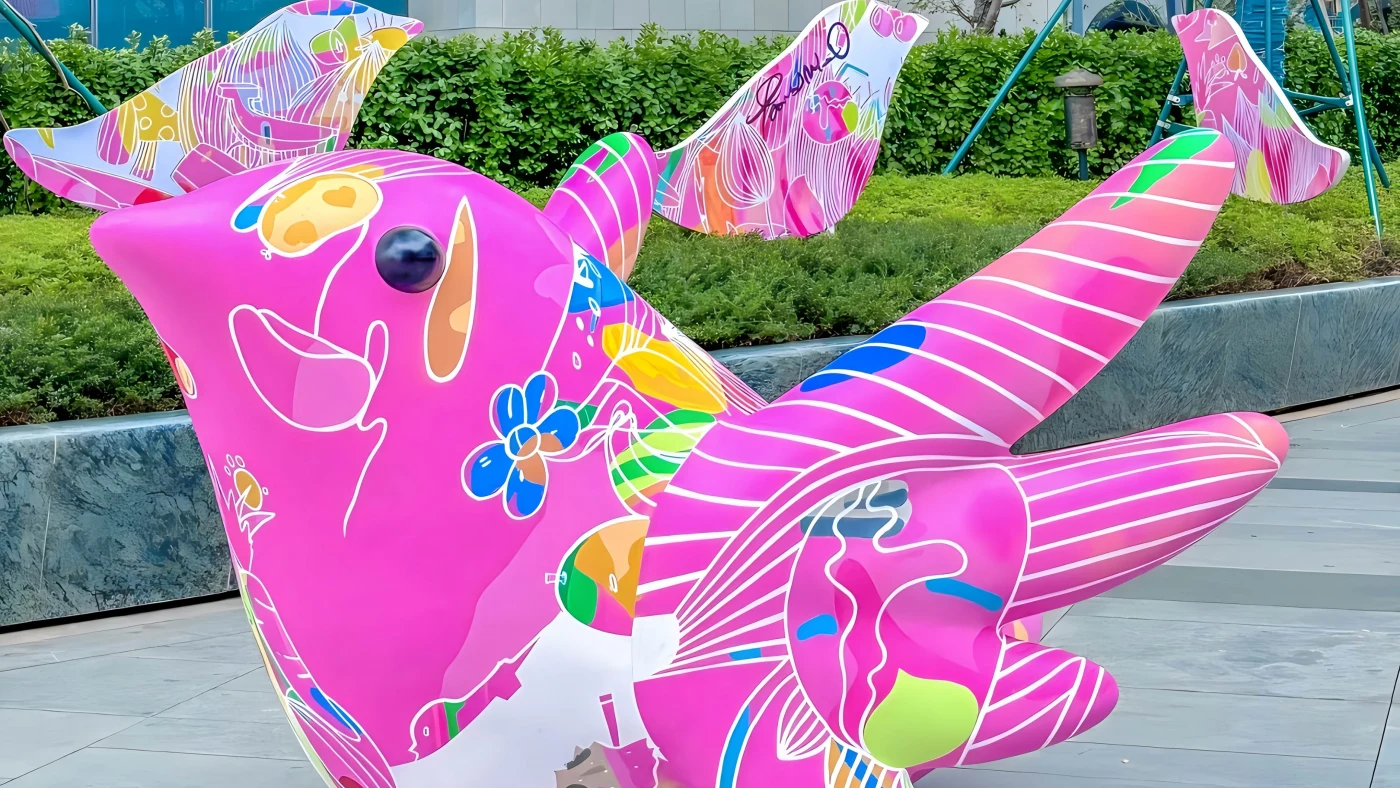
For irregularly shaped retail installations, prototyping is an important step in verifying both appearance and manufacturability. We first produced a 1:3 scale prototype incorporating the planned materials and finishes so the client could review color, texture, and lighting effects. For critical structural joints, we also made full-scale test pieces to check connection strength and assembly accuracy. The Meny Bird project went through two rounds of prototype approval. Full production began only after the key process parameters had been confirmed, reducing the likelihood of costly rework across the production run.
During production, we used a concurrent workflow in which four teams—metal structures, FRP components, acrylic elements, and lighting systems—worked in parallel. The project manager coordinated the overall schedule so that all components would be ready for final assembly together. Before dispatch, we completed a full pre-assembly and ran the lighting system continuously for 72 hours. The installation was dismantled for packing only after the checks had been completed and any issues resolved.
Packaging was designed for international ocean freight. Painted components were protected with layers of EPE foam and bubble wrap, while custom corner guards protected vulnerable edges. The components were secured in a fumigated solid-wood crate with moisture-absorbing desiccants and a packing list. The shipment was accompanied by the required customs documentation to support clearance at the destination port. For installation, we can provide remote video guidance or arrange for engineers to offer on-site support, helping the assembled installation match the condition verified during factory pre-assembly.
As a manufacturer of large-scale custom art installations serving international markets, we focus on tailored solutions for mid- to high-end shopping centers, brands, and design firms rather than competing primarily on the price of standardized, mass-market products. The delivery of the Meny Bird project illustrates several aspects of this approach.
Some suppliers act mainly as intermediaries, taking orders and subcontracting most fabrication and installation work. This can make quality control more difficult and create communication gaps. We operate our own metal fabrication, FRP molding, surface-finishing, and final-assembly facilities, allowing us to manage the core manufacturing stages in-house. From engineering review through final packing, this integrated setup gives us closer control over quality, production schedules, and costs.
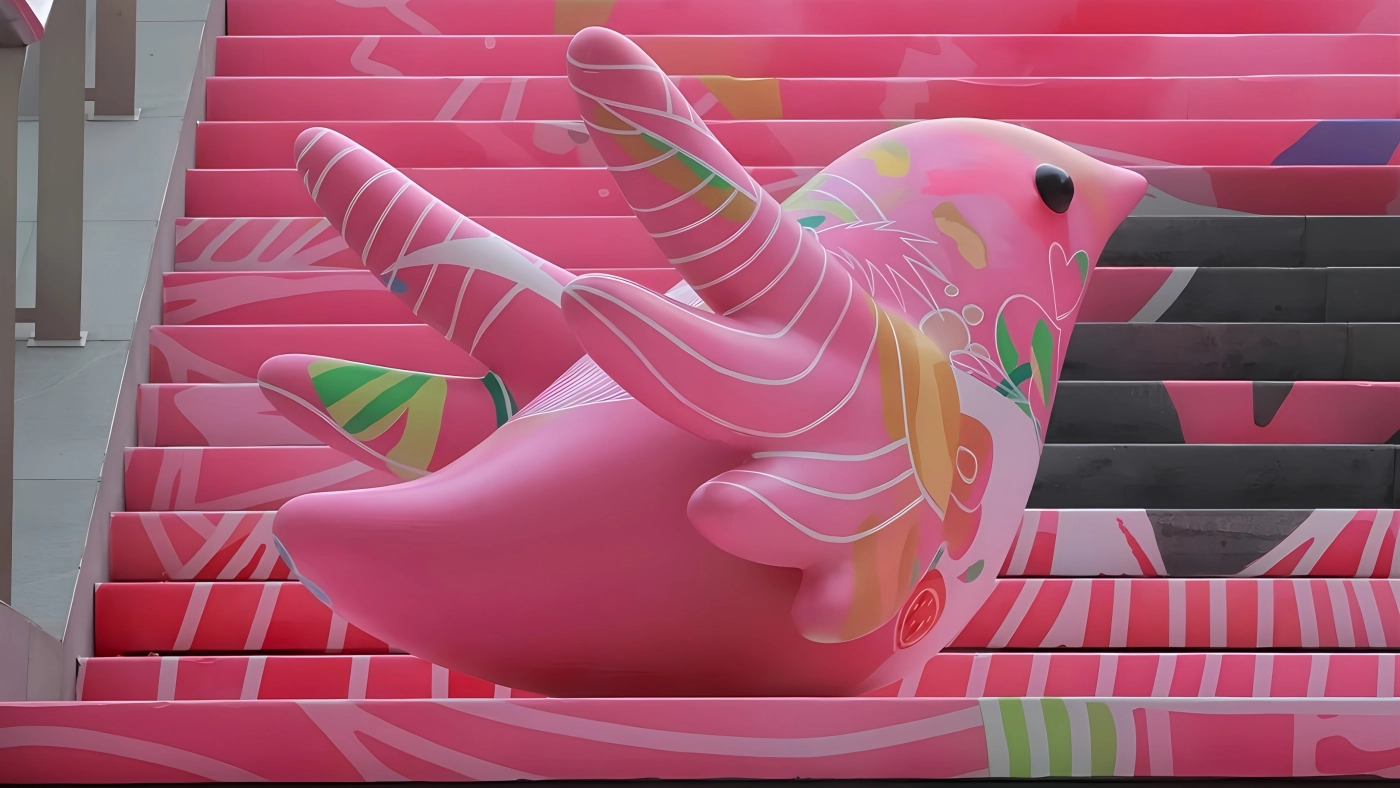
Safety, environmental, and fire-performance requirements for commercial installations differ by country and region. Understanding these differences is an important consideration for clients choosing an overseas manufacturer. We are familiar with requirements and certification frameworks used in major markets, including CE marking in the EU, UL standards in the United States, and AS standards in Australia. Where applicable, we can provide supporting documentation for materials and finished products and adapt manufacturing processes to the requirements specified for the project’s destination. For the Southeast Asian location of the Meny Bird project, termite-resistant treatment and UV-resistant coatings were incorporated to better suit local environmental conditions.
Our production system supports projects at different scales, from a one-off, large-scale themed installation such as Meny Bird to coordinated production runs for retail chains. Whether the requirement is a single bespoke artwork or props for hundreds of stores, we tailor the manufacturing approach to the project while working to maintain consistent quality across every unit.
Following the installation of the Meny Bird feature, we reviewed the operational data shared by the property owner. The reported results suggested that the installation contributed value beyond its decorative role. During the first month after installation, atrium foot traffic increased by 42% year over year, average dwell time during peak weekend periods rose from 12 minutes to 21 minutes, and related topics on local social media platforms generated more than 1.2 million organic views. The property owner also reported growth in sales at nearby restaurants and retail stores.
High-quality themed installations can become traffic-driving focal points for shopping centers. In addition to creating a strong visual impression, they can help guide visitor movement, encourage social sharing, and provide a setting for themed events. Shopping centers may build marketing campaigns around a signature installation. In the Meny Bird project, for example, a bird-themed exhibition and parent-child craft activities were later introduced to extend the concept and further support engagement.
From a manufacturer’s perspective, a successful custom installation needs to balance three qualities: visual appeal, practical functionality, and ease of maintenance. Visual appeal creates the initial impact; functionality ensures the installation supports the client’s operational objectives; and maintainability helps preserve performance over time while keeping upkeep manageable. These principles guide our approach to every project.
A: Under normal circumstances, production takes approximately 25–35 days from design approval to factory dispatch. The actual lead time depends on the installation’s dimensions, complexity, and technical requirements. International shipping time is additional and varies by destination. Sea freight to Southeast Asia typically takes around 7–10 days, while shipments to Europe and the Americas may take around 25–35 days. We recommend starting the project at least two to three months before the required installation date to allow time for design coordination, production, and shipping.
A: We use a three-part verification process. First, we complete a full-scale pre-assembly at the factory and share photos and videos for approval before dismantling and packing the installation. Second, components are labeled with part numbers and installation guidance, supported by detailed exploded-view drawings and installation videos. Third, we can provide remote video support or, when requested, dispatch engineers to assist with on-site installation and commissioning. These measures help the site team reproduce the approved factory-assembled result.
A: We are familiar with compliance requirements in major international markets. Where applicable, materials are supplied with supporting documentation for fire performance, environmental performance, and product safety, including relevant requirements or certifications associated with CE marking in the EU, UL standards in the United States, and AS standards in Australia. Before production begins, we review the destination-market requirements and specify materials and processes accordingly. Final compliance should be verified against the regulations and approvals applicable to each project.
A: Yes. Our structural engineering and detailing team can work from design renderings, concept drawings, or hand sketches to develop the structural design, break the concept down into manufacturable components, and prepare production drawings. We also review manufacturing feasibility and structural safety while preserving the intent of the original design.
A: We provide a 12-month warranty covering qualifying quality issues not caused by human factors, with repairs or replacement parts supplied at no charge under the applicable warranty terms. After the warranty period, maintenance services are available at cost, and we can continue supplying spare parts. For international projects, we can also prepare commonly replaced components in advance to help clients respond more quickly when maintenance is needed.
From the initial concept to the completed installation, the Meny Bird project illustrates the role of a specialist manufacturer in custom commercial environments: translating creative ideas into buildable products, managing international delivery through coordinated production and quality checks, and accounting for the requirements of the destination market. As a manufacturer of custom installations and props for international clients, we believe that genuine customization means more than reproducing a drawing. It requires understanding the client’s operational objectives and developing a solution that balances visual impact, practical performance, and long-term value. We will continue to refine our manufacturing capabilities and project services to help shopping centers around the world create distinctive installations that support memorable visitor experiences and commercial goals.
July 27, 2026
July 27, 2026
July 27, 2026
July 27, 2026
July 27, 2026
July 27, 2026
July 27, 2026
July 26, 2026
July 26, 2026
July 26, 2026
July 26, 2026
July 26, 2026
July 26, 2026
July 26, 2026
July 26, 2026
July 26, 2026
July 26, 2026
July 25, 2026
July 25, 2026
July 25, 2026