September 16, 2026 Ixmore Art
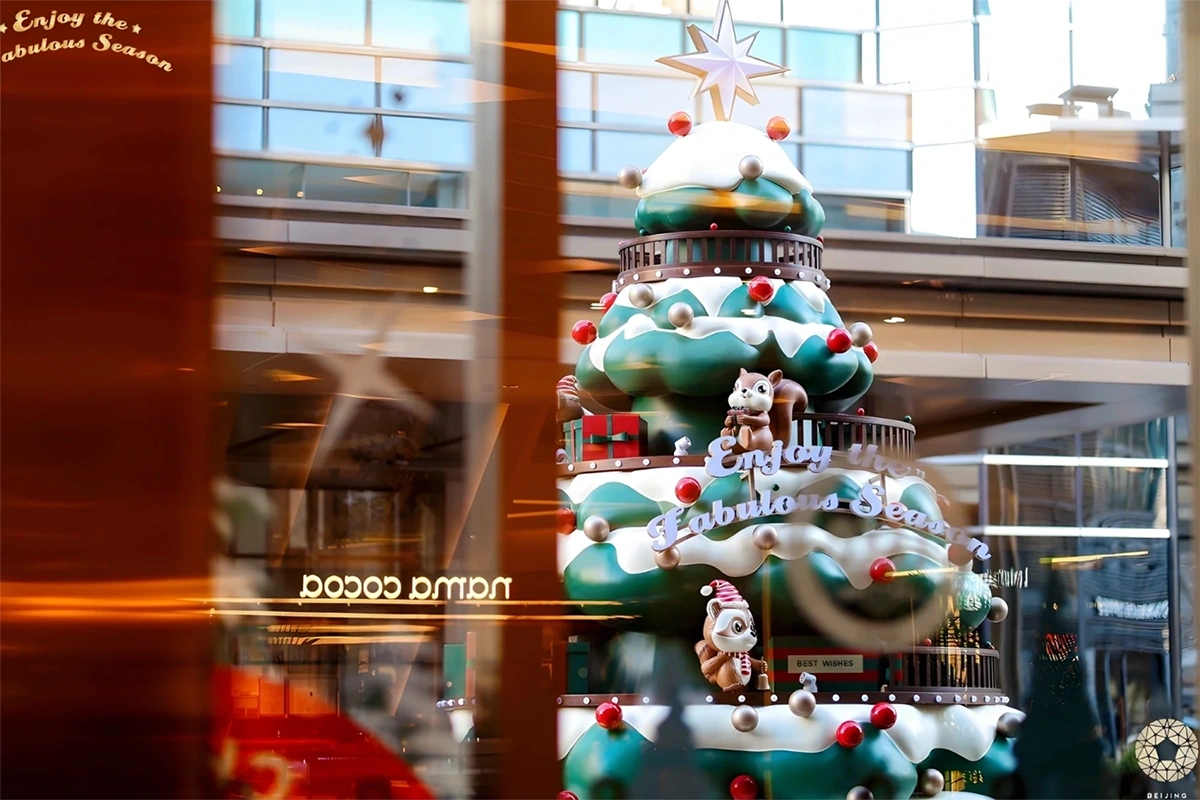
For major shopping malls, the Christmas installation in the atrium is often one of the most prominent visual focal points of the entire year. Whether a custom Christmas installation can withstand the elements—including wind, sunlight, rain, and snow—directly affects its ability to remain safe, visually appealing, and fully functional throughout the holiday season.
As a factory with extensive experience in the custom production of installations and props for large commercial spaces, we have found through years of project experience that many clients focus heavily on design and visual impact when choosing a supplier, while overlooking critical factors such as waterproofing, weather resistance, and structural durability. Yet these are the factors that ultimately determine an installation’s service life and safety. In this article, we will break down the technical considerations involved in customizing large-scale Christmas installations, covering everything from material systems, waterproofing methods, and weather-resistant finishes to electrical protection, factory quality control, and long-term maintenance.
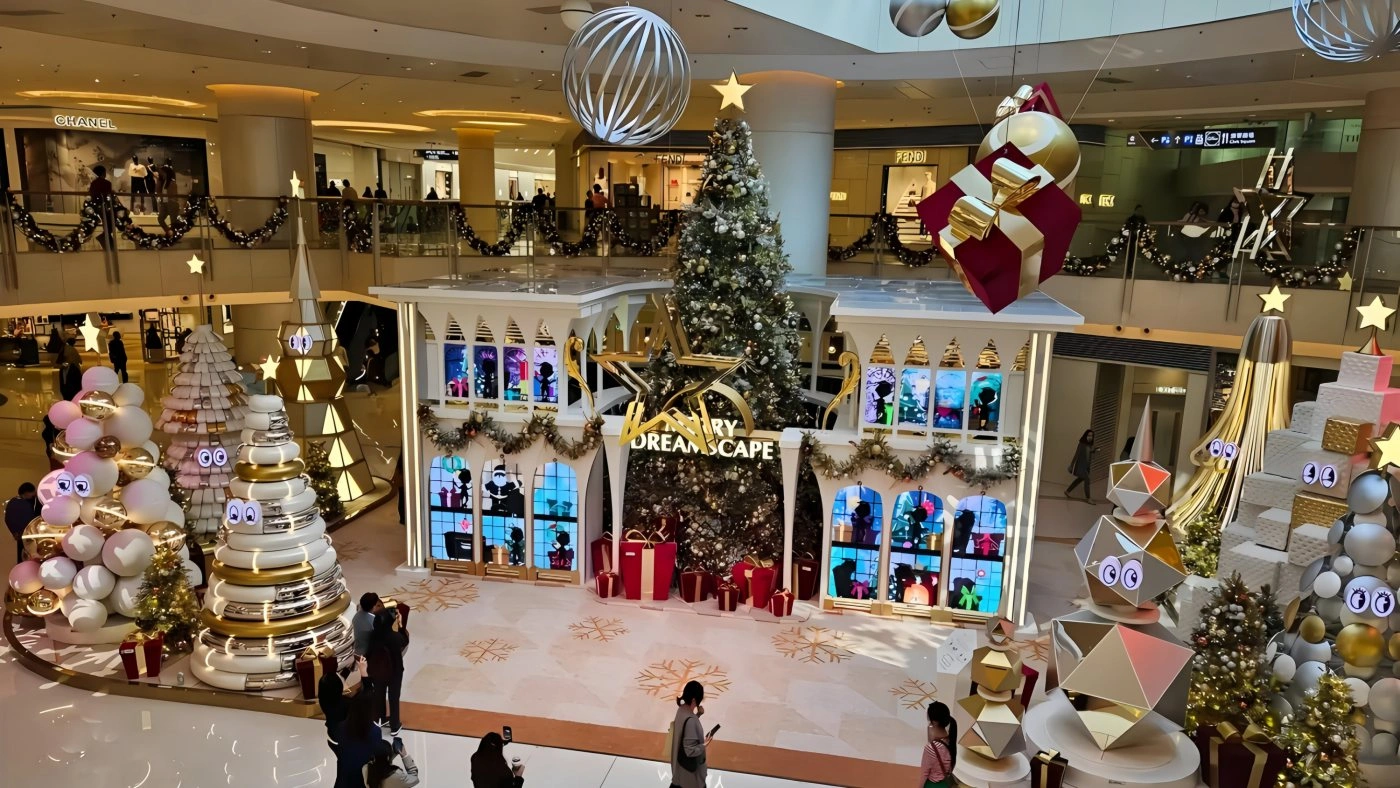
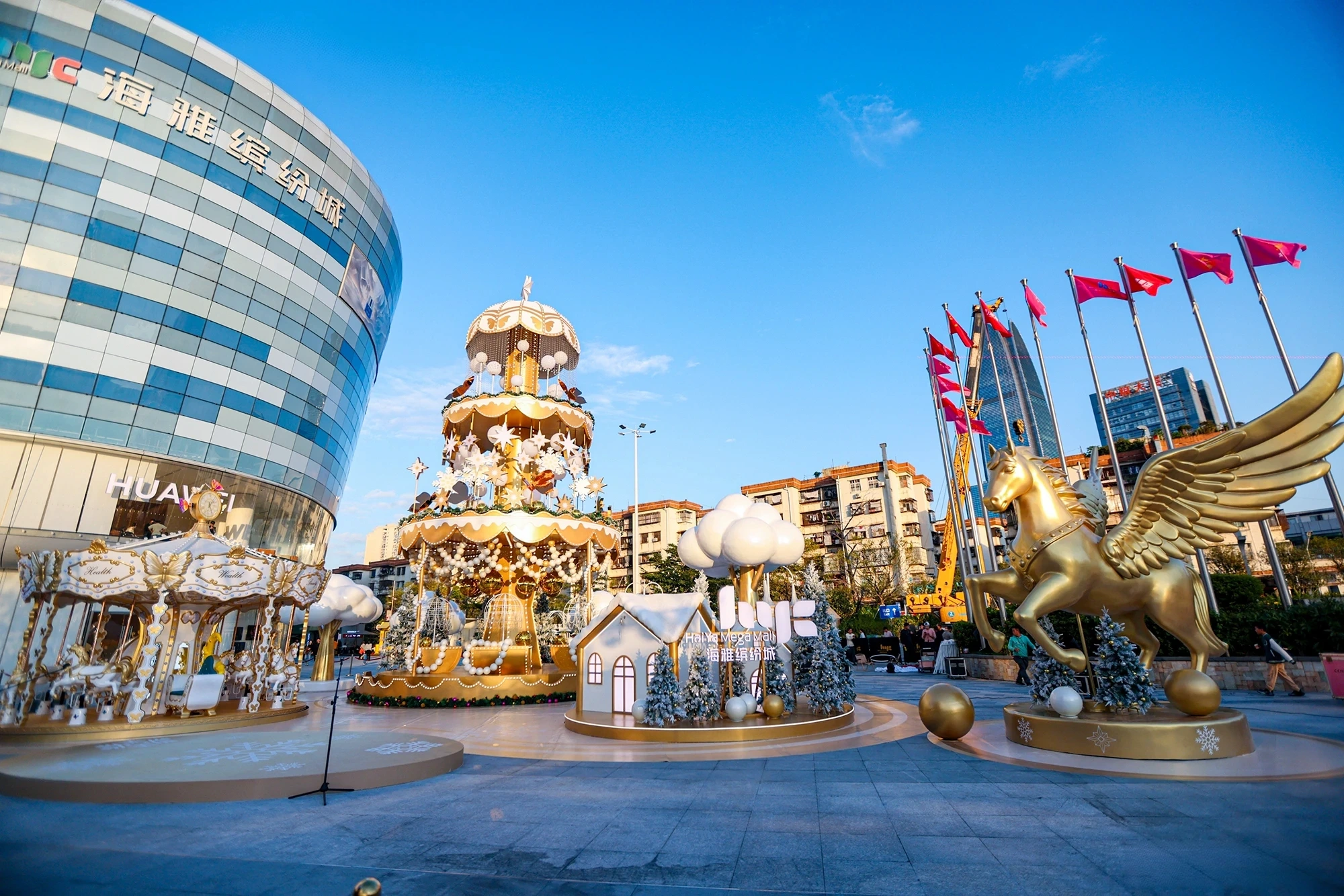
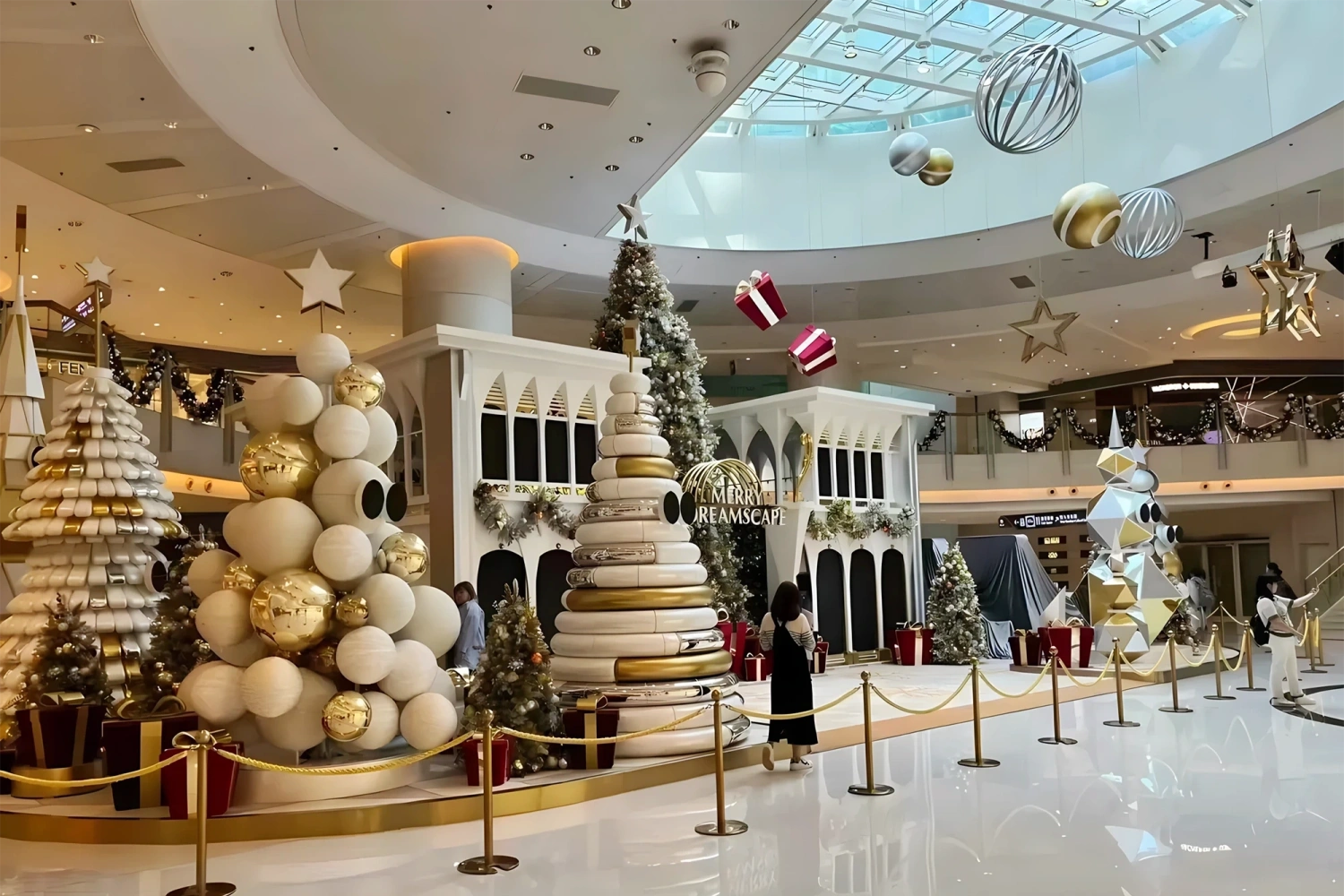
Although most shopping mall atriums are indoors, many shopping malls use glass lighting roofs at the top. Direct sunlight, temperature changes, and condensation dripping will cause continuous erosion of the devices. Semi-outdoor or fully outdoor scenes such as squares outside shopping malls, entrance areas, and rooftop gardens need to directly face the long-term test of natural environments such as rain, snow, strong winds, and ultraviolet rays. Compared with indoor short-term display props, customized Christmas installations in shopping malls usually require continuous display for 35-60 days or even longer.
During this period, they may also undergo multiple rounds of cleaning and maintenance, people touching them, children climbing and other usage scenarios. If waterproofing, weather resistance and structural strength are not fully considered during the design stage, paint peeling, discoloration, and cracking may occur at least, or at worst, the internal skeleton may be corroded due to structural water seepage, or even cause safety hazards. Therefore, a mature Christmas device customization process system must regard waterproofing and weather resistance as equally important technical indicators as styling design.
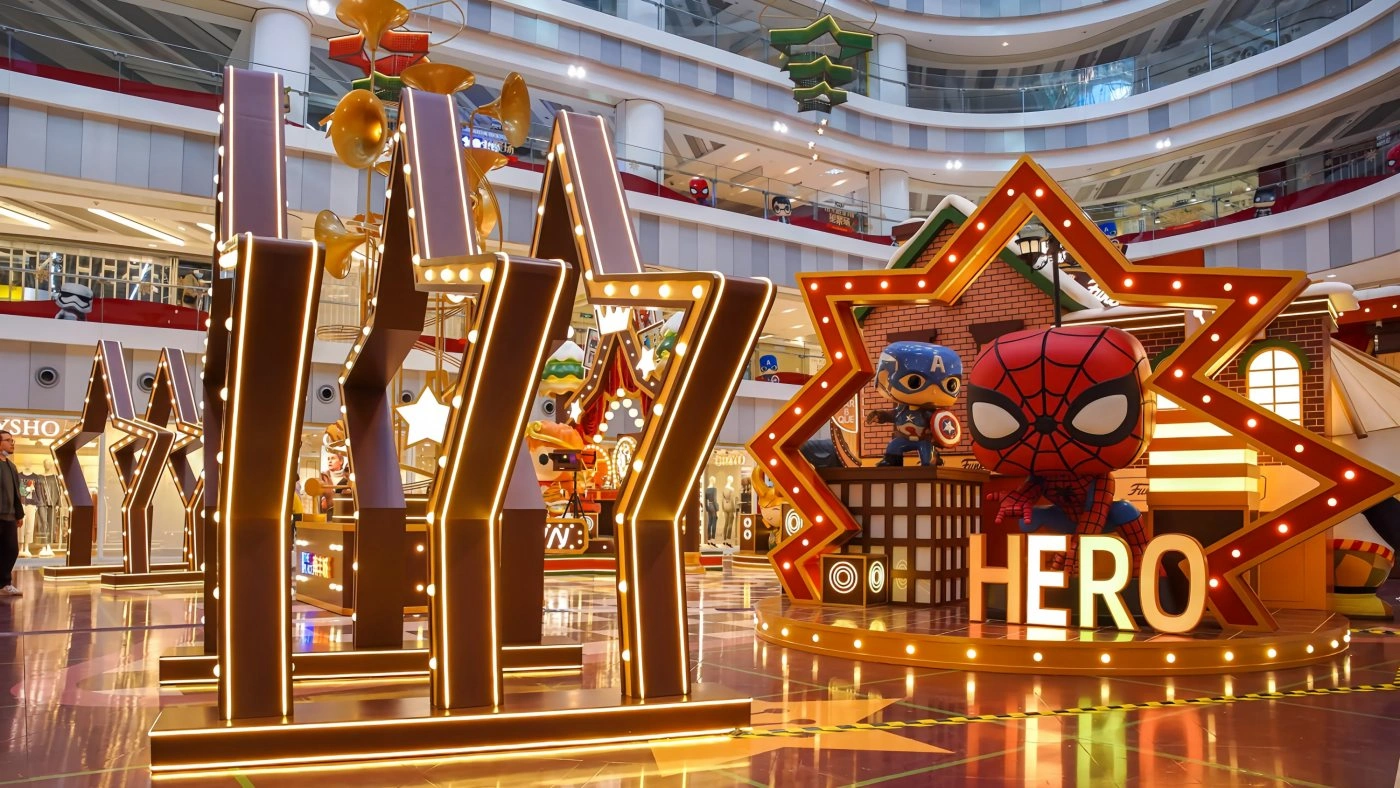
Material selection is the foundation of long-term quality and consistency for any factory specializing in custom Christmas installations
The internal framework of large-scale installations typically uses hot-dip galvanized square tubing, galvanized angle iron, or stainless steel profiles. For suspended installations where weight must be kept to a minimum, aluminum alloy profiles may be used instead. Hot-dip galvanizing creates a dense zinc-iron protective layer on the steel surface, minimizing exposure to air and moisture. It is a fundamental rust-prevention treatment for outdoor Christmas installation frames, while stainless steel is better suited to coastal environments with high salt exposure or projects intended for extended outdoor use.
Common materials for installation shells and skins include fiberglass-reinforced plastic (FRP), PVC mesh fabric, expanded polystyrene (EPS) foam finished with FRP or a polyurea coating, and acrylic or multi-wall polycarbonate (PC) sheets. FRP is widely used for the outer shells of large commercial installations because it combines low weight, high strength, and strong weather resistance. PVC mesh fabric, by contrast, is commonly used for inflatable structures, illuminated trees, oversized snowflakes, and other elements that require light transmission or flexible forming.
Regardless of the substrate, the surface coating acts as the final protective barrier against moisture, UV exposure, and weathering. Manufacturers typically use a three-layer coating system consisting of a primer, intermediate coat, and topcoat. Fluorocarbon (PVDF) and UV-curable resin coatings are often selected for the topcoat to improve both color retention and weather resistance. Technical documentation from BFG International indicates that an opaque gel coat or coating applied to FRP surfaces can help block ultraviolet radiation and reduce fading and yellowing caused by prolonged sun exposure . This finding is also consistent with our factory’s years of experience in on-site maintenance.
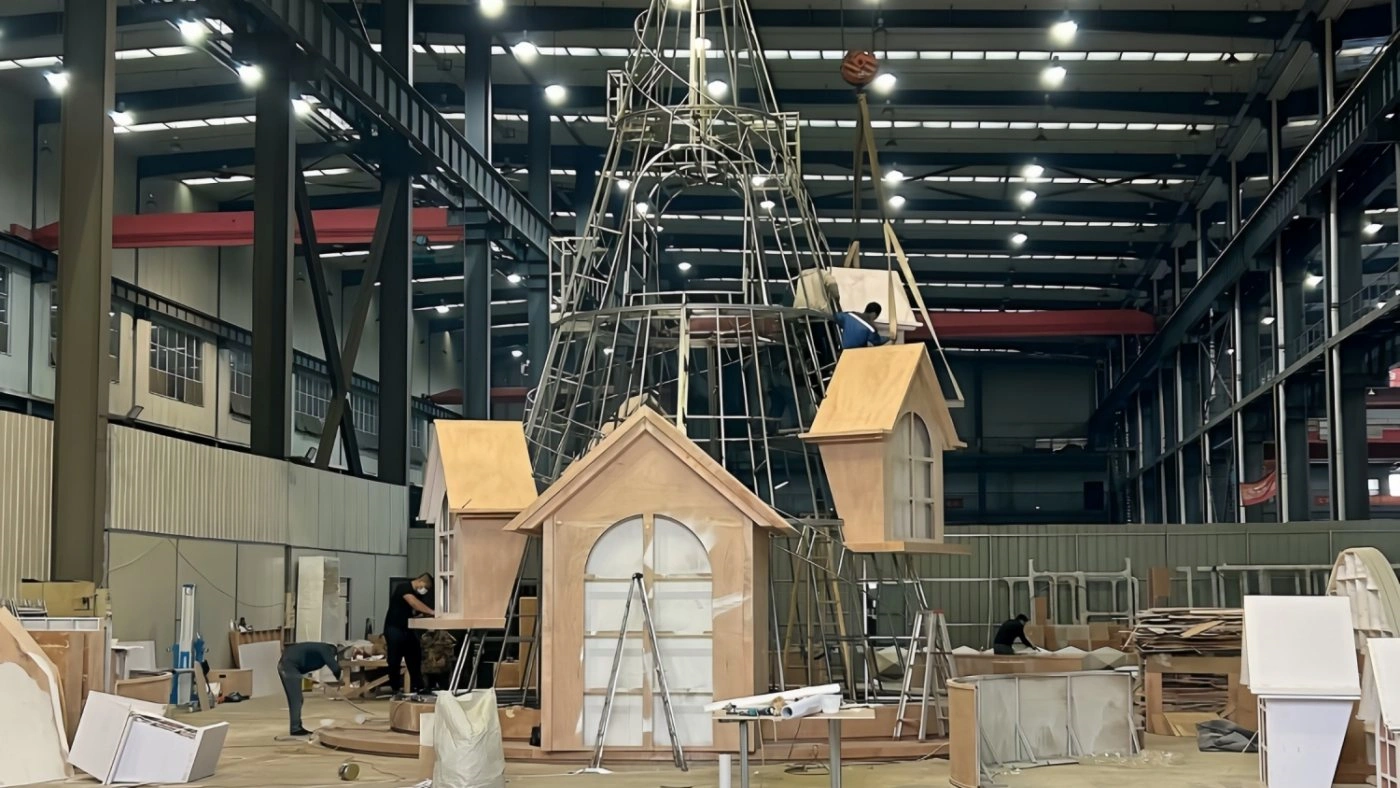
Professional waterproofing for custom Christmas installations is far more than simply “applying a coat of waterproof paint.” It is a system-wide approach that runs through the entire process, from design and fabrication to installation.
During structural design, engineers incorporate suitable drainage slopes based on the geometry of the installation and add drainage channels or drip edges in areas prone to water accumulation, such as roofs and shoulders. This prevents rainwater from sitting around structural joints for extended periods. For hollow structures such as oversized gift boxes, snowmen, and Santa Claus figures, concealed drainage holes are also incorporated to prevent water from collecting and freezing inside the cavity, which could otherwise cause the outer shell to crack.
Large custom Christmas installations for shopping malls are often assembled on site from multiple modules. Module joints, lighting cable entry points, and bolt holes are among the most vulnerable areas for water ingress. Manufacturers typically apply two layers of silicone or polyurethane sealant to critical joints and use waterproof flange covers at key load-bearing connections. Where electrical cables exit the structure, waterproof connectors and heat-shrink tubing are used to eliminate potential water-entry paths at the source.
For fully enclosed structures, the factory installs concealed drainage holes at the bottom and may fit them with one-way drain valves. These allow condensation to escape while preventing rainwater from flowing back inside. For custom Christmas displays designed for long-term outdoor use, ventilation gaps are also incorporated into the enclosure to help equalize internal and external temperatures and reduce the risk of sealant failure caused by repeated thermal expansion and contraction.
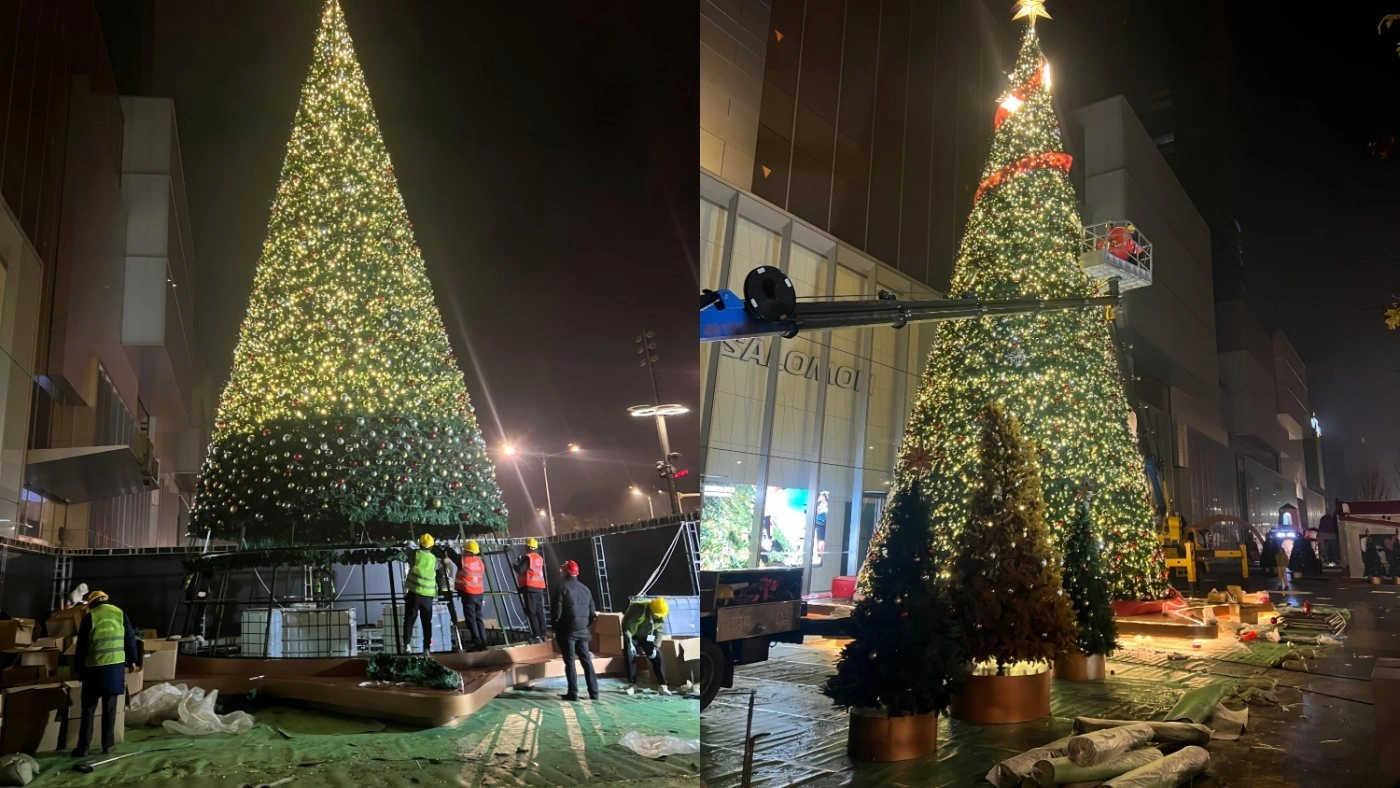
Weather resistance determines whether an installation can maintain its structural integrity and retain its original appearance after prolonged exposure to sunlight and rain.
Ultraviolet (UV) radiation is one of the main causes of fading, chalking, and embrittlement in outdoor installations. One of the most widely used methods for evaluating material weather resistance is accelerated artificial aging. For example, the fluorescent UV lamp accelerated aging test specified in ASTM G154 simulates the long-term aging effects materials may experience outdoors through repeated cycles of UV exposure and condensation. At our factory, we likewise consider the results of comparable accelerated-aging tests during raw material selection and prioritize proven UV-resistant resins and topcoat systems.
When engineering large-scale custom Christmas installations, it is essential to consider historical meteorological data for the project location and carry out structural analysis to verify the frame’s ability to withstand wind and snow loads. This is particularly important for suspended and open-frame structures, where an inadequate assessment of wind loads can result in deformation or, in extreme cases, structural failure during high winds.
In northern regions, winter installations can be exposed to substantial temperature swings. Differences in the thermal expansion and contraction rates of individual materials can cause cracking at joints over time. To address this, manufacturers typically incorporate expansion joints where dissimilar materials meet and select highly elastic sealants capable of accommodating repeated high- and low-temperature cycles.
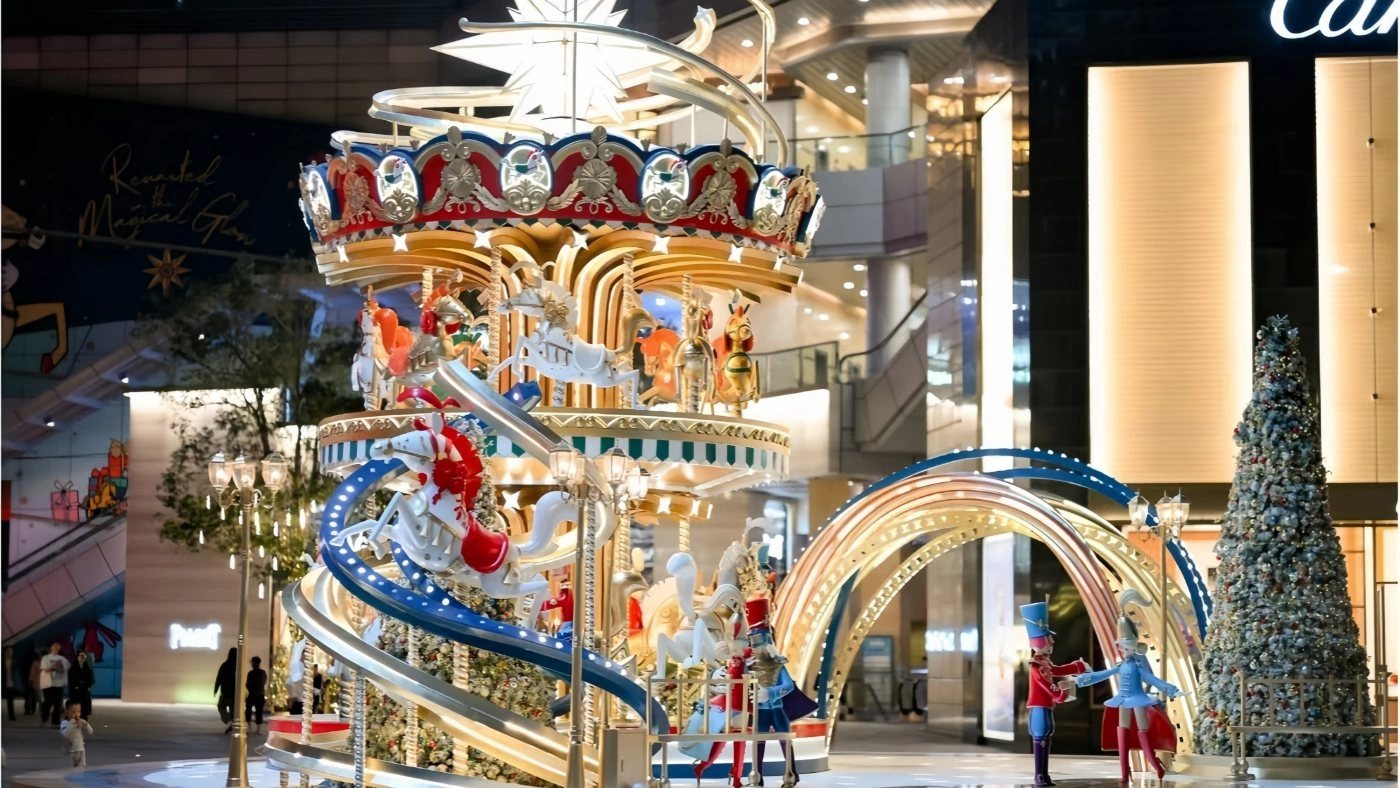
Christmas installations rely heavily on lighting effects, making the protection rating of the electrical system a critical consideration for any custom Christmas installation manufacturer. Lighting fixtures, power boxes, and controllers used outdoors or in semi-outdoor environments typically need to meet an IP65 rating or higher. Under the IEC 60529 international standard, the second digit of an IP rating indicates protection against water; IP65 provides protection against low-pressure water jets from any direction and is a common baseline for outdoor lighting equipment . In actual projects, we select IP65, IP66, or higher-rated electrical components according to the exposure level of each zone, taking into account risks such as rain, splashing, and temporary water accumulation. We also apply secondary waterproof potting to wiring terminals for additional protection.
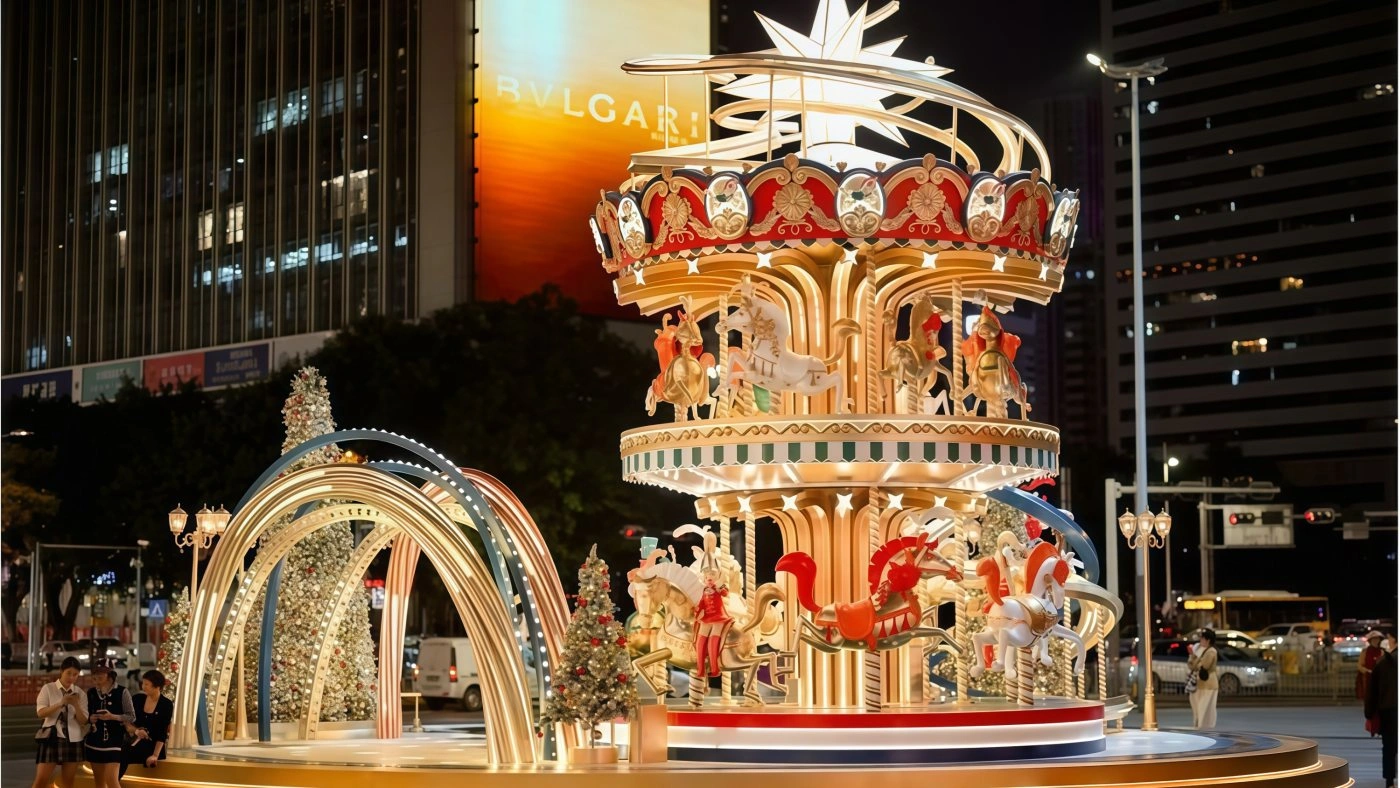
Before a high-quality custom Christmas display leaves the factory, it must undergo multiple rounds of internal quality inspection. These include structural load tests to verify that the frame can safely withstand its designed loads; spray tests that simulate sustained rainfall and check the waterproof performance of seams and lighting fixtures; high- and low-temperature cycling tests to identify deformation or cracking caused by temperature fluctuations; and colorfastness checks to confirm that the coating’s rate of fading under light exposure is consistent with the expected service life. Only after all required tests have been passed does the installation move on to packaging and shipment.
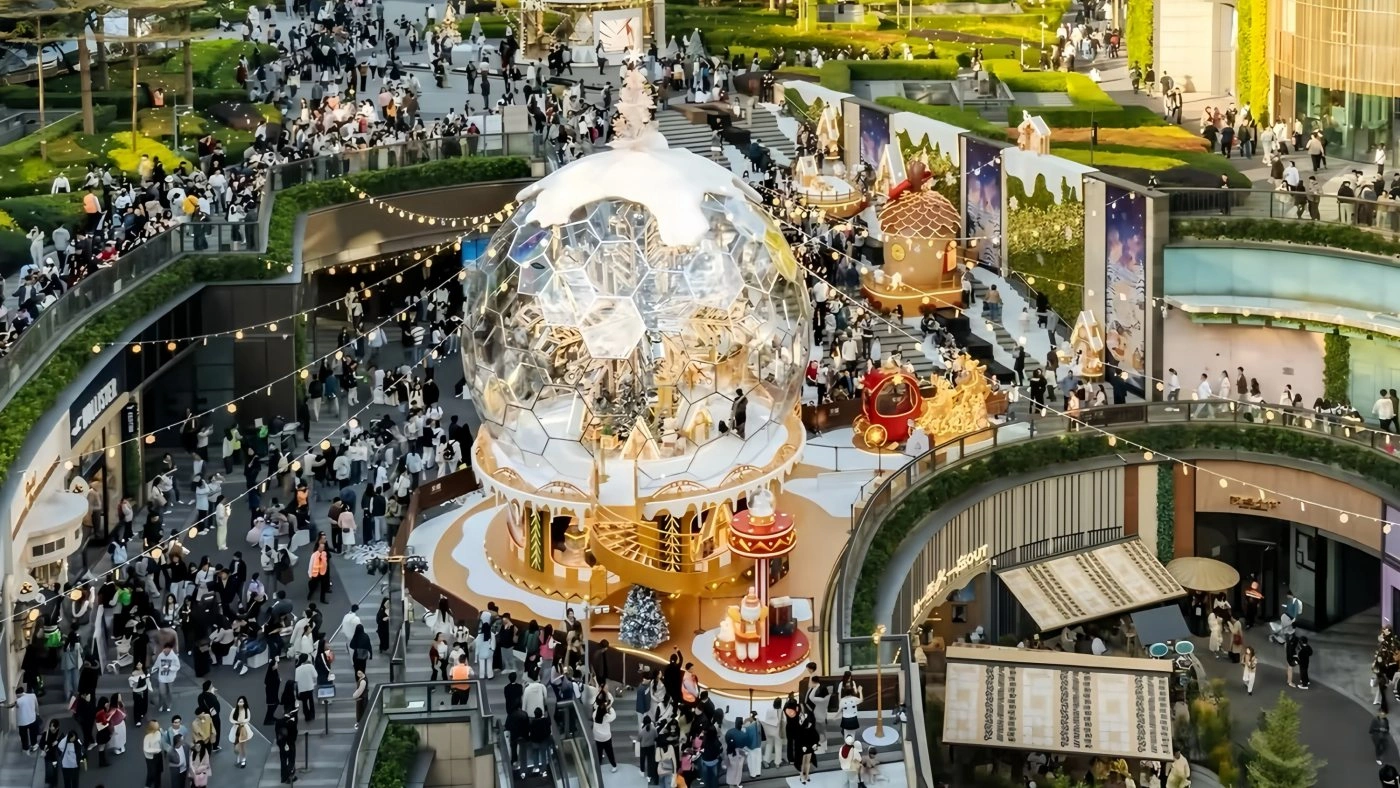
Even with a highly controlled manufacturing process, outdoor Christmas displays require regular maintenance to achieve their full service life. During the display period, mall operators should regularly check drainage holes for blockages caused by leaves or dust; inspect sealants for cracking, peeling, or other signs of deterioration and reapply them as needed; inspect the metal framework for corrosion each year before dismantling and storing the installation, touching up any affected areas with protective paint; and conduct quarterly power-on and waterproofing checks of the lighting system’s connections to ensure safe and reliable operation when the installation is brought back into service the following year.
A: With appropriate material selection and proper maintenance, outdoor Christmas decorations using fiberglass or hot-dip galvanized frames can typically be reused for 3–5 years or longer. The actual service life should be evaluated based on local climate conditions, installation duration, and annual maintenance practices.
A: Yes. Many shopping mall atriums feature glass roofs that expose installations to direct sunlight, temperature fluctuations, and condensation. Therefore, even for indoor installations, it is advisable to apply basic waterproofing protection to critical joints and lighting connections.
A: Either may be a contributing factor. If visible cracking occurs within a short period, it is generally associated with structural deformation or sealing failure. Gradual fading after prolonged use, on the other hand, is typically related to insufficient weather resistance in the coating system. It is advisable to select material systems that have been validated through accelerated-aging tests.
A: Focus on whether the supplier has standardized pre-shipment quality-control procedures, including tests such as spray testing and accelerated aging, and whether it can provide examples of completed outdoor projects and after-sales maintenance records. These are direct indicators of the professionalism and manufacturing capabilities of a custom Christmas decoration supplier.
A: If the event is relatively short and takes place entirely indoors, the weather-resistance requirements are comparatively low. However, if the installation will be used outdoors or reused across multiple seasons, it is still advisable to control material selection and manufacturing processes to outdoor-use standards. Addressing these details upfront can help prevent avoidable losses later.
From frame materials and shell fabrication to coating systems, waterproof structural design, weather-resistance testing, and electrical protection standards, custom Christmas installation manufacturing is a systematic process that combines structural engineering, materials science, and careful attention to production details. Only by working with a supplier that has a mature factory production system and can provide comprehensive waterproofing and weather-resistance solutions can large-scale Christmas installations in commercial spaces truly stand up to wind and rain and deliver reliable long-term performance. If you are looking for a manufacturing partner for custom Christmas installations for the upcoming shopping mall season, contact our team to discuss your project requirements. We can provide professional recommendations on materials and manufacturing processes based on your specific application scenario.
July 27, 2026
July 27, 2026
July 27, 2026
July 27, 2026
July 27, 2026
July 27, 2026
July 27, 2026
July 26, 2026
July 26, 2026
July 26, 2026
July 26, 2026
July 26, 2026
July 26, 2026
July 26, 2026
July 26, 2026
July 26, 2026
July 26, 2026
July 25, 2026
July 25, 2026
July 25, 2026