October 29, 2026 Ixmore Art
In the outdoor plazas, stairways, and atriums of large shopping malls, custom art installations do far more than decorate a space. They attract visitors, create photo opportunities, and strengthen brand recognition. Using a cactus-themed installation project completed by Ixmore Art as a case study, this article walks through the process from detailed design and material selection to fabrication, packaging, shipping, and on-site installation. It is intended as a practical reference for international commercial property teams, brands, and event planners evaluating installation suppliers.
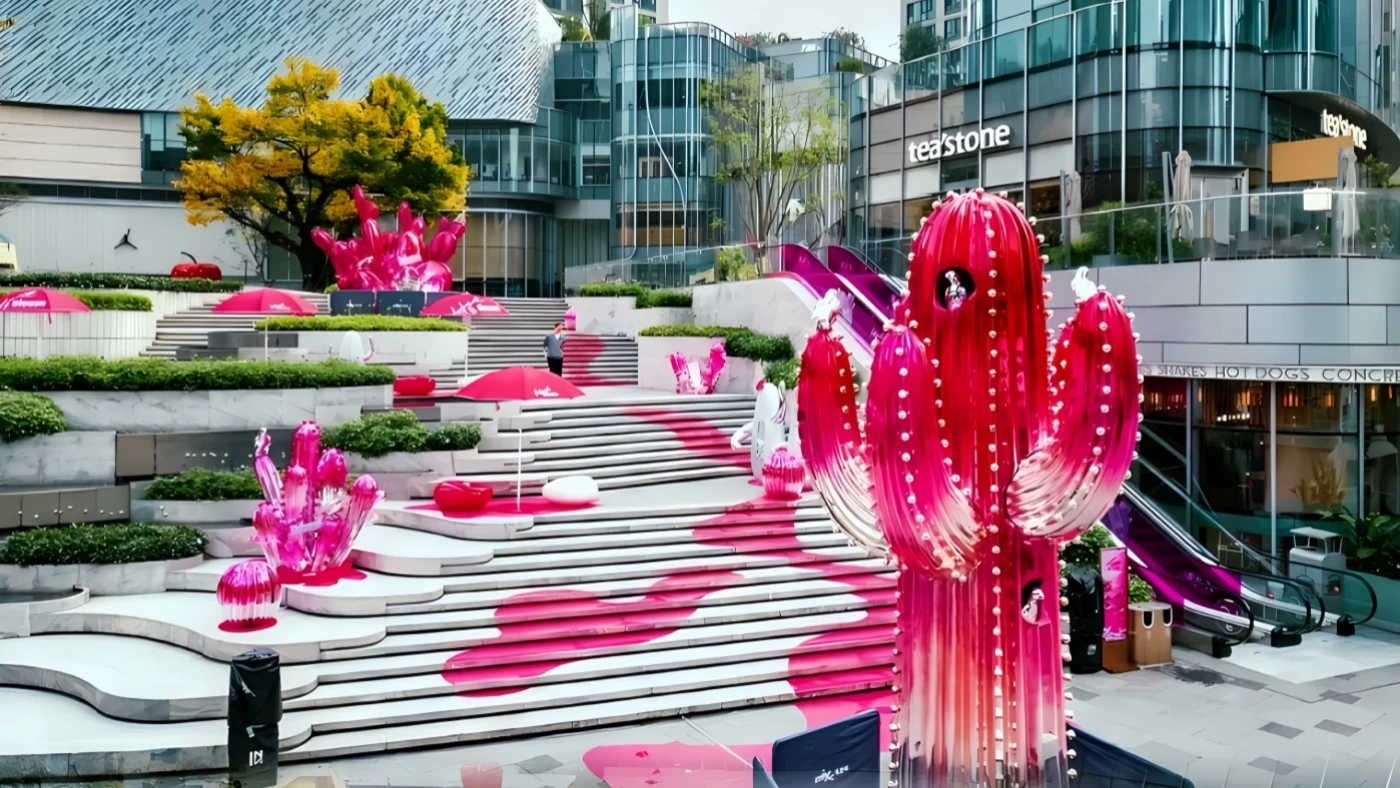
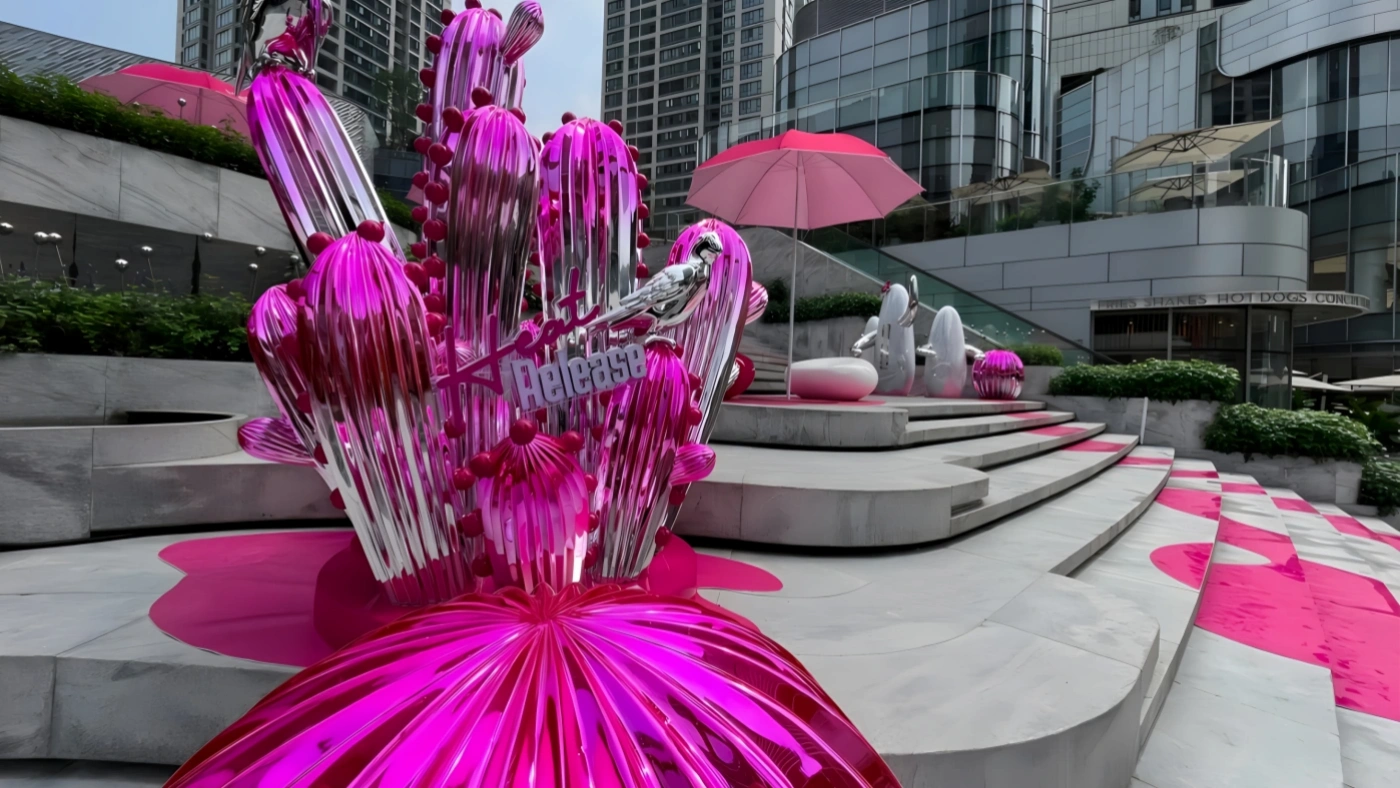
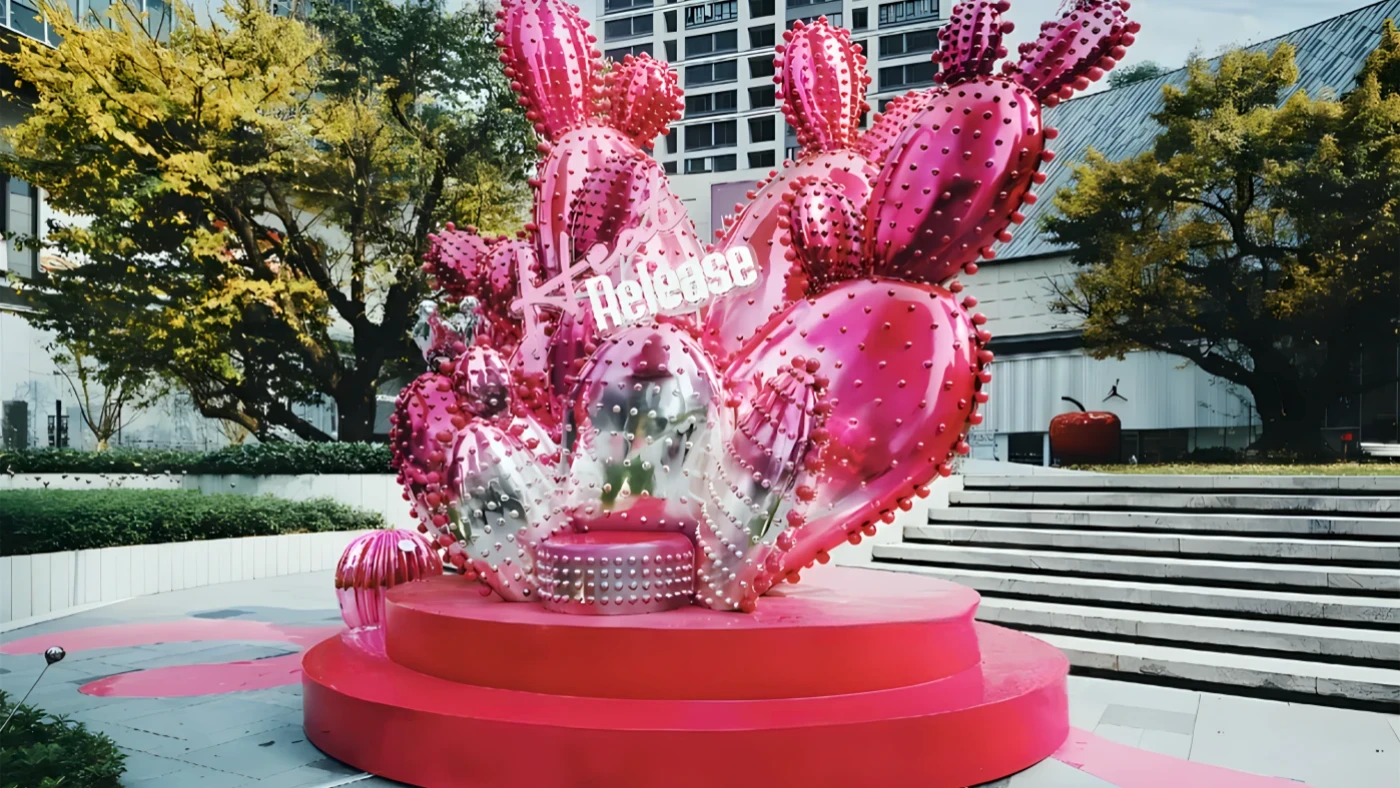
This collection of cactus-themed installations is located in an outdoor shopping mall plaza with tiered stone steps, landscaped planters, and escalators. Surrounded by glass curtain-wall buildings, the plaza draws visitors from multiple directions via its steps, escalators, and platforms. The installation features a tall, columnar cactus as its focal point, a cluster of palm-shaped cacti, a fine-mesh stainless-steel mirror feature, spherical cacti, mirror-finished bird and human sculptures, and themed illuminated signage throughout the space. Pink patterns also extend across the stepped ground surface.
The main challenge with large-scale art installations like this is not simply the creative concept, but how to execute it successfully. During planning, we first assess several critical site conditions: outdoor sunlight exposure and wind loads; height differences and load-bearing capacities of the steps and platforms; safety regarding close contact by pedestrians; and reflections and glare from mirrored surfaces under strong light. These factors determine the structural design, material thickness, and installation method. They must be resolved before fabrication, rather than left for the installation team to address at the last minute.
We define four core delivery objectives: fidelity to the approved renderings, long-term structural stability, damage-free transportation, and an efficient on-site installation window. Because malls often restrict installation work to after closing or overnight, minimizing on-site work helps reduce disruption to daily operations. This requirement must be considered during fabrication.
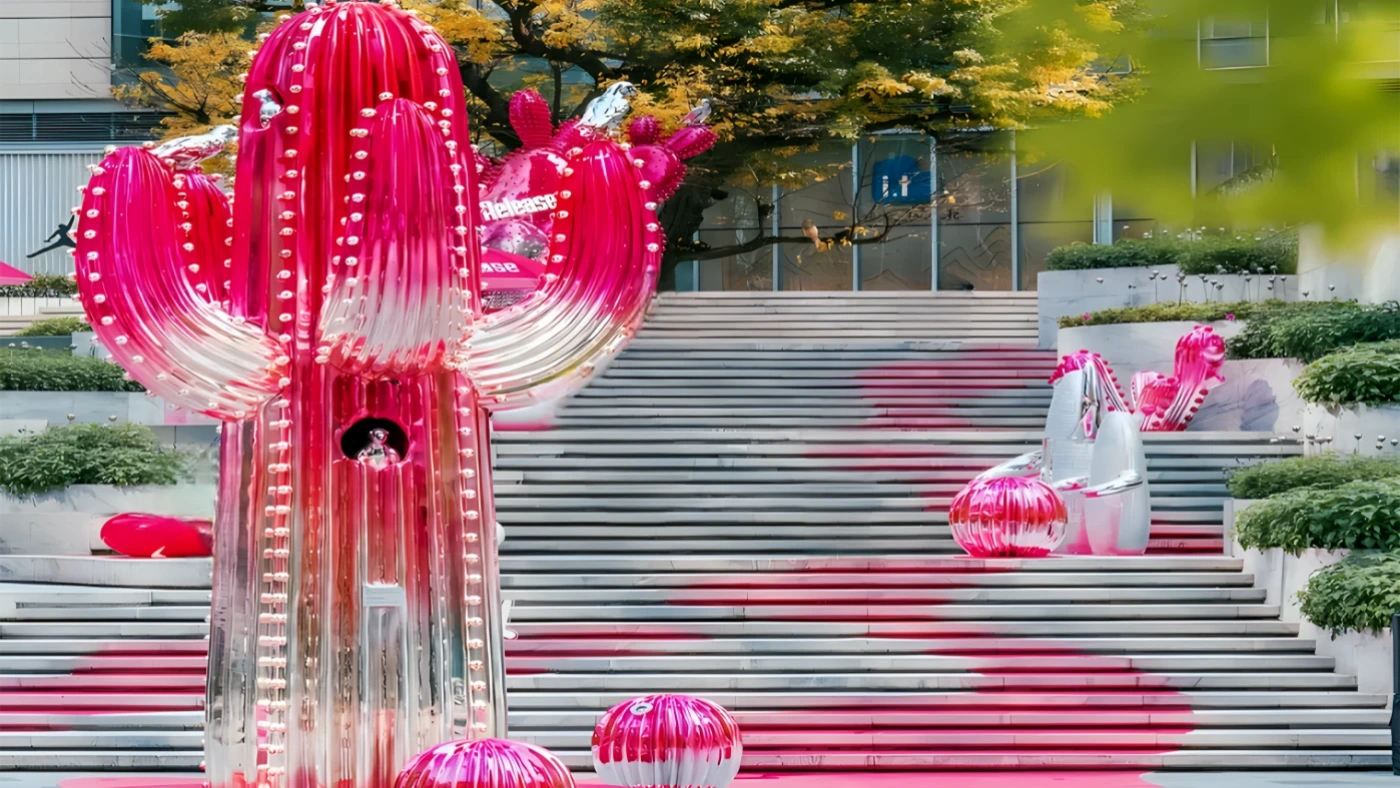
Tall, columnar cacti and multi-branched palm-shaped structures are rarely practical to fabricate and ship as single pieces. We divide each installation into modules based on shipping-container dimensions, lifting-equipment capacity, and the width of access routes at the site. We integrate concealed connectors along the split lines and align the joints with the visual rhythm of the ribs or bead details, helping minimize visible seams after assembly.
The mirrored outer shell defines the form and delivers the desired finish, while the internal steel frame carries the structural loads. We calculate the base flanges, column sections, and anchor points with the installation height, cantilevered arm lengths, and local wind loads in mind. For cactus installations with cantilevered elements, the center of gravity is especially important and must be established during design.
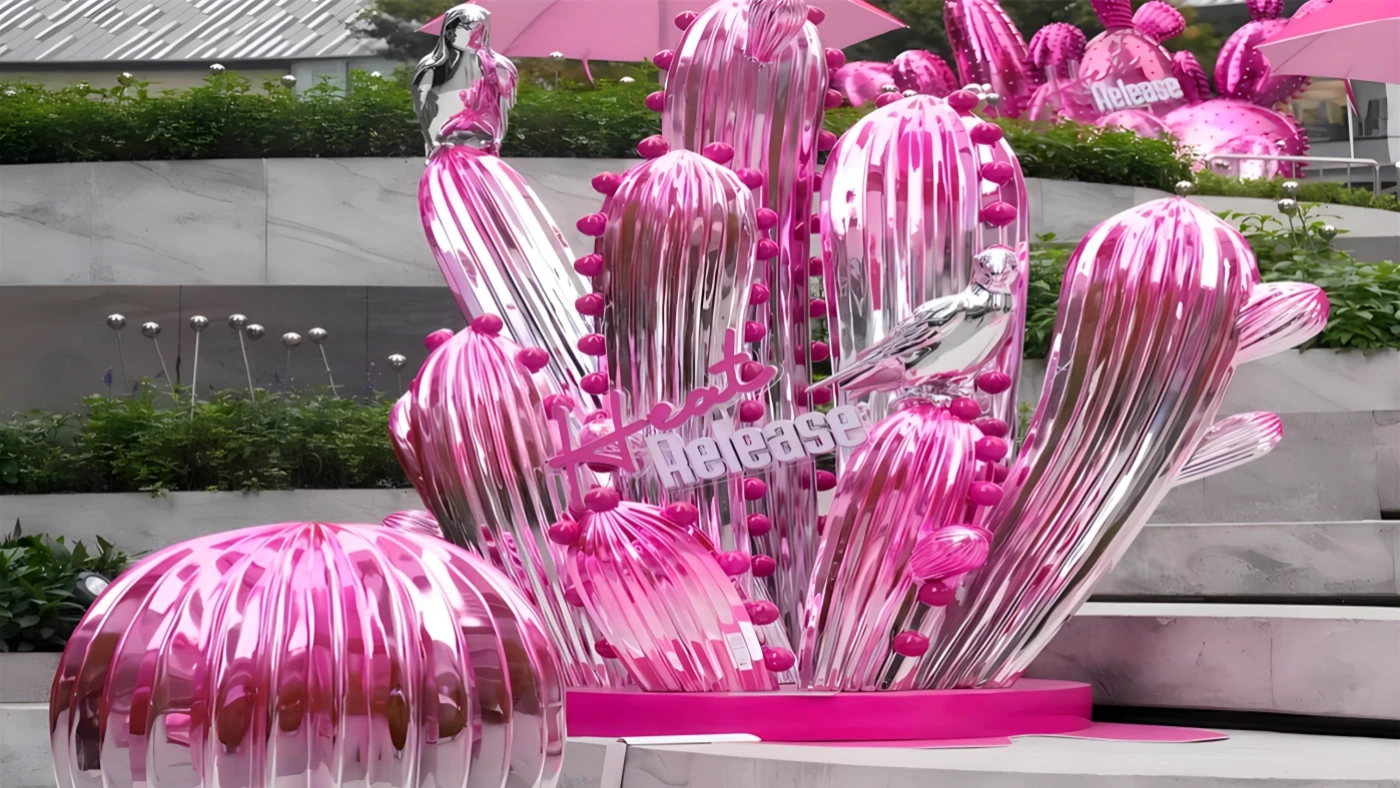
For stainless-steel mirror installations intended for long-term outdoor use, the base material grade must be selected for the specific environment. Corrosion risks can differ substantially between inland urban plazas and coastal locations exposed to salt spray. The American Society for Steel Corrosion (ASSC) has published guidelines on atmospheric corrosion of austenitic stainless steel, which provide systematic explanations for material selection in different environments. We consult relevant industry guidance when selecting materials, then determine the appropriate grade and plate thickness based on the site’s climate and air quality.
The project’s most distinctive visual feature is a mirror finish that shifts from pink to silvery white. Consistency depends on applying the color treatment to a precisely polished substrate and carefully controlling variation between production batches and modules. The finishing process is selected according to the installation’s dimensions and outdoor durability requirements. Whenever possible, all sections of a single installation are finished in the same batch to minimize color differences after assembly.
Large, curved mirror surfaces can create strong reflections in direct sunlight. We assess potential reflection paths by considering the installation’s orientation, nearby glass curtain walls, and pedestrian flow. Where necessary, we adjust the surface curvature or finish to preserve its visual appeal for photography while reducing glare that could affect nearby businesses or pedestrians.
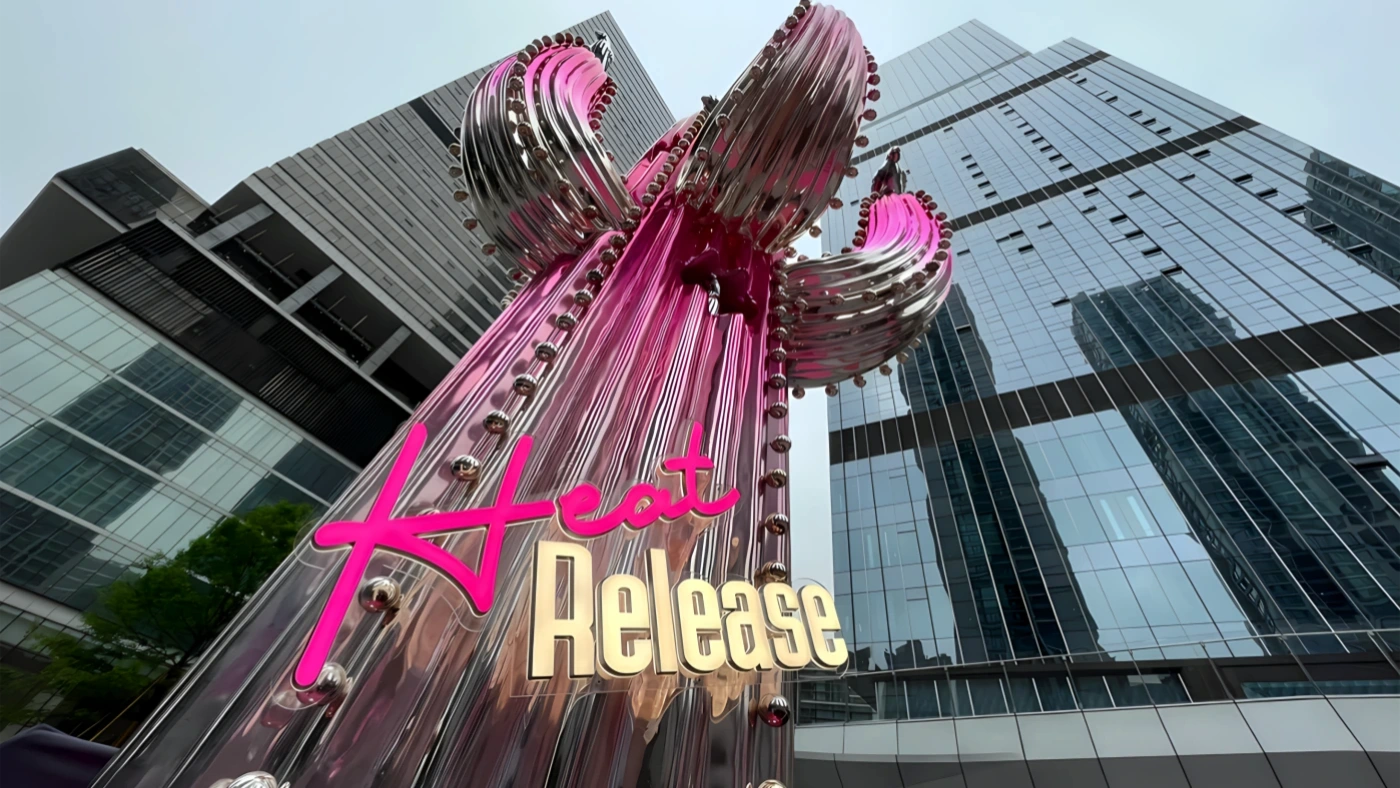
We build the frame first, then form and fit the outer skin. The cactus’s longitudinal ribs are formed in sections and joined one by one. Welds are then ground smooth so the transitions follow the contours of the curved surface. Mirror finishes reveal weld marks and surface irregularities; even minor imperfections become conspicuous in the reflection. As a result, post-weld grinding and polishing are among the most labor-intensive stages in the fabrication of custom installations.
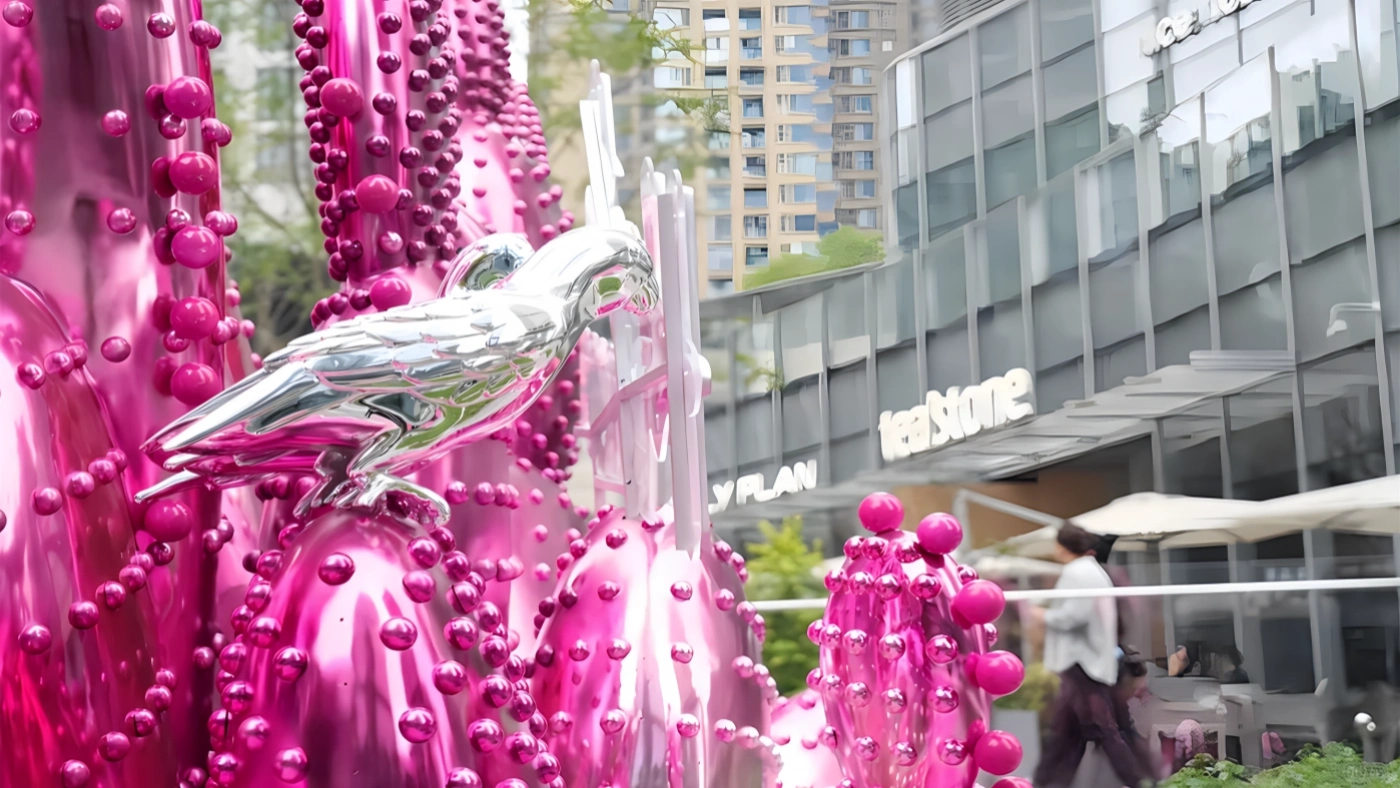
The rows of bead-like details on the cactus, together with the mirror-finished bird sculptures and human figures perched on it, are central to the installation’s overall level of finish. The bead details must be securely welded; the bird and human figures must have convincing proportions and poses; and the themed illuminated signage must be designed for outdoor waterproofing, heat dissipation, and maintenance access. These details are fitted and inspected during factory pre-assembly.
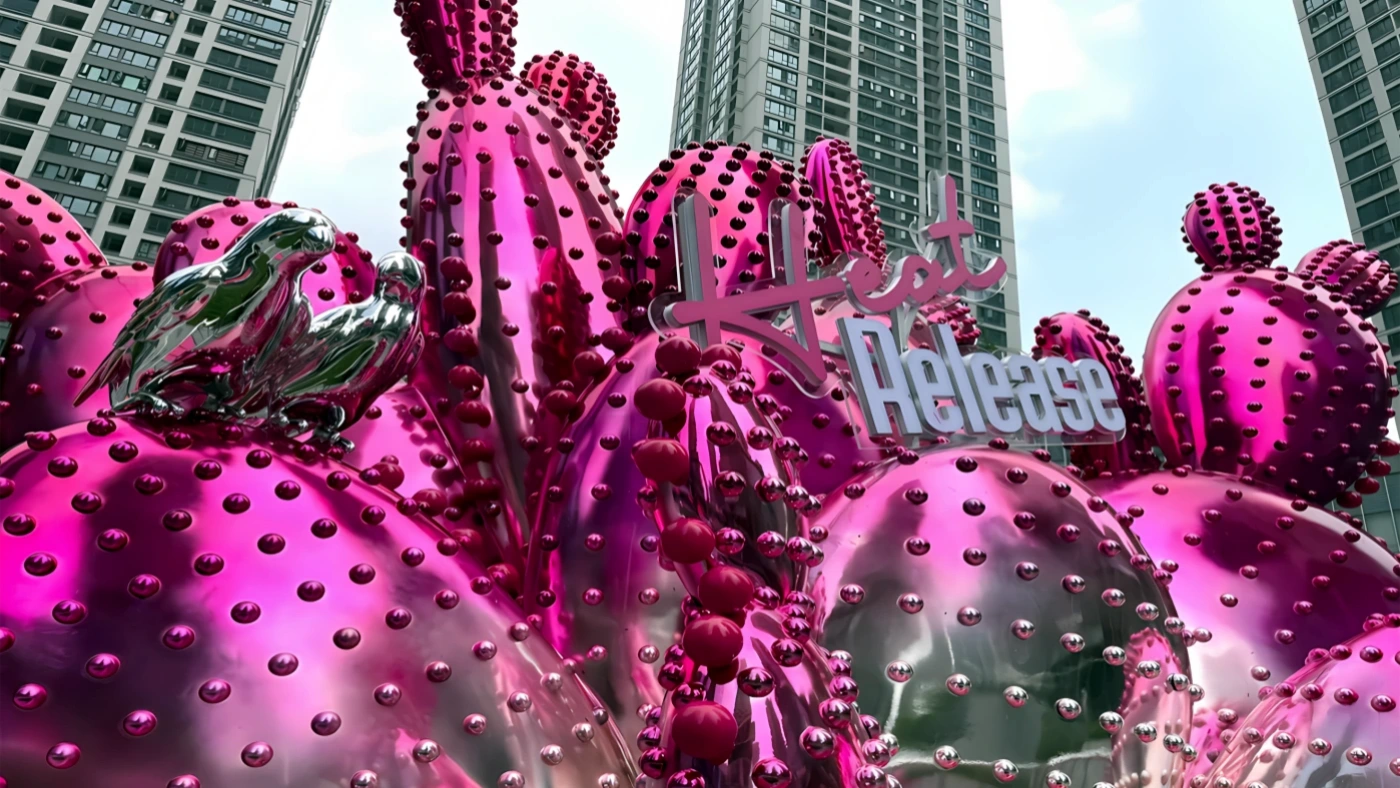
Before shipment, every module is assembled and checked at the factory, and each module and connection point receives a unique identification number. Our inspection covers seam gaps, overall vertical alignment, color consistency between sections, surface scratches, lighting performance, and anchor-bolt hole positions. Pre-assembly allows us to identify and resolve issues at the factory before they become on-site problems. Corrective work is generally far more efficient in a controlled manufacturing environment than after delivery.
Mirror surfaces are particularly vulnerable to scratches and dents. We apply protective film, wrap each surface in foam and other cushioning materials, and pack the components in custom-built wooden crates. Any projecting sections receive separate support. To help withstand impacts and vibration in transit, we design the restraints with reference to transport-packaging test guidelines, balancing protection with efficient use of space and weight.
Export wooden packaging must comply with applicable quarantine requirements. The International Standards for Wood Packaging Materials issued by the International Plant Protection Convention (IPPC) require that wood packaging made from solid wood used in international trade undergo heat treatment or fumigation and bear the appropriate markings. We check compliance during wood selection and treatment to reduce the risk of delays or detention at the destination port. For container loading, we choose standard, high-cube, or open-top containers according to module dimensions. We also provide a packing diagram and module list to help the overseas installation team unpack and identify each component.
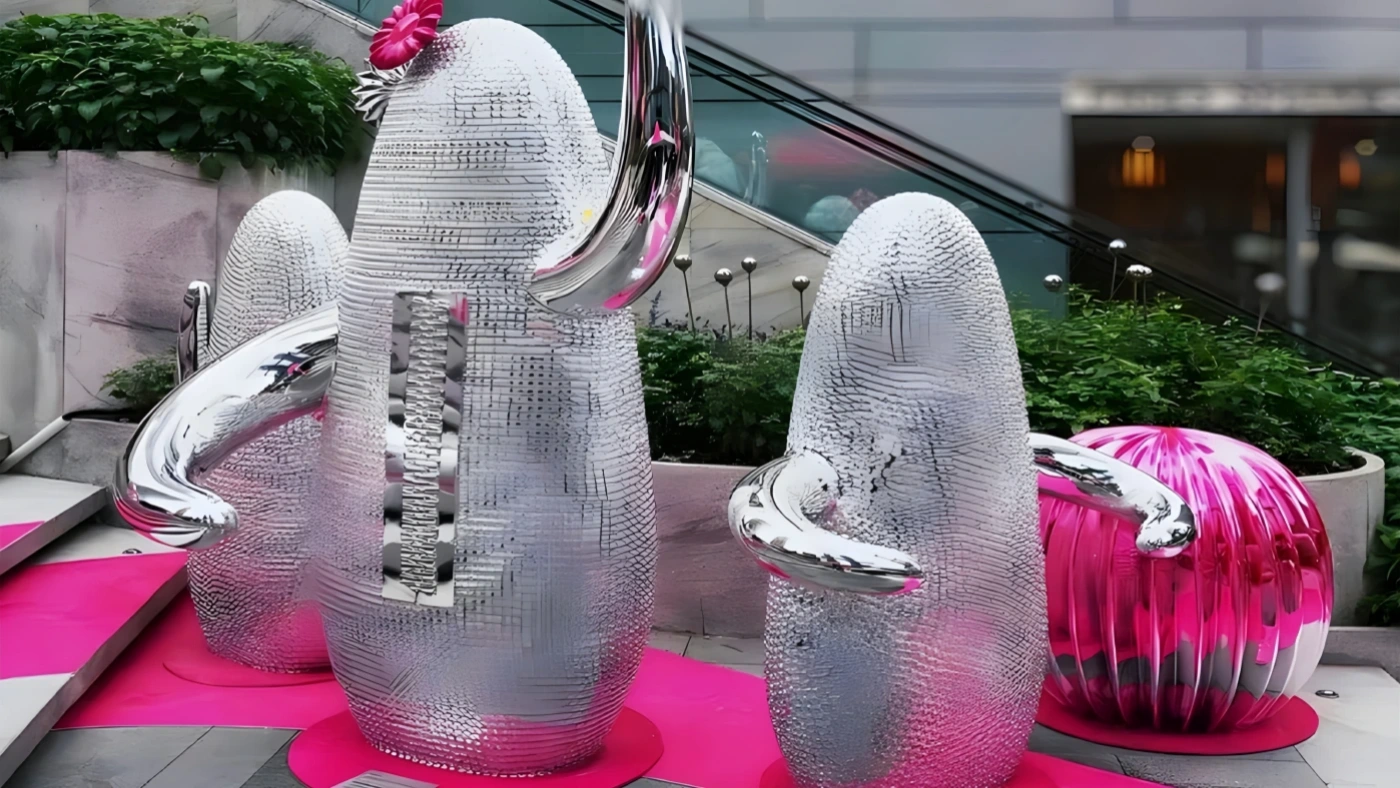
Installation begins with a site survey. We verify step surfaces, platform elevations, and embedded-anchor conditions, then mark the installation points with layout lines. Sloped steps must not be treated as level ground. The pink circular base serves as both a design feature and a cover for the base plate and anchoring hardware. The anchoring method is selected according to the load-bearing capacity of the floor slab or foundation.
Modules are lifted into position in numerical order. Tall, columnar cacti typically require a crane or other lifting equipment. Once assembly is complete, we check the structure’s vertical alignment again. Any weld marks or abrasion around the joints are polished on-site to restore a continuous mirror finish across the surface.
The illuminated signage and decorative light strips require waterproof wiring and electrical testing before operation. The pink floor graphics on the steps must use durable, slip-resistant materials suitable for outdoor use. This helps protect pedestrians while visually linking the ground treatment to the pink tones of the three-dimensional installation. Finally, the installation is cleaned, the protective film is removed, and the completed project is inspected and handed over.
We provide the owner with practical cleaning and maintenance recommendations: wipe the mirror surfaces with a neutral detergent and a soft cloth, avoiding chlorine-based cleaners and scratches from hard objects; periodically inspect anchor bolts, lighting wiring, and waterproof seals; and increase inspection frequency prior to typhoons or extreme weather events. The long-term condition of an outdoor installation depends equally on its fabrication and maintenance.
This project demonstrates that the value of custom commercial art installations lies in managing design, fabrication, transportation, and installation as one integrated process: transportation and hoisting are considered during detailed design; on-site assembly and maintenance are factored into fabrication; and compliance with destination port regulations is addressed during transportation. This integrated approach helps ensure that overseas shopping mall installations and public art projects are visually compelling, safe, and delivered on schedule. Ixmore Art specializes in custom installations and props for large-scale commercial spaces and provides the same end-to-end services for pop-up events and holiday projects. Contact us to discuss your next custom commercial art installation project.
The schedule depends on the installation’s size and quantity, the complexity of its finishes, the shipping route, and the available on-site installation window. Once the proposal is approved, we provide a phased schedule covering detailed design, fabrication, pre-assembly, shipping, and installation so you can coordinate with your mall opening or event date.
Stainless steel offers good corrosion resistance, but performance depends on the grade, surface finish, and surrounding environment. Coastal locations with salt spray place greater demands on material selection. We select suitable materials for the project location and provide guidance on routine cleaning and maintenance.
We protect installations through modular disassembly, protective surface film, cushioning, custom wooden crates, and internal bracing. We also treat the wooden packaging as required to meet quarantine regulations and provide packing diagrams and a list of modules.
We provide numbered installation drawings, connection details, and lifting recommendations. We can also guide local teams remotely by video or, if needed, send technical personnel to provide on-site support.
Yes, but the ground load-bearing capacity, step height differences, and anchoring methods must be confirmed during the design phase. We will design the base and connection structures based on actual survey data to ensure the installation remains stable even on uneven ground.
Yes. We create a wide range of installations, including shopping mall displays, holiday installations, pop-up store environments, and public art. We can develop production-ready designs and fabricate the installation based on your concept artwork or brand theme.
July 27, 2026
July 27, 2026
July 27, 2026
July 27, 2026
July 27, 2026
July 27, 2026
July 27, 2026
July 26, 2026
July 26, 2026
July 26, 2026
July 26, 2026
July 26, 2026
July 26, 2026
July 26, 2026
July 26, 2026
July 26, 2026

July 26, 2026
July 25, 2026
July 25, 2026
July 25, 2026